
Águas Abertas Sprint — Festival de Verão Aquáticos do Maranhão
- Aug 1, 2026
- Last edition date
- Distance: 1km
At a glance
- Last edition date
- August 1, 2026
- Distances
- 1 km
- Where
- Sea · Complexo Esportivo Castelinho, São Luís, Maranhão, Brazil
About the race
In Maranhão, Atlantic tides swing by more than seven meters. Here in northeastern Brazil, the Águas Abertas Sprint — Festival de Verão Aquáticos do Maranhão offers a pure open-water dash into the open sea off the city of São Luís. Swimmers tackle an intense 1,000-meter sprint along the coastline, testing their speed in water that pulses with equatorial energy and coastal surf. Organized by the FMDA - Federação Maranhense de Desportos Aquáticos, the event takes place in August. The competition makes its headquarters at the seaside grounds of APCEF in São Luís, providing an accessible staging area right by the waves. It is a straightforward, sharp sea test where navigating the immediate chop and pacing an all-out effort over a single kilometer make all the difference.
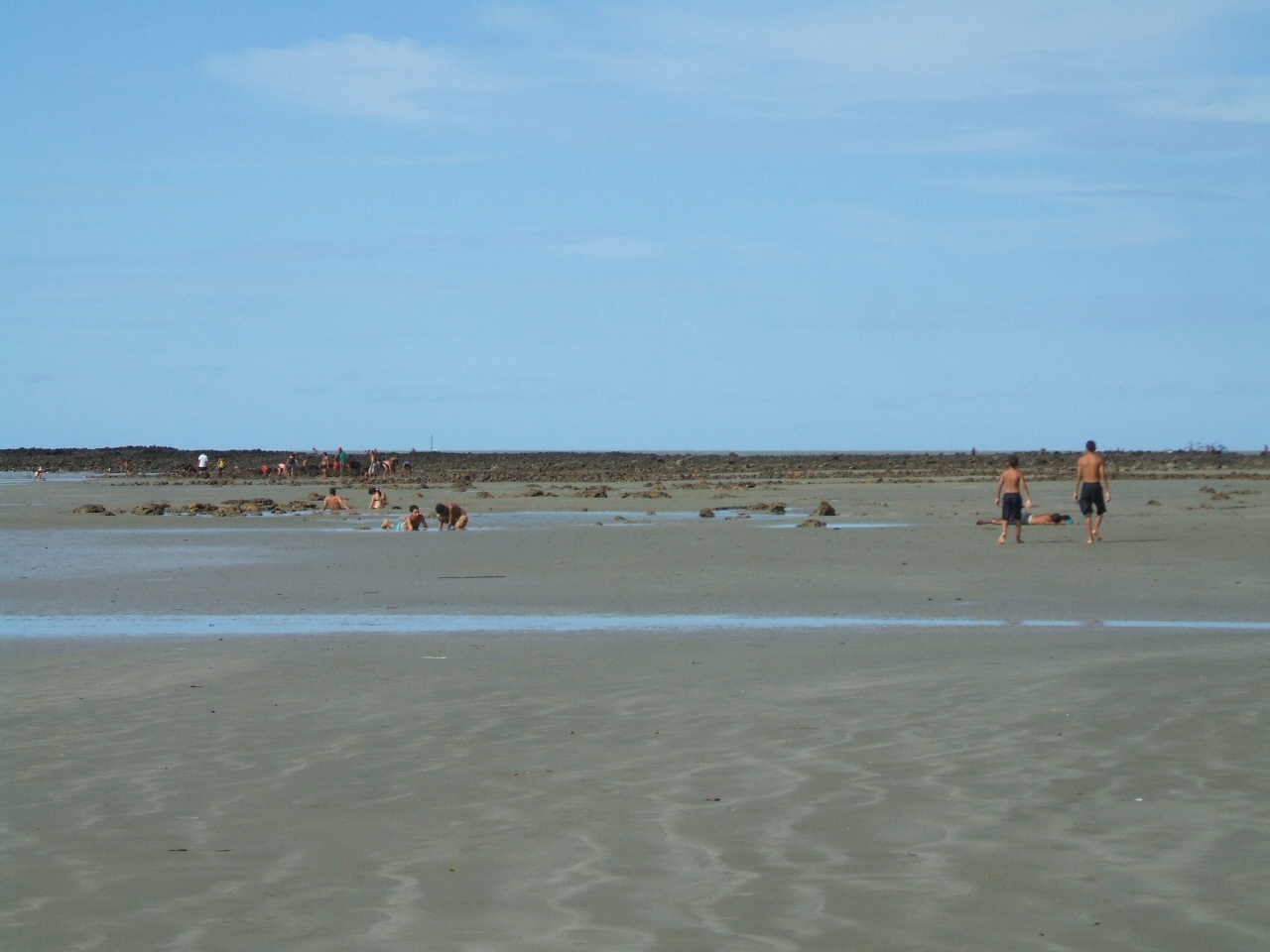
Golfão Maranhense: tidal extremes between two bays
The island setting of São Luís forms a unique geographical divide between two immense marine bodies: the Baía de São Marcos to the west and the Baía de São José to the east. Nestled within the wider Golfão Maranhense, this stretch of coastline feels the push and pull of oceanic forces funneling around the landmass. A swimmer wading into the Atlantic here enters a living confluence of open sea and vast estuarine dynamics. Immense freshwater drainage empties into the Baía de São José, which absorbs the continuous flow of major river systems like the Itapecuru and the Munim. Porto do Itaqui is recognized as the second deepest port in the world.
While a tidal amplitude surpassing seven meters sounds intimidating, it simply dictates the rhythm of the coast, sculpting a labyrinth of tidal channels, inlets, and local streams across the coastal flats. Swimmers quickly learn to read the water, using the rhythmic ebb and flood to judge their sighting lines and understand how the sea breathes across the sandbars.
Upaon-Açu and the Bay of São José
Long before modern sea races were contested off its beaches, the island was known to its indigenous inhabitants as Upaon-Açu, a name translating simply to "Big Island." The relationship between local populations and these waters stretches back millennia into prehistory. Ancient hunter-gatherer-potter communities once lived alongside the estuary at the Sambaqui do Bacanga, an archaeological site that continues to yield evidence of the deep coastal heritage embedded in the island's shell mounds. São Luís Island remains anchored to the Brazilian mainland across the narrow Strait of Mosquitoes, where modern bridges now span the gap. Further east, the waters of the Bay of São José witnessed the decisive Battle of Guaxenduba in November 1614, where Portuguese forces overcame French rivals to secure dominance over the territory. Glancing out across the bay between strokes, one swims through history.
Farol do Araçagi and the coastal defenses
Navigating this dynamic littoral has always required careful engineering and watchful sentinels against the relentless surf. Close to the city's urban waterfront, the breakwater of Espigão Costeiro da Ponta d'Areia was constructed specifically to shield the fragile shore from the heavy battering of coastal waves. Further along the coastline, about nine kilometers from the race venue, rises the prominent tower of Farol do Araçagi. The lighthouse was erected to confront the treacherous shallows of the Maranhão coast, working in tandem with the older São Marcos light to keep ships clear of hazards. Inaugurated on December 16, 1957, the Araçagi beacon entered a new era when it was fully electrified in 1982. That technological upgrade dramatically expanded its sweeping range across the equatorial ocean from 49 to 63 kilometers. Today, it stands as a reassuring navigational landmark along the coast, a reminder of the vigilance that has watched over mariners.
Avenida Litorânea and the sands of Calhau
The shoreline surrounding the race displays the wild, diverse beauty characteristic of the São Luís coastal plain. Flooded lowlands, winding mangrove forests, and rolling dunes frame long stretches of sand, interspersed with surviving pockets of lush Amazonian Forest vegetation. This meeting of tropical forest and maritime shoreline gives the local beaches an untamed green backdrop. The venue itself sits in the upscale Calhau neighborhood, situated just 100 meters away from the bustling promenade of Avenida Litorânea. APCEF originally established its presence directly along the sands of Olho D'Água beach before moving to its current coastal home. The contemporary headquarters, inaugurated in 1979, spans approximately 40,000 square meters of prime coastal property.
After exiting the 1,000-meter course, competitors can recover across the club's extensive green parkland. With fifteen shaded chalets, a children's playground, and open-air kiosks designed for barbecues and post-race gatherings, it provides an ideal retreat to relax under tropical breezes. Strolling along the water's edge on Avenida Litorânea afterward, you watch the vast Maranhão tide begin its outward retreat, leaving the wide Atlantic sands glistening under the afternoon sun.
Sources: São Luís Island · São Luís
Course
The race features a finish line on the sand (beach finish) at Praia do Olho d'Água.
The race features a finish line on the sand (beach finish) at Praia do Olho d'Água.
Awards
The races were divided into several categories, including age groups.
How to get there
Águas Abertas Sprint — Festival de Verão Aquáticos do Maranhão
Frequently asked questions
- When was the last edition of Águas Abertas Sprint — Festival de Verão Aquáticos do Maranhão?
- The last edition of Águas Abertas Sprint — Festival de Verão Aquáticos do Maranhão took place on August 1, 2026.
- What distances does Águas Abertas Sprint — Festival de Verão Aquáticos do Maranhão offer?
- Águas Abertas Sprint — Festival de Verão Aquáticos do Maranhão has a single distance: 1 km.
- Where does Águas Abertas Sprint — Festival de Verão Aquáticos do Maranhão take place?
- Águas Abertas Sprint — Festival de Verão Aquáticos do Maranhão is a sea swim. Location: Complexo Esportivo Castelinho, São Luís, Maranhão, Brazil.
Where to stay
Accommodations in São Luís range from historic pousadas within the colonial center, often converted from 18th-century townhouses, to modern boutique hotels overlooking the port area. For those preferring proximity to the race, beachfront guesthouses near Praia do Olho d'Água offer convenient access. Expect to pay between $40 and $90 USD per night depending on the proximity to the coast and the level of amenities.
Things to do nearby
Beyond the water, the city offers rich cultural explorations. Visitors can wander through the UNESCO-listed historic center to view the extensive tilework, or participate in local Bumba Meu Boi workshops to learn about the regional musical pantomime. For outdoor activity, the surrounding coastal areas are ideal for kayaking, while the nearby state parks provide extensive trails for trekking through unique vegetation. Tasting local cuisine, specifically dishes featuring fresh shrimp and regional spices, is a staple of any weekend stay.
Swimmers
Similar races


Comments
Transparency: some links on this page (stays, flights, experiences, gear) are affiliate links — if you book or buy through them, Omniathlon may earn a commission from the partner at no extra cost to you. As an Amazon Associate we earn from qualifying purchases.