
Alpen Adria Swim Cup
- May 22, 2027
- Distances from 250m to 5km
At a glance
- Next edition date
- May 22, 2027
- Distances
- 250 m · 500 m · 1.5 km · 2.5 km · 5 km
- Where
- Lake · Strandbad Familie Richler, Sankt Kanzian, Kärnten, Austria
- Wetsuit
- Wetsuit usage depends on water temperature; not recommended for Swim Run Swim events due to transition time.
- Registration
- alpenadriaswimcup.at
About the race
The Alpen Adria Swim Cup is an open water swimming race held in the sheltered waters of Klopeiner See, situated at Sankt Kanzian in the Austrian state of Carinthia.
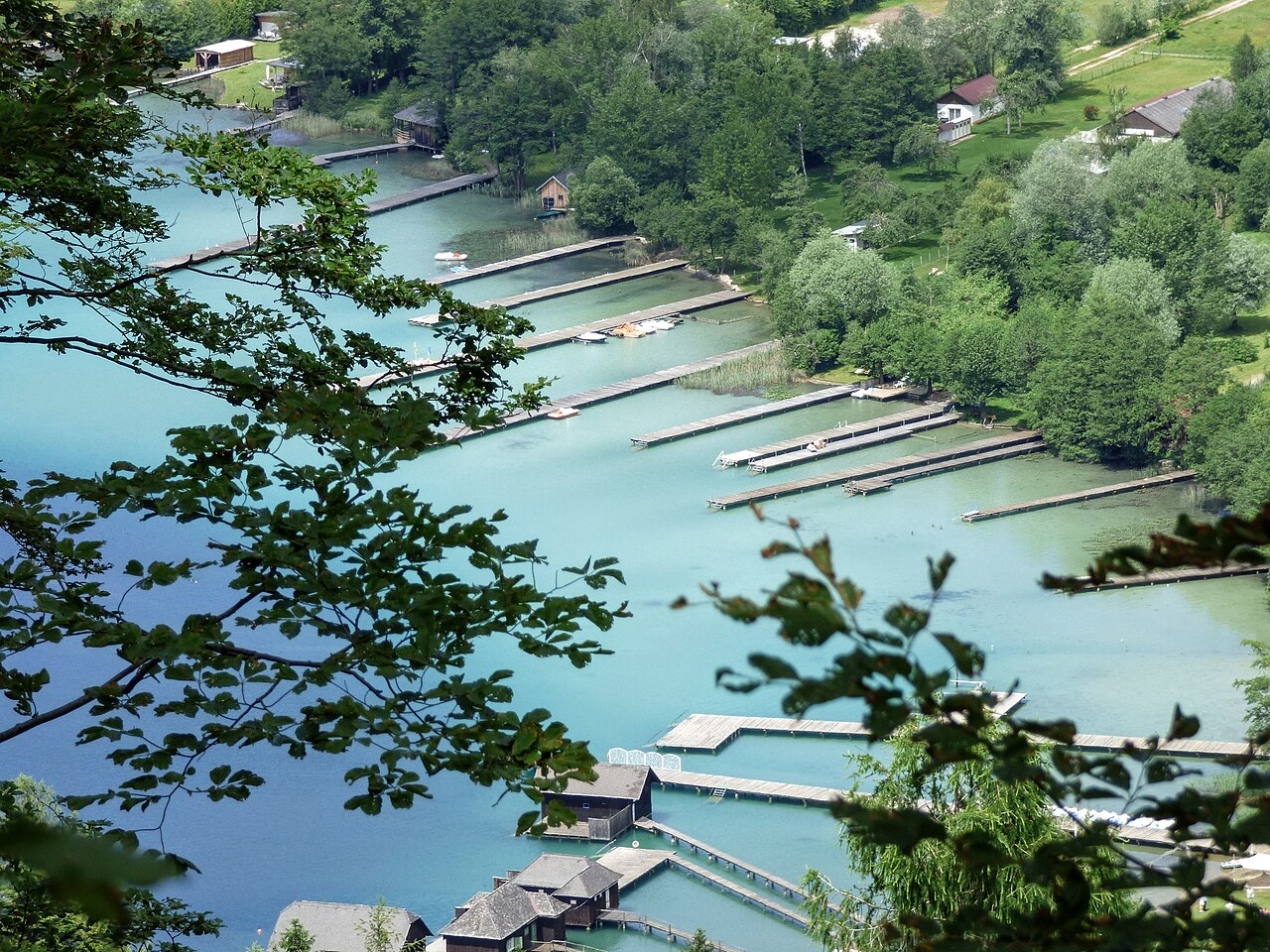
The race courses from Strandbad Familie Richler on Klopeiner See
The event establishes its race base right at Strandbad Familie Richler on the waterfront in Sankt Kanzian. The late-spring timing lets competitors experience the lake just as the Alpine sun begins heating the surface layers for the season ahead. Swimmers can choose from an extensive lineup of five distances suited to every ambition, ranging from introductory 250-meter sprints to endurance challenges over five kilometers. The longer lake journeys are structured around expansive, clearly defined circuits. The 1.5-kilometer race sets out on a single clockwise loop across the open water, while the 2.5-kilometer distance takes swimmers out on a wider single circuit around the lake. Competitors taking on the marquee 5.0-kilometer marathon swim complete two full clockwise laps of the 2.5-kilometer loop, navigating long stretches where rhythmic sighting and pacing come to the fore.
Short-distance athletes swim over an inner 250-meter lap, with the 250-meter sprint running for one circuit and the 500-meter race requiring two laps. For these two shorter distances of 250 and 500 meters, towing an inflatable swim buoy is mandatory, guaranteeing high visibility and safety on the tighter course. On the longer courses of 1.5, 2.5, and 5.0 kilometers, wearing a swim buoy is entirely optional, giving distance swimmers the freedom to move unencumbered across the lake. Every event hosted here feeds into a broader competitive scene. The race results form part of the cumulative overall ranking of the Alpen Adria Swim Cup circuit, which combines all regional AASC and swim-run events into a unified points table.
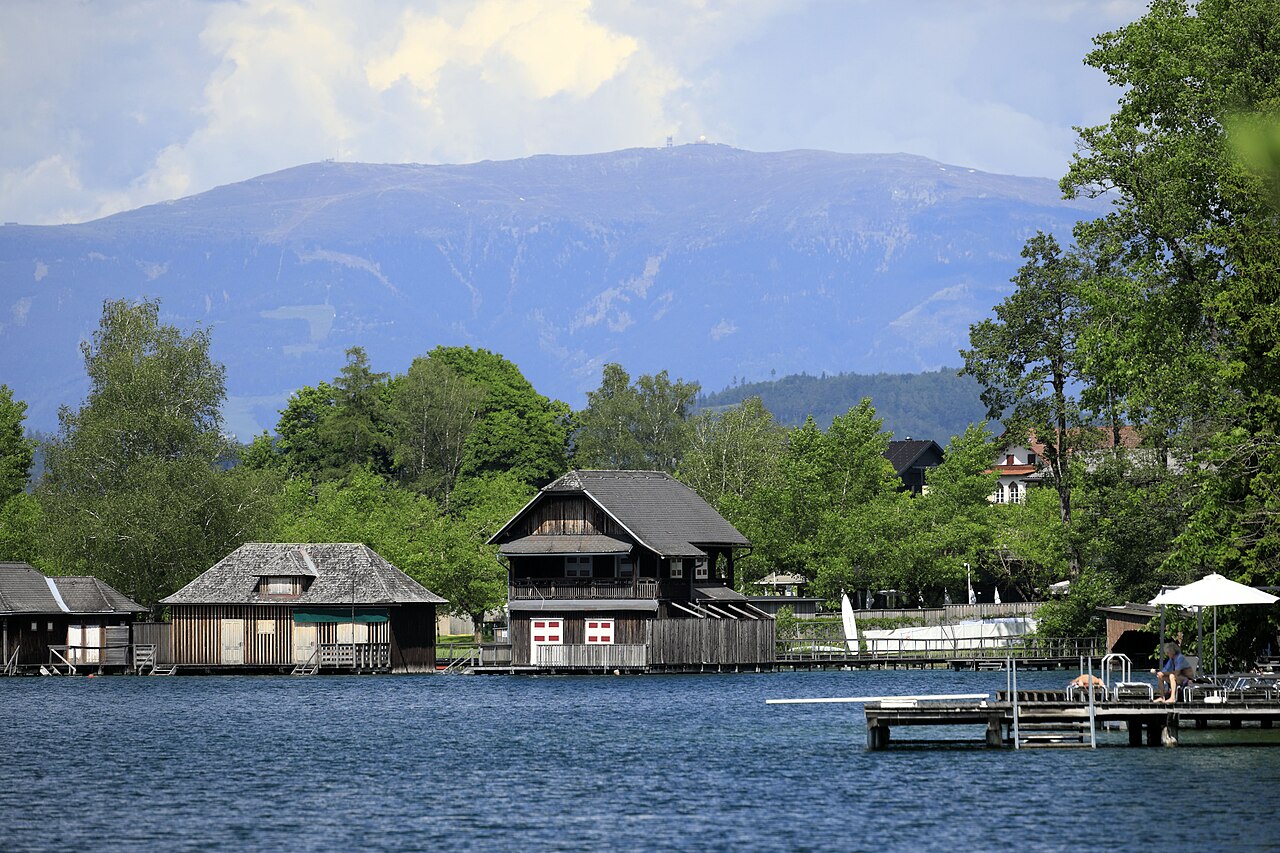
Klopeiner See: post-glacial depths and warm Alpine waters
Underneath the racing lines lies a basin shaped by profound geological forces. Klopeiner See is the preserved remnant of a vastly larger post-glacial body of water that once flooded the entire geographic plain around the modern village of Kühnsdorf after the ice sheets retreated. The modern lake plunges down to a maximum depth of 48 meters, with an average water depth of 23 meters across its floor. Despite these substantial depths, surface water temperatures can climb as high as 29 °C (84 °F) during the summer months, earning it a reputation as one of the warmest Alpine lakes. Because the lake receives no raging Alpine torrents and is fed exclusively by modest groundwater seepages and tiny surface tributaries, it operates with a remarkably gentle flow rate. While such stagnant dynamics could theoretically trap organic buildup, the lake has been protected since 1975 by an artificial deep-water drainage installation. This specialized suction system continuously draws off oxygen-depleted and nutrient-heavy bottom waters from the abyssal layers.
Klopeiner See shore: promenade, beach clubs and the lap path
Klopeiner See is eight kilometres long and 800 metres wide, and 12 Strandbäder, the lakeside beach clubs, line its shore. A continuous promenade runs all the way around Klopeiner See. The south shore of Klopeiner See is marked by quiet and nature, while the north shore is the lively side, with many restaurants and a two-kilometre art mile. In the eastern and western bays of Klopeiner See the lake bed is white, from fine limestone particles on the bottom. Carinthia's tourism site says Klopeiner See can already be 23 degrees warm in May. The Swim Run Swim course at Klopeiner See combines a 1.5 km clockwise swim loop with a 5.4 km run, one full lap around the lake on a marked cycling and walking path.
Lake Turner and Kleinsee on the Rückersdorfer plate
The tranquil margins of Lake Turner host an undisturbed botanical fringe. The shoreline is lined with delicate stands of bird's-eye primrose, bogbean, and marsh orchids, while the quiet coves on the water's surface are blanketed by floating yellow water lilies and white nymphaea blooms. Below these floating gardens, Lake Turner harbors an active community of freshwater life, sheltering wels catfish, northern pike, tench, perch species, and native noble crayfish. Along the reeds and muddy shoreline grasses, Western yellow wagtails, European stonechats, and Northern lapwings nest and feed throughout the breeding season. Nearby lies Kleinsee, another small basin carved out during the last ice age. Kleinsee reaches a maximum depth of roughly 9 meters over an easy sandy bottom, fringed along its shallow banks by thick beds of water lilies and organic mud that support 15 different species of freshwater fish.
The Jaun Valley and the Wildensteiner Wasserfall under Hochobir
The historic Jaun Valley is located about 4 kilometers away between the upper Drava river and the towering barrier of the Karawanks mountain range. The valley derives its name from Juenna, an ancient Roman settlement. Rising abruptly over the valley floor roughly 11 kilometers from the race area is the Wildensteiner Wasserfall, recognized as one of the highest free-falling waterfalls anywhere in Europe. The falls are fed by the rushing Wildensteiner Bach, tumbling vertically right below the high summit of the Hochobir mountain before descending down toward the Vellach and the Drau. The waterfall takes its name from the ruins of Wildenstein castle perched precariously on the heights above the gorge. The medieval stronghold was famously shattered during the great Friuli earthquake of 1348.
The Drava basin and the Gurk river network
The broader aquatic geography of the region is defined by the great fluvial arteries. The Gurk river begins high in the Gurktal Alps, born from two alpine glacial tarns called Gurksee and Torersee located at elevations near 2,000 meters. Because these extreme source lakes freeze entirely down to their rocky beds through the alpine winter, they support no fish life, yet they yield a pure mountain flow that travels for 157 kilometers across Carinthia before emptying into the Drau near Stein. Closer to the lake plateau, the river valley reveals quiet oxbows born from modern hydrological works. Linsendorfer See was originally an expansive meander loop of the Drau, transformed into a separate body of water between 1976 and 1981 when the river was straightened for the construction of the Annabrücke power plant. Tucked onto a narrow strip of land between the Drau river and the rising slopes of the Sattnitz, the cut-off lake is fed by a small connecting channel from the dammed river.
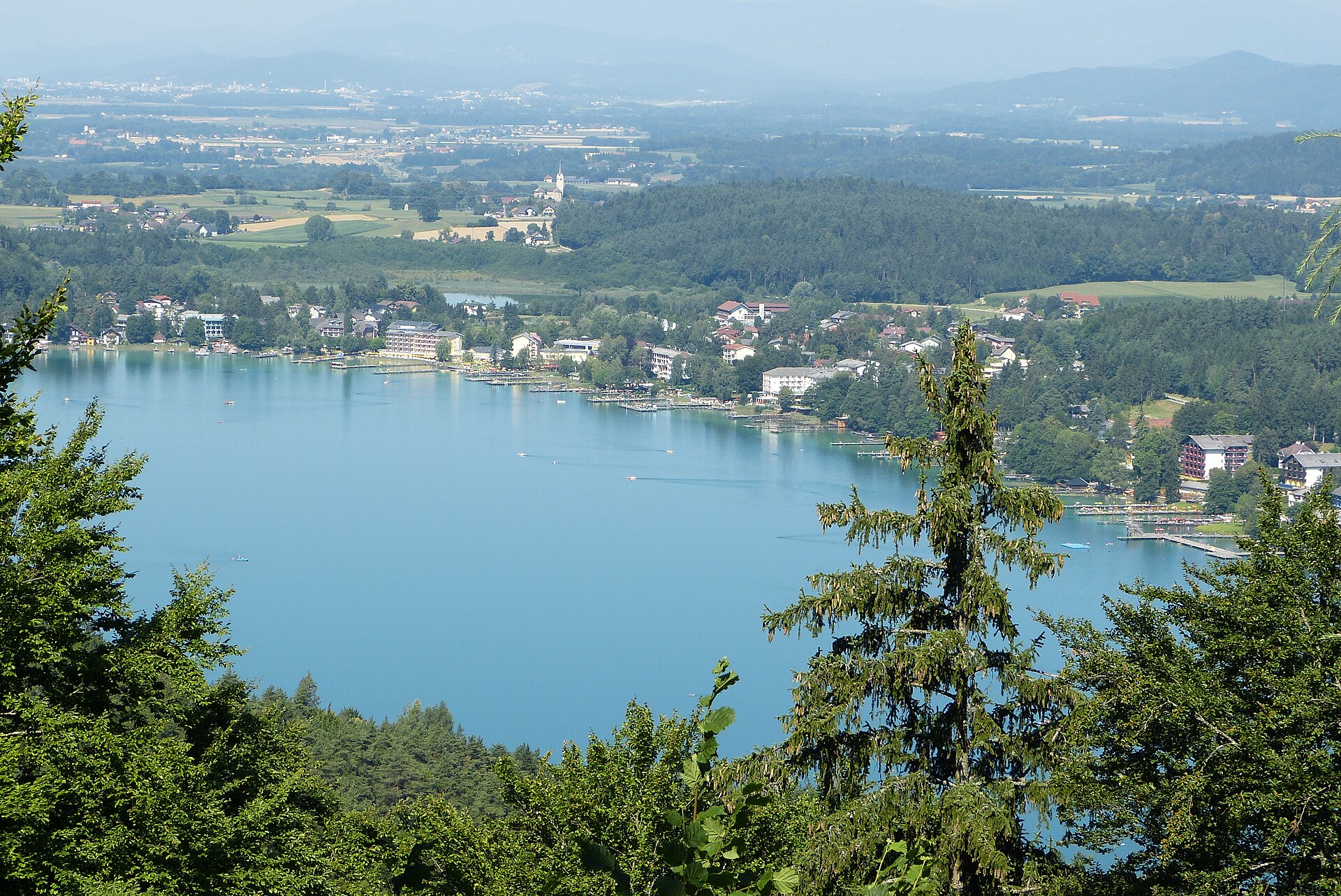
Sources: Klopeiner See · Kleinsee · Lake Turner · Jaun Valley
Course
250 m loop.
Two laps of the 250 m loop.
One loop, clockwise.
One loop course.
Two laps of the 2.5 km loop (clockwise).
Awards
- Age group awards
Top 3 female and male athletes per distance awarded. Overall ranking includes all AASC and Swim Run Swim events.
Previous editions
- 2026May 23, 2026
How to get there
Accommodation available at Gasthof Menüwirt, Schulstraße 3, 9122 St. Kanzian.
Alpen Adria Swim Cup
Frequently asked questions
- When is Alpen Adria Swim Cup?
- Alpen Adria Swim Cup takes place on May 22, 2027.
- What distances does Alpen Adria Swim Cup offer?
- Alpen Adria Swim Cup offers 250 m, 500 m, 1.5 km, 2.5 km, and 5 km.
- Is a wetsuit required at Alpen Adria Swim Cup?
- Wetsuit usage depends on water temperature; not recommended for Swim Run Swim events due to transition time.
- Where does Alpen Adria Swim Cup take place?
- Alpen Adria Swim Cup is a lake swim. Location: Strandbad Familie Richler, Sankt Kanzian, Kärnten, Austria.
- How do I register for Alpen Adria Swim Cup?
- The reference page for registering for Alpen Adria Swim Cup is https://www.alpenadriaswimcup.at/en/klopeiner-see-2026/ablauf-klopeiner-see.
Where to stay
The area around St. Kanzian features a mix of traditional guesthouses, family-run inns like the Gasthof Menüwirt, and classic lakeside resorts. Visitors will find a range of options from quaint 'pensionen' and private apartments to more established hotels with direct access to the water. Expect to pay between €80 and €160 per night for a double room, depending on the proximity to the Strandbad and the time of the season.
Things to do nearby
The region offers a high density of outdoor activities centered on its geological and historical assets. Swimmers can explore the area via well-marked cycling and walking paths that circle the lake, or take to the water with a kayak or SUP to view the Sattnitz conglomerate ridges from a different perspective. For those interested in deeper history, the surrounding hills feature trails leading to ancient archaeological sites, while local vineyards in southern Carinthia offer tastings that highlight the region's unique climate.
Swimmers
Other races by this organiser
- Alpen Adria Wörthersee CrossingPörtschach am Wörthersee, AT
- Sunrise Swim Portoroz powered by Alpen Adria Swim CupPortoroz, SI
- Alpen Adria Ossiacher See 2026 — VillachOssiacher See, AT
- Alpen Adria LängseeLängsee, AT
Similar races


Comments
Transparency: some links on this page (stays, flights, experiences, gear) are affiliate links — if you book or buy through them, Omniathlon may earn a commission from the partner at no extra cost to you. As an Amazon Associate we earn from qualifying purchases.