
Bring On The Bay
- Jul 17, 2027
- Distances: 1.5km and 3km
At a glance
- Next edition date
- July 17, 2027
- Distances
- 1.5 km · 3 km
- Where
- River · Ottawa River, Ottawa, Ontario, Canada
- Entry fee
- 68 €
- Registration
- raceroster.com
About the race
Thirty stationary sailboats anchored in line across Britannia Bay guide open water swimmers to Britannia Park. Bring On The Bay is an open water swimming event held on the freshwater expanse of the Ottawa River in Ottawa, Ontario, Canada. The event features both a 1.5-kilometre dash and a 3-kilometre distance, welcoming participants of all ages and athletic backgrounds to race across the wide river bay. The 3-kilometre course sets off directly from the Nepean Sailing Club, tracing a sweeping line across the open water. Swimmers tackling the 1.5-kilometre event start from Britannia Park, following an abbreviated path. Both courses converge on the riverfront of Britannia Park, where friends, families, and cheering crowds gather along the water's edge to welcome each finisher out of the river.
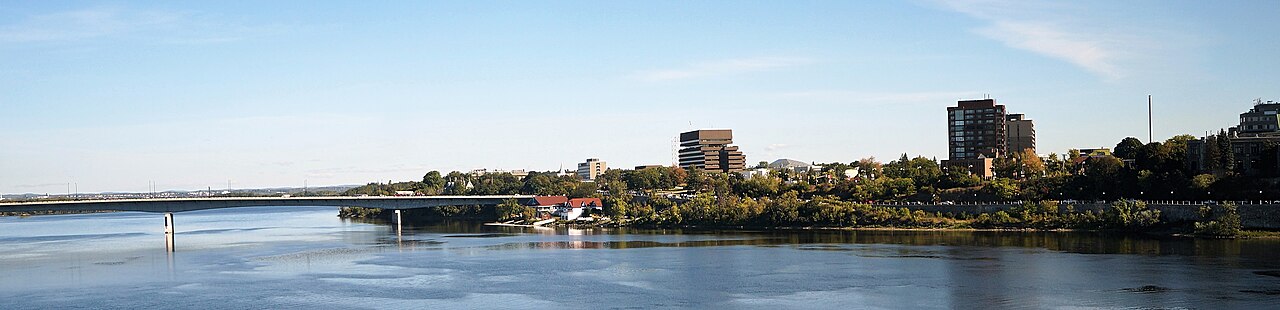
Navigating the open bay is made remarkably straightforward thanks to an escort flotilla of approximately thirty sailboats stationed every hundred metres along the race corridor. In addition to cheering swimmers along the course, these anchored boats display clear distance markers to help you gauge your progress stroke after stroke. After tracking the sailboat line across the bay, swimmers on the 3-kilometre route encounter a decisive final navigation test: a sharp right-hand turn threading through a tight passage between a large turning buoy and a support kayak before aiming straight for the beach. Midsummer races typically greet swimmers with mild, comfortable freshwater conditions that suit both wetsuit and skin swimmers alike.
A passing southwest breeze can kick up a steady river chop, occasionally making the water bob under your stroke after the first five hundred metres. In seasons with high water levels, the opening seventeen hundred metres can feel like a muscular pull into the river's volume, followed by welcome relief along the final thirteen hundred metres into the protected bay. The gathering has deep community roots, having started fifteen years ago with a tight-knit field of just twelve swimmers. Over the seasons, the race has built a dedicated tradition for its ten-year veterans, permanently retiring their racing cap numbers in tribute to their loyalty, such as cap number one for Pierre Tessier and cap number two for Stephane Laurin.
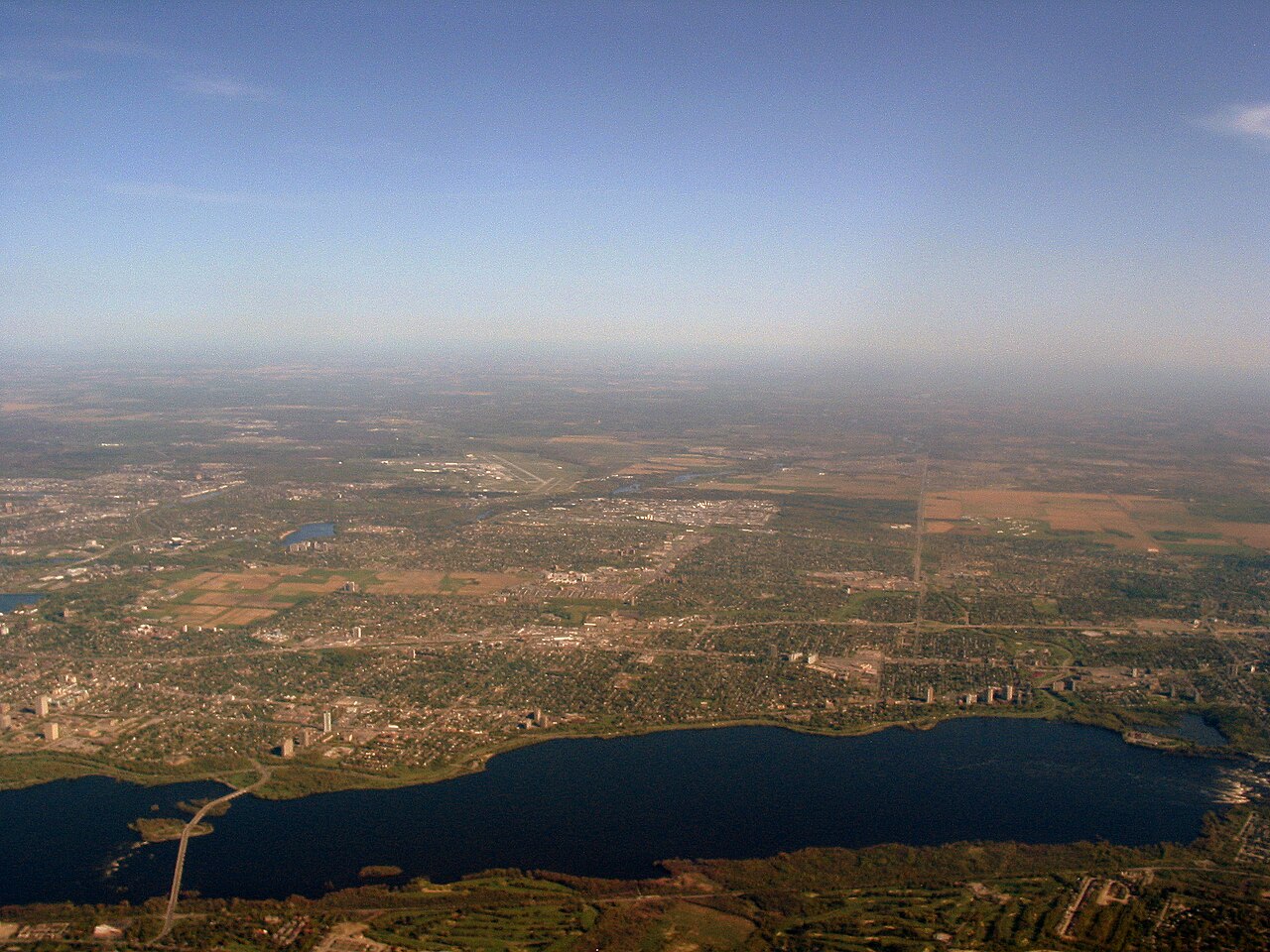
The Ottawa River: post-glacial floodwaters and rapid currents
The waterway underneath you is the product of monumental post-glacial geology, flowing through a vast valley that became habitable roughly ten thousand years ago after the natural drainage of the prehistoric Champlain Sea. Within Ottawa, three major rivers converge, creating an aquatic nexus that has served as a central trading and travel corridor for thousands of years. Further down the urban waterfront, the Ottawa River meets the tributary Rideau River, highlighting the living power and constant movement of the regional river system.
Voyageurs, timber rafts, and the Rideau Canal waterway
Long before modern swimmers raced across Britannia Bay, the river served as the vital wilderness artery for early exploration, with Étienne Brûlé becoming the first documented European to navigate the Ottawa River in 1610. Rivalries flared on the water in 1835, when the Shiners—a faction whose name likely derived from the French word chêneur, meaning an oak cutter—physically blocked rival timber rafts on the river. The river's strategic transport importance led to the engineering of the Rideau Canal, designed to provide a secure military supply route between Montreal and Kingston while bypassing vulnerable stretches of the St. Lawrence River. Spanning 202 kilometres to connect the Ottawa River directly to Lake Ontario, the canal incorporates natural rivers and lakes into a continuous navigation channel.
Rather than cutting long artificial channels through rock, the canal utilized an ingenious slackwater design, building dams to raise water levels and submerge impassable river rapids. The finished route features forty-five locks across twenty-three stations, lifting vessels through an elevation rise of eighty-three metres from the Ottawa River to Upper Rideau Lake.
Shirleys Bay and the shoreline alvars
The river ecosystem preserves fragile aquatic habitats that depend entirely on natural hydrological changes. At Shirleys Bay, the shoreline preserves a biologically diverse alvar alongside one of the largest silver maple swamps along the entire Ottawa River. These extensive wetland complexes rely on regular seasonal fluctuations in river depth to sustain their delicate balance of native flora and aquatic life. When water levels recede during dry spells, exposed sandbars and clay flats emerge, creating fertile ground where rare wetland plants can germinate and thrive along the banks. As the river glides past sandy ribbons like Ottawa Beach, the public waterfront at Andrew Haydon Park, and the riverine Duck Islands, it maintains a rich mosaic right at the edge of the capital.
Britannia Park: sandy shores and the riverfront lawn
Race morning centres entirely around the water's edge, organized by the Nepean Sailing Club for the 3-kilometre distance. Watching the line of support sailboats motor out into their anchored positions gives swimmers a striking view of the aquatic highway awaiting them. At the finish line, Britannia Park provides the perfect natural amphitheatre for the end of the swim.
Lac Deschênes, swimmer numbers and the Britannia pier
Bring On The Bay takes place on Lac Deschênes in the Ottawa River, starting at the Nepean Sailing Club and ending at Britannia Park. The Nepean Sailing Club describes its most recent field as over 700 swimmers, 35 or more boats, and 70 or more kayaks, paddle boards and canoes. At the 2015 swim, a record 590 swimmers entered the water, and the finishers ranged in age from 11 to 73. Around 1900 the Ottawa Gas and Electric company extended the trolley line and created an amusement park at Britannia beach to draw weekend riders. By 1904 the trolley company had built a wide pier 1,000 feet long out into the river at Britannia. Britannia beach was described as ideal for bathing, since people could wade out almost to the end of the pier without danger.
Sources: Ottawa River · Ottawa
Course
Previous editions
- 2026Jul 11, 2026
- 2024results
How to get there
Bring On The Bay
Frequently asked questions
- When is Bring On The Bay?
- Bring On The Bay takes place on July 17, 2027.
- What distances does Bring On The Bay offer?
- Bring On The Bay offers 1.5 km and 3 km.
- How much is the entry fee for Bring On The Bay?
- The entry fee is 68 €. Registration details for the 2026 edition are closed; please standby for 2027 registration information.
- Where does Bring On The Bay take place?
- Bring On The Bay is a river swim. Location: Ottawa River, Ottawa, Ontario, Canada.
- How do I register for Bring On The Bay?
- The reference page for registering for Bring On The Bay is https://raceroster.com/events/2026/110874/bring-on-the-bay-15k-and-3k-open-water-swim.
Where to stay
Ottawa offers a range of options, from boutique hotels near the historic ByWard Market to comfortable riverfront lodges closer to the Nepean Sailing Club. Given the city's status as a capital, visitors can find high-end international chains or more intimate guesthouses. Prices typically range from $150 to $350 per night depending on proximity to the central business district versus the quieter, scenic residential areas along the river. Camping options are limited within the immediate city limits, though several well-equipped parks are available in the surrounding National Capital Region.
Things to do nearby
The weekend provides ample opportunity to explore the capital beyond the water. You can participate in local beer tastings at breweries in the nearby Gatineau hills, or rent a kayak to navigate the quieter tributaries of the Rideau River. For those interested in history, the region is home to numerous national museums and the historic Rideau Canal, a UNESCO World Heritage site. Trekking trails through Gatineau Park offer panoramic views that complement the river scenery experienced during the race.
Swimmers
Similar races


Comments
Transparency: some links on this page (stays, flights, experiences, gear) are affiliate links — if you book or buy through them, Omniathlon may earn a commission from the partner at no extra cost to you. As an Amazon Associate we earn from qualifying purchases.