
Circuito Ocean — Florianópolis
- Nov 14, 2026
- Distances from 200m to 3km
At a glance
- Next edition date
- November 14, 2026
- Distances
- 200 m · 750 m · 1.5 km · 3 km
- Where
- Sea · Jurerê Beach, Florianópolis, Santa Catarina, Brazil
- Entry fee
- 200 m: 138.8 BRL · 750 m: 258.8 BRL · 1.5 km: 258.8 BRL · 3 km: 258.8 BRL
- Registration
- circuitoocean.com.br
About the race
Calm, temperate sea laps against the pale sand of Praia Jurerê. This protected stretch of coast in Florianópolis, located on Santa Catarina Island in southern Brazil, hosts the Circuito Ocean. Swimmers step into tranquil saltwater with a choice of four distinct courses: a short 200-meter sprint, alongside open-water distances of 750, 1,500, and 3,000 meters. The gathering stands as the open-water swimming centerpiece of the largest multisport beach festival in the south of Brazil. Staged by PDA Esportes, the weekend brings athletes to the shoreline for competitive racing and community coastal sports. Scheduled in November during the southern spring, the swimming events are arranged in a counter-clockwise loop marked out by turn buoys, with course directions subject to adjustment based on tidal currents, sea conditions, and wind on race morning.
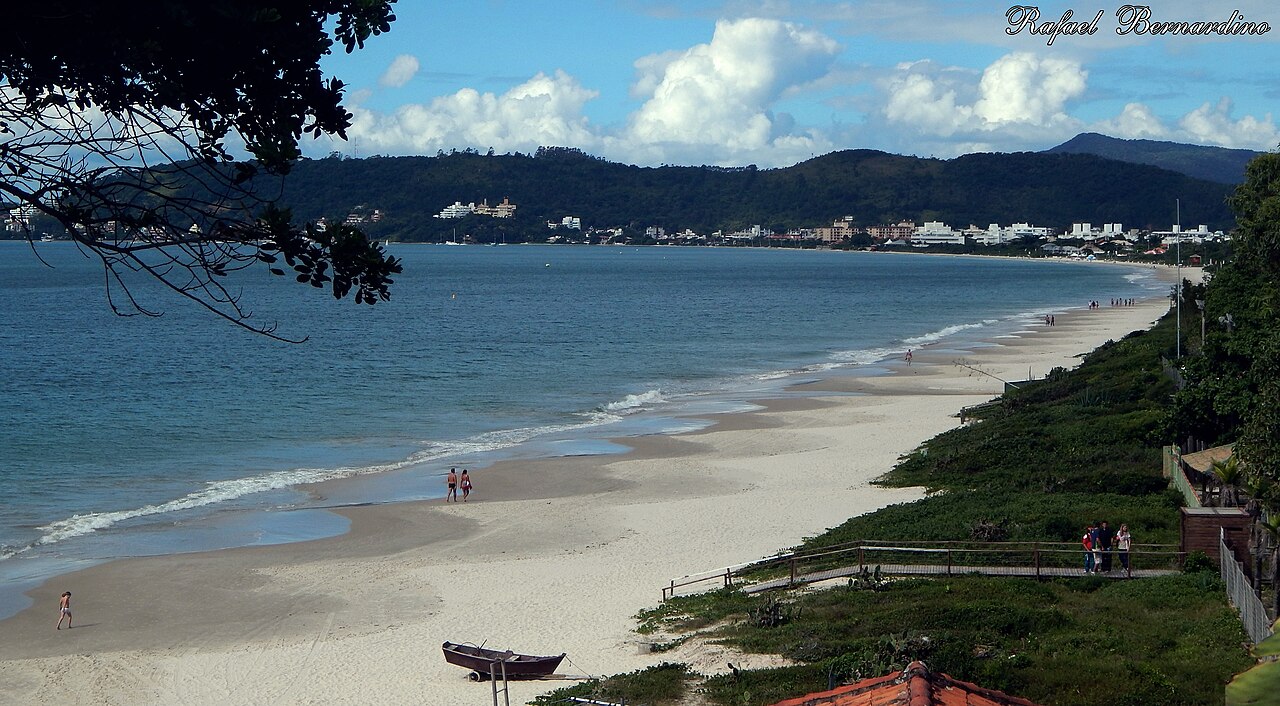
Praia Jurerê: the calm bay and open-air promenade
Praia Jurerê's sheltered bay conditions create an ideal environment for stand-up paddleboarding, jet skiing, and distance swimming without the battering of heavy shore breaks. The smooth water surface lets competitors settle into an uninterrupted stroke rhythm as soon as they run into the sea. The beachfront divides naturally into two distinct profiles along its sweeping sands. To one side lies a traditional, family-oriented neighborhood lined with classic summer beach cottages, while the neighboring sector unfolds into Jurerê Internacional, recognized for its luxury mansions, cosmopolitan air, and carefully planned layout featuring wide, tree-lined streets and manicured gardens. Waterfront life outside of racing centers on relaxed strolls along the sand and watching the evening sunset.
Swimmers and visitors gather around Jurerê Open Shopping, an open-air commercial space where landscaped garden walkways are bordered by boutiques, cafes, and restaurants highlighting fresh regional seafood and international menus. As the warm season begins, the beachfront comes alive with renowned beach clubs hosting upscale events right beside the tideline.
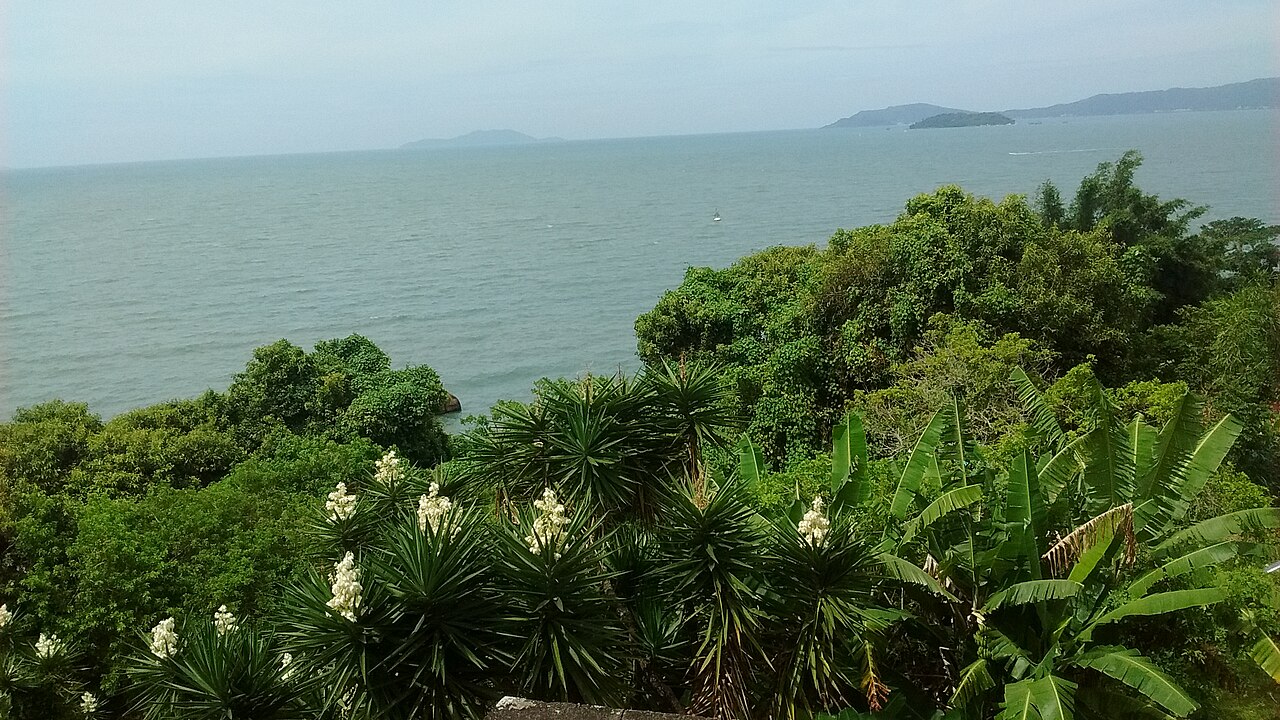
Buoy loops and wetsuit rules at Circuito Ocean Florianópolis
The open-water courses of Circuito Ocean Florianópolis are closed loops in a square or triangular shape, marked by buoys along the route. At Circuito Ocean, wetsuits are optional when the water temperature is between 18°C (64 °F) and 23.9°C (75 °F). Wetsuits are prohibited when the water temperature is above 24°C (75 °F). The organisers confirm the wetsuit condition on the day before the stage. On the Saturday of each stage, a swim training session takes place at the race venue, with buoys installed and a support crew in the water. The previous Florianópolis stage of Circuito Ocean was held on 29 and 30 November 2025 at Canasvieiras.
Santa Catarina Island: sambaquis, Carijós heritage, and coastal waters
Santa Catarina Island spans fifty-four kilometers from north to south and eighteen kilometers across, covering an area of over 424 square kilometers. It is severed from the continental Brazilian mainland by a strait five hundred meters wide and twenty-eight meters deep. The indigenous Carijós people historically named the island Meiembipe, meaning mountain along the sea. Long before them, prehistoric groups belonging to the Sambaqui culture inhabited the island from around 4800 BC. These ancient maritime inhabitants left profound archaeological marks across the territory. Along the shores, prehistoric shell mounds known as sambaquis remain at locations such as Ponta das Almas, Canto dos Araçás, and Costa da Lagoa. The island's inner waterways and wetlands remain closely safeguarded.
The Carijós Ecological Station was established in 1987 to protect delicate mangrove ecosystems on the island, while the Pirajubaé Marine Extractive Reserve protects traditional shellfish harvesting in the bay. On the broader perimeter, large natural reserves bookend the landscape: the Serra do Tabuleiro State Park, established in 1975, encompasses the southern tip of the island, while the Rio Vermelho State Park was created in 2007 along the northeast coast. Climate across the island is frequently influenced by southern winds, which bring colder, drier conditions that can make the wind chill during winter drop below recorded air temperatures.
Lagoa da Conceição and Barra da Lagoa: tidal lagoons and sea turtles
The island holds two major interior water bodies: the freshwater Lagoa do Peri and the vast saltwater Lagoa da Conceição. Covering nearly twenty square kilometers, this coastal lagoon is naturally partitioned by a narrow strait into two basins known as Lagoa de Dentro and Lagoa de Fora. A topographic depression between two mountain massifs historically linked this water system to the ocean. Along the northwestern shore at Costa da Lagoa, quiet pockets of sand alternate with rocky outcrops. The lagoon exchanges tides with the Atlantic Ocean through an outlet canal at Barra da Lagoa. This channel ran seasonally until the mid-1940s, before comprehensive stabilization works in 1980 dredged and straightened the waterway while adding jetties and lighthouses.
Near the channel, Morro da Galheta preserves ancient megalithic stone monuments that may have served astronomical observing functions for prehistoric islanders. Down along the shore, the Barra da Lagoa base hosts the Sea Turtle Open Museum as part of the nationwide TAMAR Project, dedicated to turtle rehabilitation and marine research.
The eastern dunes and open ocean: from Galheta to Campeche
The open eastern seaboard presents an entirely wilder oceanic profile framed by the sands of the Municipal Natural Park of the Lagoa da Conceição Dunes, which borders Avenida das Rendeiras. Praia Mole is an open-sea beach 960 meters long with sand spanning between ten and seventy-five meters wide. Here, depth plunges steeply just a few meters out from the shore and heavy waves pound the coast, while the southern rocky headland bears a shape famously resembling a dragon. A coastal trail leads from Praia Mole to Gravatá beach on the high cliffs, while a rocky shoreline separates Mole from Praia da Galheta. Facing the open Atlantic on the eastern side of the island, Galheta is designated as a municipal natural monument and conservation unit under Galheta Municipal Park, established by municipal law in 1990 and regulated in 1994, where nudism is permitted.
The beach is reachable exclusively on foot by paths from Praia Mole or from the Barra da Lagoa canal, including a route through coastal scrub and granite rocks known locally as the trail of sin. Praia da Joaquina extends for three thousand meters between eight and seventy meters wide, bordered by Ponta do Retiro and Praia do Campeche and encircled by the protected dunes of the municipal park. Prehistoric granite and basalt polishing basins still sit visible along the left end of Praia da Joaquina. Praia do Campeche faces Campeche Island across the water, characterized by open-ocean swell and cooler sea temperatures. The French aviation pioneer and author Antoine de Saint-Exupéry visited this stretch during the first half of the twentieth century, and its fragile dunes and coastal restinga vegetation have enjoyed municipal legal protection since 1985 before being incorporated into the municipal park in 2018.
In the eighteenth century, whaling stations operated elsewhere on the island at Armação da Piedade and Armação do Pântano do Sul to process whale oil. Today, southern right whales enter the coastal shallows in front of Campeche between July and August, seeking refuge in the calm waters to nurse their young calves. This wild Atlantic power highlights the welcoming shelter of Praia Jurerê, where swimmers return to compete in warm, peaceful waters protected from the open ocean.
Course
How to get there
Circuito Ocean — Florianópolis
Frequently asked questions
- When is Circuito Ocean — Florianópolis?
- Circuito Ocean — Florianópolis takes place on November 14, 2026.
- What distances does Circuito Ocean — Florianópolis offer?
- Circuito Ocean — Florianópolis offers 200 m, 750 m, 1.5 km, and 3 km.
- How much is the entry fee for Circuito Ocean — Florianópolis?
- Entry fees by distance: 200 m: 138.8 BRL · 750 m: 258.8 BRL · 1.5 km: 258.8 BRL · 3 km: 258.8 BRL. Prices for the Circuito Ocean race — Floripa Stage 2026 (November 14-15, 2026). Prices for the Economic Kit (without t-shirt) at Batch 3. The Basic Kit (with event t-shirt) includes a surcharge of R$ 40.00.
- Where does Circuito Ocean — Florianópolis take place?
- Circuito Ocean — Florianópolis is a sea swim. Location: Jurerê Beach, Florianópolis, Santa Catarina, Brazil.
- How do I register for Circuito Ocean — Florianópolis?
- The reference page for registering for Circuito Ocean — Florianópolis is https://www.circuitoocean.com.br/.
Where to stay
Florianópolis offers a wide range of stay options, from cozy 'pousadas' near the northern beaches to boutique hotels overlooking the historic city center and harbor. For a more immersive experience, many athletes opt for camping grounds located directly on the beach front, allowing for immediate access to the water. Prices typically range from $40/night for budget-friendly guesthouses to over $150/night for premium seaside resorts, depending on the proximity to the race village.
Things to do nearby
Between race heats, visitors can explore the island's unique blend of culture and nature. The region is famous for its local seafood gastronomy, particularly the oyster farms in the northern bays. For those seeking movement, the area provides excellent conditions for kayaking and stand-up paddleboarding in the calmer lagoons, while the coastal trails offer rugged trekking routes with panoramic views of the ocean. History enthusiasts can also visit the 18th-century stone forts that dot the surrounding islands, accessible by short boat trips from the mainland.
Swimmers
Other races by this organiser
- Volta da Ilha de Porto BeloPorto Belo, BR
- Circuito Ocean 2026 — Palhoça (Praia do Papagaio)Palhoça, BR
- Circuito Ocean — ItapemaItapema, BR
- Circuito Ocean — GuaratubaGuaratuba, BR
Similar races


Comments
Transparency: some links on this page (stays, flights, experiences, gear) are affiliate links — if you book or buy through them, Omniathlon may earn a commission from the partner at no extra cost to you. As an Amazon Associate we earn from qualifying purchases.