
Grande Descida de Castelo Bode
- Jun 5 – 7, 2026
- Last edition date
- Distances from 4.5km to 50km
At a glance
- Last edition date
- June 5 – 7, 2026
- Distances
- 4.5 km · 7 km · 7.5 km · 9 km · 10 km · 11 km · 50 km
- Where
- Lake · Castelo de Bode reservoir, Abrantes, Santarém, Portugal
- Entry fee
- 40–190 €
- Registration
- racefinder.pt
About the race
Six stages unfurl across 50 kilometers of calm, inland freshwater along central Portugal's vast Castelo de Bode reservoir. Aldeia do Mato Open Water Swimming is an open water swimming race held in the lake waters of Abrantes, in the district of Santarém. Known as the Great Descent, the competition challenges marathon swimmers across multi-stage distances featuring courses of 4,500, 7,000, 7,500, 9,000, 10,000, and 11,000 meters, alongside the full 50,000-meter circuit down the reservoir. Held in June, the multi-stage event is organized by Clube Swim4fun for swimmers aged 14 and older holding a license from the Portuguese Swimming Federation or an equivalent recognized federation. Safety and navigation across the open freshwater depend on close teamwork, as each swimmer must be accompanied by an escort kayak or boat.
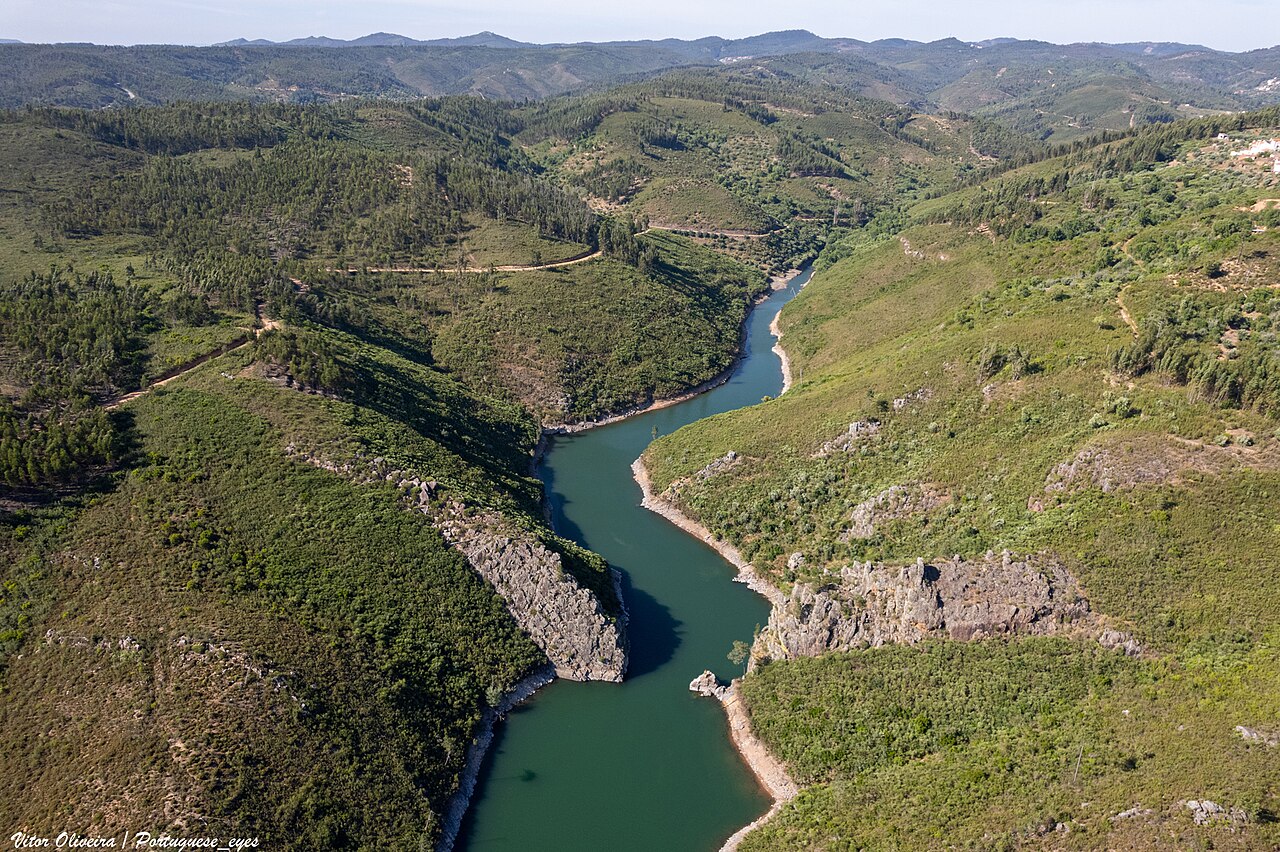
Out on the water, the setting offers an exceptionally tranquil marathon experience. Swimmers glide through quiet, warm freshwater framed by steep green hills carpeted in olive groves and fragrant pine forests. Picturesque villages occasionally jut out into the lake, breaking the shoreline and creating a scene of great natural beauty. Stroking through long stretches eases the immense physical demand of the miles. This stretch of the reservoir carries a distinguished pedigree in Portuguese open water swimming. In 2007, the 5th edition of the Challenge 10 km brought more than 350 competitors here, establishing the venue as the country's primary marathon swimming stage and attracting athletes of various abilities alongside Olympic and former Olympic swimmers.
That same year, endurance swimmers Miguel Arrobas and Nuno Vicente used the 10-kilometer race here as a vital training stage for their crossings of the English Channel. In May 2018, the waters of Aldeia do Mato also hosted the Portuguese National Open Water Swimming Championship, staging competitive distances of 1.5, 5, 7.5, and 10 kilometers.
Albufeira de Castelo do Bode: the drowned Zêzere valley
The vast body of freshwater that carries the swimmers was created when a major dam was built across the Zêzere River between 1945 and 1951. The impounded river formed a vast blue lake that weaves through surrounding hills and valleys. Swimmers move across an expanse dotted with desert islands and bordered by numerous river beaches. The surrounding wooded slopes echo the region's long rural history. Further along the reservoir near the river beach of Dornes, the lake holds sunken pieces of the past beneath the surface.
Ribeira da Isna and Penedo Furado: tributary gorges and pools
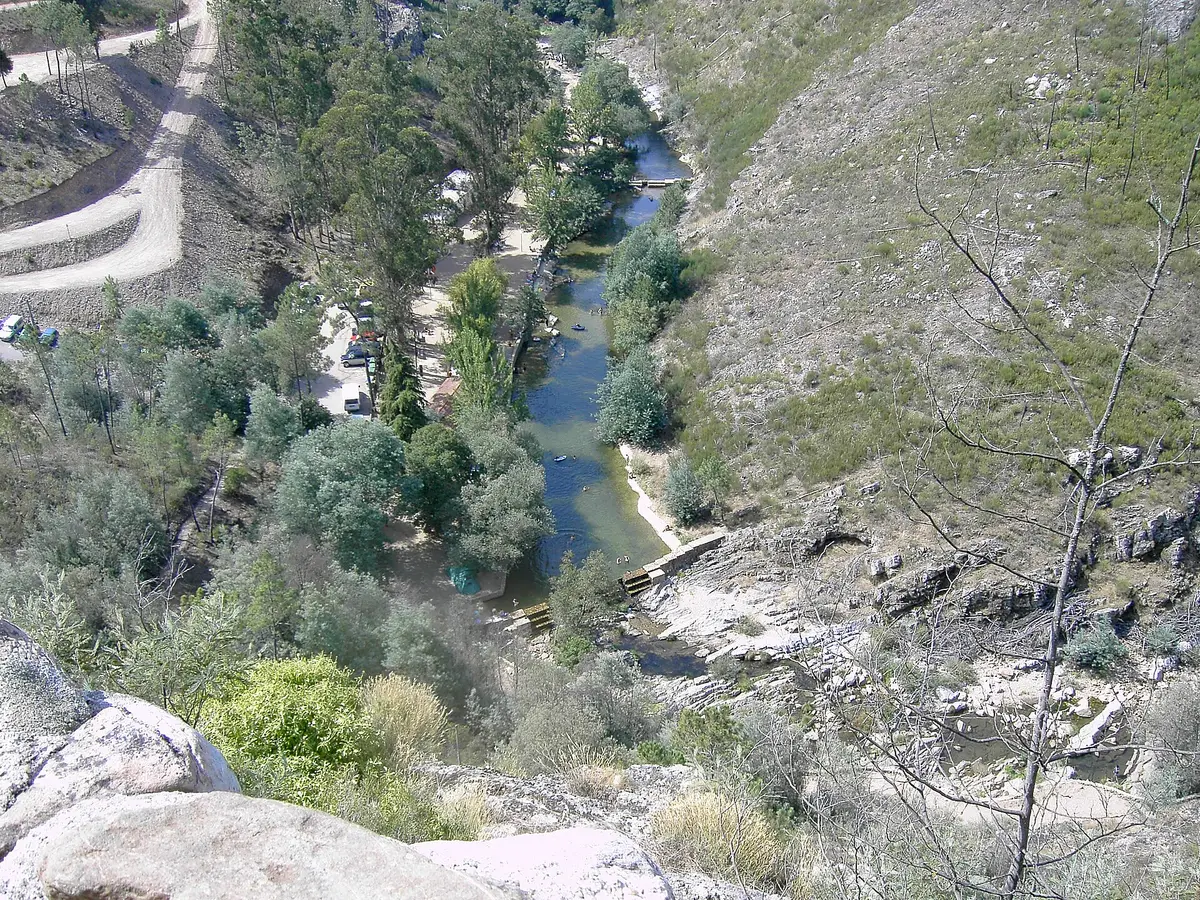
Branching off from the wider reservoir basin is the Ribeira da Isna, an inland river that flows for 45.5 kilometers before joining the Zêzere. The river course passes the Corgas dam upstream before reaching its mouth in the Castelo de Bode reservoir near the village of Fernandaires. Four distinct river beaches line the banks of this tributary course, welcoming swimmers at Malhadal, Aldeia Ruiva, Pego das Cancelas, and Fernandaires. Cascata do Penedo Furado begins in a flat river section that drops away abruptly, carving out a natural swimming pool enclosed by dense riparian vegetation. A wildfire on August 13, 2017 damaged the natural beauty of the waterfall and its bathing banks, but the river beach has since been rebuilt and fully cared for. Today, visitors find an active river beach complete with a support bar, changing rooms, and lifeguard supervision throughout the bathing season.
Praia Fluvial de Aldeia do Mato and the Abrantes shoreline
The primary focal point on the water is the Aldeia do Mato river beach, situated on the left bank of the reservoir's Zêzere Blue Lake. Honored with a Blue Flag for its environmental quality, this developed shoreline features an enclosed floating pool directly on the water. The beach is fully equipped with facilities for canoeing, sailing, and rowing, while the broader reservoir welcomes windsurfing and fishing. A quieter shore awaits at the Praia Fluvial das Fontes, tucked away into a secluded corner of the reservoir. Clear freshwater here laps against banks covered in abundant vegetation. Right beside the swimming area, the open-air Tasquinha ao Rio bar serves local snacks, drinks, and vegetarian options in a relaxing lounge atmosphere.
Perched above the landscape, Abrantes commands sweeping views across the Tagus valley from the west of Belver all the way to Constância. A deep historical bond with the Tagus River endures in the local gastronomy of Abrantes, where traditional river fish dishes remain a signature culinary craft. The river crossing at Abrantes was modernized in the nineteenth century, beginning with a road bridge completed in 1870 and followed by a railway bridge inaugurated in 1889. The mighty Tagus that frames Abrantes holds a storied place across Portuguese history. Downriver, the Tagus estuary served as the departure point for the caravels of the Portuguese Age of Discovery as they ventured across the world.
The river's power was felt during the 1755 earthquake, when a surge traveled up the waterway and flooded riverside settlements. Today, the Tagus expands into the vast inland tidal basin of the Mar da Palha between Lisbon, Vila Franca de Xira, and Benavente, before reaching the Atlantic where the Forte de São Lourenço and the Bugio Lighthouse guard its mouth on a small island. While pollution ended their year-round presence, wild dolphins still return to the estuary during the summer months.
Sources: Rio Tejo · Abrantes · Cascata do Penedo Furado · Ribeira da Isna
Course
Isna Velha to Praia Fluvial Zaboeira.
Praia Fluvial Bairrada to Praia Fluvial de Fontes.
Praia Fluvial Zaboeira to Praia Fluvial Bairrada.
Foz de Alge to Praia Fluvial de Dornes.
Praia Fluvial de Dornes to Isna Velha.
Praia Fluvial de Fontes to Aldeia do Mato.
Multi-stage competition covering 50 km along the Castelo de Bode reservoir over three days.
Awards
Monetary prizes for top 3 finishers per stage and overall; trophies for top 6 overall; medals for top 5 per stage; trophies for top 3 relay teams.
How to get there
Transport available for swimmers and their kayak/boat escorts between start and finish points.
Grande Descida de Castelo Bode
Frequently asked questions
- When was the last edition of Grande Descida de Castelo Bode?
- The last edition of Grande Descida de Castelo Bode took place on June 5 – 7, 2026.
- What distances does Grande Descida de Castelo Bode offer?
- Grande Descida de Castelo Bode offers 4.5 km, 7 km, 7.5 km, 9 km, 10 km, 11 km, and 50 km.
- How much is the entry fee for Grande Descida de Castelo Bode?
- The entry fee ranges from 40 € to 190 €. Prices include official registration, timing and secure booking. Relay teams also 190 EUR.
- Where does Grande Descida de Castelo Bode take place?
- Grande Descida de Castelo Bode is a lake swim. Location: Castelo de Bode reservoir, Abrantes, Santarém, Portugal.
- How do I register for Grande Descida de Castelo Bode?
- The reference page for registering for Grande Descida de Castelo Bode is https://racefinder.pt/en/event/5th-edition-great-descent-2026/.
Where to stay
Accommodations in the Abrantes and Castelo de Bode area lean toward rustic, low-impact hospitality. You will find converted traditional farmhouses, locally known as 'casas de campo', and lakeside camping grounds that offer direct water access. Boutique hotels near the river ports provide a more refined experience. Expect prices to range from 60 EUR to 150 EUR per night, depending on the proximity to the water and the level of amenities offered during the early summer season.
Things to do nearby
Beyond the race, the reservoir is a hub for active exploration. You can rent kayaks or SUP boards to scout the quieter coves of the Zêzere River or head to the surrounding hills for technical trekking trails. Local municipalities offer tastings of regional olive oil and river fish delicacies. For history enthusiasts, the medieval fortifications of Abrantes and the nearby Templar-influenced architecture provide a deep look into the strategic importance of the Tagus line throughout the centuries.
Swimmers
Similar races



Comments
Transparency: some links on this page (stays, flights, experiences, gear) are affiliate links — if you book or buy through them, Omniathlon may earn a commission from the partner at no extra cost to you. As an Amazon Associate we earn from qualifying purchases.