
Kamakahonu Swim
- Jul 4, 2027
- Distance: 1.6km
At a glance
- Next edition date
- July 4, 2027
- Distances
- 1.6 km
- Where
- Sea · Kailua Kona Pier, Kamakahonu Bay, Kailua-Kona, HI, United States
- Entry fee
- 45 USD
- Registration
- oceanswimhawaii.com
About the race
Beneath Kailua Kona Pier, where long-distance triathletes traditionally plunge into the Pacific, subterranean freshwater springs bubble up through the seabed, softening the salt and drawing sea turtles into the bay. The Kamakahonu Swim is a one-mile open water swimming race in the sea of Kailua Bay, held at Kailua-Kona on the west coast of Hawaii in July. Organized by Big Island, Hawaii Ocean Races, this 1,609-meter race serves as the final competition of the regional Triple Crown series. Kailua Bay is renowned as a destination for endurance sports, attracting open water competitors from across the globe. Swimmers assemble in the water for a mass start positioned at the starting point of the Ironman World Championship swim.
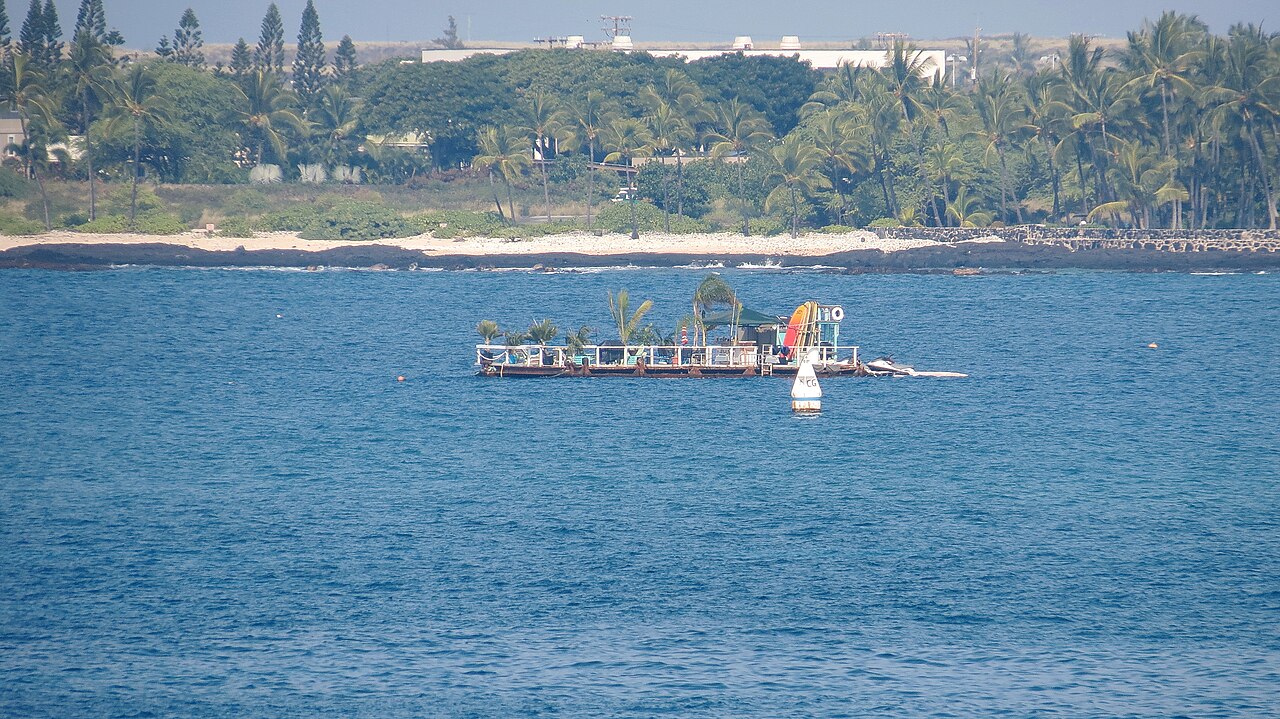
Competitors self-seed directly in the water according to their ability before setting out across the open bay. Once the horn sounds, the field spreads across clear ocean waters under the morning sun. Sighting across the bay remains straightforward as swimmers settle into their stroke, tracking the markers across the ocean surface. The course is sheltered by Kailua pier and a lava rock breakwater, creating one of the calmest bodies of water along the Kona coast. These protected conditions frequently provide exceptionally fast swimming times, helping competitors maintain a strong pace despite the testing Hawaiian sun. As swimmers approach the finish line, the course passes beside a sacred heiau built by King Kamehameha.
Kailua Bay: leeward shelter and undersea freshwater springs
The town of Kailua-Kona curves along Kailua Bay, leaning against the southern slope of the towering Hualālai volcano. The Pacific Ocean borders the town to the west, extending from Kailua Bay to Honokōhau Bay. Sheltered on the leeward side of Hualālai, the town remains protected from prevailing trade winds and rain. Seismic and oceanic forces remain an essential part of the region's environmental history. In 2006, Kailua-Kona was the closest major settlement to the epicenter of the Kiholo Bay earthquake. Along the coast about fifteen kilometres from the race area, luxury resorts including the Kona Village Resort and the Four Seasons Resort sustained damage from the 2011 tsunami.
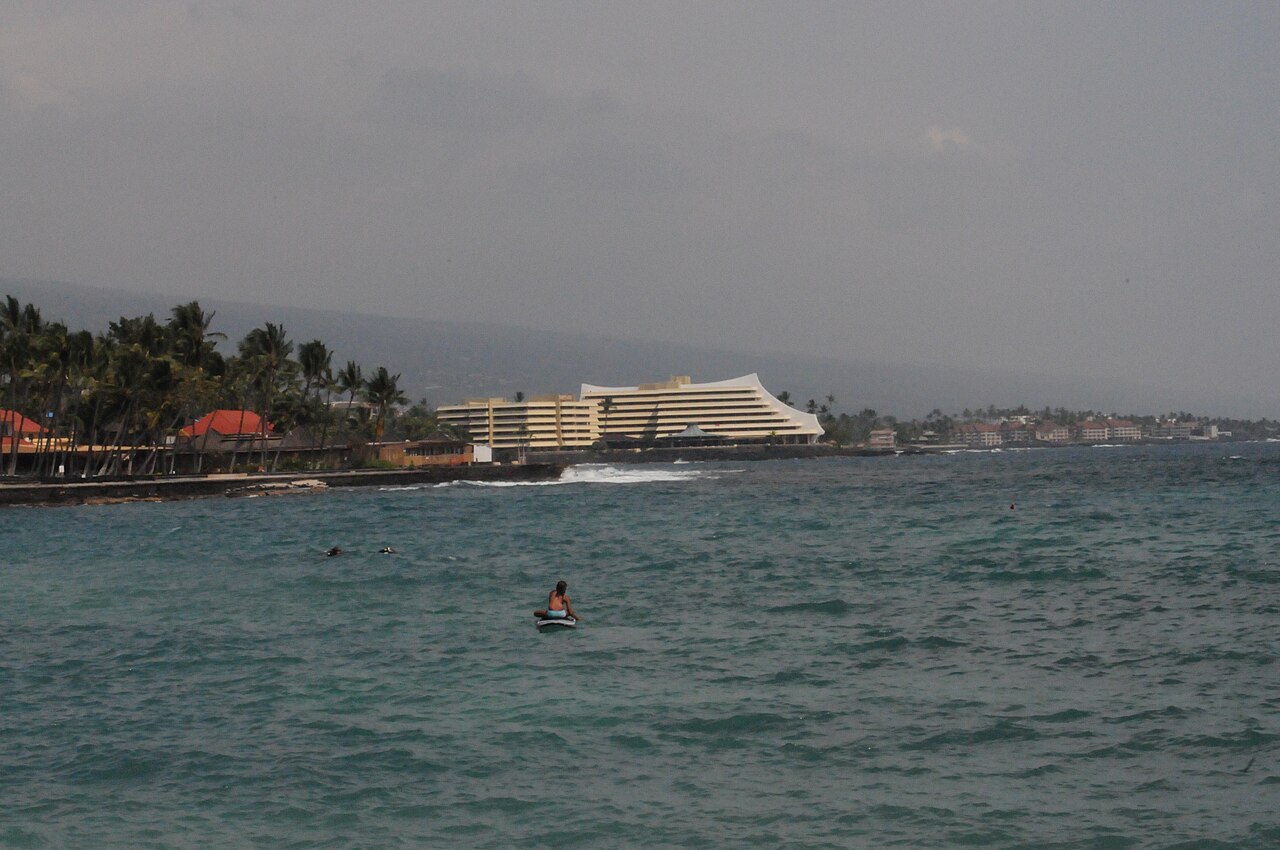
Kamakahonu: the turtle rock and Kamehameha's royal heiau
The name Kamakahonu translates literally as the turtle eye. In ancient times, this name belonged to a rock shaped like a turtle that rested along the shoreline to the left of the beach. That natural stone formation was eventually covered over by the construction of the Kailua pier, but the name still endures across the bay and gives the race its identity. This sheltered cove holds a pivotal place in Hawaiian history. On April 4, 1820, the first American Christian missionaries landed on a rock at this site, establishing an arrival point known in island history as the Plymouth Rock of Hawaii. North of the bay, the rocky headland of Kūkaʻilimoku projects into the Pacific, serving as the site for the Kailua lighthouse.
The Triple Crown finale and the water at Kailua Pier
The Kamakahonu Swim closes the Triple Crown, a series of three races on the Big Island of Hawaii. The Triple Crown winners are worked out by adding together the swim times of all three races, and the three lowest cumulative times take the overall prizes. The three Triple Crown races are the Anaeho'omalu Splash, the Hapuna Rough Water and the Kamakahonu Swim, and swimmers who finish all three in a season receive a Triple Crown swim cap at the Kamakahonu Swim. Swimming World Magazine puts the average water temperature at Kailua Pier between 70 and 80 degrees Fahrenheit and describes the site as home to coral reefs and an abundance of ocean wildlife.
Kaloko-Honokōhau and Kahaluʻu: ancient coastal fishponds
About five kilometres from the race area, traditional Hawaiian aquaculture remains preserved at Kaloko-Honokōhau National Historical Park. Early builders constructed monumental rockwall fishponds across natural coastal embayments in an arid lava landscape historically known as lands without water. These royal fishponds served as a vital hub for unified Hawaiian culture. The seawall of the Kaloko fishpond stands as an imposing engineering achievement, measuring over 30 feet wide, 6 feet high, and 750 feet long. Within the park, the Aiopio fishtrap forms a 1.7-acre pool enclosed by a stone wall along the bay. Hawaiian builders designed the wall with narrow openings that allowed juvenile fish to enter at high tide, trapping them inside as they matured or when the tide receded.
The park also encompasses the Aimakapā fishpond, which serves as a wetland habitat for native bird species including the Hawaiian duck, Hawaiian coot, Hawaiian stilt, and black-crowned night heron. Nearby, the Honokōhau boat harbor operates as a launch point for traditional canoes, fishing vessels, and diving excursions. At Kahaluʻu Bay, ancient stone constructions tell a similar story of coastal devotion. The bay features an ancient stone breakwater called Pa o ka menehune, built in Ancient Hawaii, which may have once enclosed the entire bay. Two ancient fishponds named Waikuaʻala and Poʻo Hawaiʻi remain visible along the shore. Between 1411 and 1465, builders erected the Hāpaialiʻi Heiau south of the bay for astrological observations, while sacred stones known as kuʻula were placed as monuments to the abundance of fish and green turtles. Recent history has added its own landmarks to the shoreline around Kahaluʻu. In 1953, the southern end of Kahaluʻu Bay was established as Kahaluʻu Beach County Park, characterized by a rocky beach mixed with gray sand.
Kailua Pier and Ali'i Drive seafront
The waterfront life of Kailua-Kona centers on Ali'i Drive, an oceanfront roadway that winds past archaeological sites that have survived for centuries. Kailua Kona Pier serves as the daily morning gathering spot for local swimmers, who meet for group swims across the bay. Right next to the pier, a small coral reef offers snorkeling directly from the shore. Swimmers navigating the bay frequently encounter marine life such as dolphins, manta rays, and spotted eagle rays gliding through the clear water. About nine kilometres from the race area, the shoreline of Heʻeia Bay preserves remnants of the Kāneaka Hōlua Slide. While portions below the road were destroyed and replaced by a golf course and vacation homes, approximately 2,600 feet of the course remains visible today.
At Hōlualoa Bay, ocean athletic traditions run deep. King Kamehameha I likely learned to surf in this bay during his youth. On the south side of the bay, the ancient sports complex at Kamoa Point featured terraced grandstands for watching surfing contests, alongside the Haleʻaʻama Heiau dedicated to surfers. On the north side, a lava ridge creates the surf break known as Banyans, where waves and currents create hazardous surf conditions. About ten kilometres from the race area, Keauhou Bay borders the burial grounds of Lekeleke at Kuamoʻo. Situated on the border between the Keauhou and Honalo land divisions, this ground marks the battle of Lekeleke, where a small cannon was mounted on a double canoe. The point and bay of Kuamoʻo sit just south of the battlefield. For swimmers gathering at Kailua Kona Pier, the one-mile Kamakahonu Swim offers an opportunity to experience these waters.
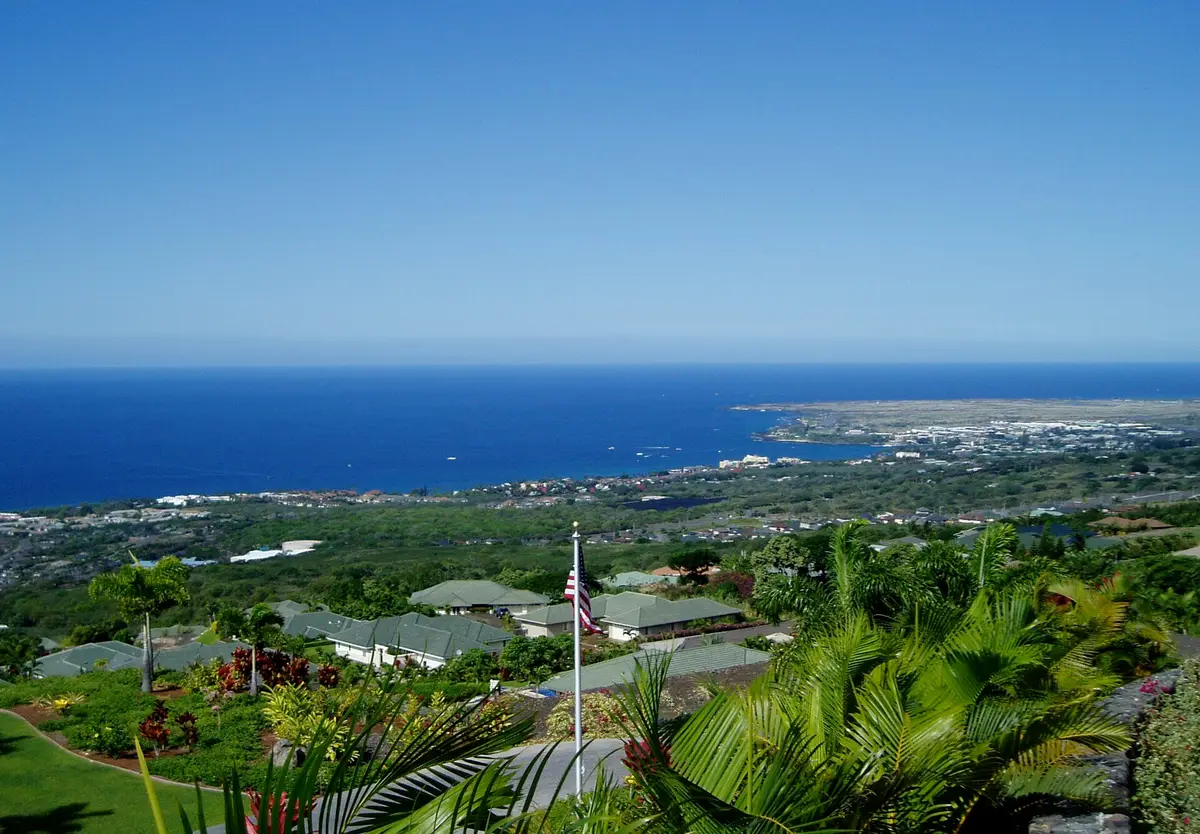
Sources: Hōlualoa Bay · Kailua-Kona, Hawaii
Course
How to get there
Kamakahonu Swim
Frequently asked questions
- When is Kamakahonu Swim?
- Kamakahonu Swim takes place on July 4, 2027.
- What distances does Kamakahonu Swim offer?
- Kamakahonu Swim has a single distance: 1.6 km.
- How much is the entry fee for Kamakahonu Swim?
- The entry fee is 45 USD. Prices based on the 2026 edition as registration for 2027 is not yet open
- Where does Kamakahonu Swim take place?
- Kamakahonu Swim is a sea swim. Location: Kailua Kona Pier, Kamakahonu Bay, Kailua-Kona, HI, United States.
- How do I register for Kamakahonu Swim?
- The reference page for registering for Kamakahonu Swim is https://oceanswimhawaii.com/.
Where to stay
Kailua-Kona offers a mix of historic oceanfront boutique hotels near the pier and smaller, locally-owned guest houses in the surrounding hills. Budget-conscious travelers often opt for short-term rentals in former fishing cottages, while those seeking proximity to the race start can find high-end lodging along Ali'i Drive. Prices typically range from $250 to $600 per night depending on the season and proximity to the water.
Things to do nearby
Beyond the water, the region is defined by its agricultural and cultural heritage. Visitors often explore the local Kona coffee farms for guided tastings or engage in guided kayak and SUP excursions through the protected bays. For those interested in history, the area features well-preserved archaeological sites and temple ruins that offer a look into the island's pre-colonial past. Trekking trails along the volcanic slopes provide views of the coastline, while local markets showcase traditional crafts and produce.
Swimmers
Other races by this organiser
- Hapuna Rough Water SwimWaimea, US
Similar races


Comments
Transparency: some links on this page (stays, flights, experiences, gear) are affiliate links — if you book or buy through them, Omniathlon may earn a commission from the partner at no extra cost to you. As an Amazon Associate we earn from qualifying purchases.