
OncoSwim
- May 30, 2026
- Last edition date
- Distances: 1.5km and 30km
At a glance
- Last edition date
- May 30, 2026
- Distances
- 1.5 km · 30 km
- Where
- Sea · Costa Brava (l'Estartit to Calella of Palafrugell), L'Estartit, Cataluña, Spain
- Entry fee
- 20–22 €
- Registration
- radikalswim.com
About the race
Organized as a long-distance open water swimming event down the Costa Brava in Catalonia, OncoSwim charts a course from the seaside town of L'Estartit to the traditional seafront of Calella de Palafrugell. Held each year in late spring at the end of May, the marathon crossing brings endurance athletes together to raise vital funding for cancer patient assistance programs through the Foundation Oncolliga Girona, with technical support from Radikal Swim. The open water course covers 30 kilometers in the Mediterranean Sea, offering squads of four the choice to navigate the entire distance side by side as a unified pod or to share the effort as a continuous relay. Each four-person team relies on a dedicated escort vessel that stays abreast of the swimmers throughout the coastal voyage, with options available for squads bringing their own boat or requesting an organizer-provided support craft.
Pacing together through rolling offshore swells requires discipline, frequent sighting off the support boat's gunwales, and steady endurance over hours of relentless open water swimming. The 30-kilometer crossing sets off from the sands of L'Estartit Beach, and teams steadily progress south to make landfall on En Calau Beach in Calella de Palafrugell. The Solidary Mile departs from Llafranc Beach and follows the coastline to finish under the very same banners at En Calau Beach, uniting marathon relays and mile sprinters in a shared celebration by the water.
Montgrí and the Medes Islands marine sanctuary
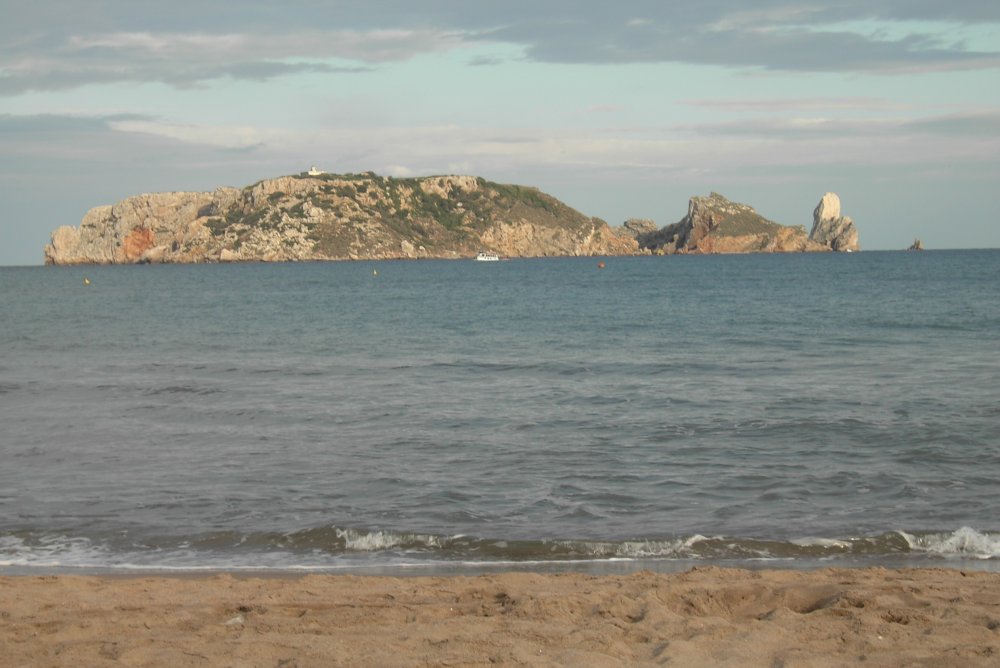
Designated to safeguard rich Mediterranean marine biodiversity, the Montgrí, Medes Islands and Lower Ter Natural Park encloses 2,036.99 hectares of protected sea around the Montgrí Massif, the mouth of the Ter River, and the offshore archipelago. In June 2010, the islands gained protected status to shield their fragile underwater habitats, including celebrated banks of Mediterranean red coral that thrive along submerged rock faces. The Medes archipelago consists of seven small islands and scattered islets. The islands form a direct underwater continuation of the mainland's limestone Montgrí Massif. Out on the limestone outcrops, harsh winds, high salinity, and the absence of fresh water create severe environmental conditions that prevent trees from taking root.
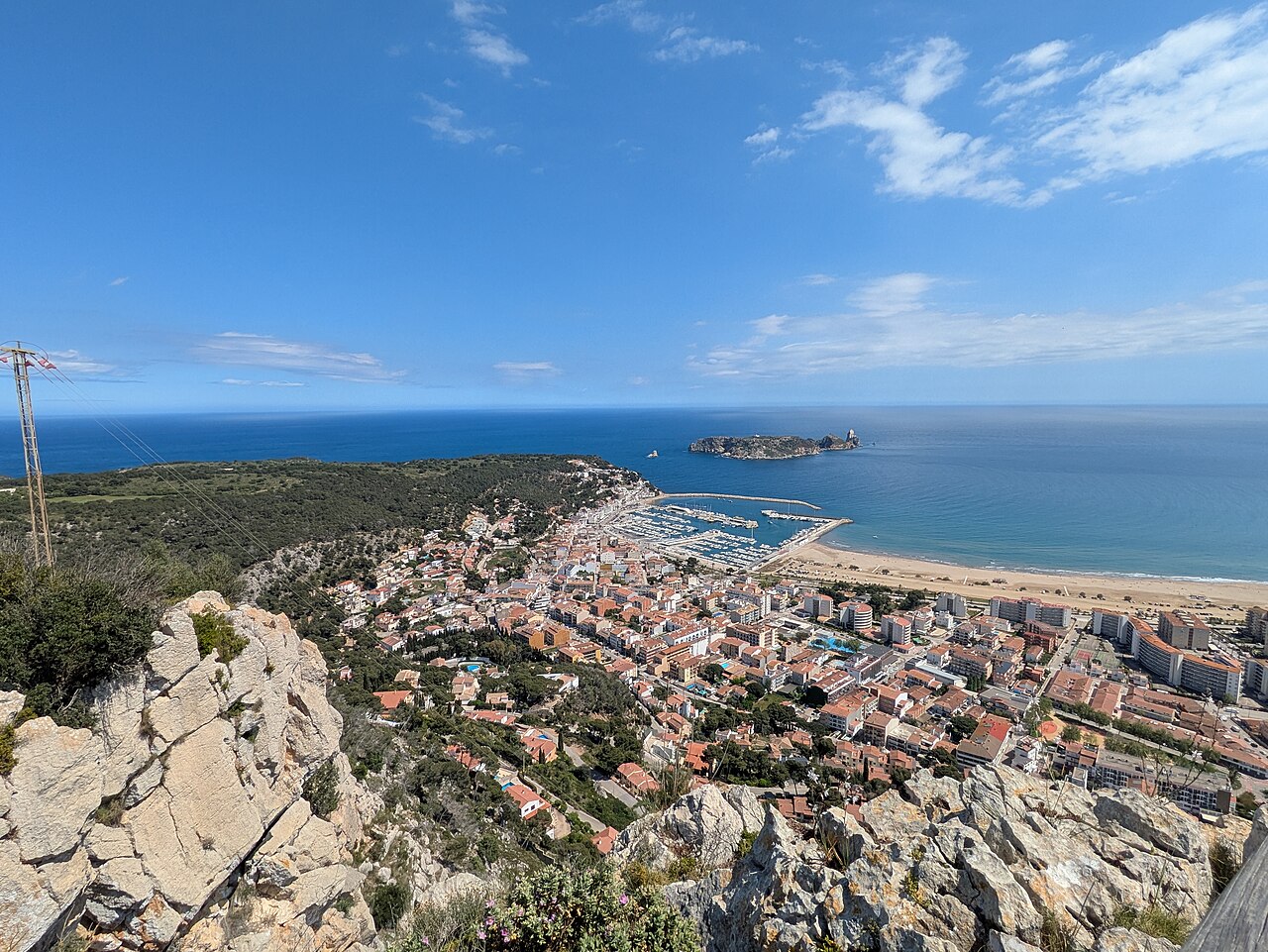
Along the mainland flank of the massif, towering sea cliffs plunge more than one hundred meters straight down into the waves. Marine erosion has carved deep hollows and arched sea passages into the rock face, most famously at La Foradada near Cabo Castell. The surrounding seabed remains heavily influenced by freshwater runoff from the Ter River estuary, where river water either floats atop the dense sea brine or dives beneath it depending on salinity and water temperature differences.
Corsair raids and watchtowers of the Montgrí coast
Centuries before these waters became a marine sanctuary, the islands and cliffs served as a refuge for maritime raiders. Sunken vessels documented around the Medes archipelago confirm that pirates once used the isolated islands as an offshore staging ground to launch raids against coastal towns. To guard the shore against persistent piracy, fortified stone towers such as Torre Moratxa and Torre dels Moscats were constructed along the ridges of the massif starting in the fifteenth century. These high stone lookouts allowed mainland communities to spot incoming danger from afar. Maritime safety for commercial shipping was later established with the construction of the Medes Islands lighthouse, erected on the largest island of the archipelago less than one kilometer from L'Estartit.
Inaugurated on June 1, 1868, as the final lighthouse completed during the reign of Queen Isabella II, the beacon occupies a site that still preserves traces of ancient buildings. Guarding this passage through rough sea conditions has long demanded resilience; on November 29, 1933, the lighthouse keeper from Rosas suffered a shipwreck while transporting fuel supplies out to the island.
The Ter river mouth and the restored Pletera wetlands
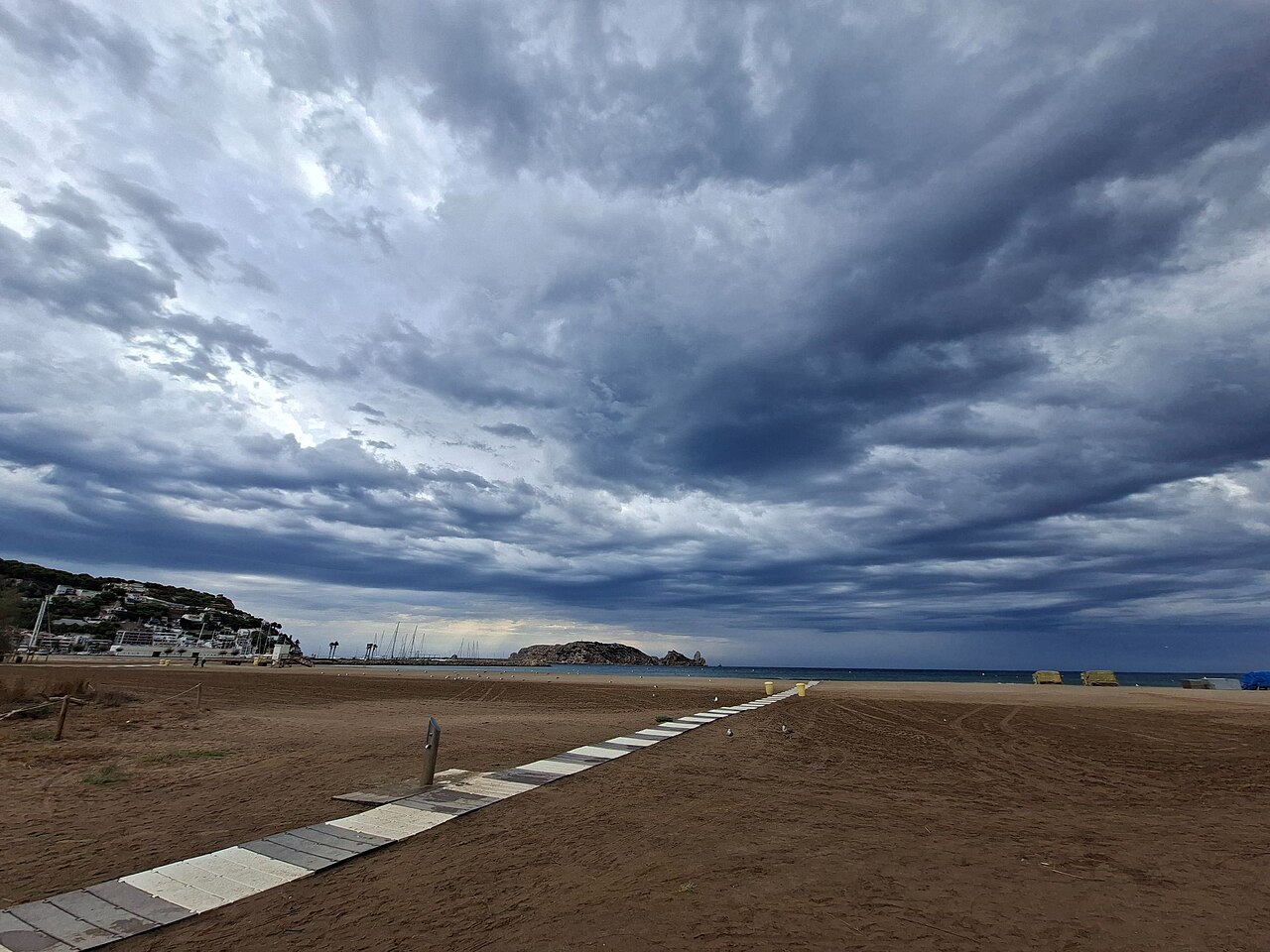
L'Estartit Beach unrolls for three kilometers between the harbor and the mouth of the Ter River. This shoreline is formed by rich alluvial sediment carried down from the interior by the Ter and Daró rivers. River mouths serve as highly dynamic environments where continuous sediment deposition reconfigures the coastal geomorphology, while fierce easterly storms regularly strip away beach sands and redeposit river debris along the tide line. The southern edge of this sandy stretch falls within the protected natural park and borders the Pletera coastal ponds. The Pletera marshes and coastal dune systems were reclaimed through an extensive de-urbanization initiative begun in the 1980s. The Ter River itself has witnessed pivotal historical events.
On May 27, 1694, the banks and fords of the waterway became the battleground for the Battle of Torroella. Spanish forces had divided their army into three defensive positions to hold the crossings at Verges, Ullà, and Torroella. On that morning, a dense fog settled over the riverbanks, altering natural acoustics by dampening high frequencies while low sounds traveled across the mist. Using the fog as cover, French forces successfully crossed the fords at Torroella de Montgrí, subsequently pillaging ten surrounding villages and marching south on May 30 to begin a combined land and sea siege of the fortress at Palamós.
From Cala d'Aiguablava to Calella de Palafrugell
The name Costa Brava described the wild, jagged shore stretching from the Tordera River north toward Banyuls. Farther north, the coast is anchored by Cap de Creus, the easternmost spur of the Pyrenees, while the Gulf of Roses features extensive wetlands nurtured by the Muga and Fluvià rivers at Aiguamolls de l'Empordà, and the modern marina of Empuriabrava constructed over the Muga marshes in the 1960s. About eleven kilometers from the course area lies ancient Empúries, founded as a coastal Greek colony in 575 BC near modern Sant Martí d'Empúries. The original Greek settlement of Neapolis centered on its agora, which later held the public baths of the Basilica. A Roman camp covering 22.5 hectares was established on an adjacent hill outside the city, and when the two settlements merged into the Municipium Ampuriae, the eastern Roman defensive wall was dismantled.
The ancient city was ultimately abandoned during the third century AD as commercial shipping shifted toward other prosperous Mediterranean coastal ports. The landmark cove of Cala d'Aiguablava is overlooked by the Parador de Aiguablava perched on the cliff above the water. The bay is a favored mooring anchorage for sailing yachts and motor craft. Along the beach runs the long-distance GR 92 trail, which winds north toward the village of Fornells and south through fragrant pine and cork oak forests toward Tamariu. Passing these headlands under the afternoon sun, swimmers tackle their final kilometers toward En Calau Beach in Calella de Palafrugell. Here, after thirty kilometers of open sea, escort boats peel away and teams touch the sand together to complete their marathon crossing of the Costa Brava.
Sources: Islas Medas · Batalla de Torroella · Faro de las islas Medas · Playa de Estartit · Costa Brava · Montgrí, Medes Islands and Lower Ter Natural Park
Course
Connects the fishing villages of Llafranc and Calella de Palafrugell, finishing at En Calau Beach.
Starts in l'Estartit, passes through the Medes Islands and Formigues Islands, finishing at En Calau Beach in Calella de Palafrugell.
Awards
Ceremony held at the finish point for both distances.
Aid stations
Basic provisioning (water) provided for 30km teams; food and liquid at the finish line.
Useful info
Registration via radikalswim.com. Mandatory fundraising for Fundación Oncolliga Girona (supporting cancer patients). Illes Medes marine reserve: maximum environmental care required.
How to get there
OncoSwim
Frequently asked questions
- When was the last edition of OncoSwim?
- The last edition of OncoSwim took place on May 30, 2026.
- What distances does OncoSwim offer?
- OncoSwim offers 1.5 km and 30 km.
- How much is the entry fee for OncoSwim?
- The entry fee ranges from 20 € to 22 €. 30km event requires teams to raise 600 EUR in donations. 30km entry fees vary by boat provision (750-1500 EUR). 1.5km fee is 20-22 EUR.
- Where does OncoSwim take place?
- OncoSwim is a sea swim. Location: Costa Brava (l'Estartit to Calella of Palafrugell), L'Estartit, Cataluña, Spain.
- How do I register for OncoSwim?
- The reference page for registering for OncoSwim is https://radikalswim.com/en/ow-event/oncoswim-3.html.
Where to stay
L'Estartit and Calella de Palafrugell offer a mix of traditional Mediterranean lodging. You will find small, family-run boutique hotels near the harbor, renovated former fishermen's houses, and several camping sites nestled in the pine forests along the coast. Expect to pay between 120 and 220 EUR per night for a double room during the late spring season, depending on the proximity to the waterfront.
Things to do nearby
The area is ideal for exploring the rugged coastline beyond the race. You can rent a kayak to investigate the sea caves at the base of the Montgrí cliffs, or visit the Iberian archaeological site of Ullastret. For those interested in local culture, the inland villages of the Baix Empordà are perfect for wine and olive oil tastings, while the coastal paths offer extensive hiking opportunities with views over the marine reserve.
Swimmers
Similar races


Comments
Transparency: some links on this page (stays, flights, experiences, gear) are affiliate links — if you book or buy through them, Omniathlon may earn a commission from the partner at no extra cost to you. As an Amazon Associate we earn from qualifying purchases.