PAI Open Water Swimming – Luzon Leg
- Distances: 5km and 10km
At a glance
- Distances
- 5 km · 10 km
- Where
- Sea · Manila, Luzon, Philippines
- Registration
- philippineaquatics.com
About the race
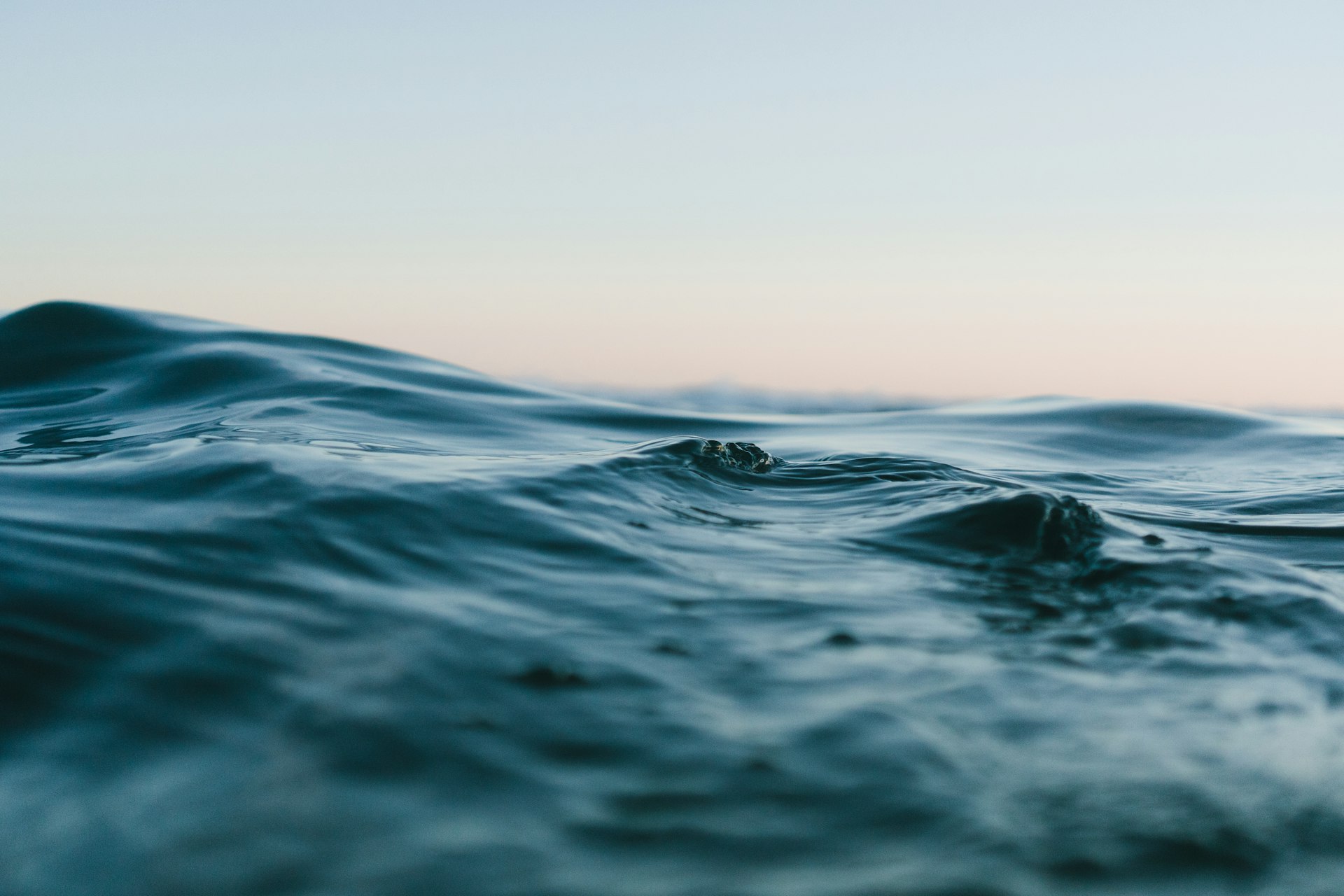
On the eastern shore of Manila Bay, swimmers dive into the sea for the PAI Open Water Swimming – Luzon Leg, an open water swimming race held in Manila, on the island of Luzon in the Philippines. The event is organized by Philippine Aquatics, Inc., testing open water competitors in open coastal sea conditions. Across each lap, the course is designed to test the endurance, strategy, and strength of athletes competing in the open water. Sighting across the surface requires constant focus as competitors align themselves with the turn buoys, balancing tempo against the rhythmic movement of coastal sea currents. For registered members of Philippine Aquatics, Inc., the schedule presents long-distance challenges over 5,000 meters and 10,000 meters.
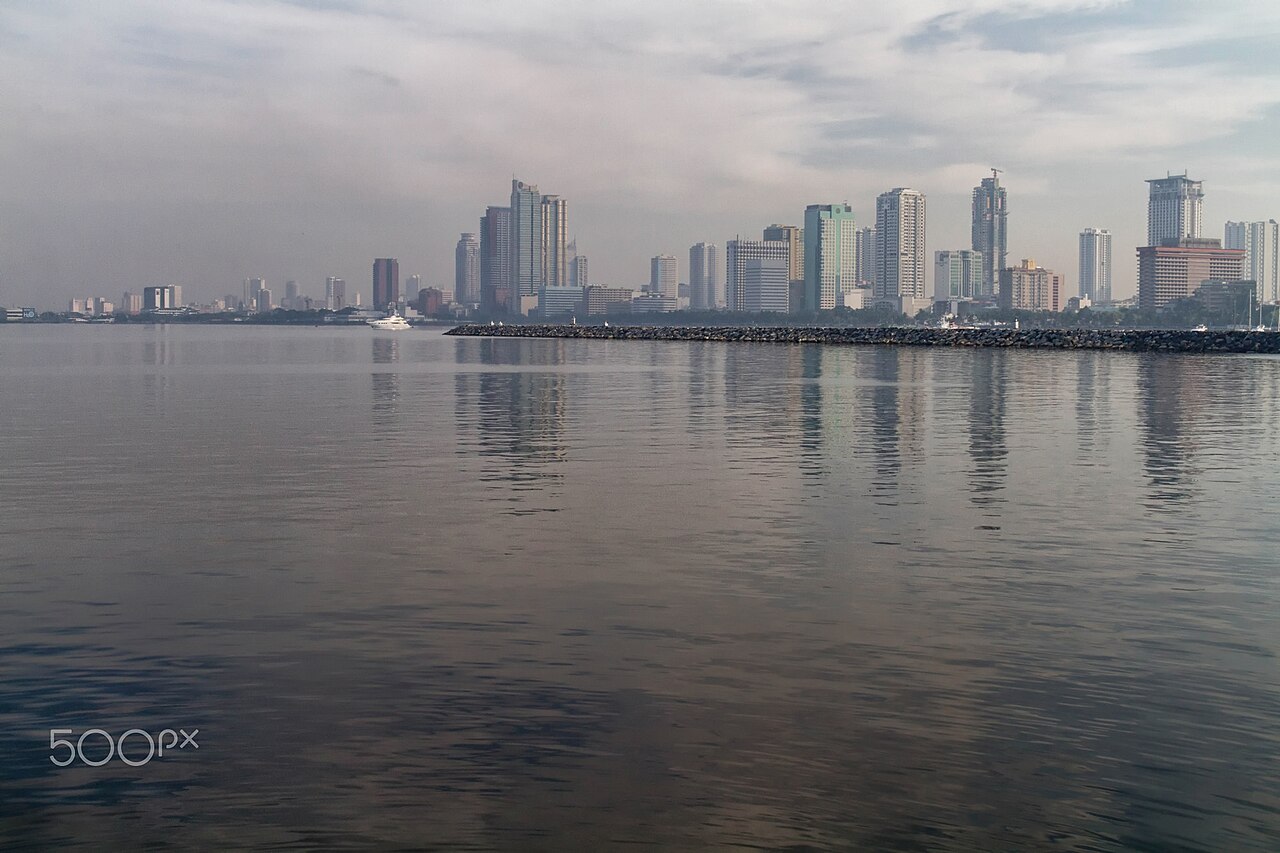
Swimmers taking on the 5,000-meter and 10,000-meter events must be at least fourteen years of age. Alongside the marathon program, festival events are staged specifically for non-members and beginners, providing an entry point to open water racing for competitors as young as seven years old. For elite competitors pushing through the distance, the event serves as a qualifying leg for the Philippine Aquatics Open Water Swimming Championships Tryouts for the 4th Southeast Asia Aquatics Open Water Championships in Boracay.
Manila Bay and the mouth of the Pasig River
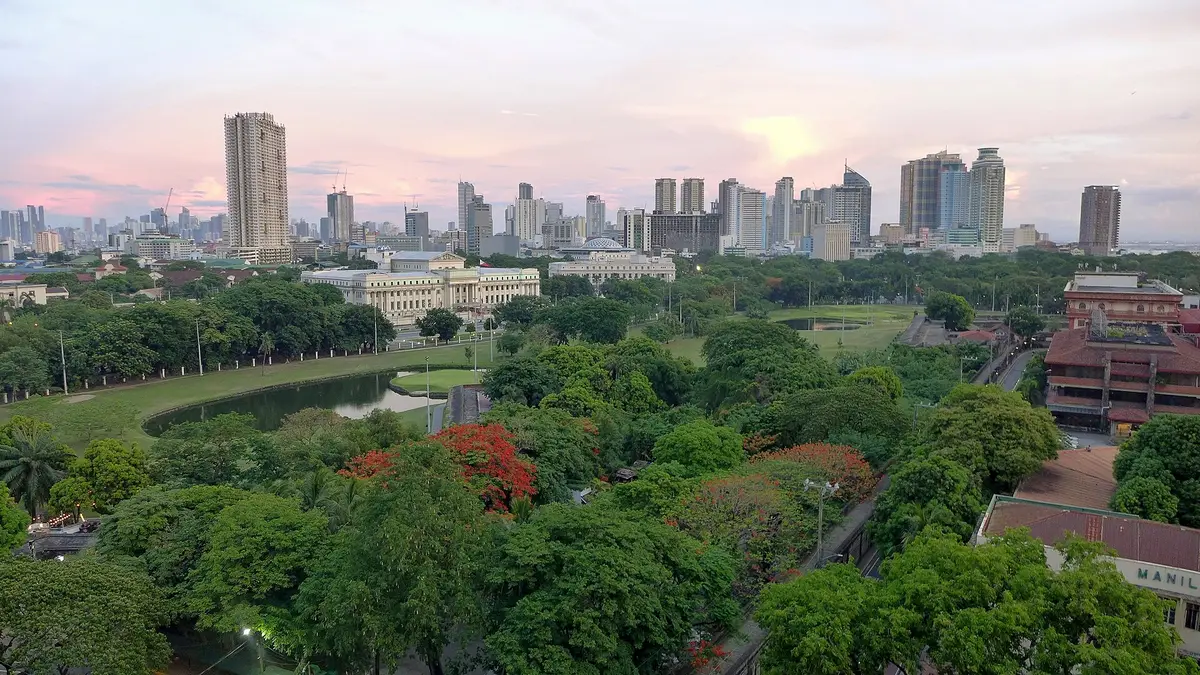
Cutting through the center of Manila, the Pasig River flows toward the sea, dividing the city into northern and southern sections. By the thirteenth century, Manila was already a fortified settlement and trading quarter situated on the shore of the Pasig River.
Puente de España: building across the riverbed in 1630
The first bridge constructed across the Pasig River was the Puente Grande, which opened in 1630. To construct the piers, workers exposed the riverbed by diverting the river water directly into city moats and cutting a channel to the sea. Into this exposed river channel, the piers were raised out of Guadalupe adobe stone, a durable volcanic tuff quarried in present-day Makati. Following the structural failure of the masonry, river crossings were maintained by a temporary pontoon span known as the Puente de Barcas, supported on large flat-bottomed river boats called cascos.
Puente Colgante and the early wire-cable span
Under one kilometer from the race venue, another historic structure spanned the channel. Completed in 1852, the Puente Colgante was the first wire-cable suspension bridge built anywhere in Asia. The structure measured 110 meters in length and seven meters in width, suspended over the flowing river currents. The deck of the suspension bridge was designed to accommodate pedestrians, horses, and carriages drawn by water carabao. Although horse and carriage traffic crossed daily, automobile traffic was never permitted on the structure throughout its years of service. The city of Manila purchased the crossing for 42,500 pesos on June 9, 1911, and tolls for crossing the bridge were officially abolished on June 15, 1911. The nineteenth-century suspension span was eventually replaced by the Quezon Bridge, which crosses the Pasig River along the same crossing alignment. The replacement bridge suffered severe damage during World War II before being rebuilt in 1946 to restore the river crossing.
Ayala Bridge and the crossing at Isla de Convalecencia
Continuing along the river corridor under one kilometer from the race area, the Ayala Bridge forms a steel truss span crossing the Pasig River in Manila. The bridge passes directly over the western tip of Isla de Convalecencia. The original river crossing was constructed in 1872 using two timber-built bridges connecting to the island. In 1908, the Ayala Bridge was rebuilt as the very first steel bridge erected in the Philippines. A subsequent reconstruction carried out during the 1930s unified the sections into a singular continuous crossing over the water.
The riverfront embankments: Santa Cruz and the Central Post Office
Another major crossing developed with the Santa Cruz Bridge, a steel truss structure spanning the Pasig River. Construction of the piers and abutments began during the Spanish colonial period but halted as a consequence of political instability. To build the bridge, stone was quarried in Mariveles, Bataan, forty-eight kilometers west. The completed Santa Cruz Bridge officially opened on March 1, 1902, joining the northern and southern districts divided by the Pasig River. During the Battle of Manila in February 1945, the Santa Cruz Bridge was destroyed by the Imperial Japanese Army, who bombed the spans during their retreat. To restore the artery, the MacArthur Bridge was built across the Pasig River to replace the destroyed Santa Cruz crossing, officially opening in 1952.
Directly along the banks of the Pasig River in Ermita, at the foot of the Jones Bridge, sits the Manila Central Post Office. The early Burnham Plan of Manila envisioned the Pasig River as an aquatic transport route for the carriage of mail by water. Built of reinforced concrete, the post office structure was designed to be earthquake-proof, which also made it resistant to direct artillery and tank fire during World War II. Along the waterfront, the Juan Luna Building features a frontage of forty-six meters on Muelle de la Industria along the Pasig River. Nearby, the Regina Building stands beside both the Estero de la Reina estuary and the main Pasig River channel.
Sources: Manila
Course
Open water swimming competition organized by Philippine Aquatics, Inc. in Manila. The course includes competitive distances of 5KM and 10KM (qualifying for the SEA championships) and Festival categories for beginners. Technical details regarding buoys, currents, or obstacles are not specified in the information material.
Previous editions
- 2026results
Useful info
Event open to PAI members (5KM/10KM, min 14 years old) and non-members/beginners (Festival, min 7 years old). Serves as a qualifier for the SEA championships in Boracay. Registration via the official info kit on the PAI website. Contacts: [email protected] or 09999935135.
How to get there
Airport: Ninoy Aquino International (MNL), 10-12 km away. There are no direct train stations to the race site; use LRT-1 or MRT-3 to travel around the city. To reach the site, use taxis or apps like Grab. Traffic in Manila is heavy, plan your travel well in advance. Parking is limited near coastal areas, public transport or shuttles are preferred.
PAI Open Water Swimming – Luzon Leg
Frequently asked questions
- What distances does PAI Open Water Swimming – Luzon Leg offer?
- PAI Open Water Swimming – Luzon Leg offers 5 km and 10 km.
- Where does PAI Open Water Swimming – Luzon Leg take place?
- PAI Open Water Swimming – Luzon Leg is a sea swim. Location: Manila, Luzon, Philippines.
- How do I register for PAI Open Water Swimming – Luzon Leg?
- The reference page for registering for PAI Open Water Swimming – Luzon Leg is https://www.philippineaquatics.com/index.php/en/resources/pai-events/pai-open-water-swimming---luzon-leg.
Where to stay
Manila offers a diverse range of stays, from historic boutique hotels within the restored walls of Intramuros to high-rise accommodations overlooking the bay in the Makati and Bonifacio Global City districts. Expect a wide spectrum of pricing, typically ranging from $50 USD for modern guesthouses to over $250 USD per night for luxury waterfront properties. For those seeking proximity to the race site, international hotel chains provide consistent services tailored to athletes. Find suitable lodging near the race start.
Things to do nearby
Beyond the water, the area is rich with cultural exploration. Visitors can take guided walking tours through the colonial-era architecture of Intramuros or explore the world’s oldest Chinatown in Binondo for authentic culinary experiences. For an active weekend, nearby regions offer kayaking trips through remaining mangrove sites or day treks to historical sites that predate the Spanish colonial period. Discover weekend activities in the Manila region.
Swimmers
What to see around
1. Intramuros: historic Spanish walled city. 2. Rizal Park: iconic park dedicated to the national hero. 3. National Museum of the Philippines: art and history. 4. Manila Baywalk: scenic seaside promenade. 5. Binondo: the oldest Chinatown in the world, ideal for food tours.
Other races by this organiser
Similar races


Comments
Transparency: some links on this page (stays, flights, experiences, gear) are affiliate links — if you book or buy through them, Omniathlon may earn a commission from the partner at no extra cost to you. As an Amazon Associate we earn from qualifying purchases.