
Pinnata dell'Adda — Discesa dell'Adda
- Distance: 5.5km
At a glance
- Distances
- 5.5 km
- Where
- River · Fiume Adda, Imbersago, Lombardia, Italy
- Registration
- bergamodivingcenter.it
About the race
Gliding downstream through the emerald waters of the Adda with swimming fins turns the river's flow into an effortless flight. This journey is the Pinnata dell'Adda — Discesa dell'Adda, an open water river swim held in the Adda river at Imbersago, in Lombardy, Italy. Organized by Bergamo Diving Center, the event has been taking place for more than three decades since its first descent in 1986, establishing a tradition centered on the use of fins. The term "pinnata" itself highlights this specific mode of propulsion, inviting swimmers to strap on fins and slip into the freshwater channel. The swim is structured as a non-competitive event covering an approximate distance of 5.5 kilometres along the moving course of the Adda.
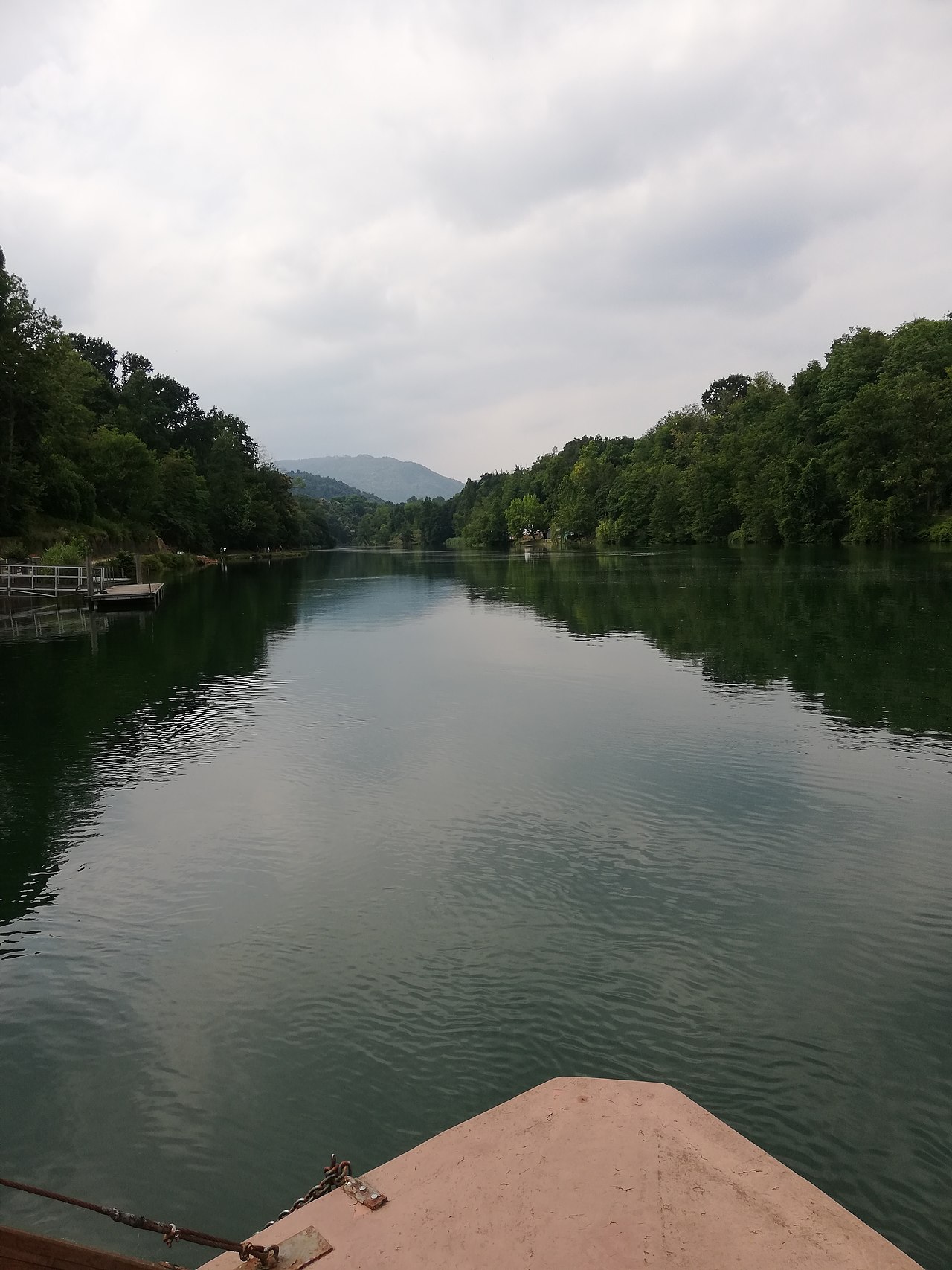
In past editions, around fifty swimmers took part in the journey from Brivio down to Imbersago. On those descents, participants were transported upriver to the start in Brivio by boat before easing into the water and letting the natural river current carry them back to Imbersago. Other editions have charted courses such as a five-kilometre descent starting from the Esterle hydroelectric plant down to the lake of Trezzo d'Adda. Across these varied editions, swimmers have encountered clear river waters with water temperatures between 20 and 25 degrees Celsius, making the descent comfortable and inviting in the summer warmth. Slicing through the freshwater with fins provides steady momentum as the banks glide past. At the finish, the day transitions into a convivial post-swim gathering, where participants in past editions enjoyed a relaxed grill hosted right on the riverbank at the Circolo Canottieri di Trezzo sull'Adda.
The Adda at Imbersago: river currents, reserves, and wildlife
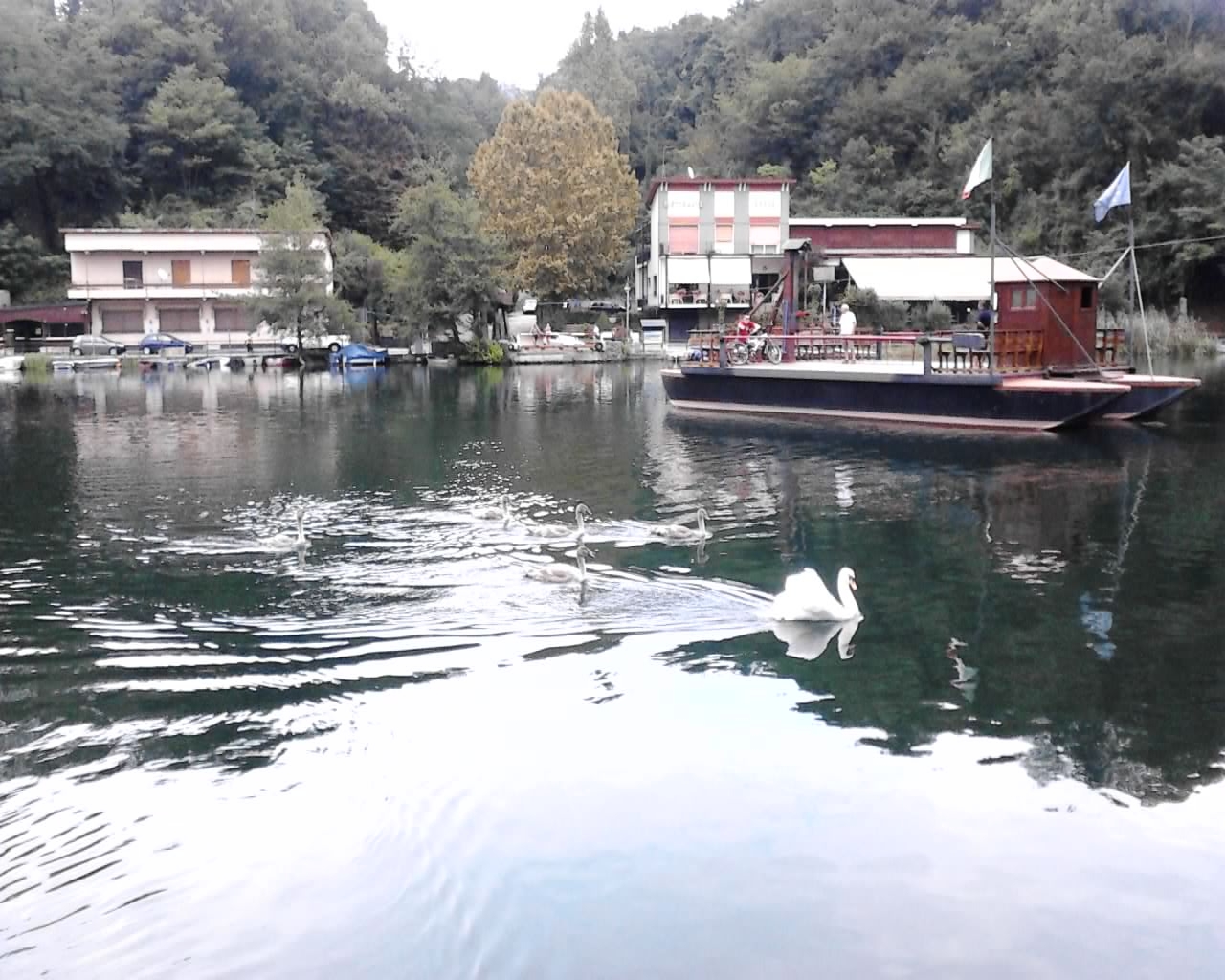
Around Imbersago, the Adda flows through a changing landscape where the river water shifts in tone from bright emerald green to a dusty blue. Further downriver near the Tre Corni rocks, the river narrows into a rocky gorge filled with noisy, foaming rapids that famously inspired Leonardo da Vinci's landscape in the *Virgin of the Rocks*. While those rapids churn dramatically, the course chosen for the swimming descent provides a welcoming, navigable passage through clear waters. Leonardo's ingenuity remains directly linked to this stretch of river at Imbersago through a unique, functioning hand-operated ferry designed according to his original sketches, which crosses between the two riverbanks powered solely by the force of the current.
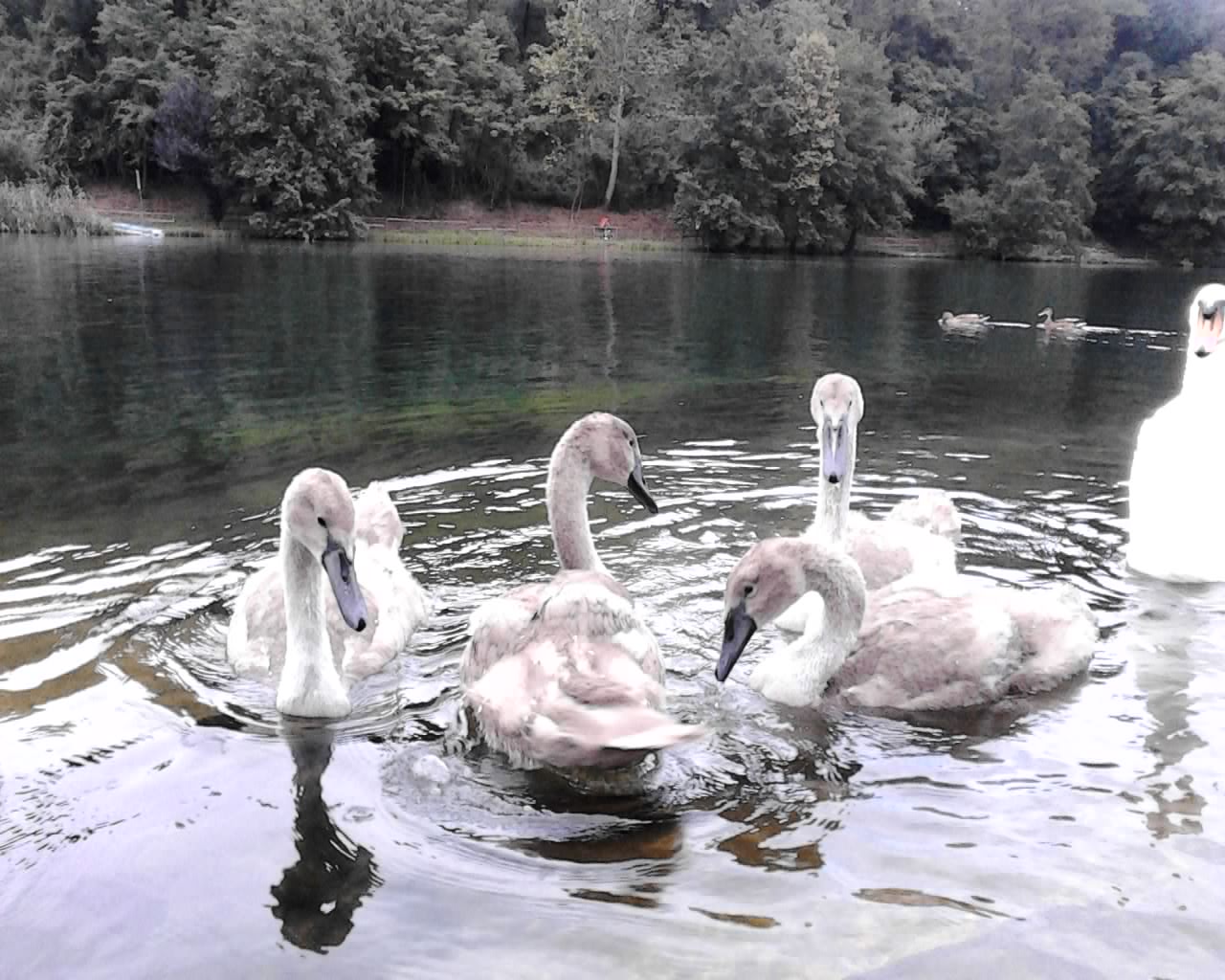
Along the riverbanks near Imbersago, small, tranquil beaches open up between beds of reeds, marsh canes, and floating water lilies. This quiet river margin is rich with wildlife, offering swimmers and riverside observers glimpses of mute swans, ducks, herons, mallards, and grey crows. About two kilometres away from the race area lies the Lago di Sartirana, a morainic basin that has been protected as a nature reserve since 1983. Covering a total reserve area of 23.60 hectares, the lake itself spans 9.80 hectares of water with an average depth of 2.50 metres and a maximum depth of 3.50 metres. It represents the only European example of a spring-fed lake directly connected to the Adda river through underlying layers of permeable rock.
Trezzo sull'Adda: Visconti fortifications and the Martesana Canal
About twelve kilometres down the river corridor from the race area, the strategic narrows at Trezzo sull'Adda preserve layers of human settlement dating back to prehistoric Celtic populations and later seventh-century Lombards. Perched high on the rocky peninsula stands the Visconti Castle, which historically featured two defensive lookouts: the Teodolinda Tower at its northern tip and the Black Tower on the eastern flank. Between 1370 and 1377, the medieval Trezzo Bridge was erected across the Adda as a fortified crossing with guard towers that controlled access to the castle above. To defend the stronghold, casemates were excavated directly out of the living rock along the castle walls running parallel to the river.
The fortified bridge stood until 1416, when the condottiero Francesco Bussone da Carmagnola undercut one of its abutments during a military siege, bringing down the colossal medieval span. Today, only the two massive stone abutments and remnants of the arch vault survive along the river's edge. Later, in the nineteenth century, the Black Tower was also lost when puddingstone quarries were excavated along the shore of the Adda. Following the collapse of the medieval span, large stone blocks from the ruined bridge were retrieved and transported via water to Milan to build the Napoleonic Arena Civica. This transport was carried out along the Naviglio Martesana, an artificial waterway inaugurated in 1465 by Bianca Maria Sforza that originates from the Adda river near the castle of Trezzo sull'Adda, about thirteen kilometres from the race area.
The canal measures approximately 38 kilometres in length, between 9 and 18 metres in width, and between one and three metres in depth. Originally conceived to provide irrigation and supply motive power for up to sixteen mill wheels, the Martesana historically entered Milan and linked into the inner ring of canals known as the Fossa Interna through the Laghetto di San Marco. In modern times, the canal runs underground through Milan, merging with the Seveso river to form the Cavo Redefossi before discharging into the Lambro river.
Paderno to Crespi d'Adda: iron bridges and early dynamos
About two kilometres from the race area, the river gorge is spanned by the Ponte San Michele, an engineering feat designed with a single arch span to avoid placing piers in the river that would impede navigation. Its massive foundations incorporate more than 5,000 cubic metres of Moltrasio limestone and 1,200 cubic metres of Baveno granite, materials that were transported right along the Adda on cargo barges. The bridge underwent rigorous testing in May 1889 under the weight of an 850-ton train made up of three 83-ton locomotives and thirty carriages. In the twentieth century, the bridge even hosted bungee jumping until the installations were declared non-compliant. This bridge stands amid an extraordinary concentration of industrial archaeology, close to historic power stations that harnessed the river.
About five kilometres from the race area at Porto d'Adda, on the right bank, sits the Bertini hydroelectric power plant. Beginning power generation in 1895, it remains one of the oldest functioning hydroelectric plants in Europe. When it was inaugurated, the Bertini station was the most powerful hydroelectric installation in Europe and ranked second in the entire world behind only Niagara Falls. Its construction made use of the Poirer dam in Paderno d'Adda and employed the old Naviglio as a diversion canal. Downstream along the same bank, about six kilometres from the race area and 500 metres below Bertini, the Esterle hydroelectric plant was constructed in 1906. Upstream, about two kilometres from the race area near the Robbiate dam, the Semenza plant was erected in 1917 on the left bank in Calusco d'Adda.
Semenza captures an operating head of 9.1 metres created by the dam, processing a flow rate of approximately 70 cubic metres per second alongside the Edison canal, its intake structure, and the water guardian's house. Further down the river, about fourteen kilometres from the race area, Cristoforo Benigno Crespi purchased a one-kilometre valley between the Brembo and Adda rivers in 1869. There, on the eastern bank of the river, arose the company village of Crespi d'Adda. To supply electricity for manufacturing, another hydroelectric plant was built on the Adda near Trezzo around 1906, deepening the river's historic legacy of water power.
The riverbanks of Imbersago: shady towpaths and Lombard tables
Back in Imbersago, the riverbanks offer a calm, natural retreat under a canopy of plane trees, birches, poplars, willows, alders, and oaks. This thick foliage casts cooling shade along the water throughout the heat of the summer months. The riverside path running along the shore near Imbersago is a favored route for romantic walks and mountain biking, dotted with grassy stretches where visitors can sunbathe or lie back beside the current. After finishing the swim down the river, visitors can discover the traditional culinary culture of the surrounding Lombard territory. Local tables serve authentic dishes such as polenta accompanied by tender braised beef, comforting risotto made with fresh river perch, and hearty winter cassoeula. These time-honored dishes offer the perfect reward after an open water descent guided by the historic currents of the Adda.
Sources: Lago di Sartirana · Centrale idroelettrica Semenza
Course
Previous editions
- 2026results
How to get there
Pinnata dell'Adda — Discesa dell'Adda
Frequently asked questions
- What distances does Pinnata dell'Adda — Discesa dell'Adda offer?
- Pinnata dell'Adda — Discesa dell'Adda has a single distance: 5.5 km.
- Where does Pinnata dell'Adda — Discesa dell'Adda take place?
- Pinnata dell'Adda — Discesa dell'Adda is a river swim. Location: Fiume Adda, Imbersago, Lombardia, Italy.
- How do I register for Pinnata dell'Adda — Discesa dell'Adda?
- The reference page for registering for Pinnata dell'Adda — Discesa dell'Adda is https://www.bergamodivingcenter.it/index.php/pinnata.
Where to stay
Imbersago and the surrounding Adda Park offer a mix of traditional converted farmhouses and small family-run guesthouses. Visitors often choose boutique hotels located near the river ports or campsites situated along the greener stretches of the Adda banks. You can expect to find options ranging from 70€ to 130€ per night, depending on the proximity to the water and the level of service provided by the local hosts.
Things to do nearby
The area around Imbersago is defined by its industrial archaeology and riverside paths. Outside of race commitments, visitors engage in kayaking or stand-up paddleboarding along the Adda to view the historic ferry designed by Leonardo da Vinci. The region also offers extensive cycling trails through the Adda Park and guided food tours focusing on local cheeses and Lombardy wines, reflecting the agricultural roots of the Brianza and Bergamo provinces.
Swimmers
Similar races


Comments
Transparency: some links on this page (stays, flights, experiences, gear) are affiliate links — if you book or buy through them, Omniathlon may earn a commission from the partner at no extra cost to you. As an Amazon Associate we earn from qualifying purchases.