
Swim Around Charleston
- Oct 3, 2026
- Last edition date
- Distance: 19.3km
At a glance
- Last edition date
- October 3, 2026
- Distances
- 19.3 km
- Where
- River · Charleston Harbor, Charleston, South Carolina, United States
- Entry fee
- 19.3 km: 425 USD · 19.3 km: 580 USD
- Registration
- swimaroundcharleston.org
About the race
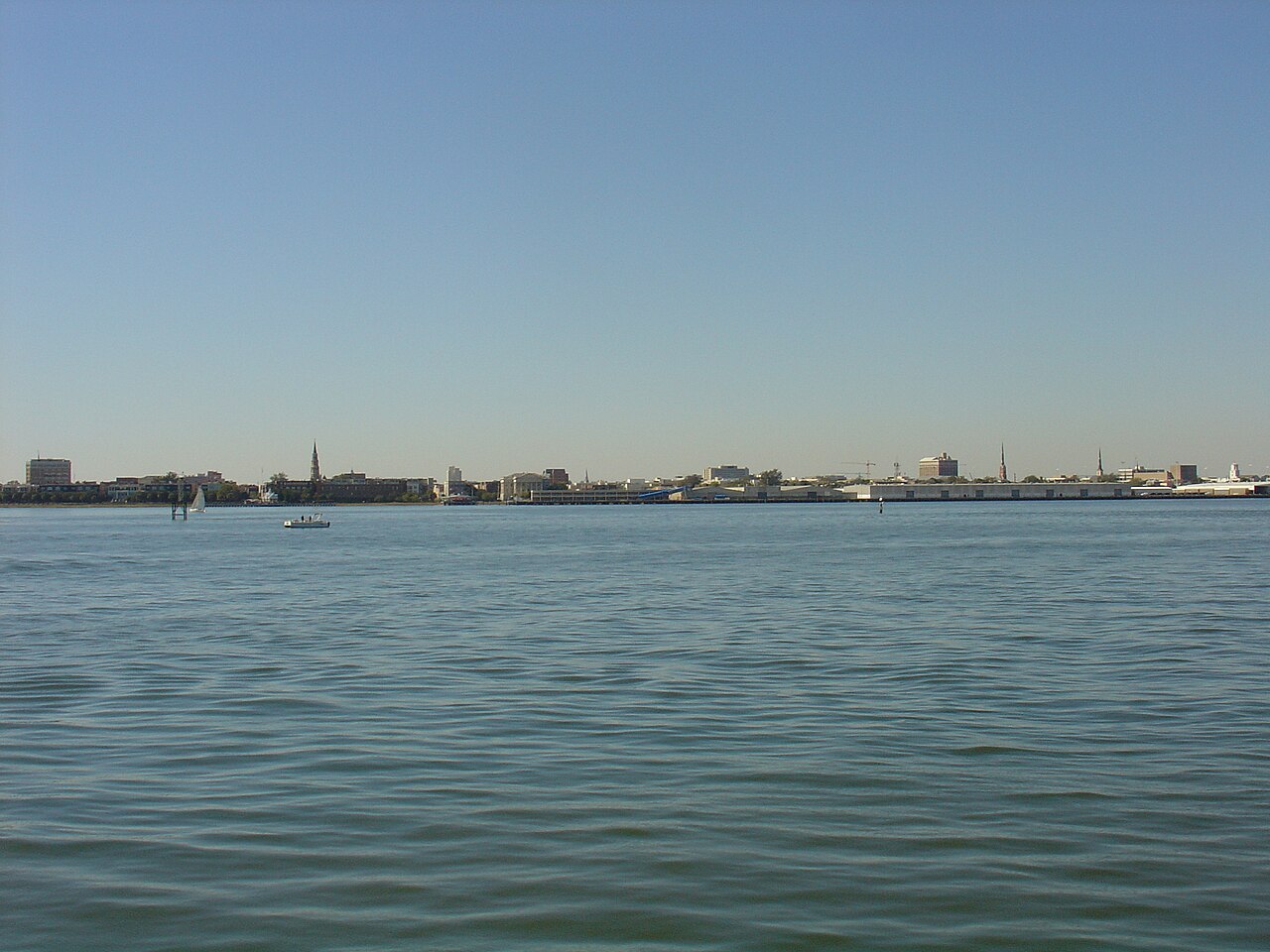
The Swim Around Charleston is a premier open water swimming marathon held each October in the sweeping maritime setting of Charleston Harbor, South Carolina. Covering an expansive distance of 12 miles, or more than 19 kilometres, the event tests endurance across open coastal currents and broad river channels. Taking on this tidal water requires careful pacing, stamina, and an ability to read the moving sea. Swimmers take to the water knowing that every mile reflects the region's deep connection to the Atlantic tide. The course begins at Remleys Point in Mount Pleasant before striking directly across the waters of the Cooper River. Crossing the open expanse of the Cooper River brings the first test of open-water sighting, as competitors aim across the wide water towards the historic cityscape.
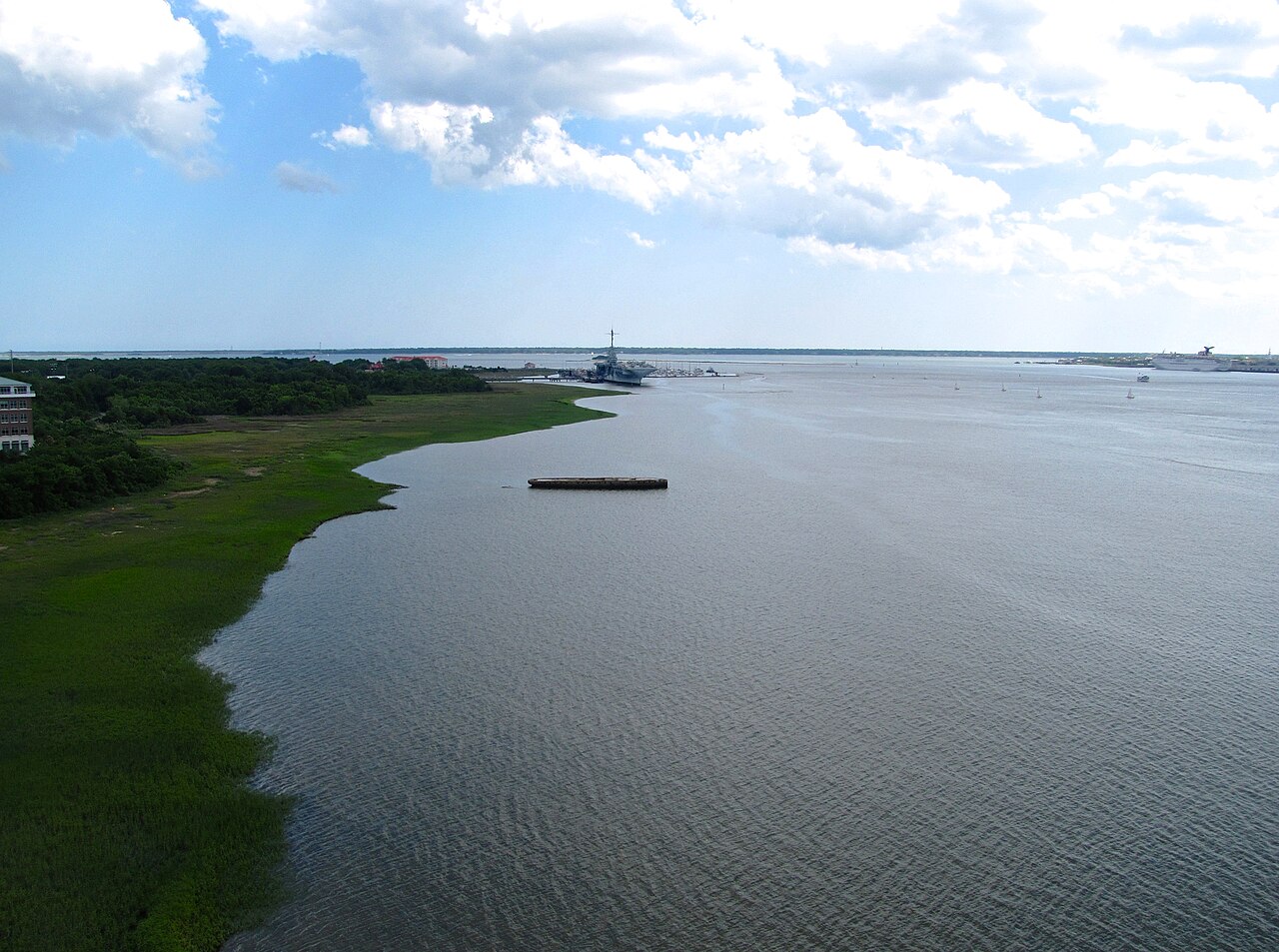
Swimmers trace the outer edge of the Charleston peninsula, keeping the city's historic shoreline to their side as they press forward toward the mouth of the Ashley River. The swim then continues upriver to a finishing arch at a county boat landing located near Interstate 526. This point-to-point journey demands steady navigation as the open bay narrows into the winding river corridor. Even as the course winds between riverbanks, this is an entirely saltwater swim that transitions from the open harbor basin into sheltered backwaters. Participants move past active marinas, scenic waterfront residences, and the imposing geometry of coastal bridges before the urban scenery gives way to wide expanses of quiet salt marshes.
The transition brings a notable shift in water texture, leaving swimmers with the gentle rhythm of tidal marshlands after the expansive chop of the harbor. As the buildings recede, the rhythmic lap of saltwater against the grass banks accompanies the final miles, bringing a peaceful conclusion to a grueling journey.
Tide, pace and the six-hour limit
The Swim Around Charleston is timed to the tide: the race start is calculated so that swimmers have a tidal assist for the majority of the swim. The first two to three miles are the critical stretch, because a sufficient pace is needed to avoid being swept off course. The first half of the swim is the faster portion and ends roughly at the Ashley River bridges, which swimmers are expected to reach in under three hours. In the second half the field often meets more chop and wind. Very fast swimmers may still be swimming through the last of the outgoing tide in the Ashley River. The course has a six-hour time limit, and swimmers who cannot finish in the allotted time are removed from the water.
Charleston Harbor: the East Coast's deepest shipping channel
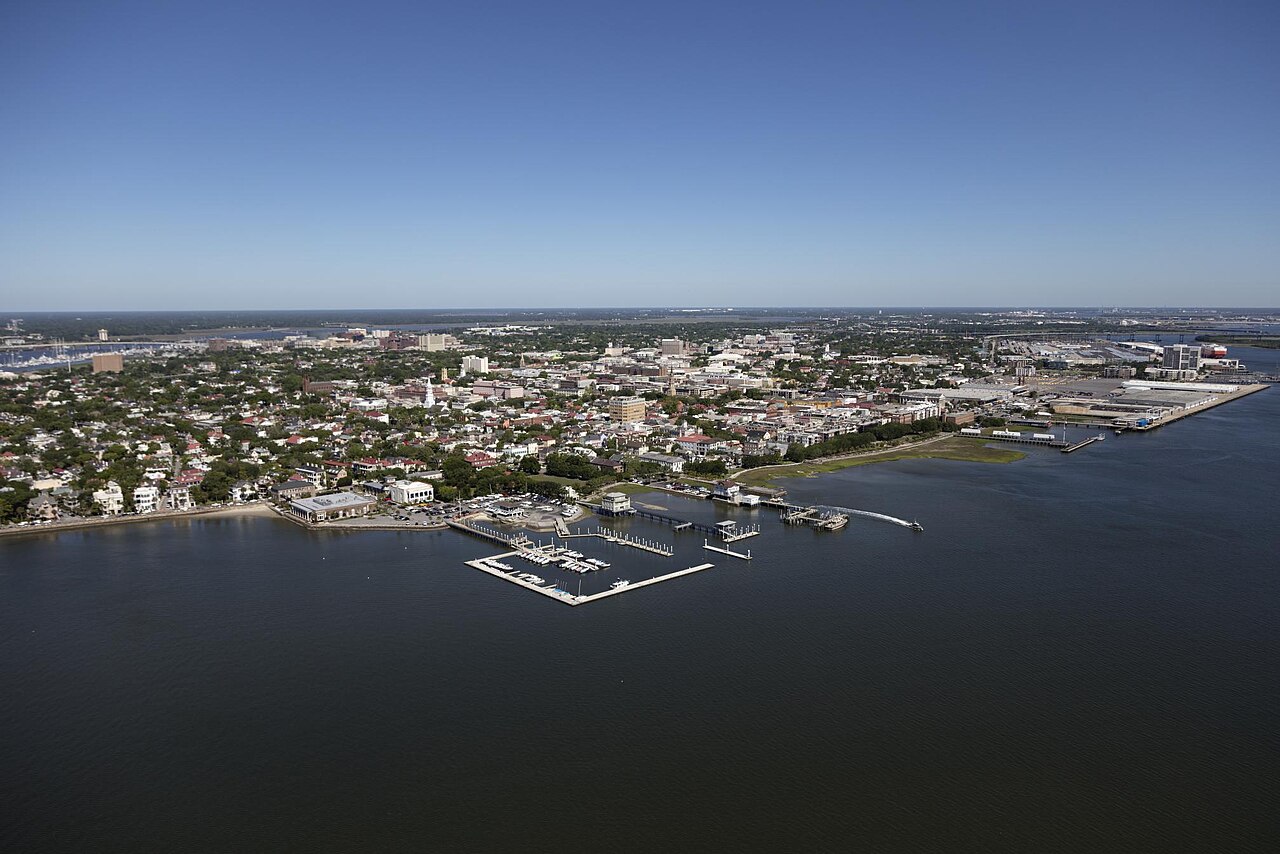
Charleston was founded upon a low-lying peninsula situated at the direct confluence where the Ashley and Cooper rivers meet to form Charleston Harbor. This natural meeting of waterways has created the Port of Charleston, celebrated today as the deepest harbor on the entire East Coast with a maintained depth of 52 feet. Out at the entrance channel that leads into this massive estuary, the water reaches 54 feet deep even at mean low tide, providing an unimpeded passage for ocean traffic. Such remarkable depth has fostered a legacy of heavy maritime traffic that has shaped the waters around the course for generations. Passenger cruise liners have frequented the Union Pier Terminal here continuously since 1913.
In modern times, the channel accommodates monumental commercial traffic, including the 1,300-foot CMA CGM Marco Polo, which set a record as the largest container ship ever to call at a port along the United States East Coast. Given the harbor's immense breadth and exposure, swimmers often encounter challenging chop and wind across the central stretches of the route. These surface conditions are driven by wind waves, which form as passing gusts blow over open water, their scale determined by the strength of the wind, the water's depth, and the fetch of unobstructed water. Fortunately, as the swim heads into the Ashley River, the surrounding shoreline shields the channel from the wind, allowing the open harbor chop to ease as you enter the protected riverway.
From Albemarle Point to Fitzsimons' Wharf: maritime colonial history
The maritime settlement that grew along these river shores dates back to 1670, when English colonists originally founded Charles Towne along the banks of the Ashley River. That initial outpost at Albemarle Point proved temporary, and in 1680 the town was relocated across the water to the peninsula where it stands today. As maritime commerce flourished throughout the eighteenth century, Christopher Gadsden initiated construction in the late 1760s of Gadsden's Wharf, less than one kilometre from the race area. During the height of its commercial prominence, this bustling shipping structure earned distinction as the largest wharf anywhere in the United States. Just down the shoreline, also located less than a kilometre from the race course, the imposing United States Custom House was erected on marshy ground that previously formed Fitzsimons' Wharf. The severe regional earthquake of August 1886 registered an estimated magnitude between 6.9 and 7.3.
Waterfront Park and the Cooper River esplanade today
Along the Cooper River waterfront, modern visitors and shoreline onlookers gather at Waterfront Park, an urban parkland extending for roughly half a mile along the river. In earlier eras, this riverfront formed the bustling heart of maritime transit, lined with commercial wharves and crowded shipping terminals. Today, the space has been reclaimed as a scenic refuge featuring a 1,200-foot palmetto-lined esplanade that follows the natural curves of the waterline. Traces of the working riverfront remain preserved along the water's edge, including the charred pilings visible from the Vendue Wharf pier. These blackened timbers stand as enduring reminders of a fierce fire that destroyed a steamship terminal on the site in June 1955. Looking toward the future, the city is actively addressing the modern challenges of rising sea levels and tidal flooding by collaborating with Dutch engineering specialists. Circling this historic peninsula, swimmers navigate waters that continually honor their rich past while adapting to the living tides of the Atlantic.
Course
A 12-mile open water swim race held in the Charleston Harbor, South Carolina.
Previous editions
How to get there
Swim Around Charleston
Frequently asked questions
- When was the last edition of Swim Around Charleston?
- The last edition of Swim Around Charleston took place on October 3, 2026.
- What distances does Swim Around Charleston offer?
- Swim Around Charleston has a single distance: 19.3 km.
- How much is the entry fee for Swim Around Charleston?
- Entry fees by distance: 19.3 km: 425 USD · 19.3 km: 580 USD. Additional fees: $120.00 for paddler (if requested by swimmer), $20.00 for extra T-shirt. All race entries are due by August 21, 2026.
- Where does Swim Around Charleston take place?
- Swim Around Charleston is a river swim. Location: Charleston Harbor, Charleston, South Carolina, United States.
- How do I register for Swim Around Charleston?
- The reference page for registering for Swim Around Charleston is http://www.swimaroundcharleston.org/new-products.
Where to stay
Charleston offers a wide variety of lodging options, ranging from historic boutique hotels located in converted merchant houses along the harbor to modern inns in the downtown district. Many swimmers opt for short-term rentals in renovated carriage houses or residential properties near the Battery for easier harbor access. Expect rates to fluctuate significantly based on proximity to the water; standard rooms typically range from $250 to $500 per night, depending on the season and specific location within the peninsula.
Things to do nearby
The weekend is characterized by the city’s maritime and colonial history. Beyond the water, visitors can explore the local culinary scene, focusing on Lowcountry cuisine, or take guided kayak tours through the nearby salt marshes. Walking tours covering the city’s architectural evolution—including the recovery from 19th-century fires and earthquakes—are common. For those interested in regional heritage, visits to the preserved sites of the Ashley River plantation district or local naval museums provide a deeper look into the harbor’s strategic importance.
Swimmers
Similar races


Comments
Transparency: some links on this page (stays, flights, experiences, gear) are affiliate links — if you book or buy through them, Omniathlon may earn a commission from the partner at no extra cost to you. As an Amazon Associate we earn from qualifying purchases.