
Swim Noosa
- May 22, 2027
- Distances from 500m to 3.8km
At a glance
- Next edition date
- May 22, 2027
- Distances
- 500 m · 1 km · 2 km · 3.8 km
- Where
- Sea · Noosa Main Beach, Noosa, Queensland, Australia
- Entry fee
- 500 m: 35 AUD · 1 km: 50.01 AUD · 2 km: 75 AUD · 3.8 km: 85 AUD
- Registration
- runawaynoosamarathon.com.au
About the race
Swim Noosa is an open water swimming race held in the sea at Noosa Main Beach, in Queensland, Australia. Held each year in May, the gathering treats competitors to crystal-clear water and gentle rolling waves that form a remarkably forgiving ocean arena. The event provides four distinct distances to suit various endurance levels: 500 metres, 1 kilometre, 2 kilometres, and a marathon course of 3.8 kilometres. The 500-metre dash is mapped out as an out-and-back route that stays tucked close to the shore, giving newer open water swimmers a gentle introduction over soft sand. Those taking on the 1-kilometre loop track eastward past the secluded sands of Little Cove before turning back toward the crowds on Main Beach.
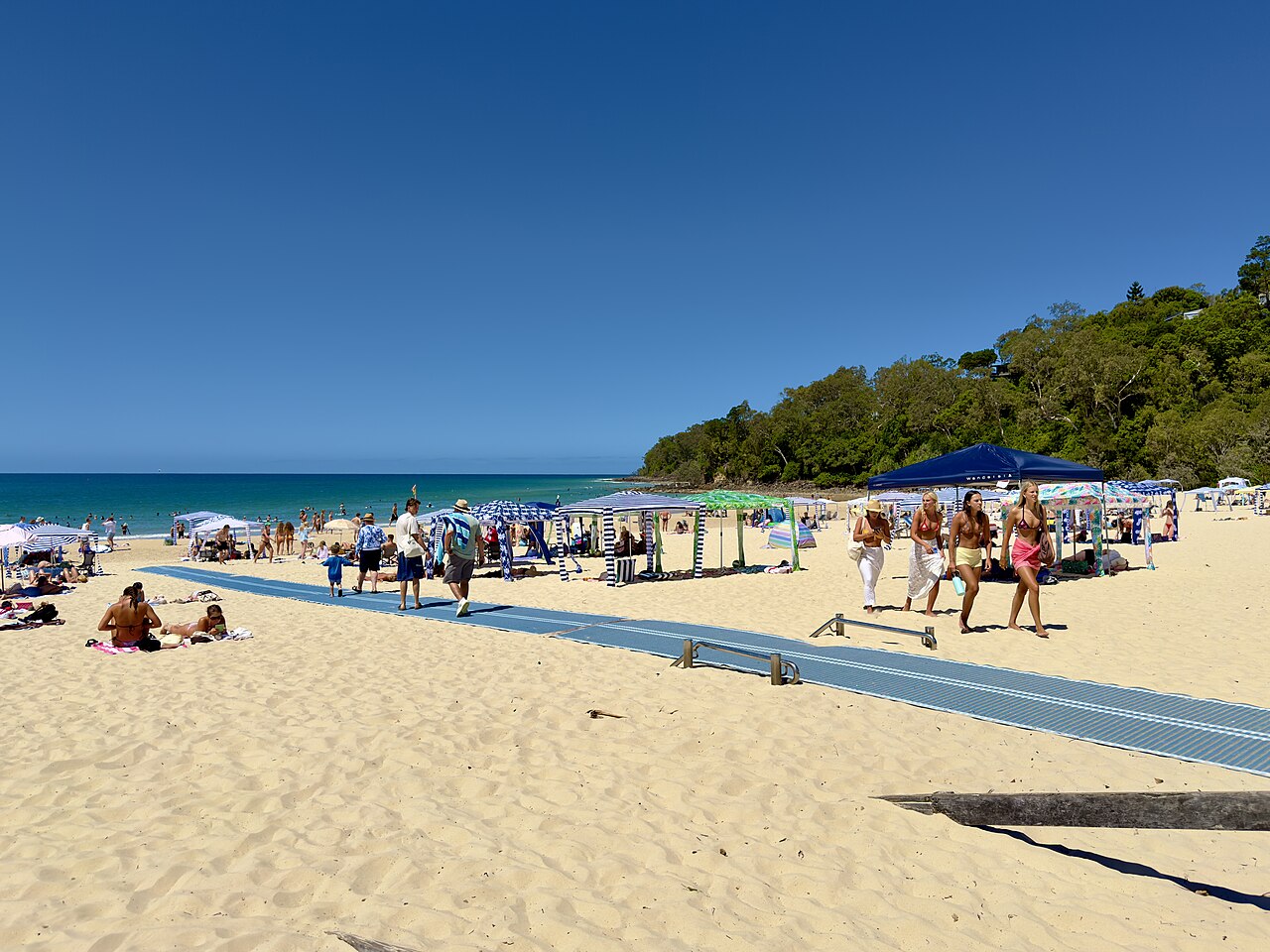
For the 2-kilometre journey, the route follows the natural curve of the rocky coastline toward the landmark known as Boiling Pot before making the turn home. Over the full 3.8-kilometre course, swimmers settle into a sustained ocean rhythm, sighting between the offshore buoys.
Noosa Headlands: granite headlands and coastal wilderness
Beyond the race turning points near Boiling Pot, the coastal terrain transitions into dramatic natural rock formations. Exploring this section of the shore reveals the Roaring Cave, also known as the Blowhole, along with the deep, surge-carved chasm of Devils Kitchen. In the Noosa National Park area, wild koalas reside, though their local population is currently in decline. South of the Noosa Headlands, the shoreline curves away into an expanse of open coast that was previously named Golden Beach. Today known as Sunshine Beach, this exposed ocean stretch is patrolled by the Sunshine Beach Surf Life Saving Club, which began its beach patrols in the 1980/81 season. The clubhouse stands right on the beachfront at the corner of Dule Street and Belmore Terrace.
Noosa Main Beach: surf lifesaving and golden sand
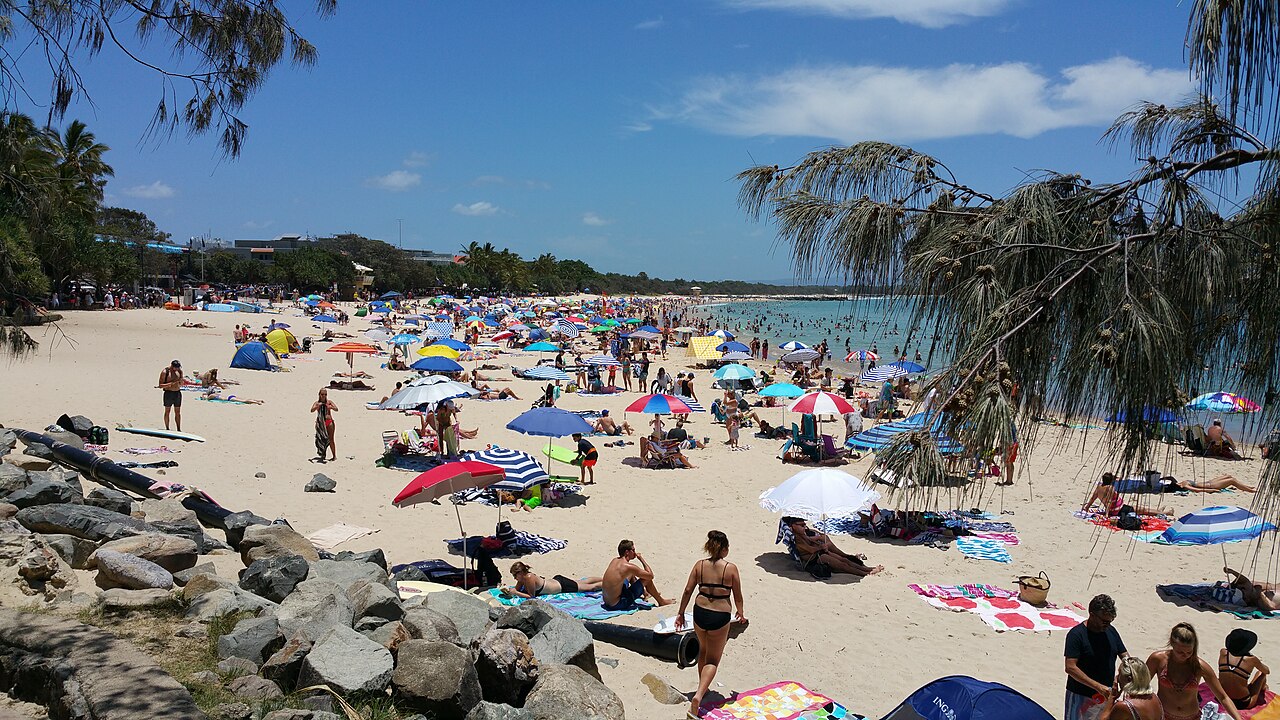
At Noosa Main Beach itself, the wide sandy strand provides an ideal natural base for the swimming festival. To mitigate severe beach erosion along the main beach, a specialized sand pumping system was constructed, securing the broad shoreline that greets swimmers each morning. Organized water safety here has deep community roots, dating back to when the Noosa Heads Surf Lifesaving Club was established in 1927. Lifesavers have guarded these waters for almost a century, keeping watch over both swimmers and the wave riders drawn to the points.
Noosa River and Lake Weyba: waterways behind the dunes
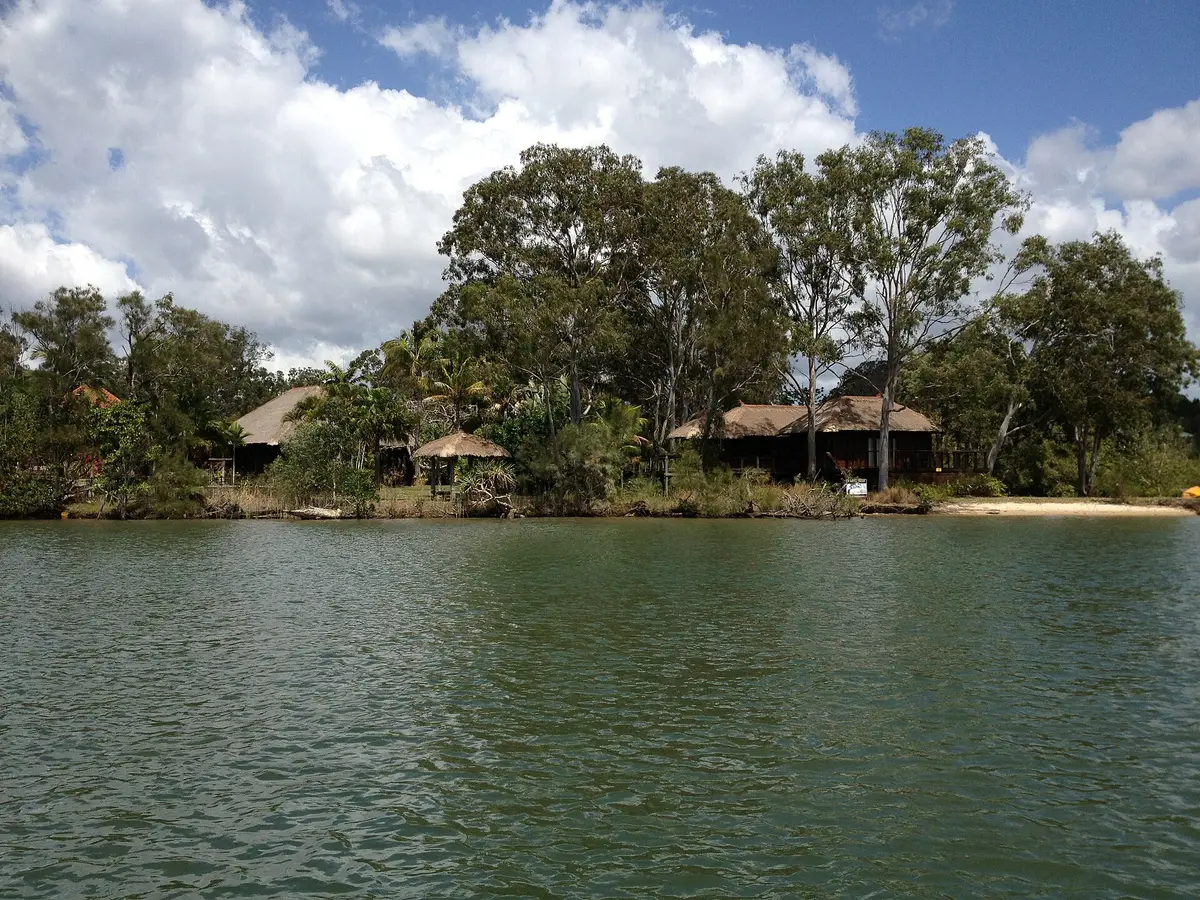
The catchment of the Noosa River originates in the Como Escarpment near Mount Elliott within Great Sandy National Park. Until the 1960s, the river entrance met the ocean at present-day Noosa Woods. Today, a regular ferry service provides passenger transport and scenic cruises along the estuary, connecting Noosa Heads, Noosaville, and Tewantin. The wider Noosa River basin has supported timber milling and wildlife for generations, from logging operations that commenced in 1864 to its current standing as a habitat for migratory birdlife. The river channel cradles three distinct islands: Sheep Island, Goat Island, and Makepeace Island. Shaped like a heart, Makepeace Island was formerly known as Pig Island. It was home to Hannah Makepeace, who lived there as a housekeeper and owner until her death in 1973.
Following her passing, the island was held in state ownership from 1973 until 1986. Lake Weyba is a shallow salt lake covering 9.77 square kilometres in Noosaville. Lake Weyba serves as a significant breeding habitat for fish and was known in the early twentieth century for hosting an abundant population of stingrays. These whiptail stingrays are demersal bottom-dwellers, often burying themselves quietly in sand or mud in shallow tropical and temperate waters while hunting mollusks and crustaceans. {{h2:Teewah Beach: colored sands and shipwreck shores}} Across the river mouth to the north stretches Teewah Beach, an expansive wilderness shoreline running for roughly 51 kilometres from the Noosa River up to Double Island Point within Great Sandy National Park. Backing this long strand are the striking Teewah Coloured Sands, towering cliffs that reach up to 200 metres in height. Inland within Great Sandy National Park, the catchment extends to Lake Cootharaba, an expansive body of water with an average depth of 1.5 metres bordered by the national park on its northern, eastern, and southern sides. The Noosa River flows into the lake from the north through the Everglades Wetlands before exiting to the south.
A sawmill began operating at Elanda Point in 1869, followed by another mill established on Lake Cootharaba in 1870 that supported a busy company town. Today, that early settlement survives as the heritage-listed Mill Point Settlement Site. Nearby Boreen Point features a sandy beach with shallow water used for swimming and launching boats. Swimmers return to the race line at Noosa Main Beach. With gentle rolling waves and clean, transparent water, the bay provides a sheltered ocean course where you can focus entirely on the rhythm of your stroke.
Sources: Noosa River · Makepeace Island · Noosa Heads, Queensland · Noosaville · Sunshine Beach, Queensland · Sunrise Beach, Queensland · Surfing in Australia
Course
A perfect introduction to ocean swimming. This short out-and-back course stays close to shore, ideal for beginners.
A classic Noosa lap taking you past Little Cove before looping back to Main Beach.
Follows the coastline toward Boiling Pot before turning back to the beach.
Previous editions
- 2026May 24, 2026
- 2024results
How to get there
Swim Noosa
Frequently asked questions
- When is Swim Noosa?
- Swim Noosa takes place on May 22, 2027.
- What distances does Swim Noosa offer?
- Swim Noosa offers 500 m, 1 km, 2 km, and 3.8 km.
- How much is the entry fee for Swim Noosa?
- Entry fees by distance: 500 m: 35 AUD · 1 km: 50.01 AUD · 2 km: 75 AUD · 3.8 km: 85 AUD. Registration link requires free account creation on the official event website.
- Where does Swim Noosa take place?
- Swim Noosa is a sea swim. Location: Noosa Main Beach, Noosa, Queensland, Australia.
- How do I register for Swim Noosa?
- The reference page for registering for Swim Noosa is https://runawaynoosamarathon.com.au/swim-noosa/.
Where to stay
Noosa offers a range of stays, from upscale boutique hotels lining the bustling Hastings Street to quiet, self-contained apartments overlooking the river. For a more authentic coastal feel, seek out traditional 'beach shacks' or holiday units near the national park entrance. During the high season or race weekends, expect to pay between $250 and $550 per night for centrally located accommodation, though budget-friendly camping options are available further inland toward the river hinterland.
Things to do nearby
The Noosa weekend is defined by its fusion of nature and leisure. Spend your recovery time exploring the coastal tracks of the national park, where the chance of spotting koalas in the wild is high. For those who prefer the water, kayak or SUP rentals provide access to the tranquil upper reaches of the Noosa River. Local food culture is anchored by organic produce, with weekend farmers' markets and riverside degustations offering a taste of the Sunshine Coast’s regional specialties.
Swimmers
Other races by this organiser
- 5150 CamiguinCamiguin, PH
Similar races


Comments
Transparency: some links on this page (stays, flights, experiences, gear) are affiliate links — if you book or buy through them, Omniathlon may earn a commission from the partner at no extra cost to you. As an Amazon Associate we earn from qualifying purchases.