
Traversée de Sète à la nage (Trophée Jo Candela)
- Apr 25, 2027
- Distances from 950m to 6km
At a glance
- Next edition date
- April 25, 2027
- Distances
- 950 m · 2 km · 3 km · 6 km
- Where
- Sea · Canaux de la ville, Maison Régionale de la Mer, Sète, Occitanie, France
- Entry fee
- 18–22 €
- Registration
- lapalmesetoise.clubeo.com
About the race
Stepping into the Canal Royal in late April places swimmers directly inside a maritime corridor to link the Mediterranean Sea with the vast inland lagoon. The Traversée de Sète à la nage is an open water swimming race held in the urban canals of Sète, along the Mediterranean coast of Occitanie in southern France. Known as the oldest open water swimming race still existing in France, the competition carries a continuous aquatic lineage that weaves through the stone quays of the port city. Jointly organized by La Palme Sétoise and L'Odyssée de Sète, the meeting centers on fin swimming and serves as both the departmental and regional championship of Hérault.
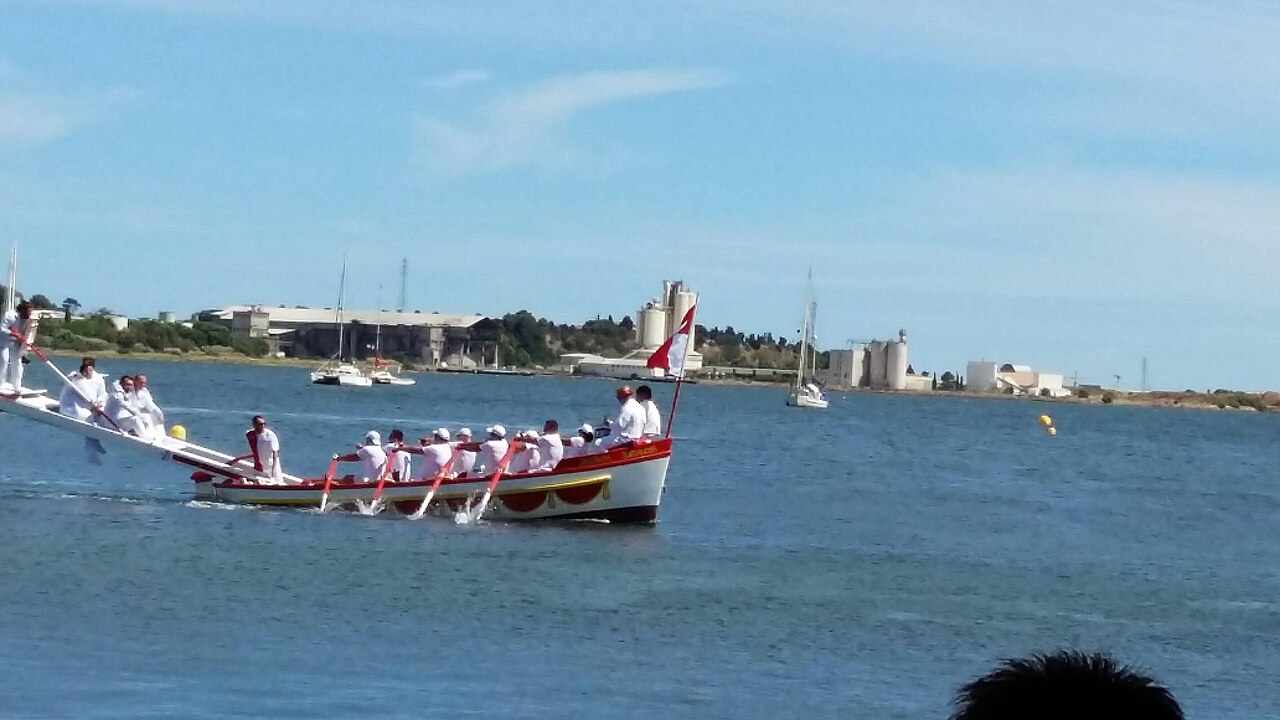
Competitors choose from multiple distances covering 950 metres, 2,000 metres, 3,000 metres, and 6,000 metres, alongside an exhaustive 3-hour endurance event. For swimmers pursuing national qualifications, these canal courses act as an official selection race for the French Long Distance Championship. The competition hub is situated in front of the Maison Régionale de la Mer, where the start and finish lines bracket the urban waterway. The setting feels uniquely urban yet entirely marine, as participants stroke through picturesque canals that can present chilly spring water around 14 degrees Celsius and stiff headcurrents.
Race morning along the quays of Sète
At noon the prize-giving took place at the Gymnase Paul Di Stephano, followed by a vin d’honneur. The club that runs the Traversée says it aims to bring together the federation’s different activities, with a promotional course for divers and underwater fishers, open to everyone. A diving club from Clermont-Ferrand sent eight of its members to the 55th edition, spread across five different races. In the 6,000 m with fins, one of those swimmers finished seventh out of 35 in 1h27'00.
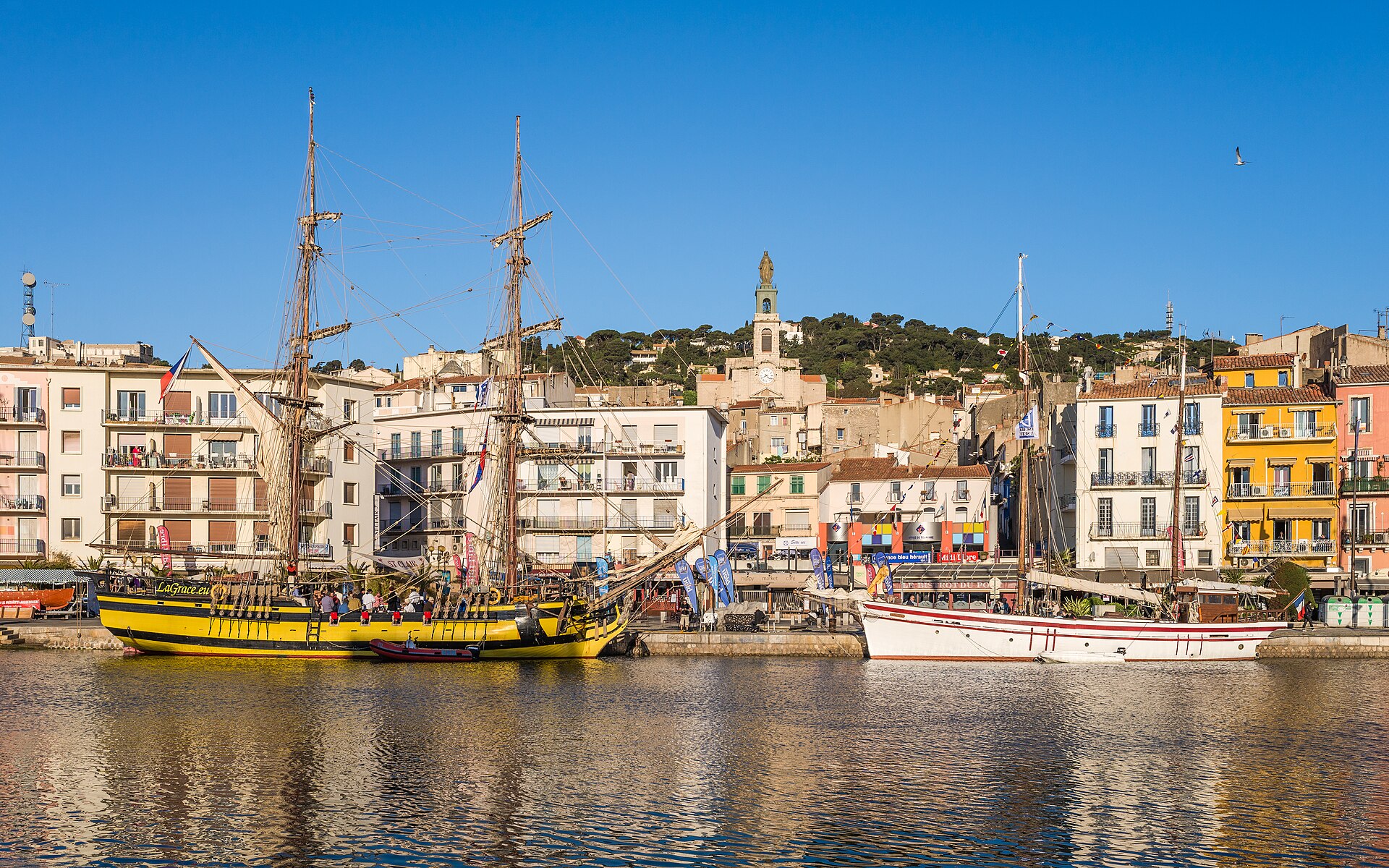
Canal Royal and the Étang de Thau: hydrology between sea and lagoon
Across the seasons, water temperatures in the connected lagoon fluctuate between 3 degrees Celsius in the depths of winter and 29 degrees in summer, creating changing conditions across the marine exchange. Beyond the racecourse, the inland waters extend further into the French waterway network via the Rhône-Sète Canal, which connects the Étang de Thau at Sète to the Rhône River in Beaucaire. This major navigational route is composed of two historic segments known as the Canal des Étangs and the Canal de Beaucaire. The surrounding lagoon itself has a basin averaging 4.5 metres in depth. While its primary navigation channel reaches 10 metres, a submerged depression dropping 30 metres near Bouzigues houses a geothermal spring that supplies the thermal baths at Balaruc.
Mont Saint-Clair: pirate lookouts and eighteenth-century coastal ramparts
Mont Saint-Clair is a prominent hill that existed as an isolated island in the Mediterranean Sea before coastal sand deposits joined it to the mainland. Today, its high ridge provides an indispensable natural barrier for the port, sheltering the water from the biting force of the mistral wind. The mountain served for centuries as a frontline sentinel against approaching pirates and corsairs. In 1586, Fort Montmorencette was erected on its slopes specifically to protect the coastline against raiding Barbary pirates. Military engineers under Louis XV expanded these coastal bastions by beginning construction of Fort Richelieu in 1745, integrating it into a defensive chain along the Languedoc shore. By 1746, the port defenses mounted 52 cannons watched over by two soldiers and one sailor on duty. Perched between the lagoon and the sea, Fort Richelieu's seaward battery historically trained artillery over the Gulf, and the installation remains property of the French Navy today.
Vieux Port and Môle Saint-Louis: Louis XIV's royal gateway to Languedoc
Long before engineers dug the urban canals, the location was an ancient fishing settlement established on the narrow lido separating the lagoon from the sea. Between 1596 and 1605, King Henri IV and Henri Ier de Montmorency established the first structured port facilities at the site. In 1666, Pierre-Paul Riquet and King Louis XIV formally founded the modern fortified port as a strategic harbor for the realm. To protect ships against dangerous storms rolling in from the southeast, builders constructed the massive Saint-Louis mole to a length of 650 metres. At the end of the breakwater, the Saint-Louis lighthouse was erected in 1684 as a square masonry tower illuminated by tallow lamps.
The beacon was rebuilt in 1690, 1720, and 1831, when it reached a height of 25 metres, before being reconstructed anew in 1861 with fine white stone from Cassis and fitted with a Fresnel lens. After burning rapeseed oil and petroleum lamps, the beacon was electrified in 1933. On August 19, 1944, German mines destroyed both the harbor and the lighthouse, leading to the construction of the present tower, inaugurated on April 10, 1948. Directly overlooking the coastline of the Gulf of Lion stands the marine cemetery, established around 1680 to bury the stone workers who died building the Saint-Louis pier. In the outer harbor waters, naval drama unfolded on October 26, 1809, when the French 80-gun ship of the line Le Robuste ran aground and was burned before the town. The outer breakwater protecting the modern harbor was begun in 1821 and brought to completion in 1869, securing the sheltered basin that swimmers see today.
From Thau Lagoon to the Corniche: flamingos, pines, and jousting barks
The Étang de Thau serves as an internationally recognized habitat for large colonies of pink flamingos, resident herons, and wintering black-necked grebes, while its brackish depths support mussels and oysters. On the seaside flank of the mountain, the Corniche de Sète protects the only habitat in the Languedoc-Roussillon region for Iberian halo-nitrophilous scrub. Along the quayside where the race finishes, the city preserves its historic maritime identity. In 2016, the port of Sète celebrated its 350th anniversary, reflecting centuries of trade and sailing. In 2014, the port of Sète hosted the Sedov and the Kruzenshtern, the two largest sailing tall ships in the world.
Sources: Sète · Mont Saint-Clair · Étang de Thau · Rhône-Sète Canal
Course
Race held in the city canals. Start and finish in front of the Maison Régionale de la Mer.
Race held in the city canals. Start and finish in front of the Maison Régionale de la Mer.
Race held in the city canals. Start and finish in front of the Maison Régionale de la Mer.
Race held in the city canals. Start and finish in front of the Maison Régionale de la Mer.
Awards
- Age group awards
Awards ceremony at 12:00 at the Paul Di Stephano gymnasium.
Previous editions
How to get there
Traversée de Sète à la nage (Trophée Jo Candela)
Frequently asked questions
- When is Traversée de Sète à la nage (Trophée Jo Candela)?
- Traversée de Sète à la nage (Trophée Jo Candela) takes place on April 25, 2027.
- What distances does Traversée de Sète à la nage (Trophée Jo Candela) offer?
- Traversée de Sète à la nage (Trophée Jo Candela) offers 950 m, 2 km, 3 km, and 6 km.
- How much is the entry fee for Traversée de Sète à la nage (Trophée Jo Candela)?
- The entry fee ranges from 18 € to 22 €. Prices refer to FFESSM licensed (18 EUR) vs non-licensed (22 EUR). Registration via HelloAsso.
- Where does Traversée de Sète à la nage (Trophée Jo Candela) take place?
- Traversée de Sète à la nage (Trophée Jo Candela) is a sea swim. Location: Canaux de la ville, Maison Régionale de la Mer, Sète, Occitanie, France.
- How do I register for Traversée de Sète à la nage (Trophée Jo Candela)?
- The reference page for registering for Traversée de Sète à la nage (Trophée Jo Candela) is https://lapalmesetoise.clubeo.com/page/55eme-traversee-de-sete-de-nage-avec-palmes.html.
Where to stay
Sète offers a range of options, from traditional fishermen's houses in the Quartier Haut to boutique hotels overlooking the commercial harbor. During the race weekend, central accommodations are in high demand; budget for approximately 90€ to 150€ per night for a standard double room. For those preferring a more relaxed setting, several campsites are located along the strip between the sea and the Etang de Thau, offering convenient access to the water for early morning training sessions. Find your base in Sète to stay close to the start line at the Maison Régionale de la Mer.
Things to do nearby
Beyond the race, the area is defined by its maritime heritage and unique lagoon ecosystem. Visitors can explore the Etang de Thau through guided kayak or SUP excursions to observe migratory birds like the Greater Flamingo, or take a walking tour of the Marine Cemetery. Gastronomy is a highlight, with local oyster tastings directly from the lagoon's producers being a must-do experience. Whether you prefer historical site visits or active water-based exploration, there are many ways to engage with the local culture. Discover activities around Sète to round out your visit.
Swimmers
Similar races


Comments
Transparency: some links on this page (stays, flights, experiences, gear) are affiliate links — if you book or buy through them, Omniathlon may earn a commission from the partner at no extra cost to you. As an Amazon Associate we earn from qualifying purchases.