
UltraSwim 33.3 Switzerland — Lac Léman
- Jul 23, 2027
- Last edition date
- Distances from 13km to 33.3km
At a glance
- Last edition date
- July 23, 2027
- Distances
- 13 km · 16.7 km · 25 km · 33.3 km
- Where
- Lake · Lac Léman, Genève, Switzerland
- Entry fee
- 1700 CHF
- Wetsuit
- Wetsuits are always permitted.
- Registration
- ultraswim333.com
About the race
Gliding across Lac Léman feels like cutting through liquid glass: three hundred metres of alpine depth below, yet a welcoming summer surface without a trace of salt. This pristine freshwater expanse sets the stage for UltraSwim 33.3 Switzerland, an open water swimming event held in the waters of Lac Léman in Geneva, Switzerland. Organised by UltraSwim 33.3, the event draws marathon swimmers to an alpine landscape where big endurance challenges meet pristine lake conditions. The foundational concept takes the legendary English Channel distance of 33.3 kilometres and breaks it down across four consecutive days. In the 33.3 Classic format, participants tackle those thirty-three kilometres spread across six distinct swimming stages.
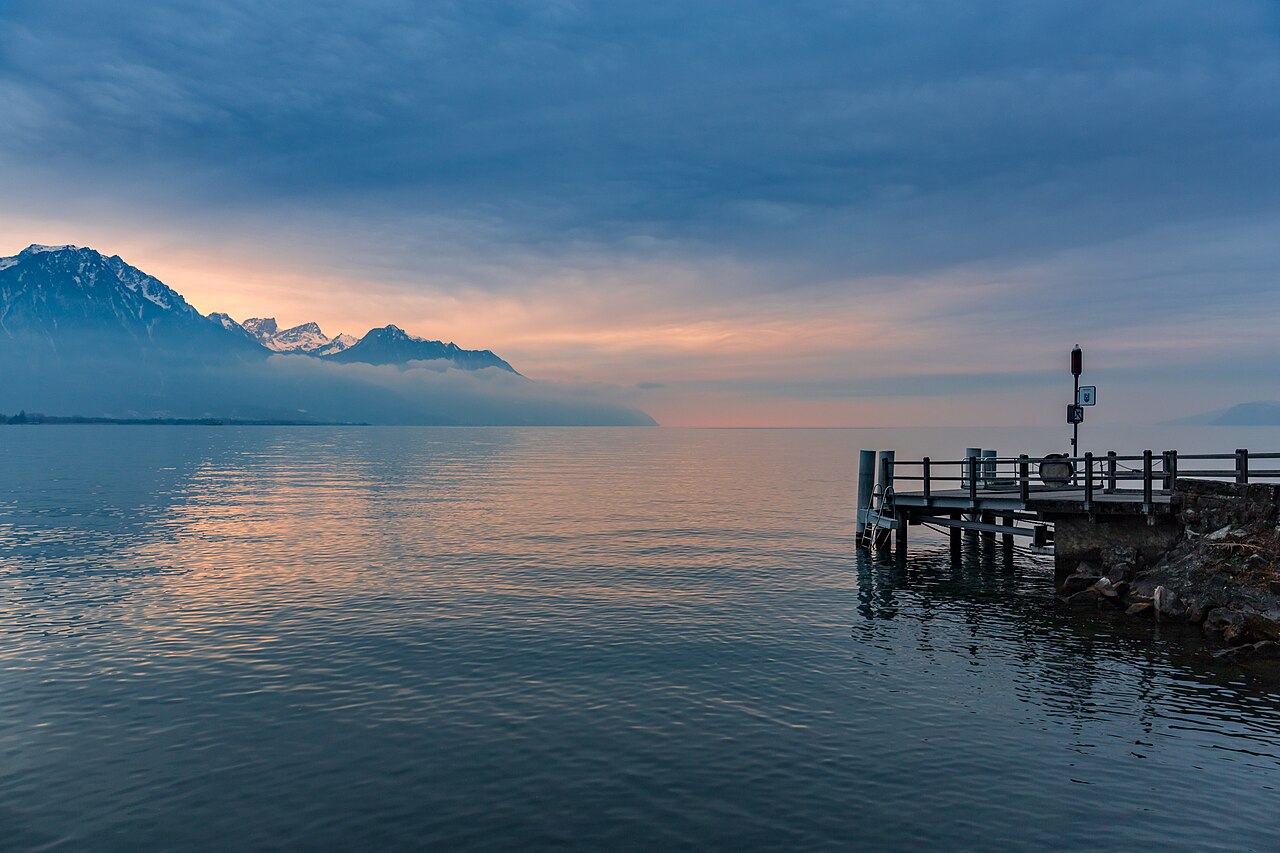
Swimmers seeking different challenges can choose between two alternative formats tailored for varied endurance goals. The 33.3/2 Build option covers approximately 17 kilometres over the course of four days, offering a structured half-distance experience. For those pursuing an unbroken marathon effort, the Ultimate format strips away stage divisions with a single, non-stop 25-kilometre swim. The logistical highlight of the stage race is a 13-kilometre open-water crossing that connects the shorelines of France and Switzerland across the wide lake basin. Swimmers have celebrated the rare novelty of needing to carry a passport for an open-water swim between two nations. Despite the lake's vast volume, late July brings comfortably mild water across the surface courses.
Wetsuits are permitted for all participants across every format and stage. Swimmers described moving through the fresh, unsalted water as an experience that felt like being in a movie. The event provides on-site support ranging from guided stretching and finish-line refuel meals to swimmer packs and safety tow floats. Beyond the swimming itself, the race actively supports the charity Léman Hope.
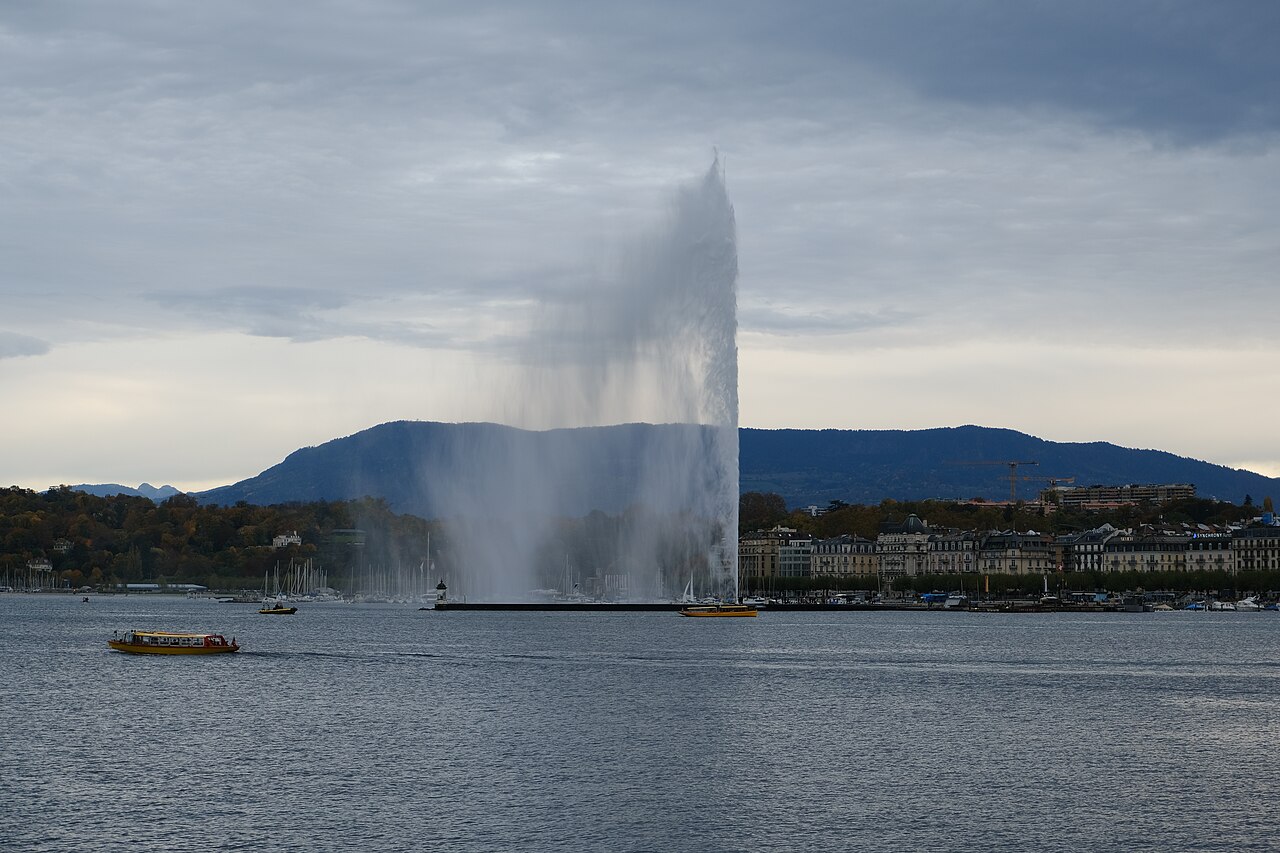
Lac Léman: three hundred metres of glacial freshwater
Lac Léman plunges to depths of 300 metres at its midpoint. The water below is cold, quiet, and immense, yet the surface remains sheltered from ocean tides and strong marine swells. While plunging into three hundred metres of mountain water can sound intimidating, the pleasant summer warmth of the upper layer and the buoyancy of permitted wetsuits keep the swim calm and accessible. Just off the city shoreline rest the Pierres du Niton, two granite erratic boulders visible above the waterline. Carried down from the Mont-Blanc massif and deposited by the retreating Rhône glacier between 18,000 and 19,000 years ago, these ancient stones still anchor the visual identity of Geneva's harbor.
At the southwestern end of the lake, the vast basin narrows to funnel its outflow into the Rhône at the Pont du Mont-Blanc. Directly alongside the bridge, resting in the river current, lies Île Rousseau. A footbridge links this quiet island to the mainland shore. Built in 1903, the Pont du Mont-Blanc stretches 252 metres across seven sturdy pillars, complemented by a pontoon underpass that links the Quai des Bergues to the Quai du Mont-Blanc.
Geneva's lakefront engineering: from the Jet d'Eau to the Seujet weir
Before Geneva engineered the river channel, the seasonal pulse of Lac Léman caused wide shifts in water levels, cresting high at winter's end when snowmelt and mountain torrents surged into the basin. To control these seasonal floods, nineteenth-century builders set up a curtain weir made of 39 larch-wood roller blinds capable of damming the Rhône up to 3.3 metres. The Bâtiment des Forces motrices powerhouse facade facing the lake was sculpted with classical statues representing Neptune, Ceres, and Mercury. It was here that the city's celebrated water landmark first appeared in 1885 as a functional pressure relief valve for the hydraulic network. Recognizing its dramatic aesthetic appeal, the municipality moved the fountain out into the lake basin in 1891 to serve as a prominent landmark.
The modern Jet d'eau, operating with pumps installed in 1951 that draw approximately 1000 kilowatts, propels 500 litres of lake water every second at a velocity of 200 kilometres per hour into the sky. Engineers only shut off this towering column of water when near-freezing winter temperatures or severe winds threaten the harbor quays. The modern task of regulating Lac Léman's water level belongs to the Barrage du Seujet, located roughly fifty metres downstream from the historic power hall. Inaugurated in 1995 after three years of work, this run-of-river weir sits one kilometre from the end of the lake between the Pont de la Coulouvrenière and Pont Sous-Terre bridges. Equipped with three Kaplan turbines producing 8.7 megawatts of hydroelectric power, the weir holds the lake strictly between 371.7 and 372.3 metres above sea level. Every leap year, authorities lower the lake level to 371.5 metres for a month at the beginning of spring, allowing essential repair work along the waterfront embankments.
Bains des Pâquis and the lakefront shores
Open water swimming on Lac Léman is steeped in historical romance, tracing its roots to Lord Byron, who lived by the lake for several months and championed long-distance swims across European waters. By 1872, the city built its first wooden public baths between the harbor mole and the Pâquis shore. At the head of the mole, the Phare des Pâquis lighthouse was erected in 1893 and 1894 to mark the harbor entrance. The complex underwent a complete transformation in 1932, when the Bains des Pâquis were rebuilt in reinforced concrete and glass in the Bauhaus style, establishing the bustling social and swimming haven that thrives to this day. Across the harbor, the promenades of the Jardin Anglais line the left bank where the Rhône flows out of the lake, created in the mid-nineteenth century on reclaimed shore land. Before the park was landscaped, the site served as a transshipment port and staging area for timber deliveries. Historic paddle steamers include the vessel Genève, constructed in 1896 and converted to diesel in 1934.
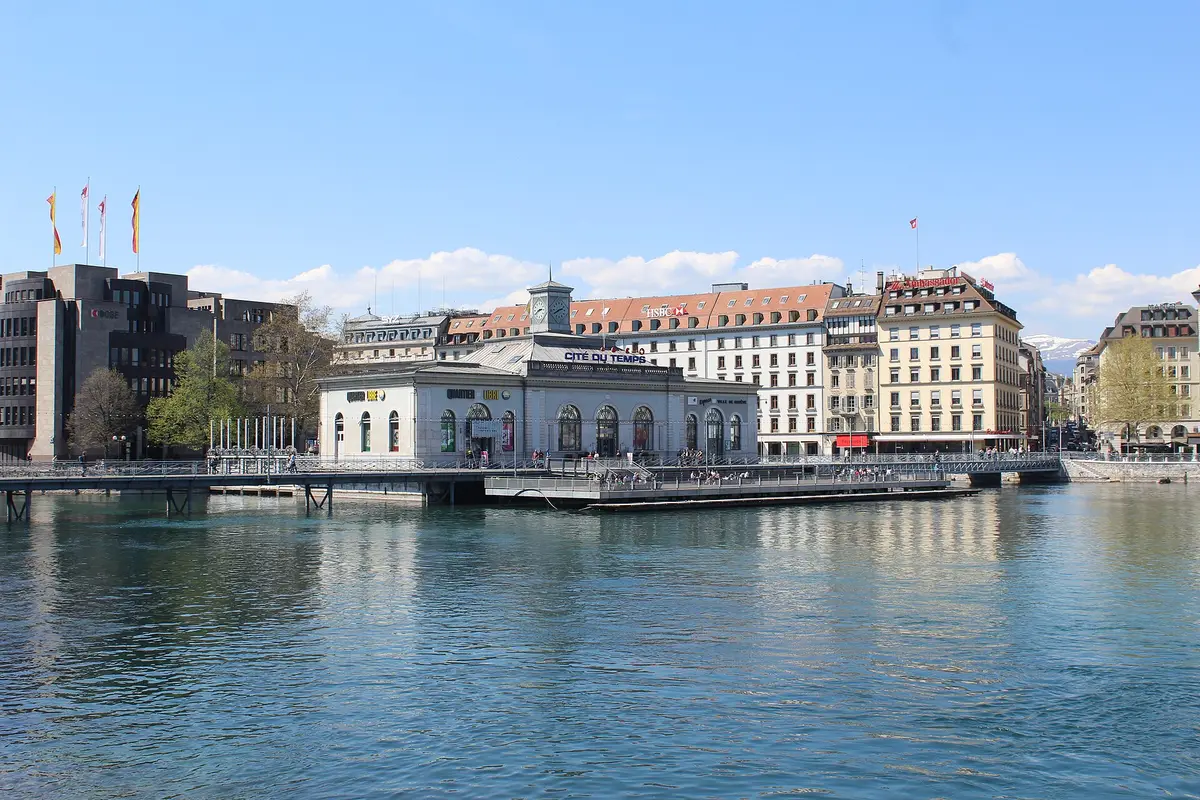
Sources: Pont de la Machine · Île Rousseau
Course
Iconic country-to-country crossing of Lac Léman between Lausanne (Switzerland) and Evian-les-bains (France), weather permitting.
33.3/2 BUILD format: covers approximately 17km over 4 days with all individual swims under 5km.
The full 33.3km distance spread across 4 days with 6 swims, ranging from 2km to a marathon day of 10-11km.
Aid stations
Supported swim each morning.
Previous editions
How to get there
UltraSwim 33.3 Switzerland — Lac Léman
Frequently asked questions
- When was the last edition of UltraSwim 33.3 Switzerland — Lac Léman?
- The last edition of UltraSwim 33.3 Switzerland — Lac Léman took place on July 23, 2027.
- What distances does UltraSwim 33.3 Switzerland — Lac Léman offer?
- UltraSwim 33.3 Switzerland — Lac Léman offers 13 km, 16.7 km, 25 km, and 33.3 km.
- How much is the entry fee for UltraSwim 33.3 Switzerland — Lac Léman?
- The entry fee is 1700 CHF. Prices start from 1,500 CHF. Packages include accommodation. 'ULTRA nomad' option available for self-arranged accommodation.
- Is a wetsuit required at UltraSwim 33.3 Switzerland — Lac Léman?
- Wetsuits are always permitted.
- Where does UltraSwim 33.3 Switzerland — Lac Léman take place?
- UltraSwim 33.3 Switzerland — Lac Léman is a lake swim. Location: Lac Léman, Genève, Switzerland.
- How cold is the water at UltraSwim 33.3 Switzerland — Lac Léman?
- The organizer states a water temperature of 23 °C (73 °F).
- How do I register for UltraSwim 33.3 Switzerland — Lac Léman?
- The reference page for registering for UltraSwim 33.3 Switzerland — Lac Léman is https://ultraswim333.com/2026switzerland.
Where to stay
Participants typically stay in the Ouchy district of Lausanne, near the waterfront. Options range from historic 5-star grand hotels with direct lake access to business-focused boutique hotels that host international sports delegations. Prices typically range from 250 to 500 CHF per night depending on the luxury tier and proximity to the race start. Some entries allow for independent arrangements, such as camping sites located along the northern lakeshore, which offer a more modest, nature-focused stay.
Things to do nearby
The region offers extensive leisure activities for the race weekend. Swimmers can explore the UNESCO-listed Lavaux terraced vineyards via local hiking trails, visit the Olympic Museum in Lausanne, or take the CGN ferries across to the thermal town of Évian-les-Bains. Kayaking and SUP are readily available in the calmer bays, and the proximity to the Alps provides a cooling retreat for those extending their stay beyond the event.
Swimmers
Other races by this organiser
- #NEVIS PIONEERCharlestown, KN
- UltraSwim 33.3 GreeceMilos, GR
- UltraSwim 33.3 Bay of KotorHerceg Novi, ME
- UltraSwim 33.3 #12 Croatia 2026 — HvarStari Grad, HR
- UltraSwim 33.3 GreeceSkopelos, GR
- UltraSwim 33.3 Bay of KotorHerceg Novi, ME
Similar races


Comments
Transparency: some links on this page (stays, flights, experiences, gear) are affiliate links — if you book or buy through them, Omniathlon may earn a commission from the partner at no extra cost to you. As an Amazon Associate we earn from qualifying purchases.