
WA’s Big Ocean Relay
- Mar 13, 2027
- Distances from 500m to 1km
At a glance
- Next edition date
- March 13, 2027
- Distances
- 500 m · 1 km
- Where
- Sea · North Cottesloe Beach, North Cottesloe, Western Australia, Australia
- Entry fee
- 500 m: 50 AUD · 1 km: 50 AUD · 2 km: 200 AUD · 4 km: 200 AUD
- Registration
- openwaterswimming.com.au
About the race
At North Cottesloe Beach, the Indian Ocean breaks in turquoise rollers over shallow limestone platforms. Known as WA’s Big Ocean Relay, this ocean swimming event brings competitors together in the sea at North Cottesloe. Organized by Swimming WA, the race forms an energetic stop on the Open Water Swimming Series calendar. Held during the warm coastal month of March, the relay draws swimmers to a competition defined by lively surf conditions and strong camaraderie. Participants take on course options of 500 metres or 1,000 metres as they share the work with their teammates. The rectangular race circuit sends swimmers charging straight off the sand and out through the surf into Cottesloe's vivid turquoise water.
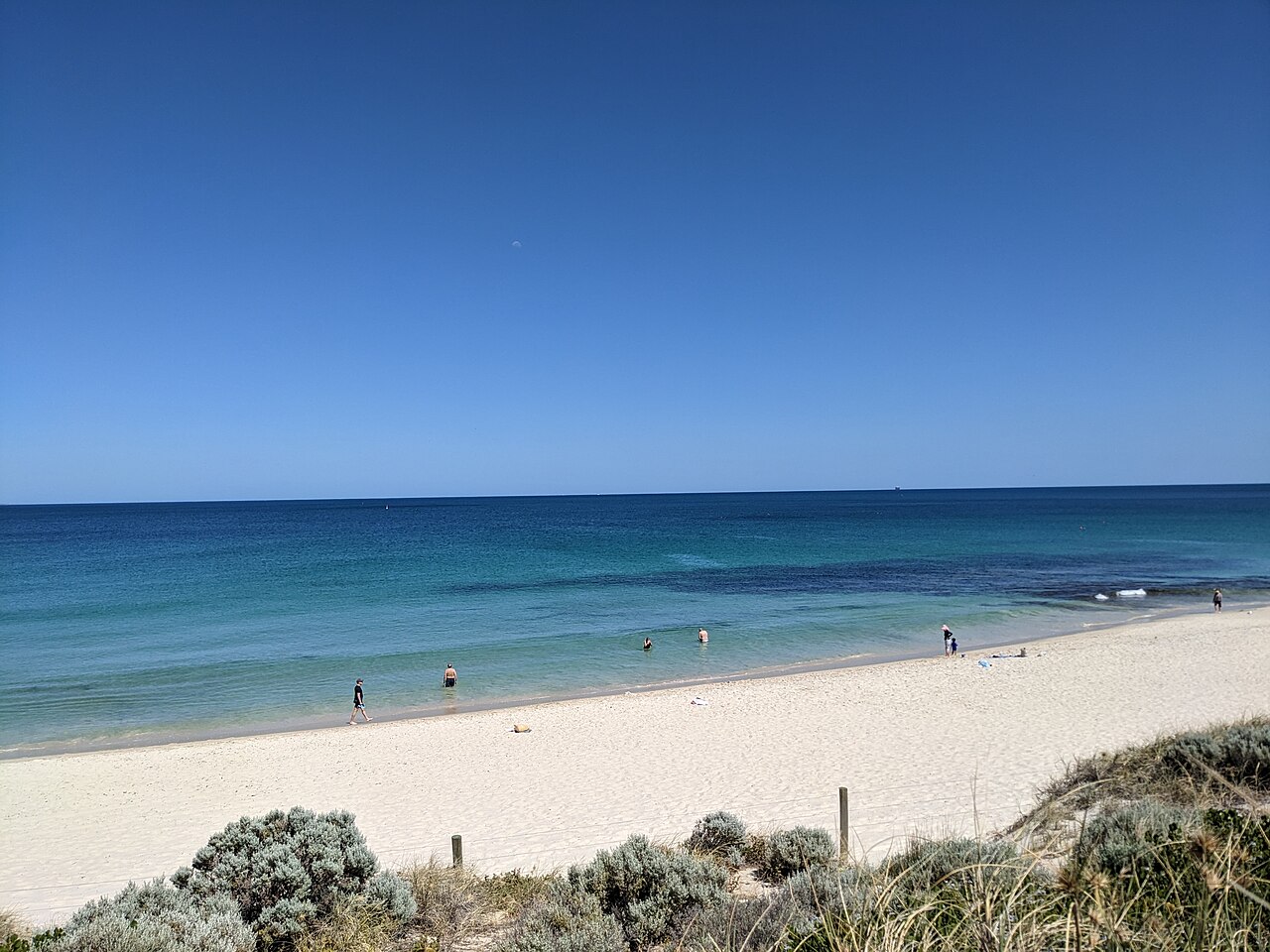
Swimmers punch through the incoming ocean swell, make a sharp turn north, and trace the outer edge of the circuit before heading back toward the shore. Coming into the shallows, the ocean swell lifts swimmers toward the beach for an intense sprint across the sand to tag their teammate. This shore changeover format keeps the energy high around the water's edge, giving spectators an up-close view of every leg.
WA's Big Ocean Relay: the team format at North Cottesloe
WA's Big Ocean Relay is an all-ages (9+) community team swim, set for Saturday 13 March 2027 at North Cottesloe Beach. The relay is swum as a 4x500m or a 4x1km, with teams entering across Male, Female or Mixed Team categories. The North Cottesloe Surf Life Saving Club supports athletes in disciplines such as surf boat rowing, surf ski, board paddling, swimming, beach sprints and beach flags.
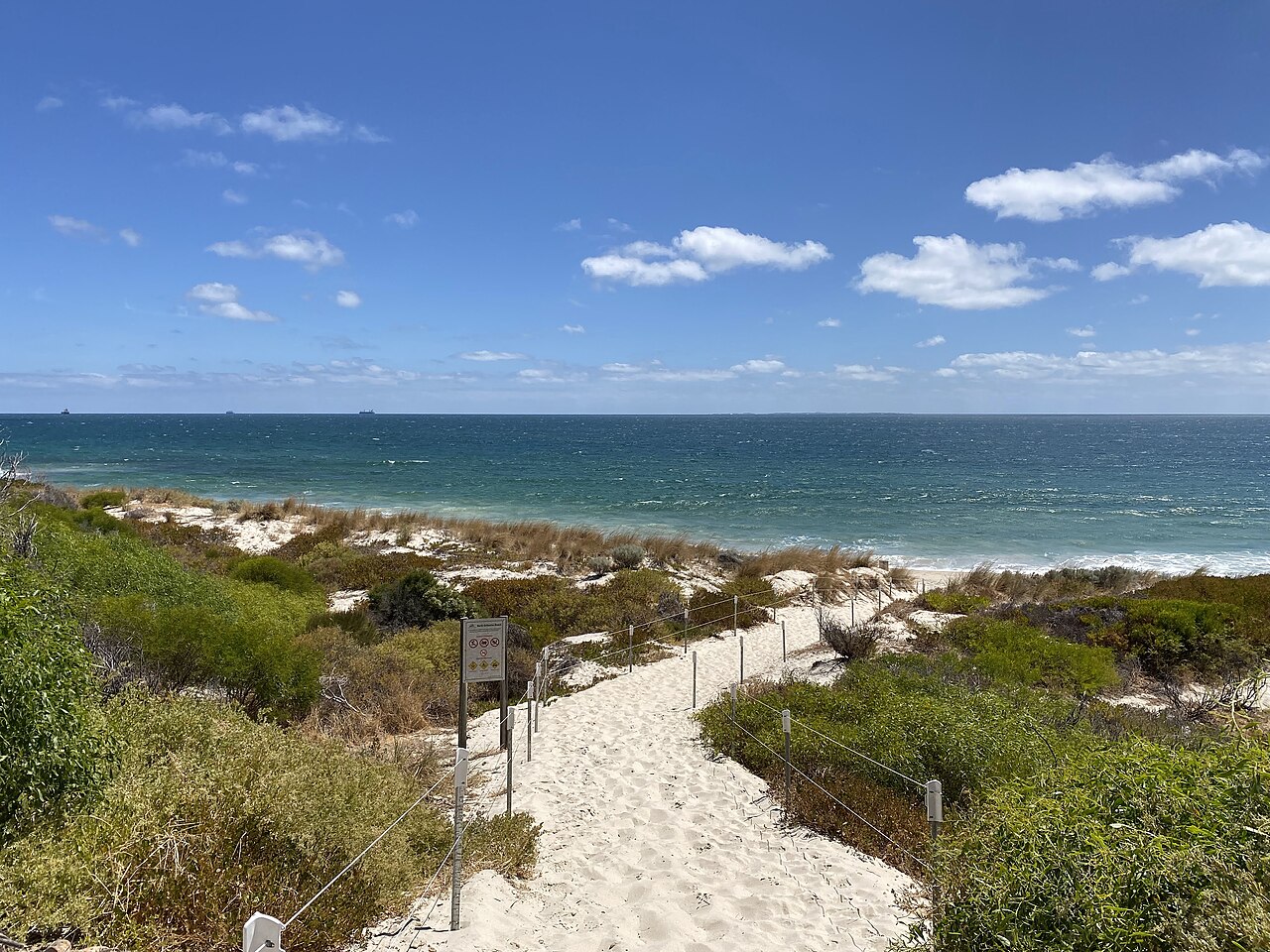
Limestone reefs and leafy seadragons at Mudurup
Long before swimmers gathered for ocean relays, this 1.5-kilometre stretch of Indian Ocean coast was known to the Noongar people as Mudurup. The coastline retains its open marine character, facing the full rolling energy of the sea. Two large groynes shelter City Beach's main swimming and surfing area, providing calmer water tucked behind the stone breakwaters. Beneath the surface at North Cottesloe, shallow limestone platforms form an intricate aquatic habitat. The beach is especially popular for snorkelling around Peters Pool, a naturally sheltered swimming spot set directly into the reef formations. Looking through the clear water, swimmers explore diverse marine communities that find shelter among the rocky shelves. Among the seaweed-covered limestone ledges, lucky swimmers can spot leafy seadragons, which drift quietly through the shallows disguised as floating kelp.
Historic pavilions and surf lifesaving clubs of Cottesloe
In 1904, an early ocean jetty was constructed along the beach, only to be destroyed by rough seas within that same year. Instead of turning away from the surf, ocean bathers organized themselves, establishing the Cottesloe Surf Life Saving Club in 1909 as Western Australia's very first lifesaving club. In 1918, the North Cottesloe Surf Lifesaving Club was founded on the race beach, making history as the first surf club in Australia to own and occupy its own land. Over time, an old offshore pylon became an enduring marine relic of the beach. In 1997, an 800-kilogram hazard that had fallen from the old pylon into three metres of water was removed.
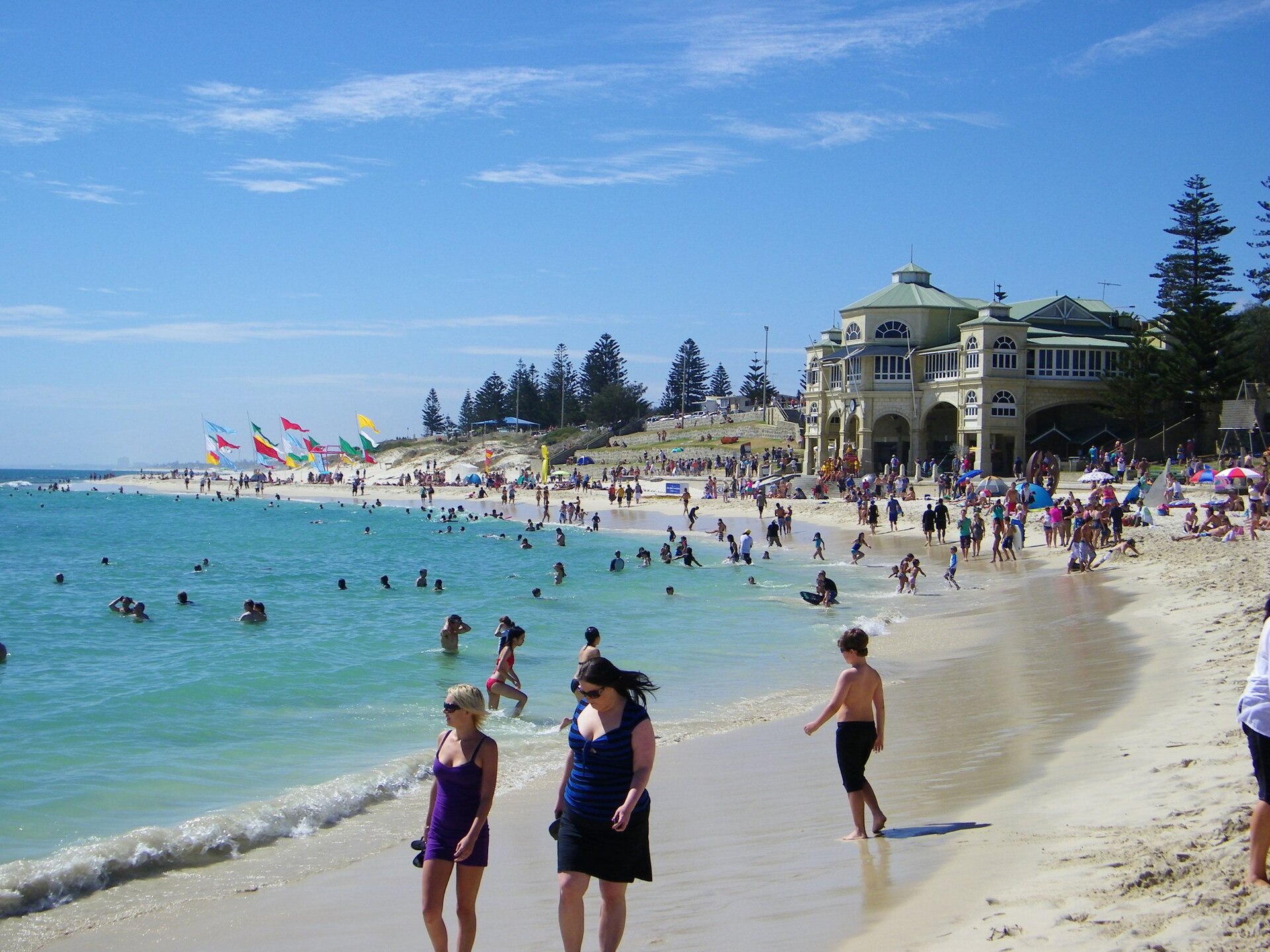
The original Indiana Tea House stood between 1913 and 1970. A dedicated Centenary Bathing Pavilion served saltwater bathers from 1929 until 1982, before a new building completed in 1983 incorporated an updated bathing pavilion into its lower floor. The enduring heritage of the shore was officially recognized in 2021, when Cottesloe Beach and the Indiana Teahouse were placed on the State Register of Heritage Places.
Norfolk pines, coastal cafes and outdoor art in March
Above the shoreline, North Cottesloe Beach opens onto broad grassy terraces framed by mature trees. Along the Cottesloe Esplanade, towering Norfolk pines cast deep shade across the lawns, creating a natural picnic spot where competitors and supporters gather after the race. A network of paved coastal paths skirts the edge of the sand, providing scenic routes for walkers, runners, and cyclists looking out over the surf. The beachfront stays vibrant throughout the day thanks to a cluster of cafes set right along the sand strip. Swimmers can sit outside with a morning coffee or a hot meal. In March, the sands take on an artistic role during the annual Sculpture by the Sea exhibition. Sculptures and outdoor art installations line the beach and surrounding lawns, turning the coastal path into an open-air gallery right at the water's edge.
Bicton Baths and the Point Walter sandbar
Known to the Whadjuk Noongar people as Kwoppa Kepa, meaning 'beautiful water', Bicton Baths sits within a sheltered tidal gorge that is heavily flushed by ocean currents. Before formal baths were constructed, the Melville Amateur Swimming Club used an old quarantine station jetty as an open-water platform. Today, the swimming site features a wooden U-shaped jetty fitted with exit ladders. The constant influx of clean seawater supports a diverse marine ecosystem, where sponges, sea anemones, nudibranchs, crabs, and starfish flourish alongside passing dolphins. The Noongar people knew Blackwall Reach as Jenalup, a sacred site celebrated in Dreaming stories. Because the reach lies close to the ocean, anglers and river watchers often encounter unusual marine fish catches.
Further along the southern bank, Preston Point marks a small headland known to the Noongar as Niergarup, meaning 'place of the salmon', where people camped and gathered for ceremonies. In 1827, James Stirling named the point after Lieutenant William Preston. Preston Point also holds significant naval heritage. In 1942, the naval base HMAS Leeuwin—named after the Dutch galleon Leeuwin that sighted Western Australia's coast in 1622—was relocated to Preston Point, about 5 km away, and the Royal Australian Navy still controls its historic wharves and boatsheds. Across on the river foreshore, the Dalkeith Hot Pool once drew bathers. A burst pipe casing from an artesian bore drilled in 1908 formed a hot spring in 1922.
Locals initially built limestone walls to enclose the warm pool, which caused a stir with nude bathing that brought police intervention in 1935. During World War II, a concrete structure replaced the pool so US Navy personnel could use the hot water for rest and recuperation, before the pool was closed and filled in during 1953. Five kilometres upstream from the river mouth at Fremantle lies Freshwater Bay, bounded by high limestone cliffs on its western and eastern foreshores and Point Resolution at its eastern end. A long sand spit to the south and the sheltering cliffs keep the bay calm and protected from prevailing winds. That southern spit is Point Walter, where sediment collected along an aeolianite band to form a sandbar extending over a kilometre into the river.
In 1837, settlers dug a canal through the sandbar to shorten boat trips between Perth and Fremantle by about 3.2 kilometres. In 1952, authorities delivered 30,000 tonnes of clean sand to Point Walter Beach to combat erosion and cover exposed limestone boulders. Northeast of the point lies the Swan River's oldest known shipwreck, a limestone barge known as 'Dearden's flat 1882'. Out on the narrow spit, the quiet shallows provide safe nesting grounds for pied oystercatchers, red-capped plovers, fairy terns, and black swans. It reminds swimmers of the rich variety of open water waiting across this sunlit Western Australian coast.
Sources: Cottesloe Beach · Indiana Teahouse
Course
Each swimmer completes one lap of a rectangular course off North Cottesloe Beach. Swimmers head straight out, turn north along the back of the course, and return to shore for the changeover.
Each team member swims two full laps of the 500m rectangular course, totaling 1km per swimmer. The course features clear sightlines and a beach-based changeover zone.
Previous editions
- 2026Mar 14, 2026
How to get there
WA’s Big Ocean Relay
Frequently asked questions
- When is WA’s Big Ocean Relay?
- WA’s Big Ocean Relay takes place on March 13, 2027.
- What distances does WA’s Big Ocean Relay offer?
- WA’s Big Ocean Relay offers 500 m and 1 km.
- How much is the entry fee for WA’s Big Ocean Relay?
- Entry fees by distance: 500 m: 50 AUD · 1 km: 50 AUD · 2 km: 200 AUD · 4 km: 200 AUD.
- Where does WA’s Big Ocean Relay take place?
- WA’s Big Ocean Relay is a sea swim. Location: North Cottesloe Beach, North Cottesloe, Western Australia, Australia.
- How do I register for WA’s Big Ocean Relay?
- The reference page for registering for WA’s Big Ocean Relay is https://www.openwaterswimming.com.au/events-ows/.
Where to stay
North Cottesloe offers a range of stays, from historic boutique hotels overlooking the Indian Ocean to self-contained apartments favored by visiting families. For a more immersive coastal experience, small guesthouses near the Marine Parade provide easy access to the beach. Expect to pay between $180 and $450 per night depending on the proximity to the shore and the level of amenities.
Things to do nearby
The area is best explored by combining coastal movement with local culture. Beyond the swim, the nearby Swan River is ideal for kayaking and SUP, offering a different perspective on the landscape. Visitors often spend the afternoon exploring the heritage sites in Fremantle or enjoying local wine and seafood at the many terrace restaurants that line the coast, providing a relaxed counterpoint to the high-energy atmosphere of the relay.
Swimmers
Other stages of this series
- Round 1: Leighton 2026-27North Fremantle, AU
- SWA OWS Series: CoogeeCoogee, AU
- SWA OWS Series: RockinghamRockingham, AU
- SWA OWS Series: MullalooMullaloo, AU
- SWA OWS Series: SorrentoSorrento, AU
- SWA OWS Series: Koombana BayBunbury, AU
Similar races


Comments
Transparency: some links on this page (stays, flights, experiences, gear) are affiliate links — if you book or buy through them, Omniathlon may earn a commission from the partner at no extra cost to you. As an Amazon Associate we earn from qualifying purchases.