
2.5K Pier to Cove Swim
- Distance: 2.4km
At a glance
- Distances
- 2.4 km
- Where
- Sea · La Jolla Cove, San Diego, California, United States
- Entry fee
- 95 €
- Registration
- lajollacoveswimclub.com
About the race
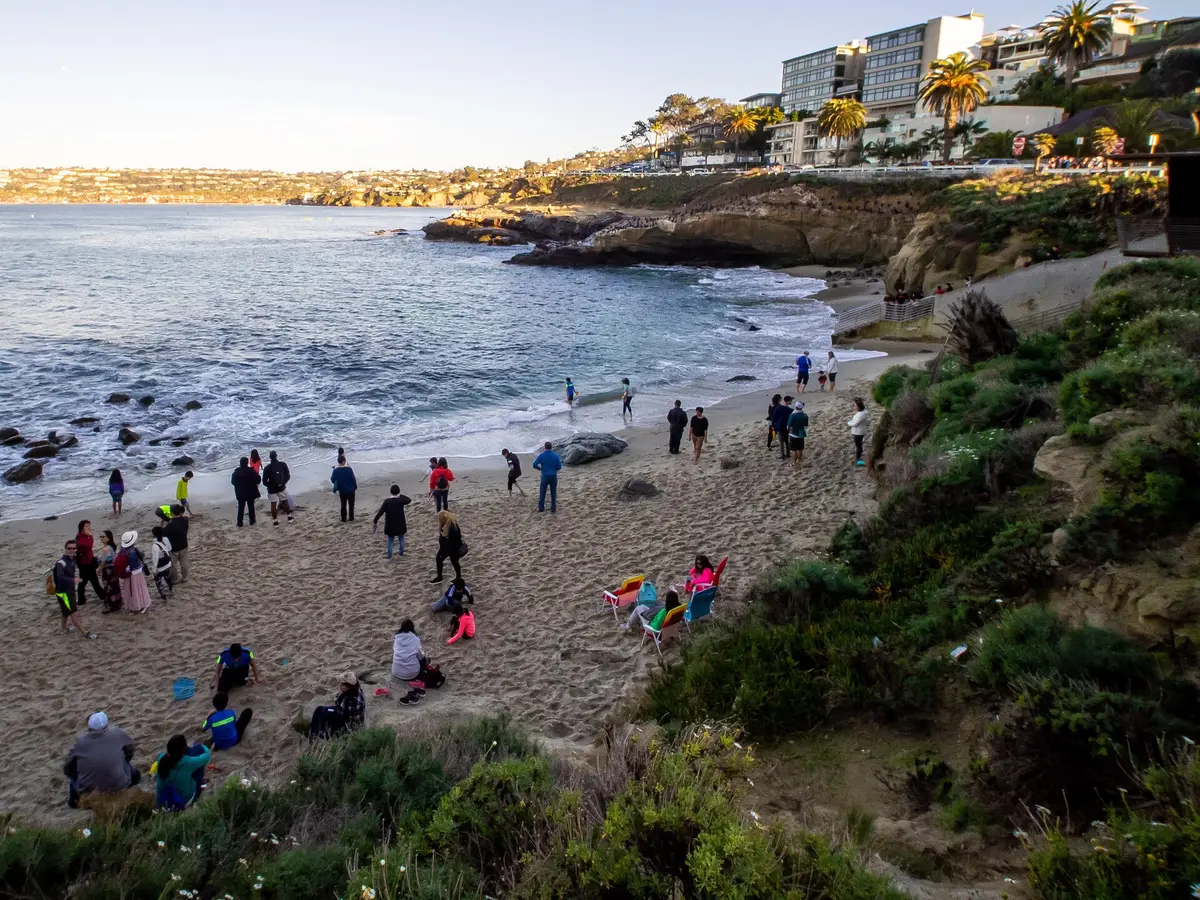
Setting off at Scripps Pier, swimmers compete on California's only continuous point-to-point coastal ocean race. Known as the 2.5K Pier to Cove Swim, this open water competition takes place in the sea at La Jolla Cove in San Diego, California. The official course covers a distance of 1.5 miles, or 2,414 meters, cutting directly through coastal waters from the pier to the protected shelter of the cove. Held annually in June, the event is organized and timed, offering awards to top finishers who complete the ocean route. Swimmers gather on the morning sand and navigate the breaking surf before finding a steady rhythm offshore. Leaving the beach behind requires navigating the Pacific surf zone, where conditions can vary from flat mornings to challenging coastal chop.
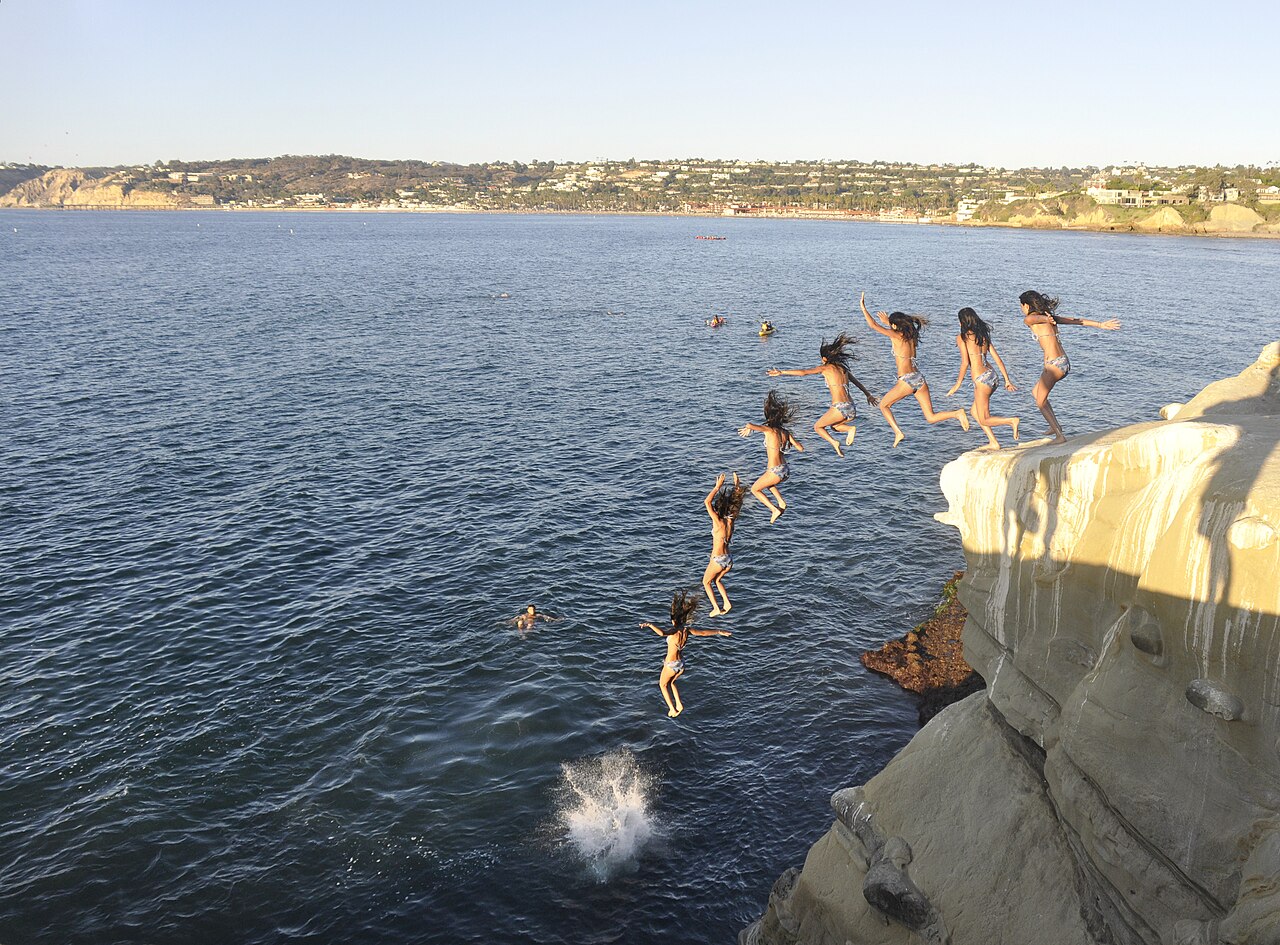
In past editions, brisk winds have created a ruffled surface across the water, and tight sets of shorebreak waves made it demanding to punch through the breakers into the open sea. Once past the surf, the course tracks over a giant underwater cavern, giving open water swimmers a deep sense of oceanic expansiveness under each stroke. Event safety is strictly overseen by the San Diego Lifeguards, who patrol the course alongside the field. Swimmers have a 90-minute time limit to complete the crossing, after which lifeguards escort any remaining participants safely from the water. The gathering is hosted by the La Jolla Cove Swim Club, a dedicated local group that maintains this traditional ocean swim.
Participants are supported by event sponsor SwimTrek and enjoy post-swim breakfast refreshments courtesy of Duke's La Jolla. Swimmers and spectators are advised to keep an eye out for the local wildlife that congregates naturally in the area, including sea lions, young pups, and sea birds. September also brings another historic event to these same waters, the La Jolla Cove Rough Water Swim, which stands as one of the oldest open water races in the world.
Scripps Pier: a century of ocean science at the start
The starting line sits beside Scripps Pier, an iconic scientific structure that extends 1,084 feet into the Pacific Ocean. Recognized as one of the longest research piers in the world, the original installation was completed in 1916 at a cost of approximately thirty-six thousand dollars. The pier anchors a profound legacy of scientific inquiry, having provided one of the longest continuous observational records of ocean conditions on Earth since its opening year. Researchers expanded their work in 1926 by initiating systematic bottom water sampling, compiling decades of physical and biological measurements right off the beach. Pumping systems draw up to 1.8 million gallons of seawater every day through the pier's infrastructure to supply the surrounding research laboratories and aquariums.
The pier was not always exclusively dedicated to academic research, as public fishing was permitted along the deck until 1941 for a modest daily fee of twenty-five cents. Today, swimmers enter the Pacific at the starting area. The start also borders the wide expanse of La Jolla Shores, a sandy beach running approximately one mile from the sea cliffs north of the cove up toward Black's Beach. This stretch serves as the only municipal boat launch within the San Diego city limits, making it a bustling center for ocean sports and paddling. The shores directly neighbor the San Diego-Scripps Coastal Marine Conservation Area and the Matlahuayl State Marine Reserve, where marine life flourishes in the shallows. Swimmers warming up along the shoreline share the coastal boundary with active marine life and ocean explorers.
Scripps Submarine Canyon: the deep chasm beneath the course
About one kilometre from the race area lies Scripps Canyon, a steep submarine chasm extending approximately 1.6 kilometres in length. This submerged canyon connects directly with La Jolla Canyon, forming an immense underwater trench characterized by near-vertical rock walls that plunge from depths of 70 feet down to 900 feet. Because La Jolla Cove faces into these deep waters, the sea temperature here is often colder than at other San Diego beaches, influenced by the cooler depths offshore. The abyss has long been an outdoor laboratory, where scientists in the 1970s and 1980s studied sediment transport, turbidity currents, and canyon erosion. Human exploration in the canyon reached a historic peak in 1965 with the SEALAB II project, an ambitious naval experiment where divers lived in an underwater habitat at a depth of 62 meters for 15 days.
The deep trenches within the San Diego-Scripps Coastal Marine Conservation Area provide a native habitat for swellsharks, specialized bottom-dwelling fish adapted to the canyon walls. In April 2024, researchers observed large numbers of pelagic red tuna crabs congregating within the canyon depths, with many washing ashore onto nearby beaches due to cold water currents. About six kilometres away along the coastal bluffs, the protected scenery of Torrey Pines State Natural Reserve overlooks the Pacific. This coastal reserve features an elevated plateau and sandstone cliffs made of sandy, unstable material prone to natural collapse. At the southern end of the reserve beach, an imposing promontory called Flat Rock projects straight into the surf, while a coastal lagoon provides resting grounds for migrating seabirds.
Santa Ana winds periodically sweep the cliffs with warm, dry breezes that desiccate the local foliage. The reserve shelters the Torrey pine, the rarest pine species in North America, which survives naturally only in this park and across a narrow coastal strip in nearby Del Mar. Migrating gray whales and humpback whales can frequently be spotted out in the blue Pacific from the cliff tops during their seasonal journeys along the coastline.
The seven sea caves of La Jolla sandstone cliffs
The coastline features dramatic sandstone cliffs formed 75 million years ago. Located just north of the cove, a cluster of seven sea caves was naturally formed. These grottos have stood as a major coastal tourist attraction since the late nineteenth century, when visitors originally explored them under the name of the Mammoth Caves. Among these seven geological formations, Sunny Jim's Sea Cave holds a unique distinction as the only underwater cave in California accessible from dry land. In 1902, two ambitious laborers hand-excavated an underground tunnel through the cliff using nothing more than picks and shovels, opening pedestrian access to the cavern. Sunny Jim's Sea Cave is also accessible from the ocean, where the Pacific tide surges directly into its shaded opening. Visitors standing inside the damp, echoing cavern can occasionally hear the barking calls of California sea lions reverberating through the stone chamber.
Matlahuayl State Marine Reserve: swimming with local wildlife
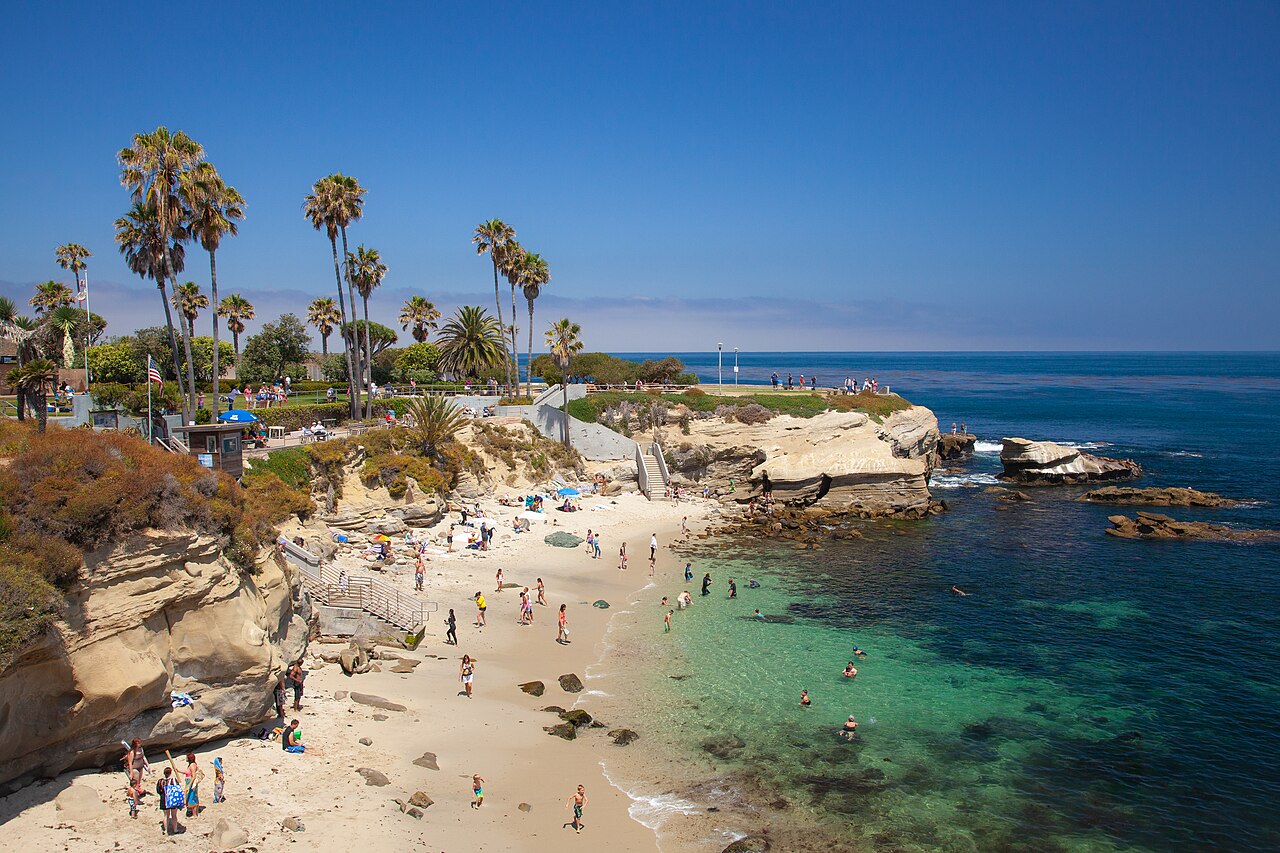
The waters along the course border the Matlahuayl State Marine Reserve, a marine sanctuary protecting sandy beaches, rocky reefs, surfgrass beds, and sea caves down past 330 feet. At the southern end of La Jolla Shores, harmless bottom dwellers like leopard sharks, diamond stingrays, round stingrays, and guitarfish commonly congregate during specific times of the year. When very low tides recede, an intricate network of tide pools is revealed across the exposed rocky reefs around the cove. The final stretch of the swim leads right into the sandy amphitheater of La Jolla Cove, where a prominent colony of California sea lions has hauled out on the sandstone ledges in significant numbers since 2013.
The Children's Pool is a beach originally created in 1931 when a curved concrete breakwater was erected to provide a sheltered, wave-free bathing area for children. In the mid-1990s, a wild colony of harbor seals moved onto the tranquil sandbar, recording their first pup births there in 1999. By 2009, approximately 200 harbor seals regularly used the sand, observing their official pupping season from mid-January to mid-April each year. Emerging through the surf at La Jolla Cove, swimmers step ashore after crossing one of the most vibrant marine environments in the Pacific.
Sources: La Jolla Cove · Scripps Canyon · La Jolla Shores · San Diego-La Jolla Underwater Park · Scripps Pier
Course
1.5-mile swim from Scripps Pier to La Jolla Cove. Open water event with challenging conditions and water temperatures. Safety overseen by San Diego Lifeguards.
Awards
Awards for top finishers.
Previous editions
Since 2026
How to get there
Directions to La Jolla Cove are provided via a Google Maps link on the contact page.
2.5K Pier to Cove Swim
Frequently asked questions
- What distances does 2.5K Pier to Cove Swim offer?
- 2.5K Pier to Cove Swim has a single distance: 2.4 km.
- How much is the entry fee for 2.5K Pier to Cove Swim?
- The entry fee is 95 €. Online registration sold out. Beach walk-on registration available at $100.
- Where does 2.5K Pier to Cove Swim take place?
- 2.5K Pier to Cove Swim is a sea swim. Location: La Jolla Cove, San Diego, California, United States.
- How do I register for 2.5K Pier to Cove Swim?
- The reference page for registering for 2.5K Pier to Cove Swim is https://www.lajollacoveswimclub.com/event-6526037.
Where to stay
La Jolla offers a mix of coastal stays ranging from high-end boutique hotels near the village center to more modest rentals. Expect to find historic inns and modern lodges within walking distance of the Cove. Prices typically range from 200 EUR to over 500 EUR per night depending on the proximity to the oceanfront. For a more rugged experience, nearby coastal campgrounds provide a budget-friendly alternative for those looking to stay closer to the natural landscape.
Things to do nearby
The area is a hub for marine-focused leisure. Visitors often spend the afternoon snorkeling or scuba diving within the protected reserve to observe the diverse fish populations. Kayaking and stand-up paddleboarding tours are available to explore the sea caves that line the cliffs. For those preferring land-based activities, the coastal trails offer expansive views of the Pacific, and the local village center features a variety of culinary spots ranging from casual seafood shacks to refined dining options overlooking the harbor.
Swimmers
What to see around
1. Snorkeling at La Jolla Cove (marine reserve). 2. Kayaking in the La Jolla sea caves. 3. Hiking at Torrey Pines State Natural Reserve. 4. Visit to the Birch Aquarium. 5. Scenic walk at Ellen Browning Scripps Park.
Similar races


Comments
Transparency: some links on this page (stays, flights, experiences, gear) are affiliate links — if you book or buy through them, Omniathlon may earn a commission from the partner at no extra cost to you. As an Amazon Associate we earn from qualifying purchases.