
67 Maratón Internacional Acapulco
- Dec 6, 2026
- Distances: 1km and 5km
At a glance
- Next edition date
- December 6, 2026
- Distances
- 1 km · 5 km
- Where
- Sea · Playa Caleta, Acapulco, Acapulco, Guerrero, Mexico
- Entry fee
- 72.19 €
- Registration
- tiempometa.com
About the race
Beneath the surface, near the rocky islet of Yerbabuena, rests a submerged bronze statue of the Virgin of the Seas. This underwater landmark inspires the 67 Maratón Internacional Acapulco, Virgen de Guadalupe Reina de los Mares, an open water swimming race staged in the sea off Playa Caleta in Acapulco, Guerrero, Mexico. The classic one-kilometre crossing sets out from the sands of Playa Roqueta on the offshore island and swims directly across the open channel to finish at Playa Caleta. For endurance swimmers tackling the five-kilometre challenge, the route starts at Playa Caleta and follows the sweeping coastline of Acapulco Bay to reach the beach at Hotel Emporio. The ocean along this coast maintains a remarkably stable tropical warmth, creating comfortable open-water swimming conditions year-round.
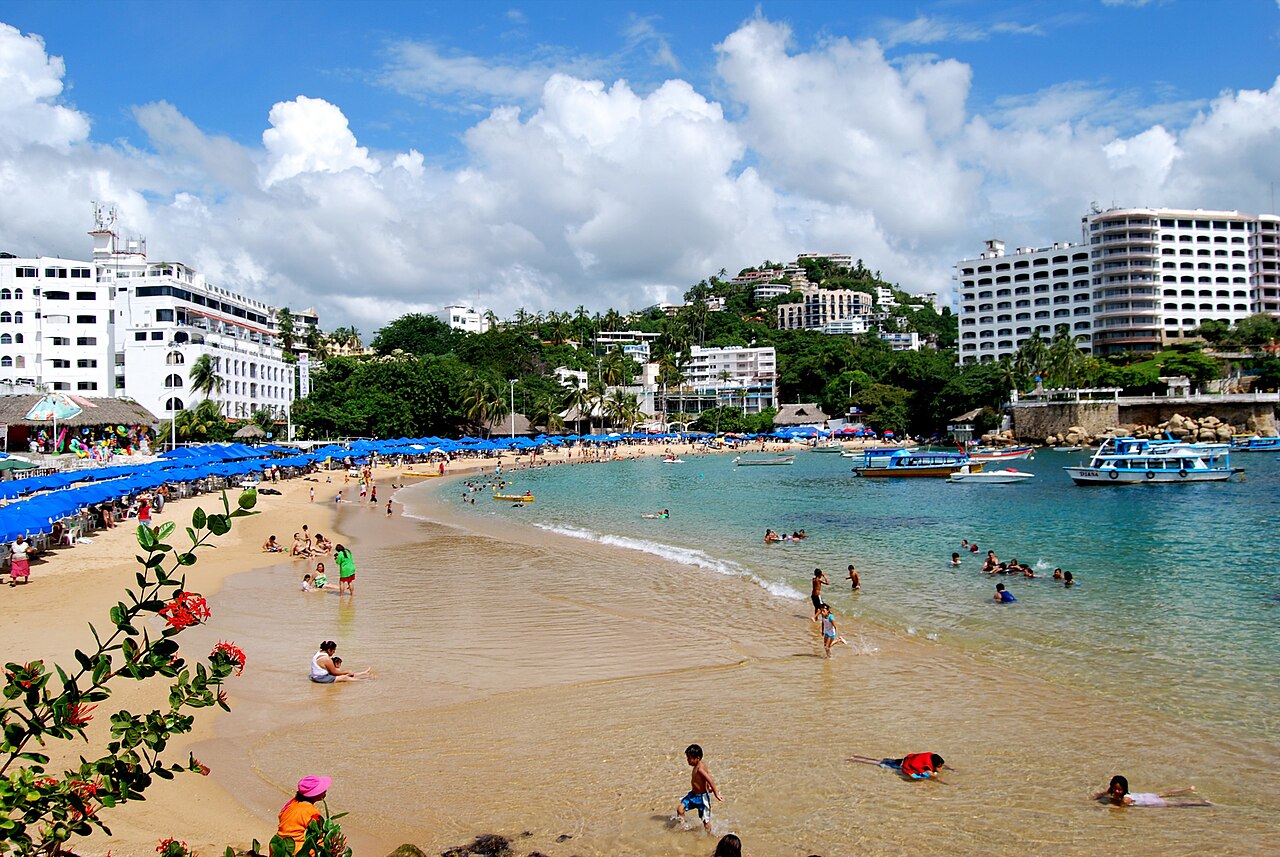
The marathon weekend: La Roqueta, the Elephant Rock and Emporio
The 65th Maratón Internacional Acapulco, held on 7 and 8 December 2024, was based at the beaches of Caleta and Caletilla and on Isla La Roqueta. The municipal government describes the Maratón Internacional Acapulco as one of the longest-running open water swimming competitions in Mexico. The 2024 edition gathered more than 4,000 participants in categories including children, veterans and swimmers with disabilities, coming from states such as Estado de México, Puebla and Veracruz and from the United States and Ecuador. Competitors in the 62nd edition in 2021 ranged from 8 years old to over 70, together with athletes with disabilities, and swam the 1 km from La Roqueta to Playa Caleta. On the second day of the 2021 edition the 5 km course started at Playa Caleta, passed the Piedra del Elefante (Elephant Rock) and ended on the beach of the Emporio hotel.
Isla de La Roqueta: volcanic reefs and ancient Pacific corridors
The island of Isla de La Roqueta stands as a rugged natural barrier, formed from intrusive igneous rock of ancient volcanic origin. It is separated from the mainland by the Bocachica Channel, a stretch of open water nearly two kilometres long that drops to average depths of twenty-five metres. Archaeological explorations carried out by the INAH since 2017 have identified seven archaeological sites and a paleontological site on the island, uncovering ancient artefacts belonging to the Olmec and Toltec cultures. In addition to this deep heritage, the island forms a crucial link within an expansive marine biological corridor running along the Pacific coast all the way from Mexico to Peru.
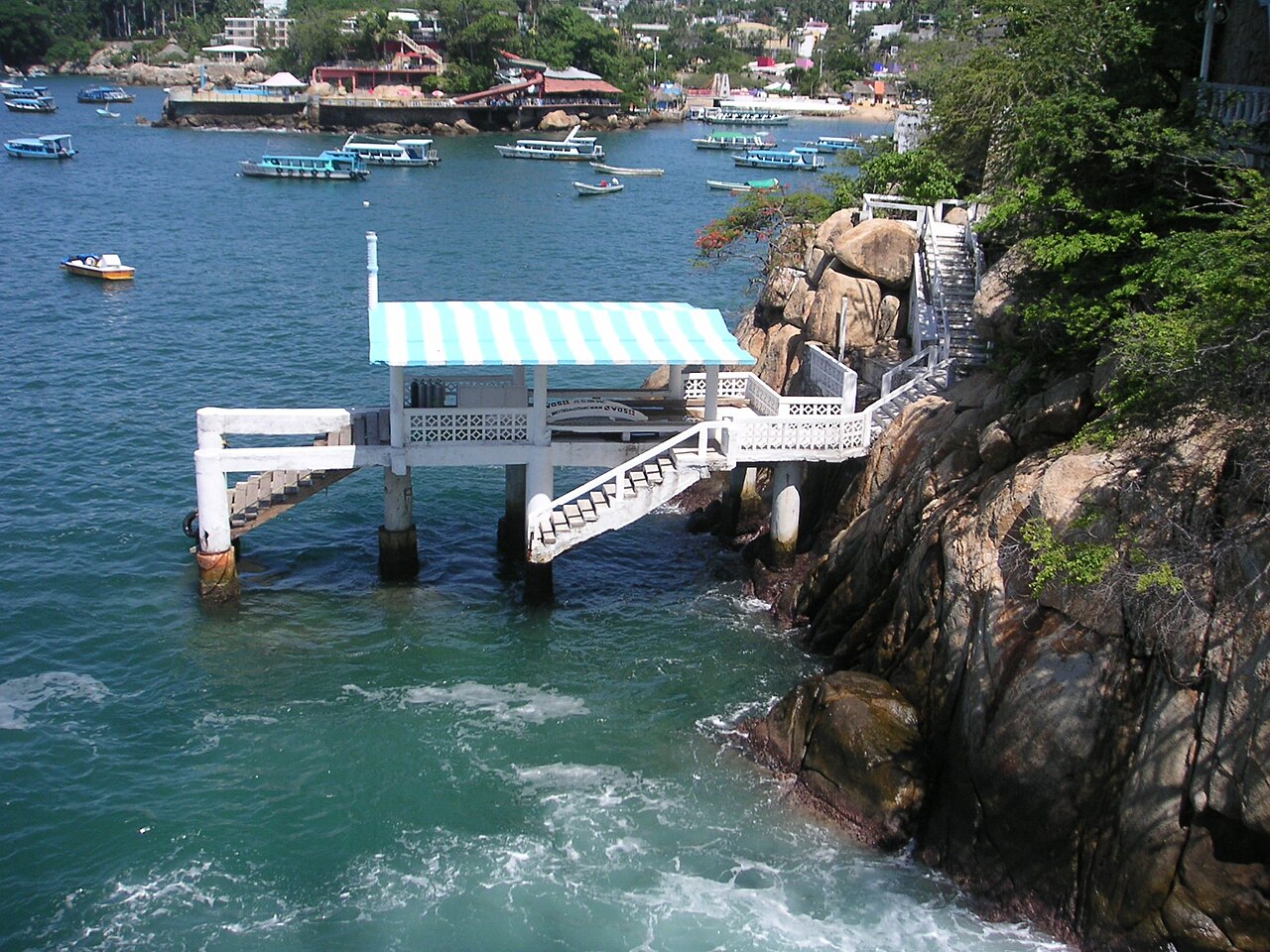
Acapulco Bay and Fuerte de San Diego: galleons, corsairs, and naval sieges
Acapulco is nestled within a deep, semicircular bay that has functioned as a premier natural harbour since the early colonial era. In 1565, the establishment of the trans-Pacific trade route linked Acapulco to Manila, making the port second only to Veracruz in the commerce of New Spain. The constant arrival of galleons made the anchorage a prime target for British and Dutch privateers who raided the coast throughout the sixteenth century. To safeguard the galleons and their precious cargo, the crown began construction of the Fuerte de San Diego in 1616. An earthquake damaged the fortress during its early construction, and when a catastrophic tremor destroyed it in 1776, engineers rebuilt it by 1783 into a massive fortress capable of housing two thousand people with provisions for a whole year.
Artillery tests demonstrated that the fortress cannons could reach Punta del Grifo, effectively barring unauthorized ships from passing into the bay. These waters witnessed pivotal moments during the Mexican War of Independence, when insurgent general Hermenegildo Galeana used the shoreline of Playa Caleta to observe royalist troop movements. On June 9, 1813, insurgent forces launched a daring amphibious assault across the Bocachica Channel, taking Isla de La Roqueta and severing royalist supply lines until the Spanish garrison surrendered the fort to José María Morelos. Decades later, naval fire returned during the bombardment of Acapulco in January 1863, when a French squadron attacked the forts and the warship Pallas took over fifteen cannon hits before retreating French forces threw several coastal guns into the sea.
La Quebrada: the legendary cliff divers of the Pacific bluffs
La Quebrada began as a man-made project in 1799, when engineers attempted to blast an air channel through the cliffs to bring ocean breezes into the enclosed port basin. The project was abandoned, revived briefly in 1876 by Colonel José María Lopetegui, and left unfinished, creating a dramatic natural amphitheatre where open ocean funnels between sheer rock walls. In 1934, local divers formally organized the La Quebrada Cliff Divers, turning the precipitous rock walls into an iconic diving arena. Modern divers scale the cliffs and leap from rock ledges situated at heights of twelve and twenty-four metres above the surge. Early divers performed even more perilous jumps from heights of up to forty-five metres, plunging into an inlet where the water is no deeper than four metres.
Navigating such extreme drops requires an intimate understanding of the ocean swell: divers must carefully time their leap to coincide with an incoming wave, ensuring the ocean surge fills the rocky trench with enough depth to break their fall safely.
Playa Caleta: golden sands, mid-century glamour, and beachfront palapas
Playa Caleta offers swimmers a sheltered sanctuary of soft golden sand and calm, warm waters. The beach has gentle, rolling waves similar to neighbouring Caletilla, Majahua, and Pichilingue. A rocky islet separates Caleta from its twin beach, Caletilla, home to a marine aquarium populated by fish, reptiles, and seals. During the mid-twentieth century, this islet held the private home of Maximino Ávila Camacho, reflecting the post-war allure of the bay. Throughout the 1950s and 1960s, Playa Caleta served as an international glamour hub, welcoming cultural icons like Frank Sinatra and Elvis Presley to its shores. Today, that relaxed beachfront culture survives along the water's edge, where rows of seafood restaurants serve fresh catches with panoramic views across the bay. Swimmers can finish their day by the warm Pacific shallows.
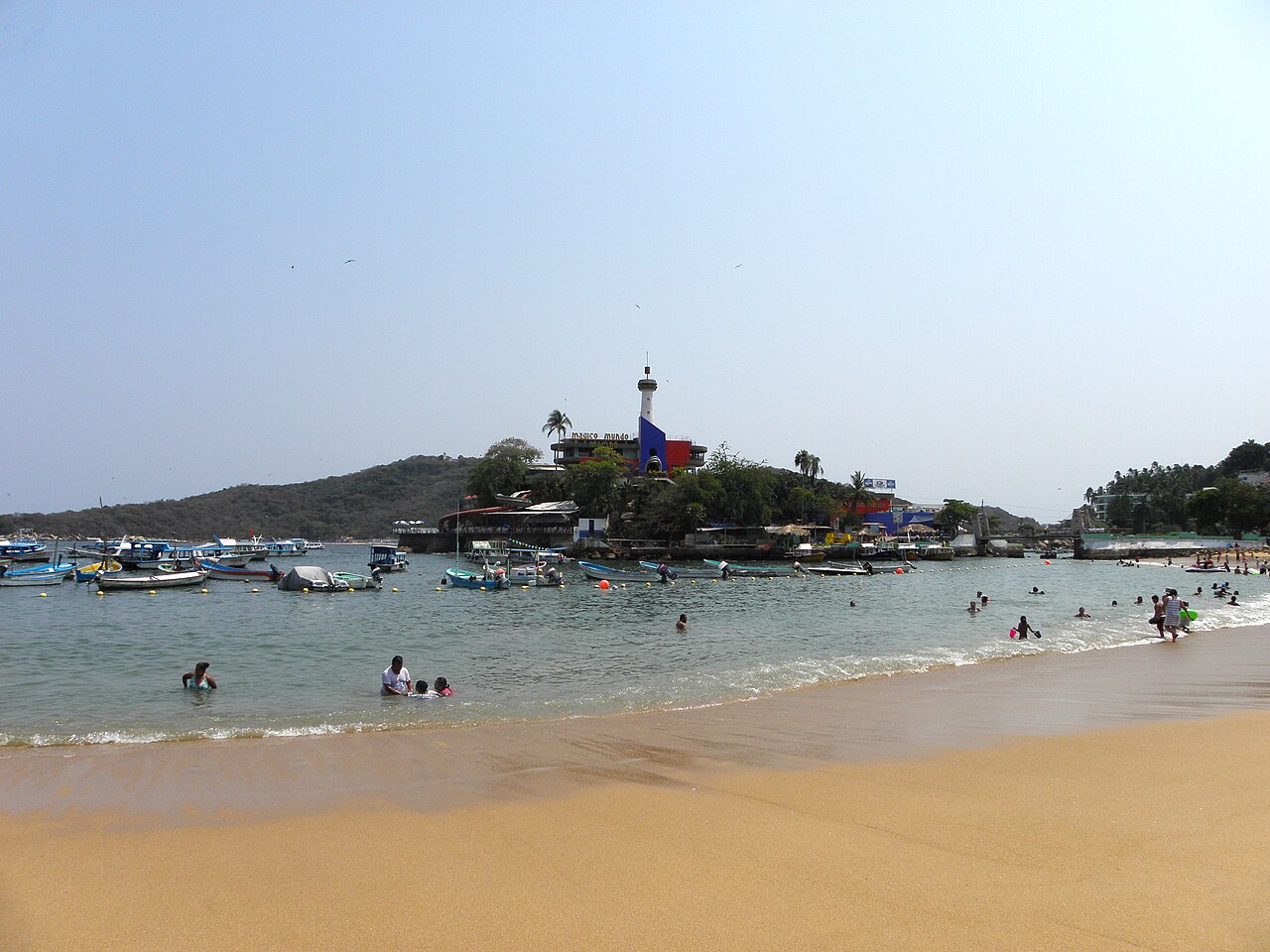
Sources: Acapulco · Playa La Condesa
Course
Point-to-point course starting at Playa Roqueta and finishing at Playa Caleta.
Point-to-point course starting at Playa Caleta and finishing at the beach of Hotel Emporio.
How to get there
67 Maratón Internacional Acapulco
Frequently asked questions
- When is 67 Maratón Internacional Acapulco?
- 67 Maratón Internacional Acapulco takes place on December 6, 2026.
- What distances does 67 Maratón Internacional Acapulco offer?
- 67 Maratón Internacional Acapulco offers 1 km and 5 km.
- How much is the entry fee for 67 Maratón Internacional Acapulco?
- The entry fee is 72.19 €. Registration details and fees are available in the official PDF call (Convocatoria) or via the external registration portal.
- Where does 67 Maratón Internacional Acapulco take place?
- 67 Maratón Internacional Acapulco is a sea swim. Location: Playa Caleta, Acapulco, Acapulco, Guerrero, Mexico.
- How do I register for 67 Maratón Internacional Acapulco?
- The reference page for registering for 67 Maratón Internacional Acapulco is https://tiempometa.com/t/registration?event=7b208e4ce5b1eac4fb6042ea63d2ca96&api_key=95f6dbf6abdf801d.
Where to stay
Acapulco offers a wide spectrum of lodging, from traditional boutique hotels overlooking the port to high-rise resorts along the Costera. For a more authentic feel, small family-run guesthouses are available near Playa Caleta. Budget travelers can find simple rooms starting at $40–$60 per night, while beachfront hotels in the tourist center range from $120 to $250 per night, depending on proximity to the finish line at Hotel Emporio. Find your base for the swim.
Things to do nearby
Beyond the race, the bay provides excellent conditions for sea kayaking and stand-up paddleboarding, particularly around the protected waters of Isla Roqueta. Gastronomy enthusiasts can explore local markets for traditional Guerrero-style seafood, while those interested in history can visit the various archaeological sites scattered along the nearby hills. For a change of pace, hiking trails in the surrounding mountains offer elevated views of the Pacific coastline. Discover weekend activities.
Swimmers
Similar races


Comments
Transparency: some links on this page (stays, flights, experiences, gear) are affiliate links — if you book or buy through them, Omniathlon may earn a commission from the partner at no extra cost to you. As an Amazon Associate we earn from qualifying purchases.