
Aguas Abiertas Huatulco
- Oct 11, 2026
- Last edition date
- Distances from 500m to 7km
At a glance
- Last edition date
- October 11, 2026
- Distances
- 500 m · 1.5 km · 3 km · 7 km
- Where
- Sea · Bahías de Huatulco, Huatulco, Oaxaca, Mexico
- Registration
- granrettoventas.com
About the race
Along twenty-six kilometers of southern Mexican Pacific coastline, nine bays and thirty-six white sand beaches carve into Oaxaca. In this sheltered coastal haven of Bahías de Huatulco, Oaxaca, swimmers take to the open Pacific sea for Aguas Abiertas Huatulco. Organized by Gran Retto with the support of the Municipality of Santa María Huatulco, the competition has built a reputation over its annual editions as a showcase of endurance swimming. The event offers four distinct courses suited to varying levels, spanning 500 meters, 1,500 meters, 3,000 meters, and a grueling 7,000-meter crossing. The swimming routes trace lines across three prominent coastal inlets: the bays of Santa Cruz, Chahué, and Maguey. In October, the Pacific waters present authentic open water conditions where tactical execution becomes essential.
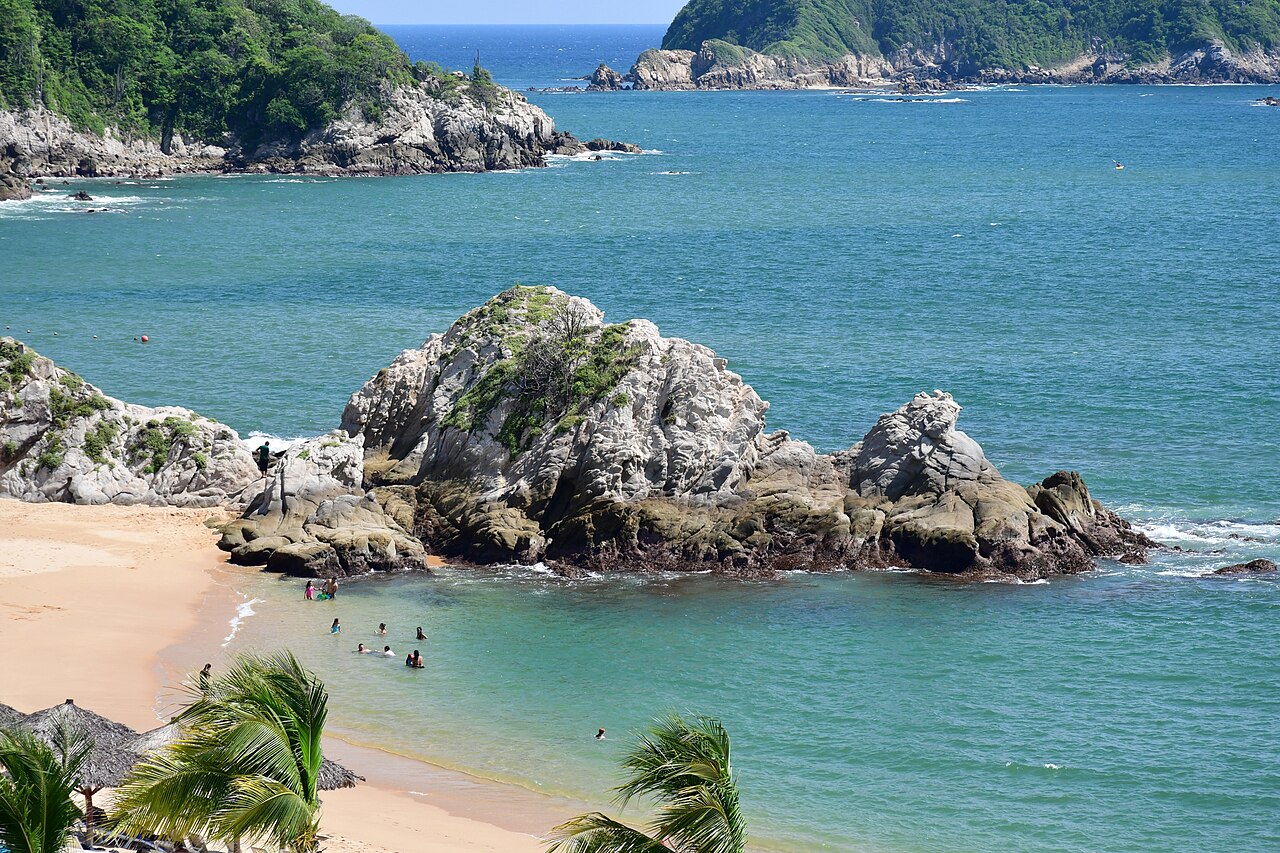
Swimmers must read the changing ocean currents, lock onto buoys and coastal landmarks across the bay mouths, and practice pack drafting in the surging water. Managing the entry and exit through the Pacific surf requires steady footing and careful timing with the rolling waves.
Courses by bay: Chahué circuits and two crossings
The 500 m and 1.5 km events of Aguas Abiertas Huatulco are swim circuits in Chahué bay, with time limits of 30 and 45 minutes. The 3 km Gran Retto is a crossing from Santa Cruz to Chahué, with a time limit of two hours and thirty minutes. The 7 km GR Xtreme is a crossing from Maguey to Chahué, with a time limit of four hours and thirty minutes. Swimmers caught using propulsion aids such as fins or paddles are disqualified. When the time limit of a distance runs out, the organisers take the swimmers still on the route off it, remove their timing chip and bring them close to the finish to complete their trip.
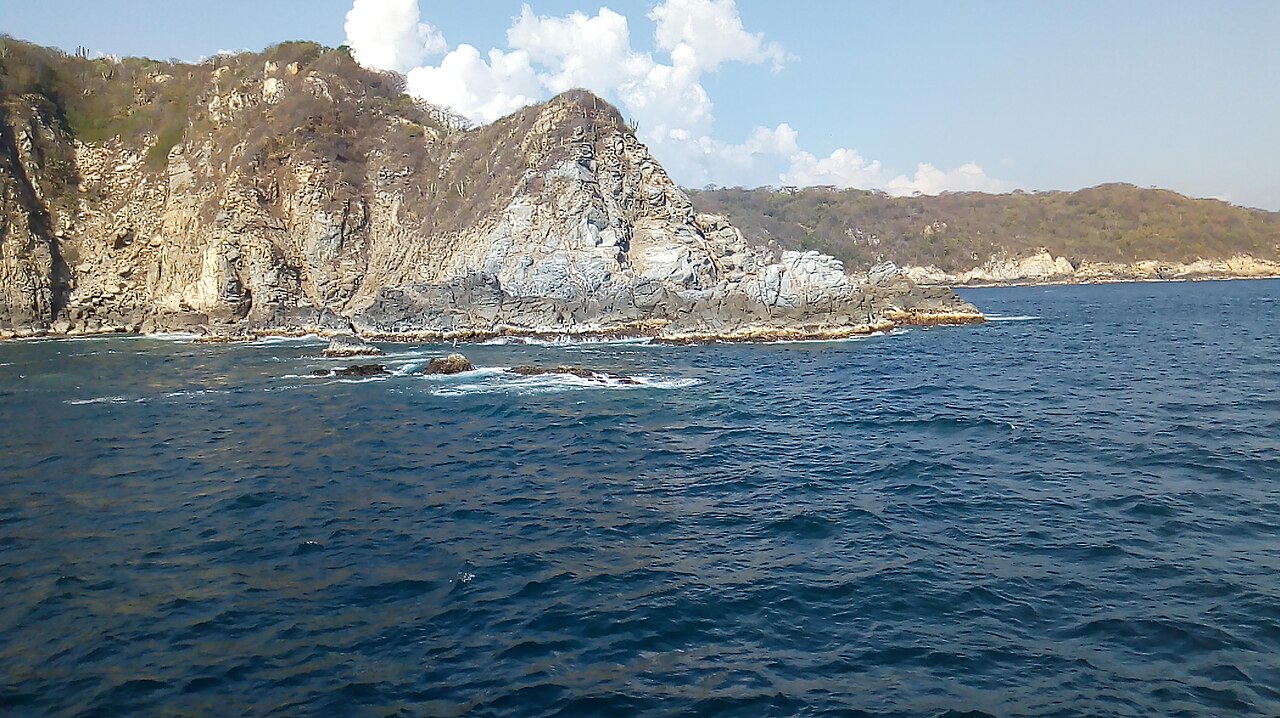
The bays of Huatulco: coral barriers and deep water coves
At Playa La Entrega, for example, swimmers encounter an enclosed cove embraced by towering rock formations that create a naturally protected marine pocket. Beneath the surface at La Entrega, the beach features a steep thirty-degree slope that plunges rapidly into the sea, quickly reaching depths between 7.6 and 9.1 meters. Despite the proximity of the open Pacific and its rolling currents, a protective coral reef barrier breaks incoming swells, transforming the cove into calm, tranquil water. This natural breakwater allows swimmers to stroke smoothly through clear depths without contending with harsh breakers.
Parque Nacional Huatulco: coral reefs and marine life
About nine kilometers from the race area lies the Huatulco National Park, established in 1998 to safeguard 11,890.98 hectares of southern Mexico's delicate coastal and marine environments. Later recognized as a UNESCO Biosphere Reserve in 2006, the park protects over 5,516 hectares of sea alongside more than 6,374 hectares of land, preserving the most significant coral communities in the Mexican Pacific. The marine sanctuary extends approximately two nautical miles offshore, framed between Punta Sacrificios to the west and Punta Violín to the east. This protected seaward perimeter incorporates five of Huatulco's nine bays: San Agustín, Chachacual, Cacaluta, Órgano, and Maguey, where race swimmers take their strokes.
Pre-Hispanic shores and the naming of Playa La Entrega
The connection between coastal people and these Pacific waters reaches back over a millennium, evidenced by archaeological remains approximately 1,000 years old preserved within the national park. Since pre-Hispanic antiquity, indigenous Mixtec groups from Pinotepa de Don Luis have traveled to these rocky intertidal zones to extract purple dye from the marine snail Plicopurpura pansa. Their enduring practice represents a delicate harvesting craft tied intimately to the natural rhythm of the tides. Modern maritime history has also left its imprint along these shores, particularly at Playa La Entrega, a compact beach only about 150 meters long. It was onto this narrow strip of white sand that Mexican independence hero Vicente Guerrero was delivered by sea to his enemies in January 1831, giving the cove its enduring name. Today, the tranquil amphitheater of rock and sand stands as a peaceful haven for visiting swimmers.
From Bahía San Agustín to the Copalita estuary
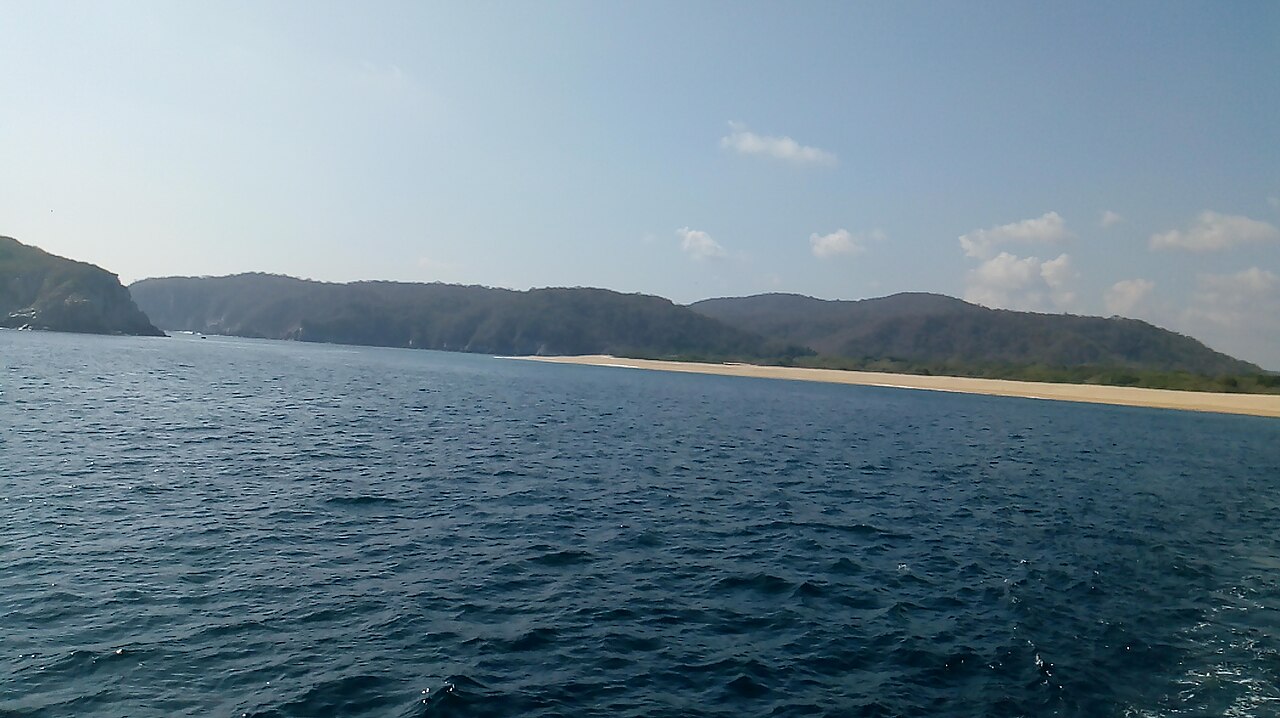
Exploring beyond the central inlets reveals the untouched wildness of the Oaxacan Pacific coast. Further along the coastline, Bahía Cacaluta and Bahía Chachacual remain completely isolated from road networks and modern construction, reachable solely by boat across the open ocean. In these secluded bays, pristine beaches open directly to the Pacific swell under undisturbed coastal skies. Bahía San Agustín stands as the largest of the nine bays, famous for the picturesque rocky islets that punctuate its calm turquoise waters. On the eastern flank, beyond Bahía Conejos, the marine journey reaches its boundary at the mouth of the Copalita River, where freshwater currents spill into the sea along a sweeping stretch of sand beaches.
Sources: Huatulco · La Entrega · Parque nacional Huatulco
Course
Previous editions
- 2025results
How to get there
Aguas Abiertas Huatulco
Frequently asked questions
- When was the last edition of Aguas Abiertas Huatulco?
- The last edition of Aguas Abiertas Huatulco took place on October 11, 2026.
- What distances does Aguas Abiertas Huatulco offer?
- Aguas Abiertas Huatulco offers 500 m, 1.5 km, 3 km, and 7 km.
- Where does Aguas Abiertas Huatulco take place?
- Aguas Abiertas Huatulco is a sea swim. Location: Bahías de Huatulco, Huatulco, Oaxaca, Mexico.
- How do I register for Aguas Abiertas Huatulco?
- The reference page for registering for Aguas Abiertas Huatulco is https://www.granrettoventas.com/Sinsc/ListadoFichas?e=01c3ae3d-d5ae-4ac5-b594-b339d1ddce2f.
Where to stay
Huatulco offers a spectrum of lodging ranging from large-scale resorts in the Tangolunda area to more intimate, family-run establishments near the secondary bays. Travelers can secure boutique hotels overlooking the marina for $150–$250 per night, or opt for simpler, coastal-style bungalows and guest houses closer to the public beaches, often found for $60–$120 per night. Camping is generally restricted to specific designated zones, so checking local park regulations is advised for those seeking a more rustic experience during the race weekend.
Things to do nearby
Beyond the water, the region is defined by the biodiversity of the Sierra Madre foothills. Visitors can engage in guided trekking through the coastal jungles to reach isolated coves, or rent kayaks to explore the mangrove systems that feed into the Pacific. The town of Santa María Huatulco also offers opportunities to explore regional culinary traditions, particularly those centered around Oaxacan mezcal and locally sourced seafood, providing a necessary contrast to the physical intensity of the race day.
Swimmers
Similar races


Comments
Transparency: some links on this page (stays, flights, experiences, gear) are affiliate links — if you book or buy through them, Omniathlon may earn a commission from the partner at no extra cost to you. As an Amazon Associate we earn from qualifying purchases.