
Batalla de Rande
- Jun 20, 2026
- Last edition date
- Distance: 27km
At a glance
- Last edition date
- June 20, 2026
- Distances
- 27 km
- Where
- Sea · Playa de Rodas (Cíes) → Isla de San Simón, Vigo, Galicia, Spain
- Entry fee
- 325 €
- Registration
- batalladerande.com
About the race
Setting off from Playa de Rodas means stepping into oceanic waters that funnel twenty-seven kilometers inland through the estuary. Batalla de Rande is an open water swimming race held in the sea of the Ría de Vigo, organized by Batalla de Rande in the province of Pontevedra, Galicia. From the pure Atlantic rim to the innermost sheltered bay, swimmers cross the entire geography of the ria in an uninterrupted passage from the open ocean. The estuary stretches thirty-five kilometers inland from Cape Silleiro to Arcade, carved into a deep coastal basin that opens to the western sea. At its outer threshold, the Cíes Islands form a protective natural barrier across the bay mouth, sheltered within the National Park of the Atlantic Islands.
To the north, Cabo Home forms the southernmost point of the Morrazo peninsula, which rises as a tectonic horst shaped by the sinking of the surrounding rias. Across this peninsula, the tectonic fissure of the Aldan Ria divides the O Hio sub-peninsula from the main landmass. Deep, cold currents surge inward from the northern Atlantic, loading the clear marine layers with rich nutrients that sustain the estuary's thriving waters. Just across the peninsula, the neighboring Ría de Pontevedra covers a surface area of 145 square kilometers, created when the Atlantic flooded a river valley approximately 4,000 years ago. Some 14,000 years ago, that coastline featured vast sand dunes when Ons Island was still connected to the mainland.
Today, Ons and Onza islands belong to the same national park, while prehistoric soil remains discovered in 2018 at Mourisca in Beluso show how long humans have inhabited these shores. In the middle of that northern bay, about fifteen kilometers away, pyramidal Tambo Island preserves an ancient castro hillfort, an old lighthouse, and a nineteenth-century lazaretto that served as a quarantine station between 1865 and 1879. The Lérez River pours freshwater into the bay where Francis Drake raided the island chapel in 1589, throwing the figure of Santa María de Gracia into the sea.
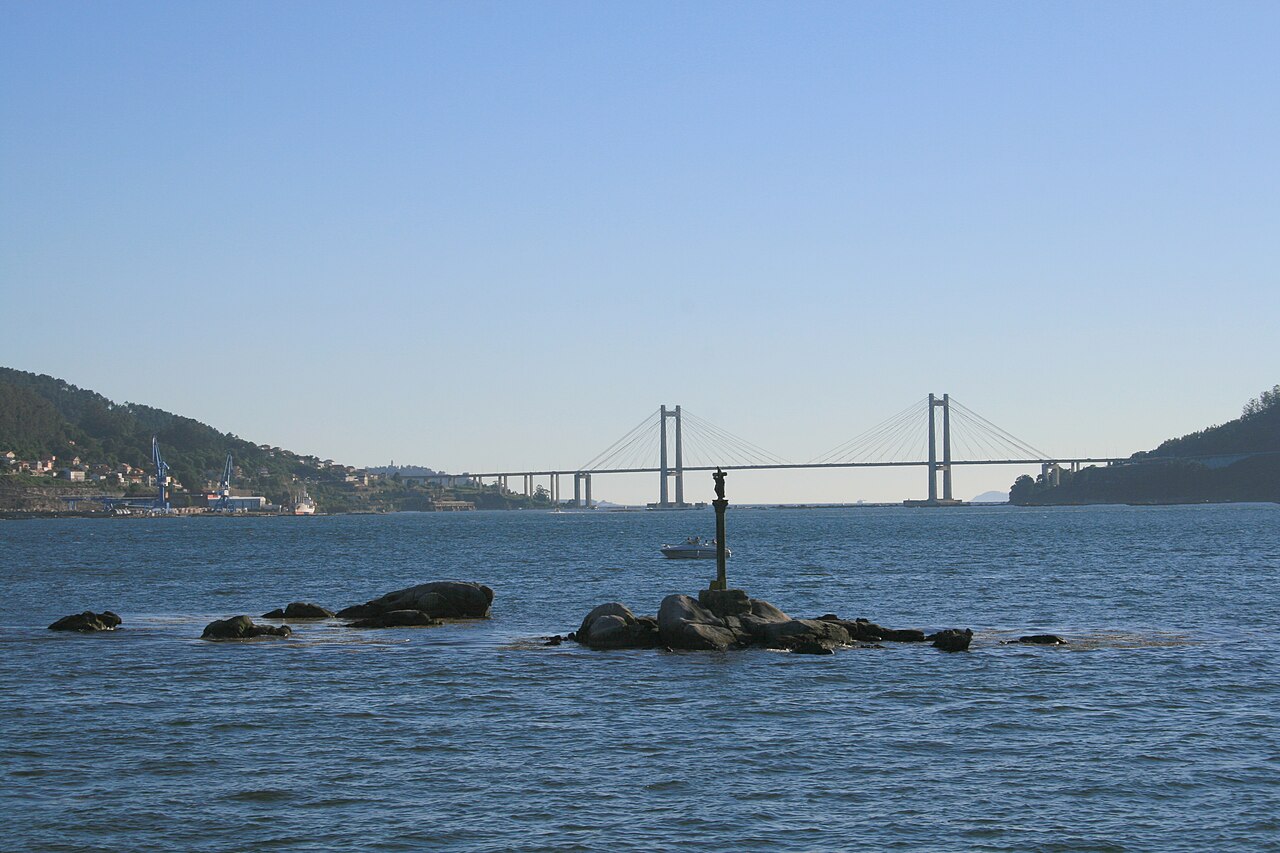
Monte de la Guía: shoreline beacons of the southern channel
On the southern shore of the Ría de Vigo stands the headland of Monte de la Guía, about eight kilometers along the maritime approach. Directly north of the headland lies Playa de A Punta, a fifty-meter stretch of sand and pebbles that looks out over the open expanse of the Ría de Vigo. Low tides reveal a large sandbank that is completely covered as the tide rises along the illuminated shoreline promenade.
The Rande Strait: sunken galleons, chains, and Jules Verne
On October 23, 1702, Anglo-Dutch naval forces attacked the Spanish treasure fleet sheltered in the Ensenada de San Simón during the Battle of Rande. The passage was fortified by Corbeiro Castle on the northern shore and Rande Castle to the south, with heavy defensive chains stretched across the strait to block enemy access. Ships were sunk during the combat and immense riches were lost to the deep. Today, the sunken galleons lie buried beneath a deep blanket of river mud carried into the bay by inflowing streams. In 2007, marine sonar surveys identified the silt-covered remains of the galleon Santo Cristo de Maracaibo resting on the seabed of the inlet.
The mystery of this sunken gold inspired Jules Verne to set the Nautilus here in Twenty Thousand Leagues Under the Sea, imagining Captain Nemo replenishing his treasure reserves from the seabed of Rande. Modern naval conflict later touched the ria during the Second World War, when the German submarines U-506 and U-523 were sunk in these approaches in 1943.
Ensenada de San Simón: corsairs, lazaretto, and boxwood gardens
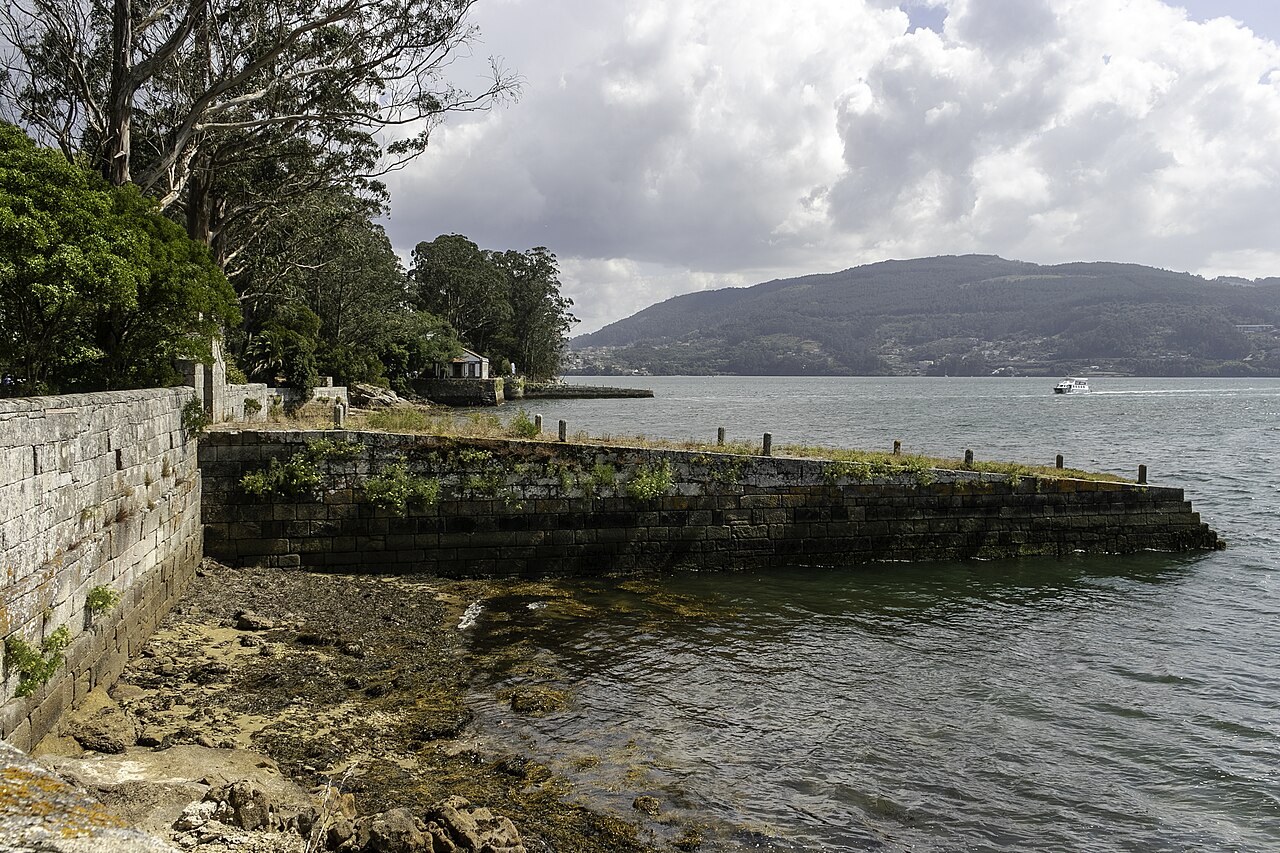
Beyond the strait, Isla de San Simón rises to form the finish line. Maritime raids reached this sanctuary as early as 1589, when English corsairs under Francis Drake plundered the island. Just across the water, the islet of San Antón spans 1.2 hectares and connects to San Simón by a monumental three-arched stone bridge. San Antón once hosted an isolated leper colony, designated as a dirty lazaretto because of the grave condition of the patients housed there. The atmosphere across the twin islands today is tranquil and shaded, with eucalyptus woods blanketing the ground of San Antón. On San Simón, visitors walk beneath the vaulted green canopy of the Paseo dos Buxos, an avenue framed by centennial boxwood trees.
Batalla de Rande: 27 kilometers from Rodas to San Simón
Because June temperatures in the estuary range between 14 and 18 degrees Celsius, regulations give competitors the freedom to swim in a wetsuit or without one. To sustain athletes through the long crossing, seven aid stations are stationed along the ria, providing essential feeds as swimmers navigate from the ocean waves into the calm inner bay.
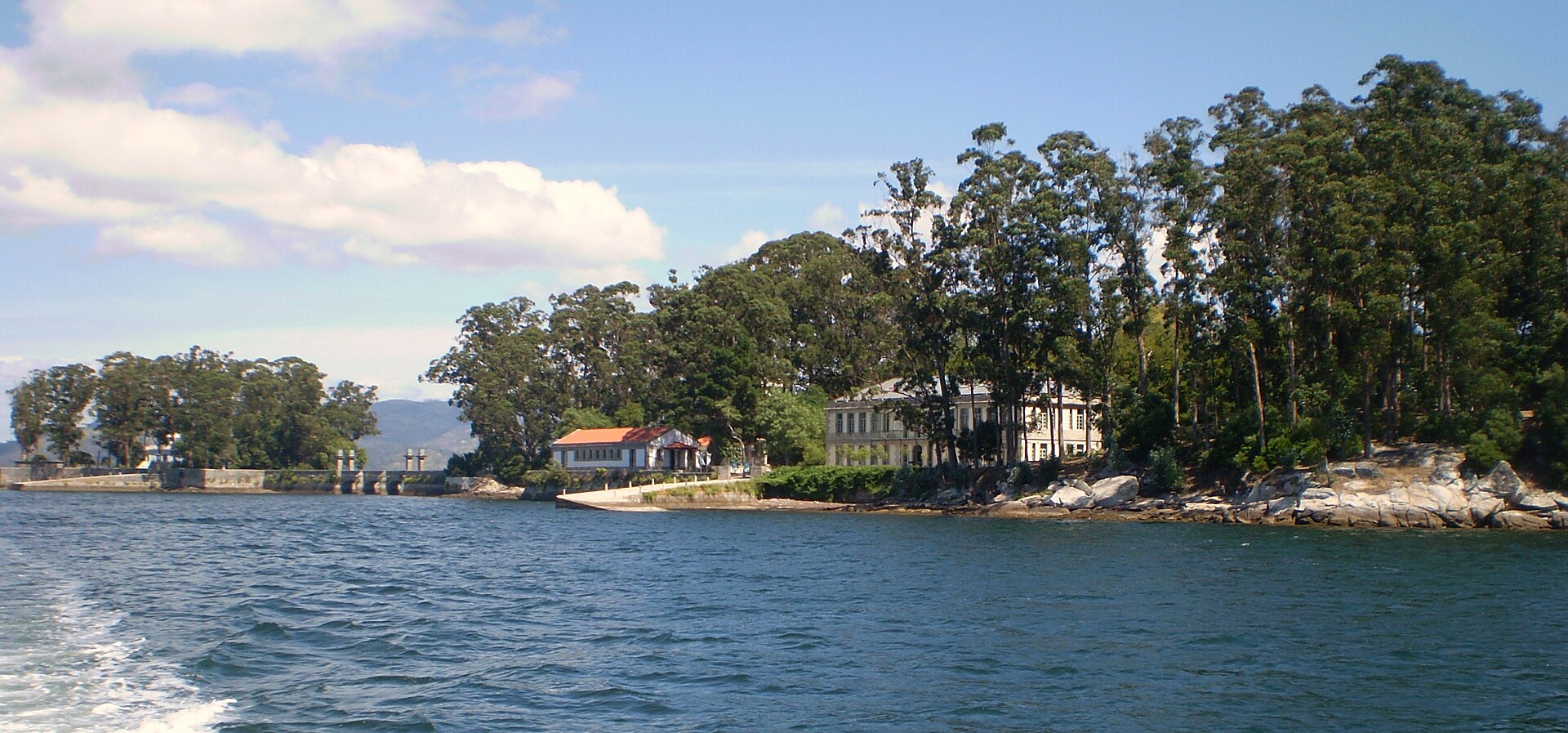
Sources: Isla de San Simón · Isla de San Antón (Redondela)
Course
Open water swimming event starting at Playa de Rodas (Cíes Islands) and finishing at the island of San Simón.
Awards
Results and classifications available on the official website.
How to get there
Batalla de Rande
Frequently asked questions
- When was the last edition of Batalla de Rande?
- The last edition of Batalla de Rande took place on June 20, 2026.
- What distances does Batalla de Rande offer?
- Batalla de Rande has a single distance: 27 km.
- How much is the entry fee for Batalla de Rande?
- The entry fee is 325 €.
- Where does Batalla de Rande take place?
- Batalla de Rande is a sea swim. Location: Playa de Rodas (Cíes) → Isla de San Simón, Vigo, Galicia, Spain.
- How do I register for Batalla de Rande?
- The reference page for registering for Batalla de Rande is https://batalladerande.com/.
Where to stay
Vigo offers a range of options, from traditional guesthouses in the historic quarter—often converted from 19th-century granite buildings—to contemporary boutique hotels near the harbor. Prices generally range from €80 to €220 per night, depending on the proximity to the ferry terminals. For those preferring direct coastal access, several campsites operate near the Ría de Vigo, providing functional facilities for athletes at a lower price point, typically €30-€60 per night. Booking in advance is recommended due to the high volume of maritime tourism during the summer months.
Things to do nearby
The weekend offers opportunities to explore the maritime heritage of the Ría de Vigo through guided boat excursions to the Cíes Islands. Visitors can engage in sea-kayaking near the San Simón bridge to observe the local ecosystem, or choose to tour the historic center of Vigo to see the ancient olive tree and local archaeological sites. Gastronomic experiences are central to the area, with specialized tastings of local seafood and Albariño wine available at the many taverns surrounding the port.
Swimmers
Similar races


Comments
Transparency: some links on this page (stays, flights, experiences, gear) are affiliate links — if you book or buy through them, Omniathlon may earn a commission from the partner at no extra cost to you. As an Amazon Associate we earn from qualifying purchases.