
Circuito Mares 2026 — Caraguatatuba (junho)
- Jun 13, 2026
- Last edition date
- Distances from 100m to 5km
At a glance
- Last edition date
- June 13, 2026
- Distances
- 100 m · 500 m · 1 km · 2.5 km · 5 km
- Where
- Sea · Praia Martim de Sá, Caraguatatuba, São Paulo, Brazil
- Entry fee
- 100 m: 190 BRL · 500 m: 250 BRL · 1 km: 250 BRL · 2.5 km: 250 BRL · 5 km: 250 BRL
- Registration
- circuitomares.com.br
About the race
Between the forested escarpment of the Serra do Mar and the open Atlantic, Caraguatatuba lines an indented coastline of seventeen distinct beaches. The June edition of the Circuito Mares brings open-water swimmers into the salt water of Praia Martim de Sá, one of the most prominent sporting arenas along the northern coast of São Paulo in Brazil. Located just two and a half kilometres from the city centre, this broad coastal stretch sits cupped between the sheltered nook of Prainha to the south and the wild headland of Praia Brava to the north. Here, the ocean opens straight out, offering a racecourse where swell accompanies every stroke. Organized by Circuito Mares as part of a five-stage annual series that combines swimming, running, aquathlon, and paddleboarding, the event offers a full ladder of ocean distances.
Swimmers can choose between a 100-metre introductory sprint, a 500-metre test, a 1,000-metre course, a middle-distance 2,500-metre journey, or a 5,000-metre marathon route in the open sea. Depending on prevailing weather and swell, Martim de Sá can generate occasional rip currents that push offshore. These channels of water never pull swimmers beneath the surface, but can tire anyone attempting to fight their seaward pull directly; navigating them simply requires staying relaxed and swimming parallel to the beach until you escape the flow.
Prainha and the wilderness trail of Praia Brava
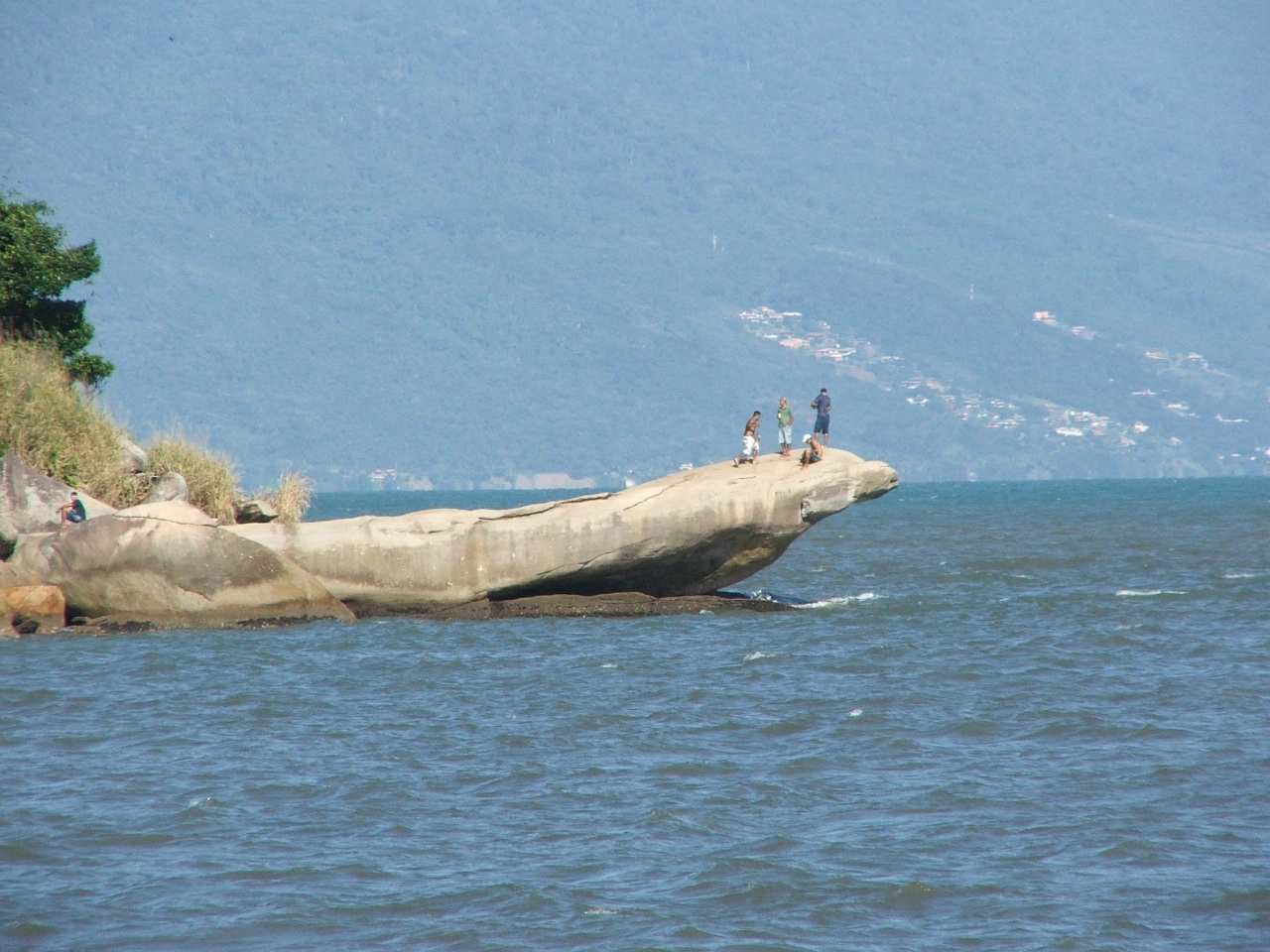
Immediately south of the race arena, the coastline tucks into Prainha, a small bay bordered by Martim de Sá and the rocky formation of Pedra da Freira. Its sheltered orientation keeps the water calm and glassy, making it a natural refuge from the main beach swell. Wrapping along the edge of the mountain, a walking trail leads upward to the summit of Pedra do Jacaré, a distinctive promontory. In sharp contrast, the northern headland hides the raw wilderness of Praia Brava, reached only after a twenty-minute hike through a preserved corridor of native Atlantic Forest. The cove resembles a natural shell of sand cradled by dense jungle hillsides, completely free from houses, kiosks, or any commercial footprint. Its shoreline plunges steeply into deep water, creating strong continuous currents along the entire strand that show off the untamed power of the open ocean.
Massaguaçu surf and the Cocanha mussel banks
Heading further along the northern arc, Praia do Massaguaçu stretches wide and open from the freshwater lagoon at Praia do Capricórnio. This shoreline is characterized by a dramatic underwater shelf drop-off right at the water's edge, accompanied by powerful coastal currents that sweep close to the shore. At the northern end of this exposed beach sits a traditional coastal fishing community, where local craftsmen still carve traditional canoes while Ilhabela rises against the horizon across the sea. Massaguaçu flows directly into Praia da Cocanha, where the marine conditions transform into calm, crystalline shallows ideal for diving and fishing. Just off the beach, a small rocky islet attracts snorkelers and divers looking to observe local marine life. Cocanha is also home to the largest mussel farming operation in the state of São Paulo, cultivating approximately eight thousand tons of shellfish each year in its nutrient-rich, clean coastal waters.
Mococa, Tabatinga, and the border coves of Ponta Aguda
Continuing up the coast, Praia da Mococa opens at the mouth of the Mococa River between Cocanha and Tabatinga. Framed by protected mangroves and sand-dune restinga vegetation, the gentle waves make the river mouth a pleasant spot for shallow diving. Tabatinga has virtually no surf, functioning almost like a seawater lagoon, where a safety line of small buoys anchored fifteen metres offshore keeps swimmers safely separated from motorized boats. On the rugged boundary between Caraguatatuba and Ubatuba lies Ponta Aguda, where a stream of fresh water flows into the sea, natural rock pools form protected ocean baths, and two freshwater spouts offer drinking water to swimmers gazing out toward the green ridges of Ilhabela.
Sources: Caraguatatuba · Praia do Massaguaçu · Praia do Martim de Sá · Praia Brava (Caraguatatuba) · Prainha (Caraguatatuba)
Course
Awards
- Age group awards
Awards are typically provided for age group categories; specific details are defined in the event technical manual.
How to get there
Circuito Mares 2026 — Caraguatatuba (junho)
Frequently asked questions
- When was the last edition of Circuito Mares 2026 — Caraguatatuba (junho)?
- The last edition of Circuito Mares 2026 — Caraguatatuba (junho) took place on June 13, 2026.
- What distances does Circuito Mares 2026 — Caraguatatuba (junho) offer?
- Circuito Mares 2026 — Caraguatatuba (junho) offers 100 m, 500 m, 1 km, 2.5 km, and 5 km.
- How much is the entry fee for Circuito Mares 2026 — Caraguatatuba (junho)?
- Entry fees by distance: 100 m: 190 BRL · 500 m: 250 BRL · 1 km: 250 BRL · 2.5 km: 250 BRL · 5 km: 250 BRL. registration closed
- Where does Circuito Mares 2026 — Caraguatatuba (junho) take place?
- Circuito Mares 2026 — Caraguatatuba (junho) is a sea swim. Location: Praia Martim de Sá, Caraguatatuba, São Paulo, Brazil.
- How do I register for Circuito Mares 2026 — Caraguatatuba (junho)?
- The reference page for registering for Circuito Mares 2026 — Caraguatatuba (junho) is https://www.circuitomares.com.br/.
Where to stay
Caraguatatuba offers a diverse range of stays, from simple guest houses favored by local families to boutique hotels along the port. Budget-conscious travelers often opt for camping sites directly facing the beach or modest hostels, while those seeking comfort find mid-range hotels with sea views. Expect to pay between R$ 250 and R$ 600 per night depending on the proximity to the race venue at Martim de Sá and the level of amenities.
Things to do nearby
The weekend is an ideal time to explore the North Coast beyond the shoreline. You can join guided trekking tours through the Atlantic Forest trails that offer panoramic views of the coast, or rent a kayak to paddle the calmer bays nearby. For a taste of the region, visit the local markets to sample artisanal cachaça and fresh seafood dishes, or explore the archaeological remnants of historical coastal fortifications that still stand guard over the neighboring bays.
Swimmers
Other stages of this series
- Circuito Mares — Ubatuba (Praia da Enseada)Ubatuba, BR
- Circuito Mares 2026 — Caraguatatuba (fevereiro)Caraguatatuba, BR
- Circuito Mares 2026 — Toque-Toque Pequeno (São Sebastião)São Sebastião, BR
- Circuito Mares - Etapa 4/5Ilhabela, BR
- Circuito Mares — VitóriaVitória, BR
Similar races


Comments
Transparency: some links on this page (stays, flights, experiences, gear) are affiliate links — if you book or buy through them, Omniathlon may earn a commission from the partner at no extra cost to you. As an Amazon Associate we earn from qualifying purchases.