
Copa Brasil de Águas Abertas — Maraú (Barra Grande)
- Dec 12 – 13, 2026
- Distances from 1.5km to 4km
At a glance
- Next edition date
- December 12 – 13, 2026
- Distances
- 1.5 km · 2.5 km · 4 km
- Where
- Sea · Baía de Camamu, Maraú, Bahia, Brazil
- Entry fee
- 189 BRL
- Registration
- cbda.org.br
About the race
Baía de Camamu hosts the Copa Brasil de Águas Abertas — Maraú (Barra Grande), an open water swimming race held in the sea off the municipality of Maraú, in the state of Bahia in northeastern Brazil. Organized by the CBDA, the event gathers athletes along the coastline of Barra Grande, providing an inviting arena for open water racers. Competitors take to the water in December, enjoying the warm southern-hemisphere late spring and early summer climate. The program features three distinct course options: a 1,500-meter sprint, a intermediate 2,500-meter test, and a 4,000-meter long-distance challenge across the open water. Whatever the chosen distance, swimmers move through remarkably crystal-clear sea water. This pristine clarity is a defining feature of the coast, where translucent water encircles the seaside villages of the Maraú municipality.
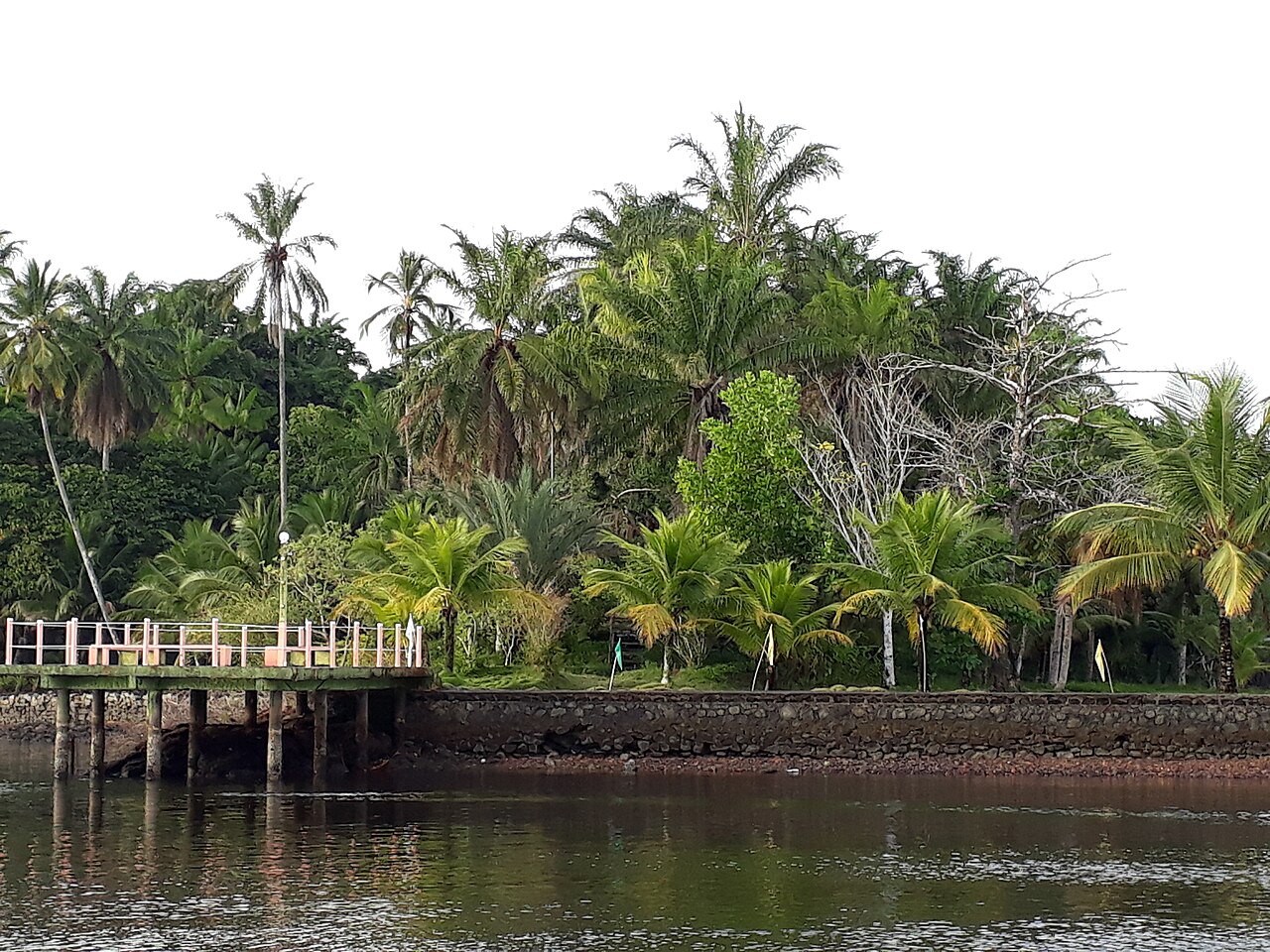
Barra Grande: the village on the bay and the walk to Ponta do Mutá
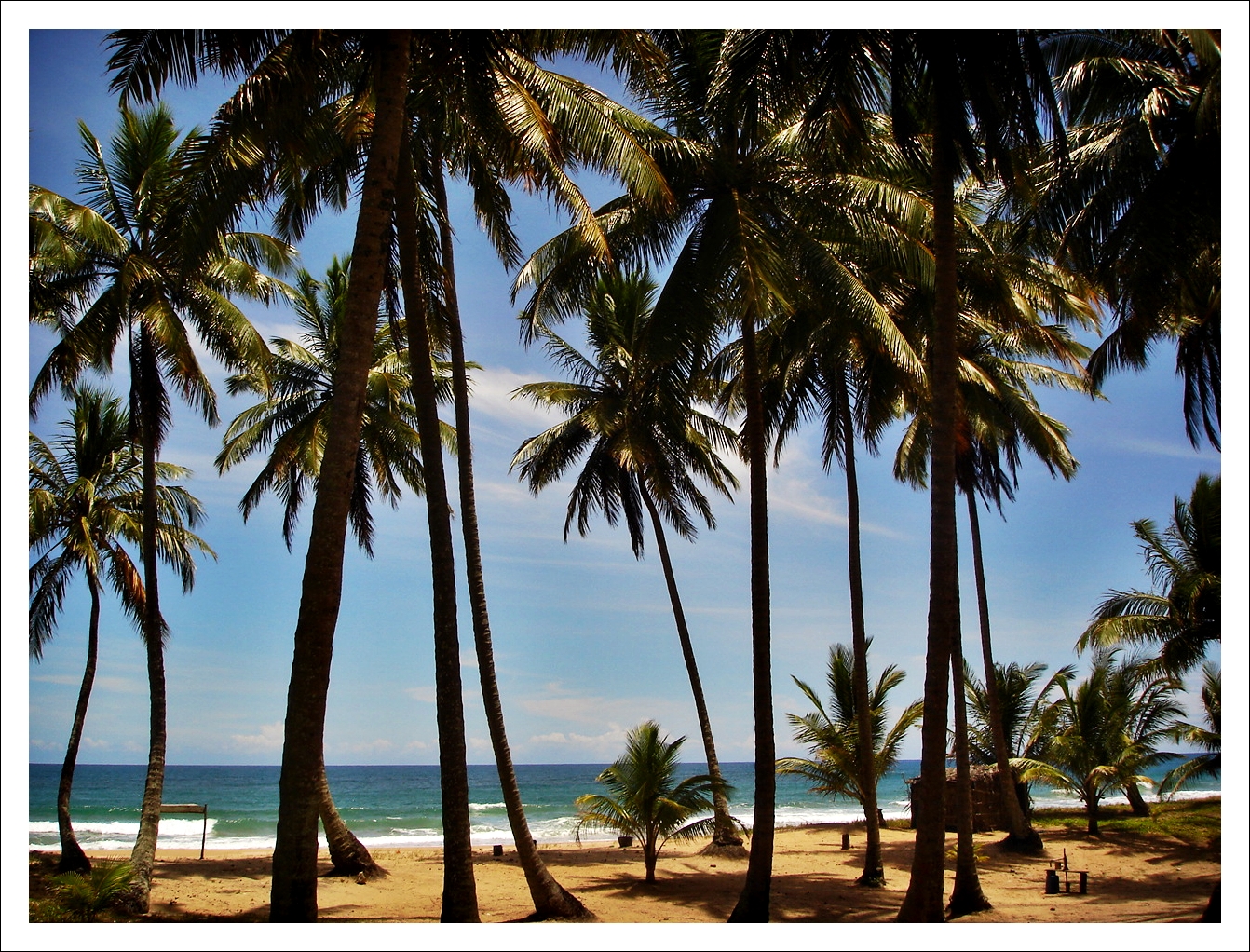
Barra Grande is the most visited beach on the Península de Maraú and the one with the best infrastructure, and the peninsula's port is located here. The beach of Barra Grande faces the Baía de Camamu, with very calm water and coconut palms along the shore. The village of Barra Grande holds most of the peninsula's guesthouses and restaurants, and the Carapitangui river runs beside it. Most boat trips, by schooner and by launch, leave from Barra Grande. A short walk along the beach from Barra Grande leads to Ponta do Mutá, at the northern tip of the peninsula, where guesthouses, restaurants and beach clubs line the shore.
Baía de Camamu: warm currents and deep sheltered waters
The coastline of the state of Bahia extends over 1,100 kilometers, forming the longest ocean shoreline of any state in Brazil. Throughout this vast coastal stretch, the sea remains naturally warm due to the continuous influence of the ocean current arriving across the Atlantic from the Gulf of Guinea. Back along the mainland coast, the Baía de Camamu covers an immense expanse measuring approximately 24 by 43 kilometres. By surface dimensions, it ranks as the third largest bay in Brazil, and by total volume of water, it constitutes the second largest bay in the state of Bahia. Despite its monumental scale, the bay is renowned for its deep, calm waters. Protected from the unruly open sea, the basin creates an expansive, tranquil arena where swimmers find steady conditions from the starting horn to the final turn buoy.
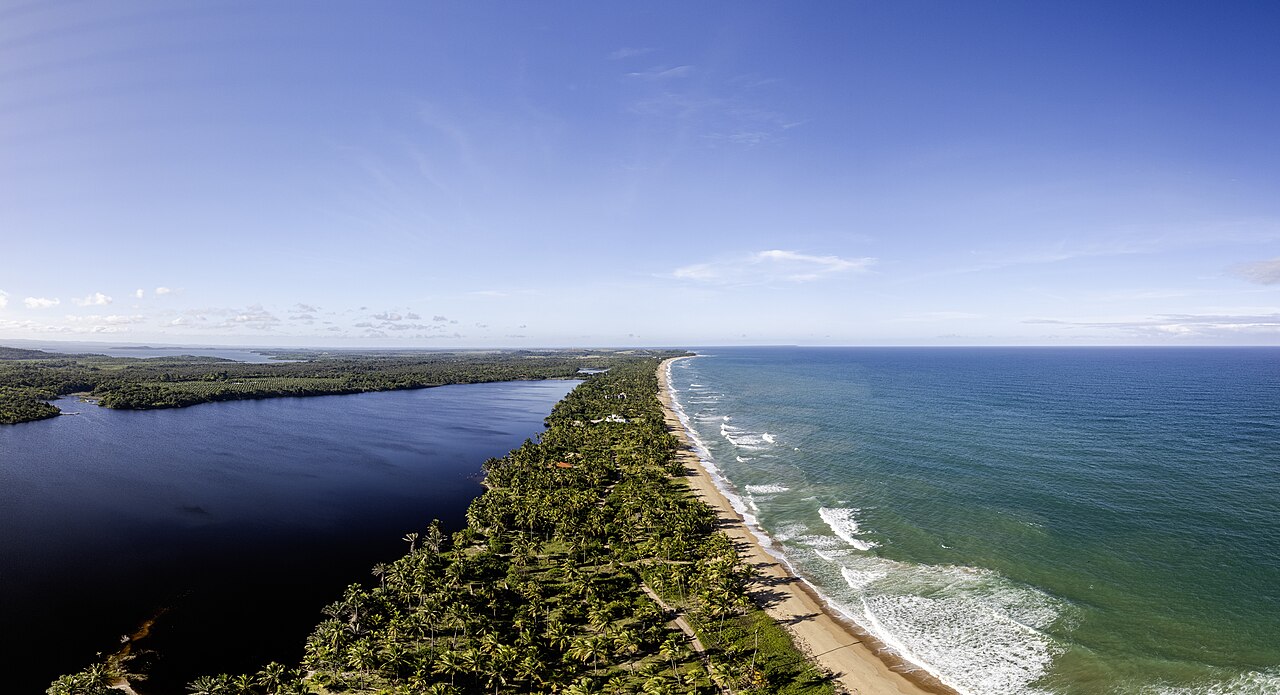
Baía de Camamu Protected Area: mangroves, lagoons, and waterfalls
About ten kilometres from the race course, the natural treasures of the basin are safeguarded by the Baía de Camamu Environmental Protection Area. Established in 2002, this sprawling conservation zone spans 118,000 hectares of land, open water, scattered islands, and reefs. The explicit mission of the protected area is to safeguard the delicate balance between the region's interconnected fresh, brackish, and salt waters. The sanctuary protects a rich mosaic of native coastal ecosystems. The terrestrial and shoreline vegetation comprises coastal restinga, dense mangroves, and surviving remnants of the native Atlantic Forest. Numerous islands of varying sizes dot the interior of the bay, flanked by protected forest borders and pristine beaches.
In the quiet, untouched mangrove channels, shoals of fish can be seen jumping across the surface. Beyond its saline channels, the conservation territory contains notable freshwater features. These include the 8-kilometre-long Cassange lagoon, alongside the Saquaíra and Algodões ocean beaches. A particularly distinctive landmark in the protected area is the Tremembé waterfall, where fresh river water flows across the rocks and cascades directly into the saltwater bay.
The channel of Camamu: seventeenth-century rocks and traditional schooners
Across the bay waters stands the historic town of Camamu, an urban settlement built on two separate physical levels. The elevated upper town is celebrated for its historic colonial architecture, while the lower town bustles around the active working port and local commercial piers. The town's maritime entrance carries a storied past dating back to early colonial seafaring defense. During the seventeenth century, large rocks were intentionally placed in the channel of the harbor entrance to deter Dutch invaders. This tactical underwater barrier forced incoming hostile ships to navigate an arduous zigzag course. The maritime craft of the bay remains very much alive today on the nearby shores of Cajaíba. This coastal village is renowned for its traditional boat-building industry, where classic wooden schooners are still constructed using traditional methods.
Península de Maraú: car-free islands and Taipus de Fora
The sheltered interior of the bay features dozens of islands that invite exploration after the competition. Among these, Ilha Grande is the largest island in the entire bay, known for its peaceful pace of life where motor cars are completely absent and the public streets consist entirely of walking trails. Another memorable destination is Ilha da Pedra Furada, an islet that takes its name from an erosion-carved rock arch, surrounded by tranquil, crystal-clear water. The oceanfront of the Península de Maraú is equally famed for its extraordinary stretches of sand. The municipality features an array of picturesque beaches, including Algodões, Arandí, Barra, Cassange, Mangueira, Piracanga, Saquaíra, Três Coqueiros, Campinho, and Taipus de Fora.
In 2013, CNN recognized Taipus de Fora as one of the eight best beaches in Brazil. That same international assessment highlighted Porto da Barra beach in Salvador among the nation's top eight beaches, while journalist Joe Robinson ranked Caraíva beach in Porto Seguro as the third best beach in Brazil. After a day of racing along the clear shallows of Barra Grande, swimmers can make the journey across to the waterfront in Camamu to share in local culinary traditions. Along the pier of the lower town, open-air kiosks prepare peixe assado na telha, a classic regional delicacy. Savoring the meal beside the docks offers the perfect conclusion to a swimming journey immersed in the tranquil waters and maritime history of the bay.
Sources: Maraú · Lista de praias da Bahia · Baía de Camamu · Lista de ilhas da Bahia · Lista de baías e enseadas da Bahia
Course
Awards
- Age group awards
- Master/Elite separated
Awards follow CBDA national circuit regulations for age groups and categories.
How to get there
Copa Brasil de Águas Abertas — Maraú (Barra Grande)
Frequently asked questions
- When is Copa Brasil de Águas Abertas — Maraú (Barra Grande)?
- Copa Brasil de Águas Abertas — Maraú (Barra Grande) takes place on December 12 – 13, 2026.
- What distances does Copa Brasil de Águas Abertas — Maraú (Barra Grande) offer?
- Copa Brasil de Águas Abertas — Maraú (Barra Grande) offers 1.5 km, 2.5 km, and 4 km.
- How much is the entry fee for Copa Brasil de Águas Abertas — Maraú (Barra Grande)?
- The entry fee is 189 BRL. Official 2026 entry fees for the 13th Copa Brasil de Águas Abertas per distance event. Rates are R$ 189.00 for confederated/federated athletes and R$ 203.00 for non-federated (vinculados) athletes.
- Where does Copa Brasil de Águas Abertas — Maraú (Barra Grande) take place?
- Copa Brasil de Águas Abertas — Maraú (Barra Grande) is a sea swim. Location: Baía de Camamu, Maraú, Bahia, Brazil.
- How do I register for Copa Brasil de Águas Abertas — Maraú (Barra Grande)?
- The reference page for registering for Copa Brasil de Águas Abertas — Maraú (Barra Grande) is https://www.cbda.org.br/aguas-abertas.
Where to stay
The peninsula offers a mix of rustic 'pousadas' built from local wood and thatch, traditional fishermen's houses converted for visitors, and boutique retreats tucked near the harbor. During the peak of the December season, accommodation options range from modest guesthouses starting at $60 per night for a double room to more exclusive beachfront lodges reaching $250 or more. Booking well in advance is essential as the limited road access keeps capacity controlled, maintaining the area's quiet character even during event weekends.
Things to do nearby
Between race sessions, the area is best explored by water. Local boat tours provide access to the mangroves and remote islands within the bay, while kayak and stand-up paddleboarding are the standard ways to navigate the shallower lagoons near Taipus de Fora. For those looking to move inland, guided trekking through the remaining Atlantic Forest patches offers a perspective on the region's biodiversity. Tasting local seafood dishes prepared with dendê oil remains the defining culinary experience of the Maraú peninsula.
Swimmers
Similar races


Comments
Transparency: some links on this page (stays, flights, experiences, gear) are affiliate links — if you book or buy through them, Omniathlon may earn a commission from the partner at no extra cost to you. As an Amazon Associate we earn from qualifying purchases.