
X Cruce Bahía de Cádiz — San Fernando
- Oct 4, 2026
- Last edition date
- Distance: 5.5km
At a glance
- Last edition date
- October 4, 2026
- Distances
- 5.5 km
- Where
- Sea · Bahía de Cádiz (Torregorda to Cassería de Ossio), San Fernando, Andalucía, Spain
- Entry fee
- 25 €
- Registration
- faninscripciones.es
About the race
Swimming across the inner basin of the Bay of Cádiz means tracing 5.5 kilometers of sheltered Atlantic water between the open beaches of Torregorda and Casería de Ossio. Known as the X Cruce Bahía de Cádiz — San Fernando, this sea event is held along the coast of San Fernando in Andalusia. Setting off from the sands of Torregorda, swimmers head directly across the open water of the bay toward the welcoming slipways of the Casería de Ossio marina. The event takes place in October, offering swimmers an extended open-water journey across the protected maritime geography of the bay. Rather than a battle against the clock, the crossing is organized as a non-competitive group swim grouped by pace levels, founded on mutual support and camaraderie among participants.
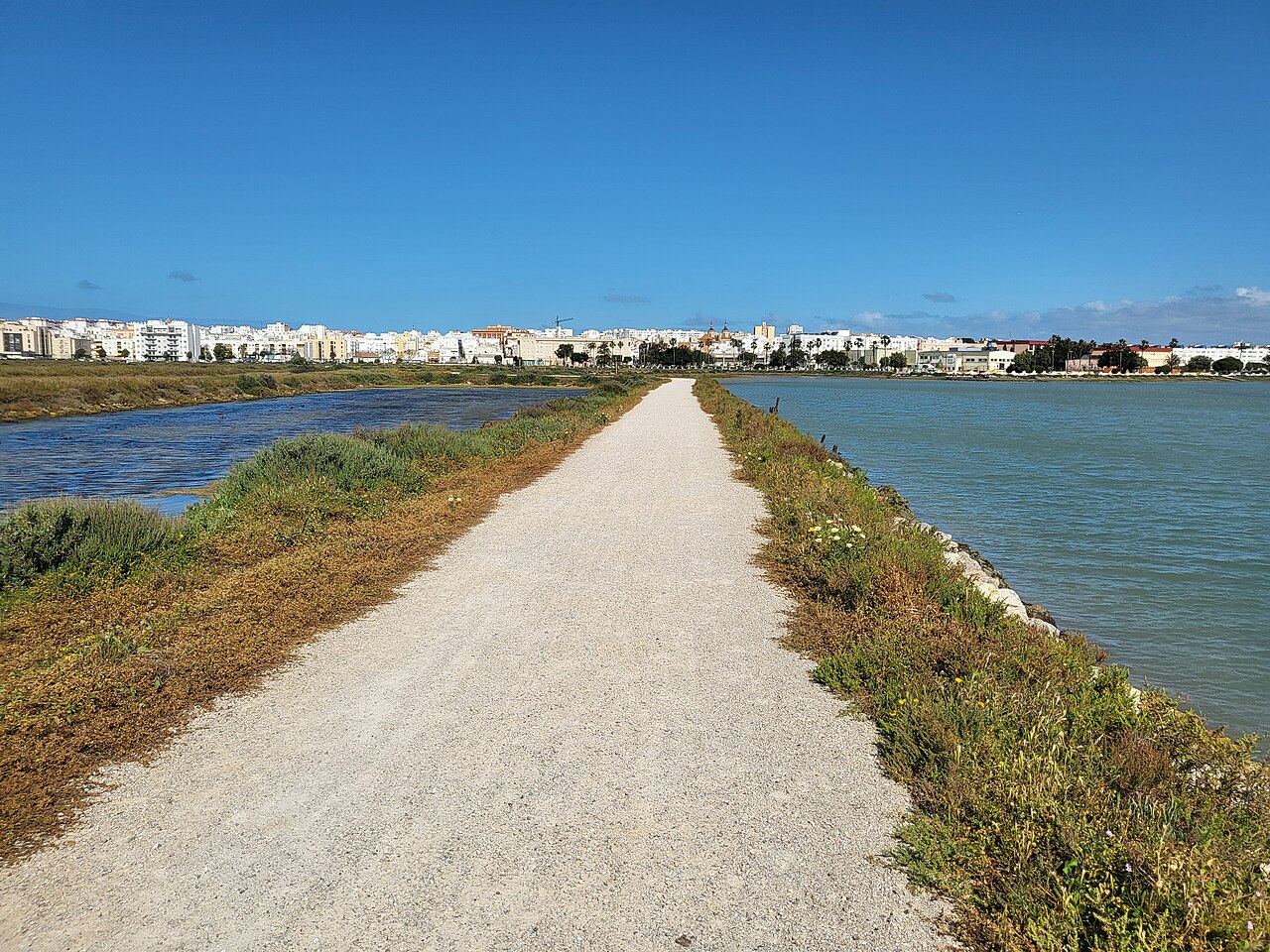
Organized by Brazadas Solidarias, Fundación Vicente Ferrer, and Federación Andaluza Natación, the journey carries deep personal meaning under the title of Memorial Santos Fernández. In addition to honoring Santos Fernández, the event pays tribute to the memory of Meli, celebrating their lasting dedication to this swimming initiative. Moving together in structured packs allows swimmers to share the effort across the full distance. Out on the open water, participants find steady reassurance in an organized support structure. Course buoys are moored along the line approximately every 500 meters to aid navigation, while dedicated support boats carry refreshments and safety cover every 1,500 meters. That cooperative rhythm builds confidence as the group glides smoothly past open water landmarks. In past editions, packs of between 78 and 101 swimmers have completed the 5,500-meter crossing side by side under good weather conditions and calm waters.
Bahía de Cádiz Natural Park: inner marshes and bird routes
The bay's shores are shared by five distinct municipalities: Cádiz, San Fernando, Puerto Real, El Puerto de Santa María, and Rota. Framing these urban centers is the Bahía de Cádiz Natural Park, which has protected the perimeter of the bay since its creation in 1989. Playa de Cortadura stretches for 3,900 meters with a dry sand expanse about 60 meters wide. It is celebrated as the only virgin beach within the municipal territory of Cádiz. The beach is characterized by an extensive dune network, an intertidal shelf, and rocky outcrops exposed during low tide. Its primary dunes support resilient coastal flora including marram grass, sea rocket, and prickly saltwort, while artificial depressions in the secondary dunes stabilize the sand and nourish reeds.
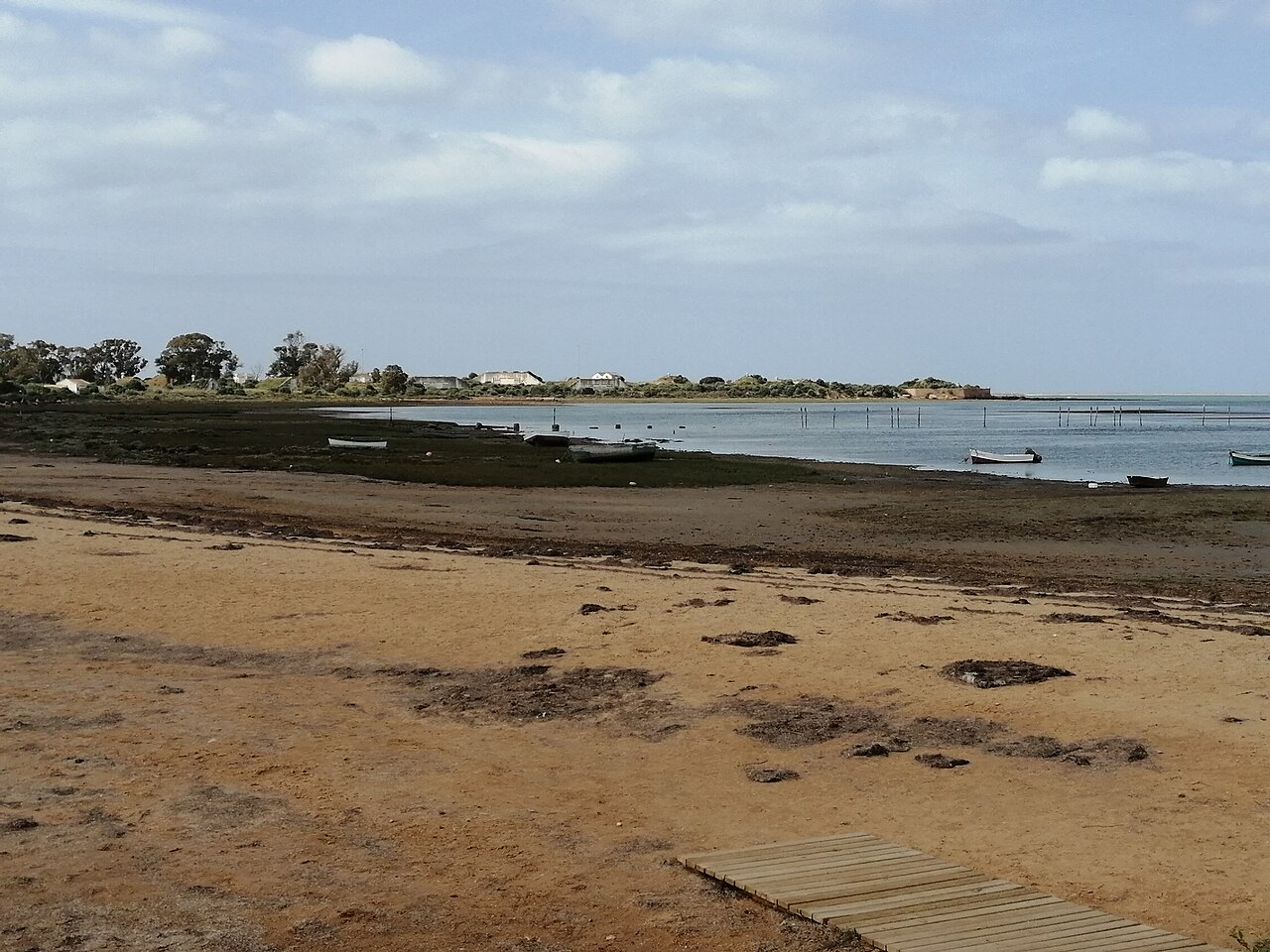
Farther into the inner sack of the bay lies Playa de la Cachucha, a beach nearly half a kilometer long known for its fine orange sand. Its sheltered position in the inner bay generally produces very calm water. At low tide, a broad muddy tidal flat emerges, leaving traditional local fishing boats stranded on the soft bed. This inner sector is internationally protected as a Ramsar wetland, a Site of Community Importance, a Special Protection Area for birds, and part of the natural park. Since the early 19th century, bathers have sought out its waters and muds for their recognized therapeutic properties. The shoreline also hosts its own open-water swimming tradition with the annual Virgen del Carmen crossing, an 850-meter course contested since 2011 between Puntilla del Muelle and La Cachucha beach.
Historically, Isla del Trocadero operated as an active commercial trading hub and a base for ship maintenance and repairs. Today, it forms an undisturbed wetland biotope that provides a crucial landing and feeding zone for migratory birds journeying along major Atlantic flyways.
Sancti Petri and La Caleta: Phoenician temples and coastal fortresses
Human habitation in the Bay of Cádiz stretches back to very ancient times, as proven by extensive archaeological remains. Sheltered coastal coves like La Caleta served as natural anchorages for Phoenician, Carthaginian, and Roman fleets seeking shelter along the Atlantic coastline. Farther south at the mouth of the Sancti Petri channel stood the ancient islet sanctuary of Melkart. The sanctuary housed two freshwater wells that exhibited a tidal rhythm inverse to the tides of the open sea. The Carthaginian general Hannibal famously traveled to the islet to make sacred vows before setting out on his historic overland invasion of Italy. The classical shrine was later quarried between 1565 and 1574, when more than eighty ancient marble columns were removed from the ground to be repurposed and sold.
To protect against sea raiders, the Castillo de Sancti Petri was constructed between the 16th and 18th centuries on the small island facing Playa de Camposoto. This fortress endured bombardments by French forces during the War of Independence and sustained fire again in 1823. The neighboring beach at Camposoto, accessible by boat from the Sancti Petri marina in Chiclana, preserves defensive batteries such as San José del Baruel and San Melitón de la Calavera, while the nearby Punta del Boquerón retains the Aspiroz, Urrutia, and San Genís installations. Beyond Sancti Petri, the 6-kilometre-long Playa de la Barrosa extends southward, separated from Sancti Petri beach by towering cliffs. Barrosa was the setting for the Battle of Barrosa in 1811 during the Peninsular War.
Its shores are bookended by historic coastal lookouts, with Torre Bermeja guarding the northern end and Torre del Puerco positioned on the southern headland. Across the bay, San Luis Fort on the southern tip of Trocadero played a vital defensive role until French troops captured it on August 31, 1823, during the Battle of Trocadero. The Cortadura walls formed the primary outer defense line of Cádiz from the 17th to the 19th century.
Playa de la Casería: rustic tin bars and tidal flats
The swimming crossing concludes on the northwestern shoreline of San Fernando at Playa de la Casería, bathed by the waters of the Bay of Cádiz. This coastal stretch extends from the vicinity of the historic naval facilities at Arsenal de la Carraca to Punta Cantera, incorporating the sheltered Ossio cove. The construction of the Carranza bridge in 1969 blocked sand movement, which made the beach muddy and reduced its sandy stretches because the bridge foundation prevents natural sand regeneration by the tides. Simple tin houses along the beach operate as casual bars, serving fresh seafood landed directly from the surrounding bay. Gathering at these seaside shacks after the crossing gives swimmers a true taste of local coastal life beside the water.
Course
Non-competitive crossing of approximately 5.5 km from Torregorda to the Cassería de Ossio marina in San Fernando. Swimmers move in level-based groups.
Awards
Non-competitive event focused on friendship and solidarity.
How to get there
The meeting point is in front of the Torregorda Military barracks, at the “Las Cochineras” Fishermen's Association on the Santibañez trail, just past the Santibañez recreational area and the Marambay restaurant.
X Cruce Bahía de Cádiz — San Fernando
Frequently asked questions
- When was the last edition of X Cruce Bahía de Cádiz — San Fernando?
- The last edition of X Cruce Bahía de Cádiz — San Fernando took place on October 4, 2026.
- What distances does X Cruce Bahía de Cádiz — San Fernando offer?
- X Cruce Bahía de Cádiz — San Fernando has a single distance: 5.5 km.
- How much is the entry fee for X Cruce Bahía de Cádiz — San Fernando?
- The entry fee is 25 €. Price includes t-shirt (size selection required). Non-competitive event.
- Where does X Cruce Bahía de Cádiz — San Fernando take place?
- X Cruce Bahía de Cádiz — San Fernando is a sea swim. Location: Bahía de Cádiz (Torregorda to Cassería de Ossio), San Fernando, Andalucía, Spain.
- How do I register for X Cruce Bahía de Cádiz — San Fernando?
- The reference page for registering for X Cruce Bahía de Cádiz — San Fernando is https://faninscripciones.es/producto/2025-x-cruce-a-nado-de-la-bahia-de-cadiz-memorial-santos-fernandez-4-de-octubre/.
Where to stay
San Fernando offers a range of stays, from traditional hostels and family-run guesthouses in the city center to modern boutique hotels near the marina. For those preferring a coastal atmosphere, camping sites and holiday apartments are available near the beach areas. Expect to pay between 60 EUR and 120 EUR per night for a standard double room during the event weekend, depending on proximity to the San Carlos naval district.
Things to do nearby
The weekend allows for exploring the salt marshes via guided kayak or SUP tours to better understand the ecosystem you just swam through. Visitors often combine this with historical walking tours of the naval shipyards or visits to the Royal Naval Observatory. Culinary experiences focus on local seafood, particularly the ‘bienmesabe’ and fresh catch from the nearby esteros, often paired with sherry wines from the neighboring municipalities of the Bay of Cádiz.
Swimmers
Similar races


Comments
Transparency: some links on this page (stays, flights, experiences, gear) are affiliate links — if you book or buy through them, Omniathlon may earn a commission from the partner at no extra cost to you. As an Amazon Associate we earn from qualifying purchases.