Darwin Waterfront Classic
- Aug 22, 2025
- Last edition date
- Distances from 2.5km to 10km
At a glance
- Last edition date
- August 22, 2025
- Distances
- 2.5 km · 5 km · 10 km
- Where
- Sea · Darwin Waterfront, Darwin, Northern Territory, Australia
About the race
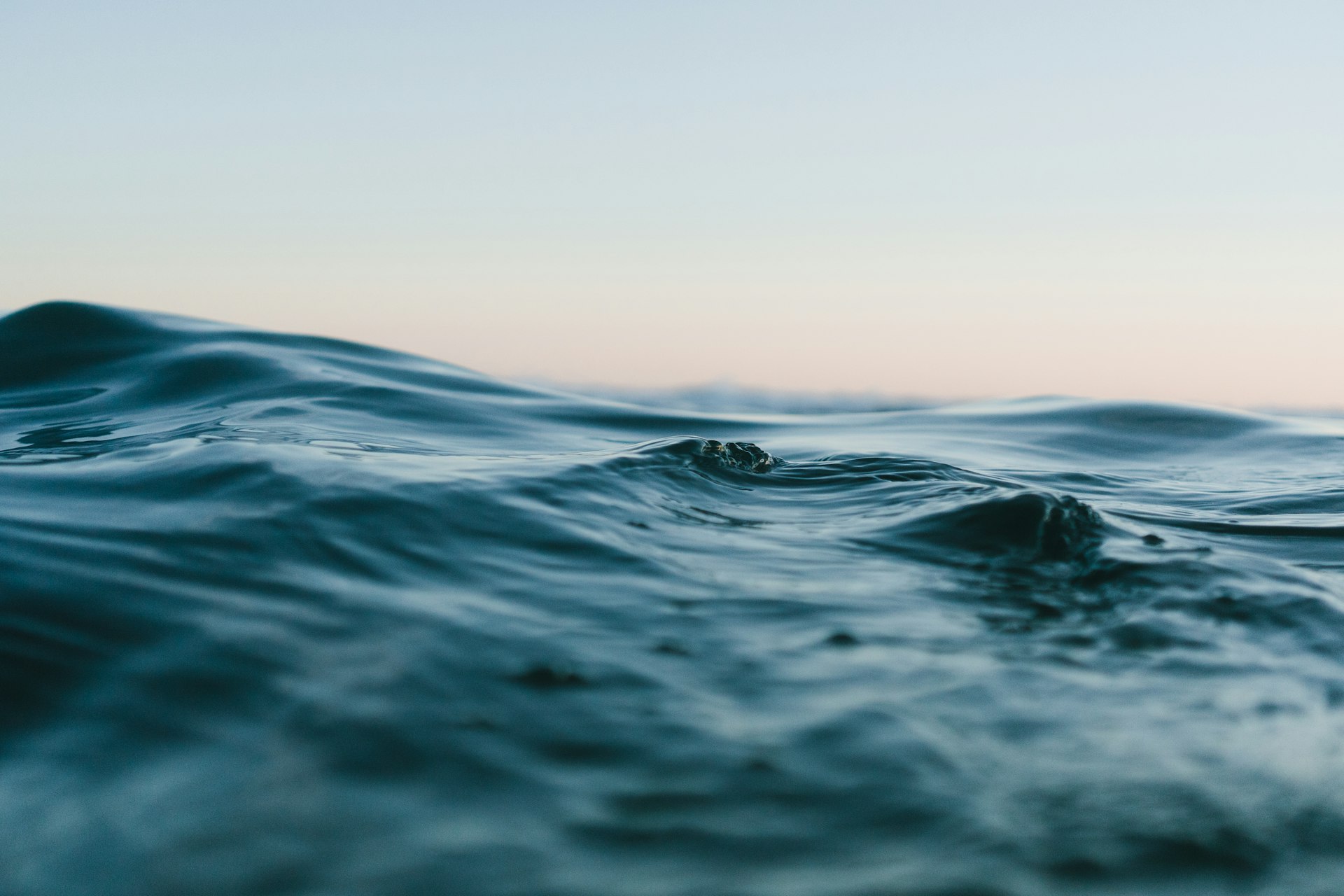
In the tropical north of Australia, the saltwater lagoon at Darwin Waterfront changes the rules entirely. The Darwin Waterfront Classic is an open water swimming competition held in the sheltered saltwater lagoon of the Darwin Waterfront, on the shores of Darwin in the Northern Territory. Here, an engineered seawall completely separates the race course from the open tidal expanse of Darwin Harbour. Because the seawall encloses the saltwater basin from the open harbour, the lagoon remains entirely free of stingers and dangerous marine animals, offering a genuinely safe tropical swimming environment. Swimmers can focus purely on stroke tempo and pacing across a calm, sheltered water surface. The event features championship distances over 2.5 kilometres, 5 kilometres, and 10 kilometres, catering to competitors across all ability levels.
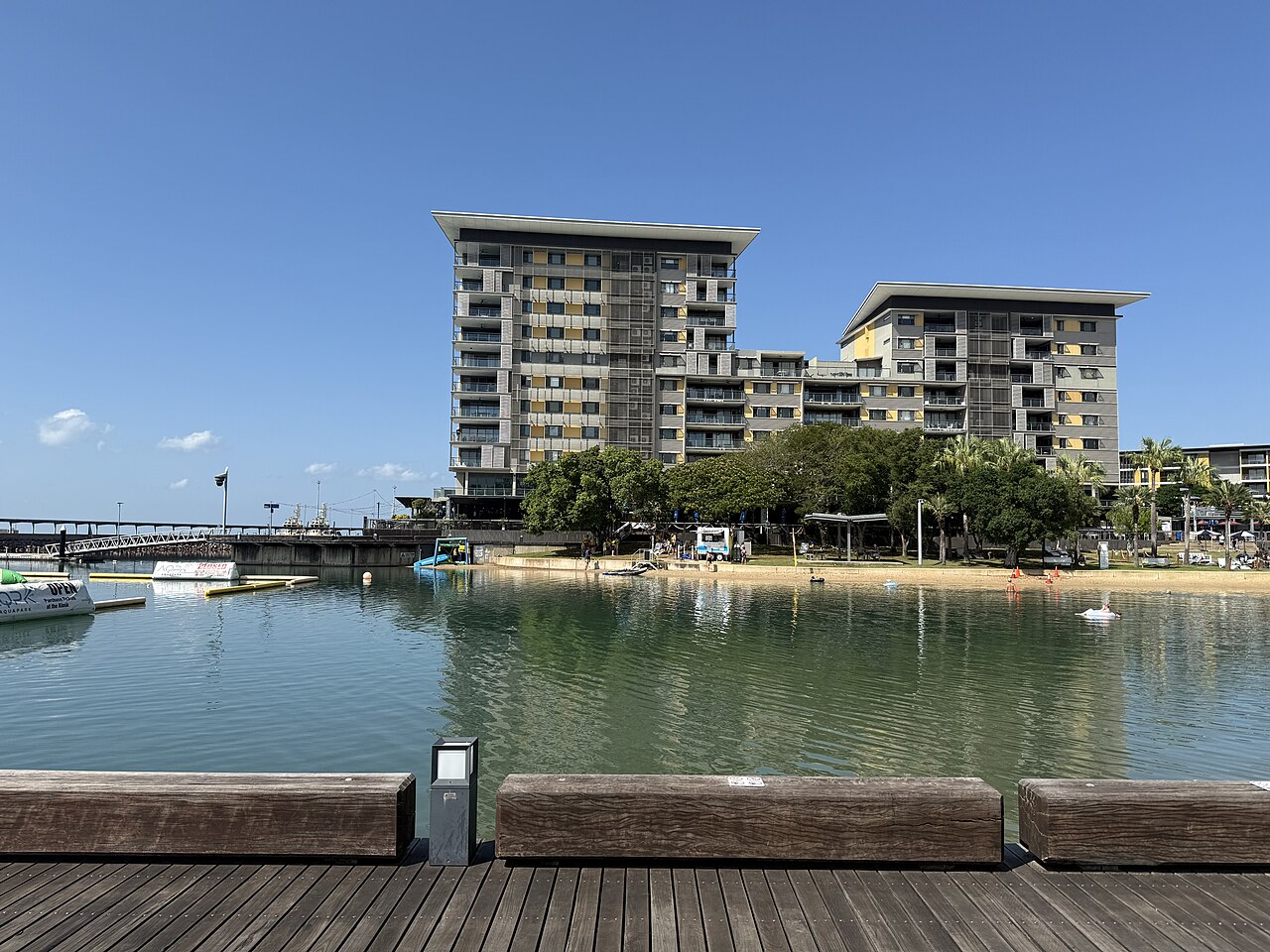
Organized by Swimming Northern Territory, the classic stands as a marquee fixture in the annual Swimming Northern Territory Open Water Series. Competitors dive into the water in the cool air of dawn, stroking across flat sea water as spectators watch the sunrise break across the harbor rim. Once the laps are done, everyone gathers for the post-race presentations to celebrate the morning's finishers.
Lameroo Beach and Fort Hill: Darwin's original sea baths
Darwin Harbour was named in 1839 by Lieutenant Stokes and Mr. Forsyth, while the neighboring high ground was named that same year by the commander of the survey ship HMS Beagle. Traditional knowledge holds that an ancestral spirit named Chinute Chinute lives inside Stokes Hill. Just below the escarpment and Parliament House, the Larrakia revere a freshwater spring at Damoe-Ra Park, a name translating to eye or spring, held sacred by Larrakia women. In past eras, Larrakia families routinely paddled canoes across from the Cox Peninsula to Lameroo Beach for important ceremonies beside these freshwater sources. In 1880, Darwin's first ocean baths were built near Fort Hill, though early storms soon damaged the pioneer structure. The rebuilt baths featured a sturdy cement wall topped by wooden palings, complete with changing sheds standing out at the deep end. Swimmers needed the protective enclosure because sharks and saltwater crocodiles were regular visitors to the shallows of Lameroo Beach.
Darwin Harbour: the sunken fleet of February 1942
Darwin occupies a strategic peninsula wedged between Clarence Strait and Frances Bay, making Port Darwin the northernmost commercial harbour in all of Australia. For naval vessels and transport ships, operating in Darwin Harbour always demanded skill. During World War II, the United States Navy transformed the harbor into a forward operating hub, establishing submarine bases, PT boat pens, and an ammunition depot along Frances Bay. Flying boats operated from an active seaplane base across the bay, while the historic USS Langley, America's first aircraft carrier, ran anti-submarine patrols off the coast in early 1942. Yet beneath the tropical surface, danger was closing in fast. In January 1942, the Japanese submarines I-121 and I-123 slipped into the approaches and laid fields of naval mines.
A few weeks later, on the morning of 19 February 1942, sixty-five Allied warships and merchant ships sat riding their anchors across Darwin Harbour. Suddenly, 188 Japanese aircraft struck the vessels and local airfields in the devastating first wave of the Bombing of Darwin. Bombs tore into the anchorage, sinking three warships and six merchant ships in a single morning raid. The neighboring pier sustained damage, while oil storage tanks on Stokes Hill exploded into flames, prompting authorities to excavate underground fuel tunnels the following year. Just two kilometres from where swimmers race today, the wreckage of the destroyer USS Peary lies at a depth of 89 feet on the harbour floor.
In December 1941, her crew had camouflaged her hull with green paint and palm fronds; today, one of her salvaged deck guns points toward her underwater grave from Bicentennial Park, and her severed propellers were rediscovered kilometers away in 2020. Five kilometres away rests the cargo ship SS Mauna Loa, which had turned back to Darwin after attempting to resupply Allied troops on Timor. Struck by two bombs through an open hatch, she plunged to the seabed in minutes. Her wreck now sits 18 metres down as a popular scuba dive site, her holds still packed with Bren Gun Carriers, military trucks, crates of ammunition, and a Harley-Davidson motorcycle left untouched by post-war salvage divers.
Kitchener Bay and Stokes Hill Wharf: seafront life today
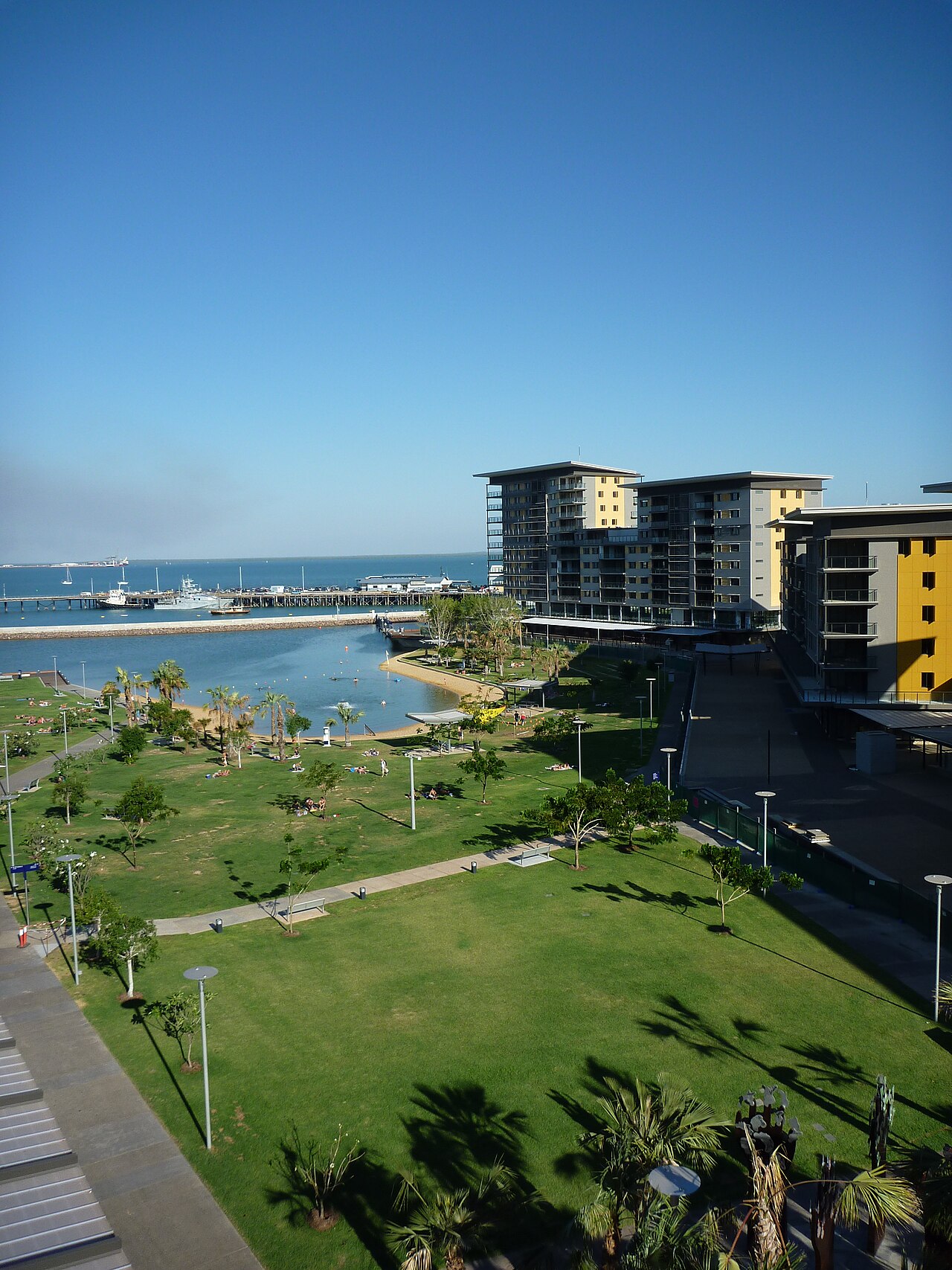
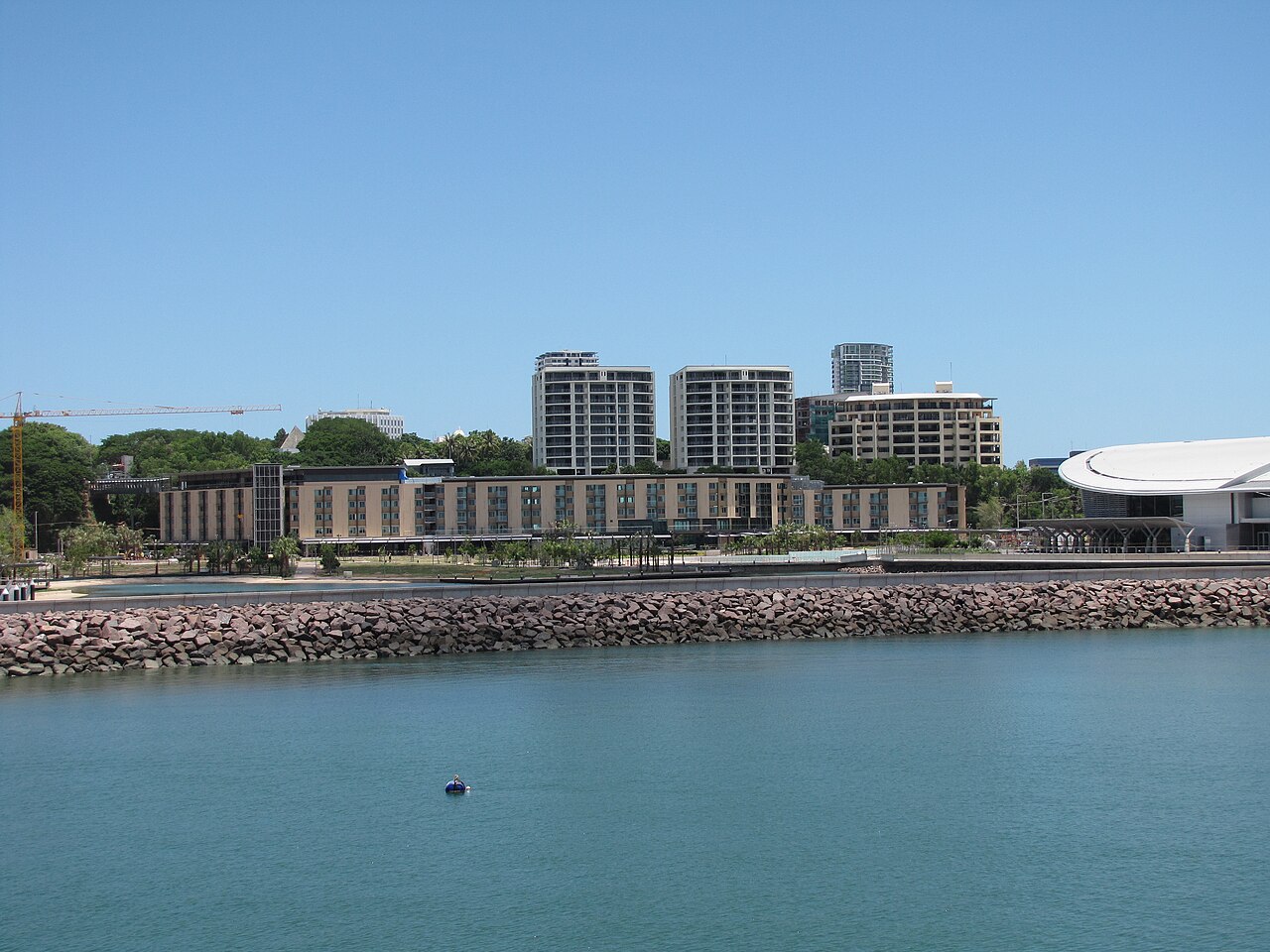
Today, the violent wartime heritage outside has given way to an inviting public recreation haven along the inner shoreline. The Darwin Waterfront Precinct was created by reclaiming the tidal flats of Kitchener Bay, situated right between the foot of Stokes Hill and the old site of Fort Hill. In place of mudflats, engineers designed a patrolled saltwater swimming lagoon bordered by an expansive sandy beach. The precinct features a massive wave pool that throws surf up to 1.7 metres high, alongside manicured lawns. A curving seaside promenade traces the water's edge, giving spectators views out over the broad expanse of the harbour. Swimmers and visitors stroll easily between the waterfront lawns and the city centre via the elevated pedestrian Sky Bridge.
Along the promenade, vibrant public artworks celebrate the multicultural heritage of the Top End. The waterfront rim is packed with shaded alfresco restaurants, cafes, and open-air bars serving cold drinks right beside the water. On weekends, the grassy lawns host community gatherings and open-air festivals that draw crowds long after the morning races wrap up. Stokes Hill Wharf remains the beating heart of Darwin's maritime recreation. Locals cast lines for harbour fish, while cruise boats depart into the harbour. It is the ideal place to finish a race day, watching the lights reflect across the safe saltwater where you swam your morning miles.
Sources: Darwin rebellion · Port Darwin · Darwin Waterfront Precinct · Stokes Hill Wharf · Naval Base Darwin
Course
Championship distance swim held at the Darwin Waterfront.
Championship distance swim held at the Darwin Waterfront.
Championship distance swim held at the Darwin Waterfront.
Awards
Presentations take place following the completion of the distance swims.
How to get there
Darwin Waterfront Classic
Frequently asked questions
- When was the last edition of Darwin Waterfront Classic?
- The last edition of Darwin Waterfront Classic took place on August 22, 2025.
- What distances does Darwin Waterfront Classic offer?
- Darwin Waterfront Classic offers 2.5 km, 5 km, and 10 km.
- Where does Darwin Waterfront Classic take place?
- Darwin Waterfront Classic is a sea swim. Location: Darwin Waterfront, Darwin, Northern Territory, Australia.
Where to stay
Darwin offers a range of stays, from modern boutique hotels overlooking the harbor to serviced apartments near the city center. Visitors frequently choose accommodation within walking distance of the waterfront to minimize transit on race morning. Expect standard hotel rates in the city to range between $180 and $350 AUD per night, depending on the season and proximity to the water. Budget-conscious travelers often look toward the more modest motels or apartment complexes slightly inland, which offer consistent value during the peak dry season.
Things to do nearby
Beyond the water, the region is defined by its rich natural and cultural landscape. Spend your time exploring the local {{internal_links:experiences|archaeological and historical sites}} that recount the city’s complex past, or venture into the nearby national parks for guided wildlife tours. The area is also known for its vibrant culinary scene, featuring fresh barramundi and tropical produce at the local markets. For those looking to stay active, kayak and stand-up paddleboard rentals are readily available, providing a different perspective of the harbor’s coastline.
Swimmers
Other races by this organiser
- Australian Open Water Cup (Darwin)Darwin, AU
Similar races


Comments
Transparency: some links on this page (stays, flights, experiences, gear) are affiliate links — if you book or buy through them, Omniathlon may earn a commission from the partner at no extra cost to you. As an Amazon Associate we earn from qualifying purchases.