
CoalCliff Beach Oceanswim
- Nov 22, 2026
- Distance: 2km
At a glance
- Next edition date
- November 22, 2026
- Distances
- 2 km
- Where
- Sea · Coalcliff Beach, Coalcliff, New South Wales, Australia
- Entry fee
- 30 AUD
- Registration
- onlineentry.com.au
About the race
Off Coalcliff Beach, the ocean swell rolls directly over the Bombie, a submerged reef break where open-water swimmers turn for shore. The Dave Winner Beach to Bombie Swim is an open water swimming race held in the sea at Coalcliff, on the rugged coast of New South Wales in Australia. It offers a pure ocean course that pits swimmers against the rolling surf of the South Pacific before returning them safely to the beach sand. Starting directly from the sand of Coalcliff Beach, the course follows an out-and-back route measuring 2,000 metres. Swimmers push out through the shorebreak, reading the incoming sets to clear the shallows before settling into their stroke in deeper water.
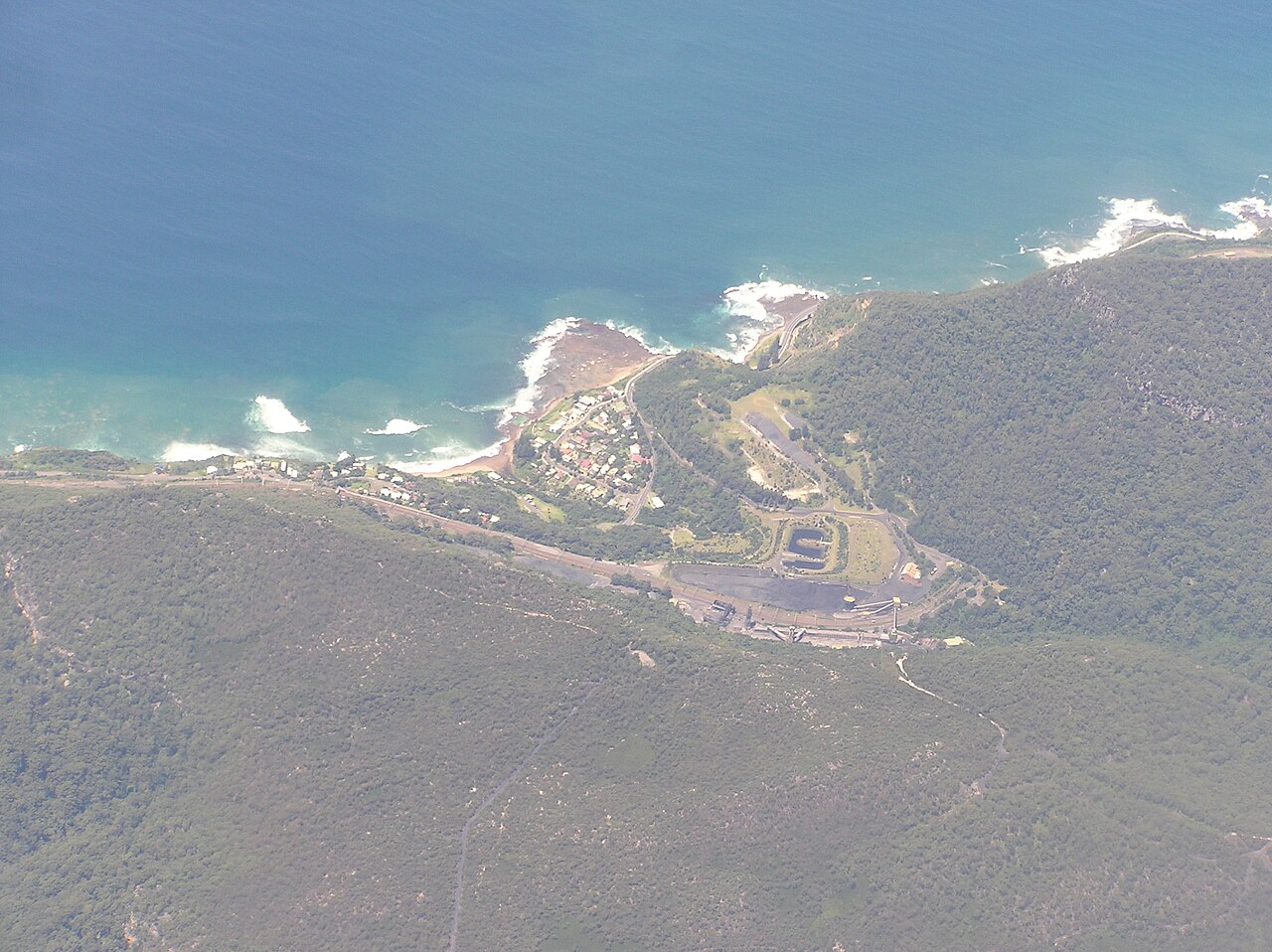
The swim heads straight offshore into open sea conditions toward the Bombie reef break, where waves rear up over the submerged shelf. Ocean conditions here can vary dramatically with the prevailing swell, alternating between gentle rolling water on quiet mornings and challenging surf when ocean energy builds. Rounding the marker buoy anchored at the Bombie requires solid surf confidence and careful sighting against the crests, testing swimmers who want to push their ocean skills. The race has been staged by the Coalcliff Surf Life Saving Club for fifteen years, establishing a deep tradition along this stretch of coast. In 2023, the event was formally renamed in honour of club life member Dave Winner.
Winner survived a near-drowning and spinal injury while surfing at Coalcliff Beach in 2021, and the community dedicated the race to his name to support his ongoing recovery and celebrate local resilience. After coming ashore through the breakers, swimmers and locals maintain a relaxed post-race gathering, celebrating over lunch and trading swim stories, with past editions meeting up at the Coledale RSL.
Sydney Cove survivors and the coal cliffs of the ocean
In 1796, survivors from the wrecked merchant ship Sydney Cove were trekking along the shoreline when they discovered coal outcropping naturally at the base of the ocean cliffs. That find transformed the secluded bay into an industrial mining outpost, as engineers drove the Coalcliff Colliery adit directly into a coal seam less than forty feet above the crashing waves. Getting coal out of the sheer cliffs required building jetties directly into the open ocean, where ships had to dock in the teeth of the Tasman swell. Pacific storms repeatedly battered the timber structures, and heavy seas smashed the coal jetty in 1878, 1881, and 1904 as shifting sand shoals constantly altered the water depths around the pylons.
Surviving on this coast meant understanding the raw strength of the waves and respecting the shifting sea floor. About ten kilometres south at Sandon Point, the historic Bulli Jetty tells a similar story of human effort against the sea. Built in 1863 to ship coal, a violent storm destroyed a large section of the jetty just four years later, claiming the lives of four workers. Even after extensions and the installation of electric lights in the 1890s, parts of the pier abruptly collapsed into calm waters in 1907, until storm damage in 1943 forced its final abandonment by the mines, leaving the weathered pilings to local fishermen.
Sea Cliff Bridge and the winds of Bald Hill
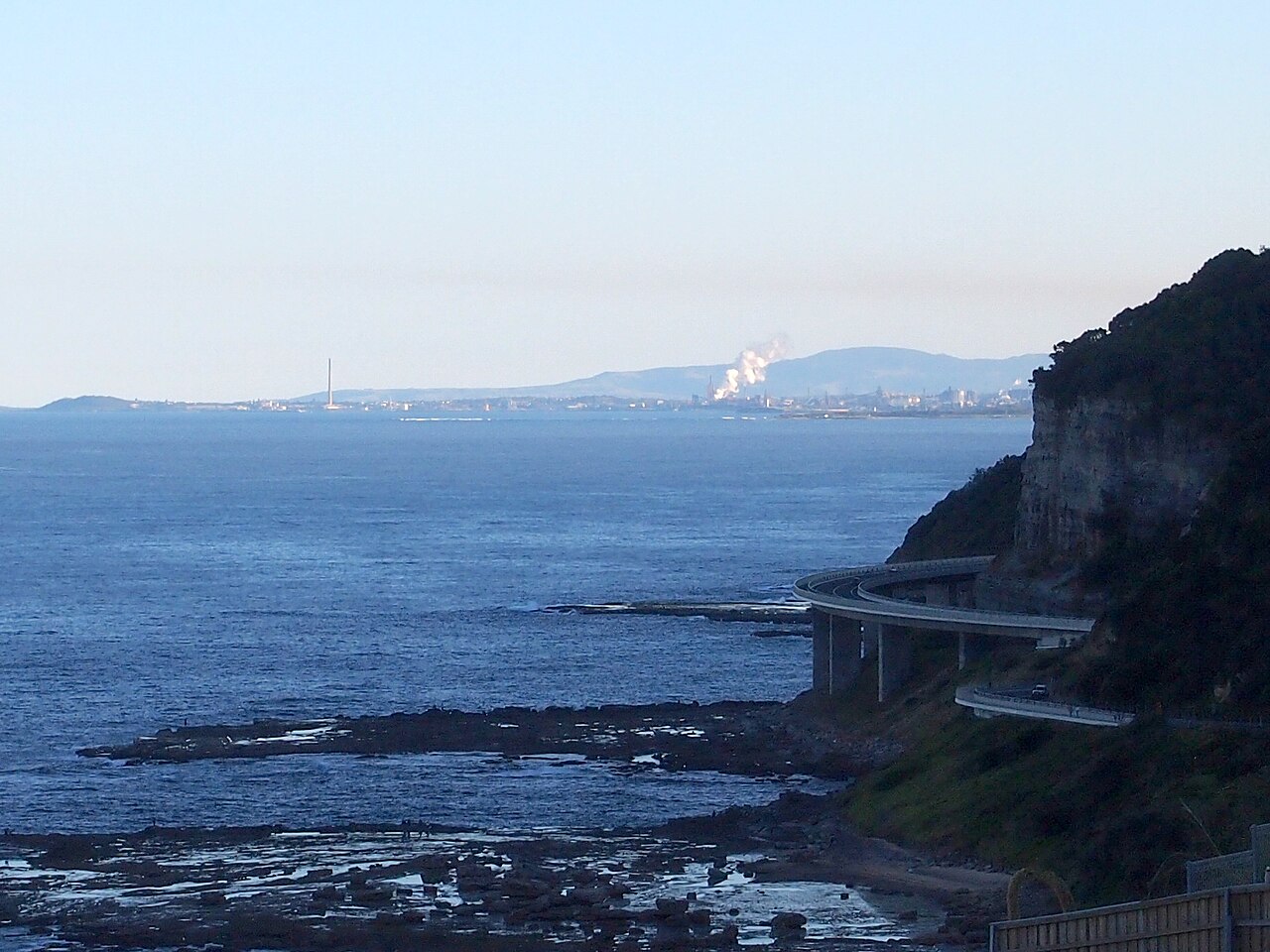
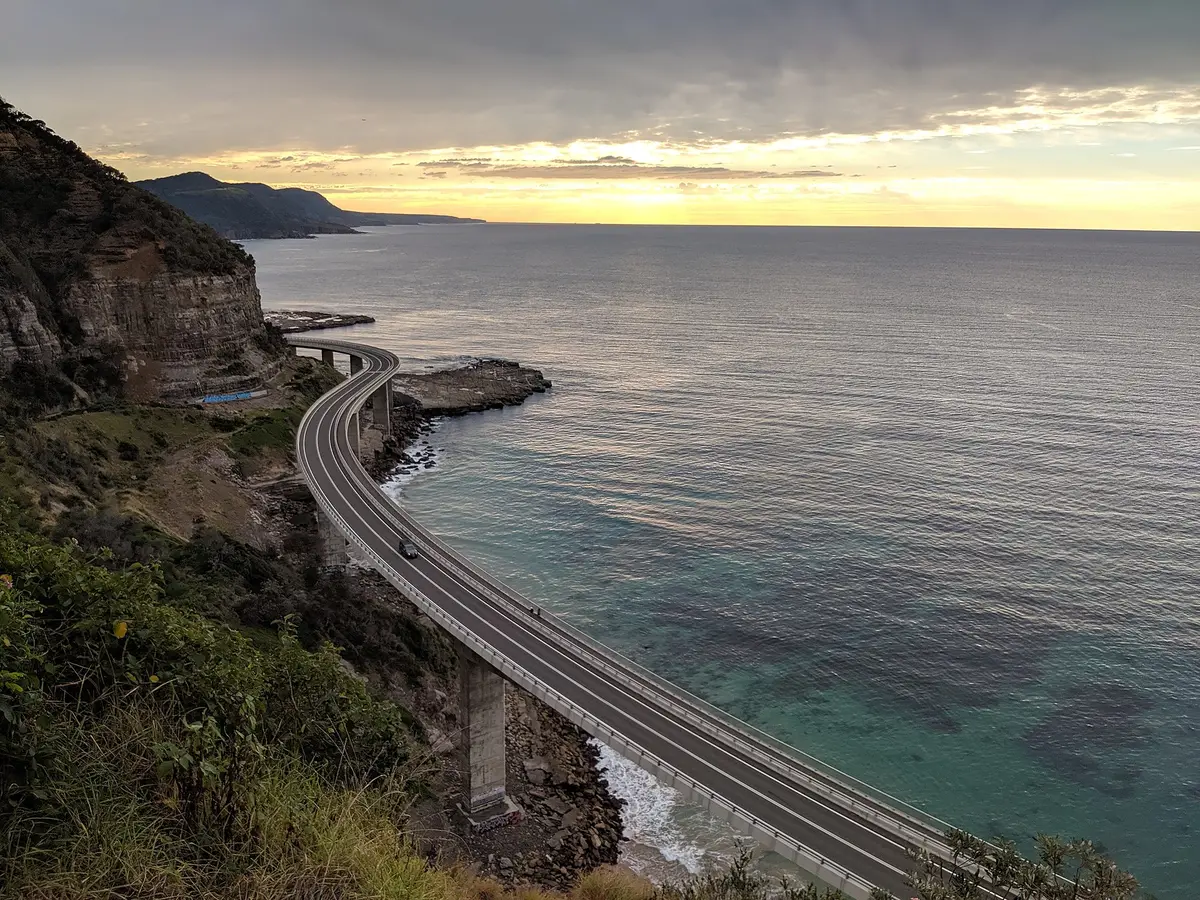
The original cliffside road proved perilous, plagued by frequent rock falls that forced its permanent closure in 2003. To reconnect the coastal communities, engineers designed the 450-metre Sea Cliff Bridge, opened in 2005. Built up to 70 metres seaward of the old road alignment, the sweeping bridge curves entirely over the breaking ocean swell, exposed to crashing surf and salt spray that create an aggressive marine environment for its steel and concrete. Swimmers and visitors walking the bridge's pedestrian path can look straight down into surging ocean water wrapping around the rocks. Rising behind the cliffs about three kilometres north stands Bald Hill, a massive headland marking the northern boundary of the Illawarra escarpment.
From its summit and the nearby sandstone outcrop of Stony Batter, the coast falls away into sweeping panoramic views across the open Tasman Sea. On the beach beneath Bald Hill on November 12, 1894, Australian pioneer Lawrence Hargrave tied himself to four box kites of his own design and was lifted nearly five metres into the air, proving early principles of powered flight on the very sands washed by the Tasman swell.
Royal National Park and the off-grid cabins of Garawarra
Reaching Burning Palms requires a steep trek down through native forest and coastal grasslands, or a long rock scramble around the headlands from Garie Beach. Tucked into the coastal scrub behind the dunes are remote shacks built between the late 1930s and early 1950s, following the path of an early hut built by an Aboriginal stockman named Old Tom around 1910. Miners from Helensburgh used the steep Burgh track to reach the surf, gradually erecting small cabins at Era, Little Garie, and Burning Palms that are now protected heritage communities. Life on these isolated beaches depended on mutual support in heavy surf.
Coalcliff beach and the ocean pool on the rocks
Back on Coalcliff Beach, the shoreline offers a classic Australian ocean setup beneath the escarpment wall. The beach remains the domain of the Coalcliff Surf Life Saving Club. Participants can focus entirely on the rhythm of the ocean swell.
Sources: Sea Cliff Bridge · Bald Hill (Australia)
Course
An out-and-back course starting and finishing at Coalcliff Beach. Swimmers head offshore to the 'Bombie' reef, round the marker buoy, and return to shore. Conditions range from cruisy to bumpy depending on the swell.
Previous editions
- 2025Nov 16, 2025
How to get there
CoalCliff Beach Oceanswim
Frequently asked questions
- When is CoalCliff Beach Oceanswim?
- CoalCliff Beach Oceanswim takes place on November 22, 2026.
- What distances does CoalCliff Beach Oceanswim offer?
- CoalCliff Beach Oceanswim has a single distance: 2 km.
- How much is the entry fee for CoalCliff Beach Oceanswim?
- The entry fee is 30 AUD. A fee of $55.00 applies if the electronic timing device is not returned.
- Where does CoalCliff Beach Oceanswim take place?
- CoalCliff Beach Oceanswim is a sea swim. Location: Coalcliff Beach, Coalcliff, New South Wales, Australia.
- How do I register for CoalCliff Beach Oceanswim?
- The reference page for registering for CoalCliff Beach Oceanswim is https://www.onlineentry.com.au/CoalCliff_2026.aspx.
Where to stay
Lodging options in the Coalcliff and Clifton area are limited, reflecting the village-like scale of the Illawarra coast. Visitors typically source small holiday rentals or converted miners' cottages that offer direct access to the cliff-side tracks. For more extensive facilities, the coastal strip toward Wollongong provides boutique hotels near the harbor and occasional camping options near the beach. Expect to pay between $180 and $350 per night for local holiday dwellings during the November season, depending on proximity to the sea.
Things to do nearby
The weekend of the swim allows for exploration of the Illawarra escarpment, a prime location for hang gliding from the heights of Bald Hill. For those remaining at sea level, the area offers coastal trekking along the Grand Pacific Drive, which provides elevated views of the reef breaks. Alternatively, visitors can tour the historic coal mining sites in the surrounding hills or spend the afternoon kayaking in the quiet estuaries near Stanwell Park, which remain sheltered from the open ocean swells.
Swimmers
Similar races


Comments
Transparency: some links on this page (stays, flights, experiences, gear) are affiliate links — if you book or buy through them, Omniathlon may earn a commission from the partner at no extra cost to you. As an Amazon Associate we earn from qualifying purchases.