
Deep South Cliff Swim
- Mar 6, 2027
- Distances from 300m to 2km
At a glance
- Next edition date
- March 6, 2027
- Distances
- 300 m · 500 m · 600 m · 900 m · 1.2 km · 1.5 km · 2 km
- Where
- Sea · Clifton Beach, Tasmania, Australia
- Entry fee
- 35 AUD
- Registration
- tasmanianoceanswimseries.com
About the race
Sea cliffs rising up to a hundred meters create a natural arena for open water swimming. The Deep South Cliff Swim is an open water swimming race held in the sea at Clifton Beach, on the wild southeastern coast of Tasmania. Part of the Tasmanian Ocean Swim Series, the event is organized by the Clifton Beach Surf Life Saving Club, established in 1963 and proudly recognized as the southernmost surf life saving club in Australia. Standing on the sand on race morning, swimmers look out at a coast shaped by powerful southern currents. The event offers two courses that make the most of the headland's natural contours. The 500-metre swim features an accessible beach start and follows an out-and-back course completely tucked within the shelter of the headland.
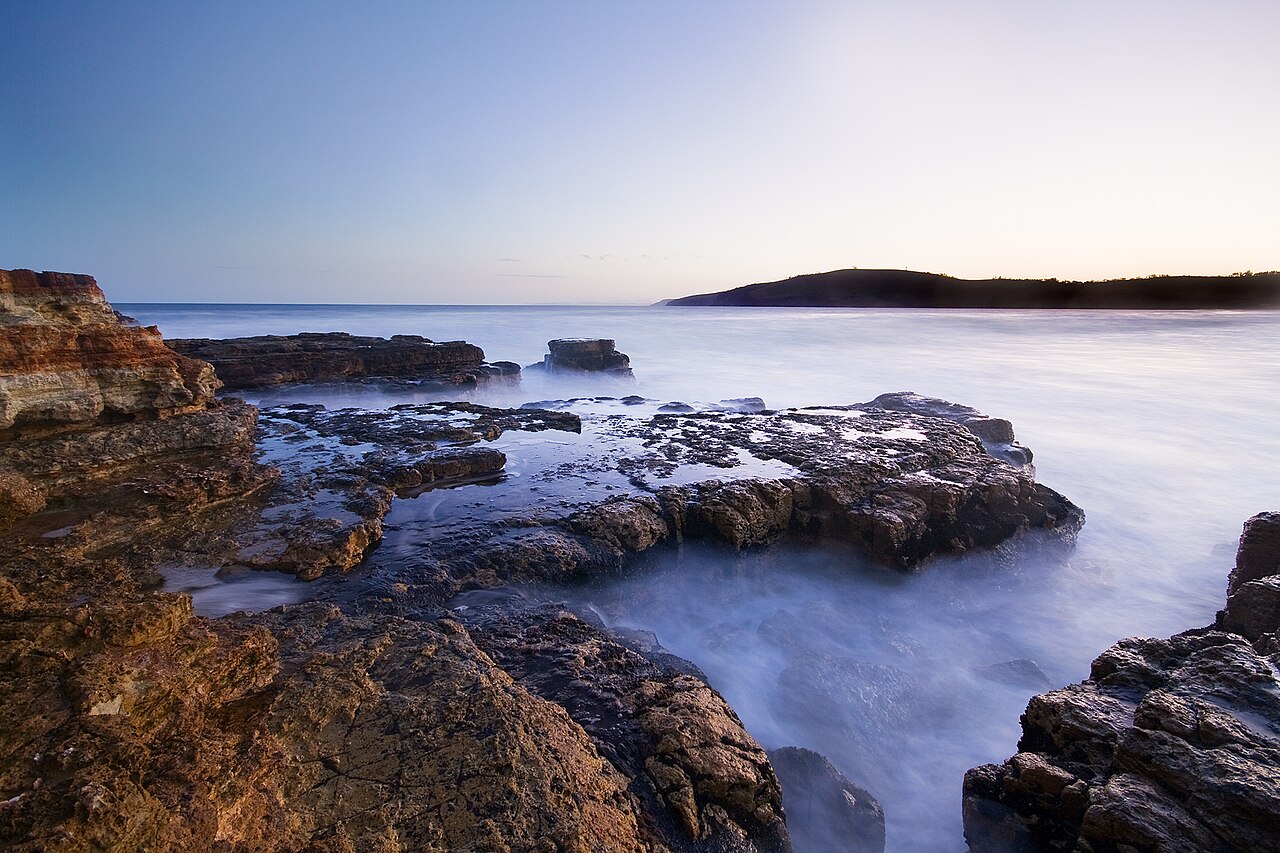
For those taking on the longer challenge, the 2-kilometre event traces a loop course directly beneath the towering rock faces, giving participants a dramatic perspective of the coastal ramparts rising straight out of the water. Held in March, the swim balances the raw energy of the southern seas with the protection offered by the cliffs. The water along the cliff base is sheltered from the open swell, yet conditions at Clifton Beach can still test ocean swimmers with moving water and variable chop. With local lifesavers watching over the course, participants experience a rare stretch of Tasmanian ocean swimming in true wilderness waters.
Storm Bay and the cliffs of Cape Contrariety
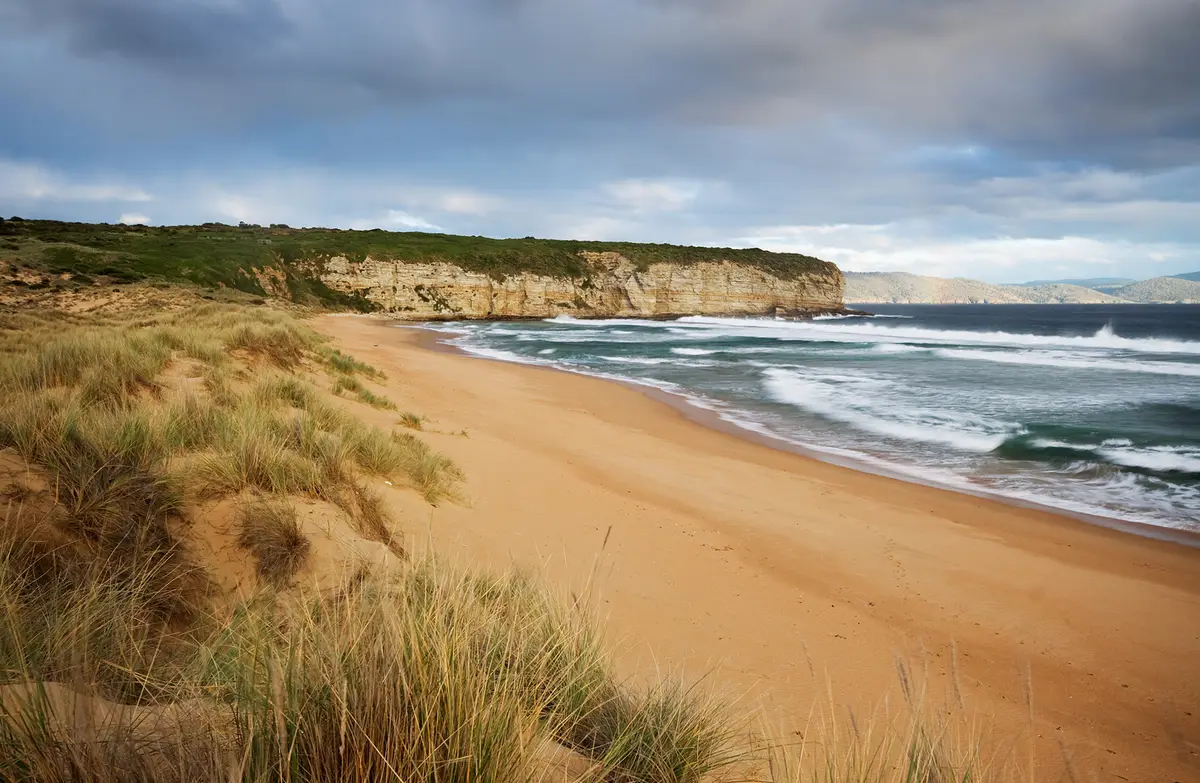
The character of the swim is defined by its exposed ocean setting. Stretching for 2.1 kilometres, Clifton Beach is set on the eastern side of the mouth of the River Derwent on the South Arm Peninsula, facing south-southeast directly into the vast expanse of Storm Bay. This open orientation exposes the shoreline to all southerly swells. Behind the beach, massive coastal dunes reach heights of over 20 metres, having drifted up to 300 metres inland under the prevailing winds. The beach is hemmed in by massive geological features that dictate water movement. To the east lies Cape Deslacs, while to the west the shoreline terminates in sheer rocky cliffs that ascend to 100 metres at Cape Contrariety.
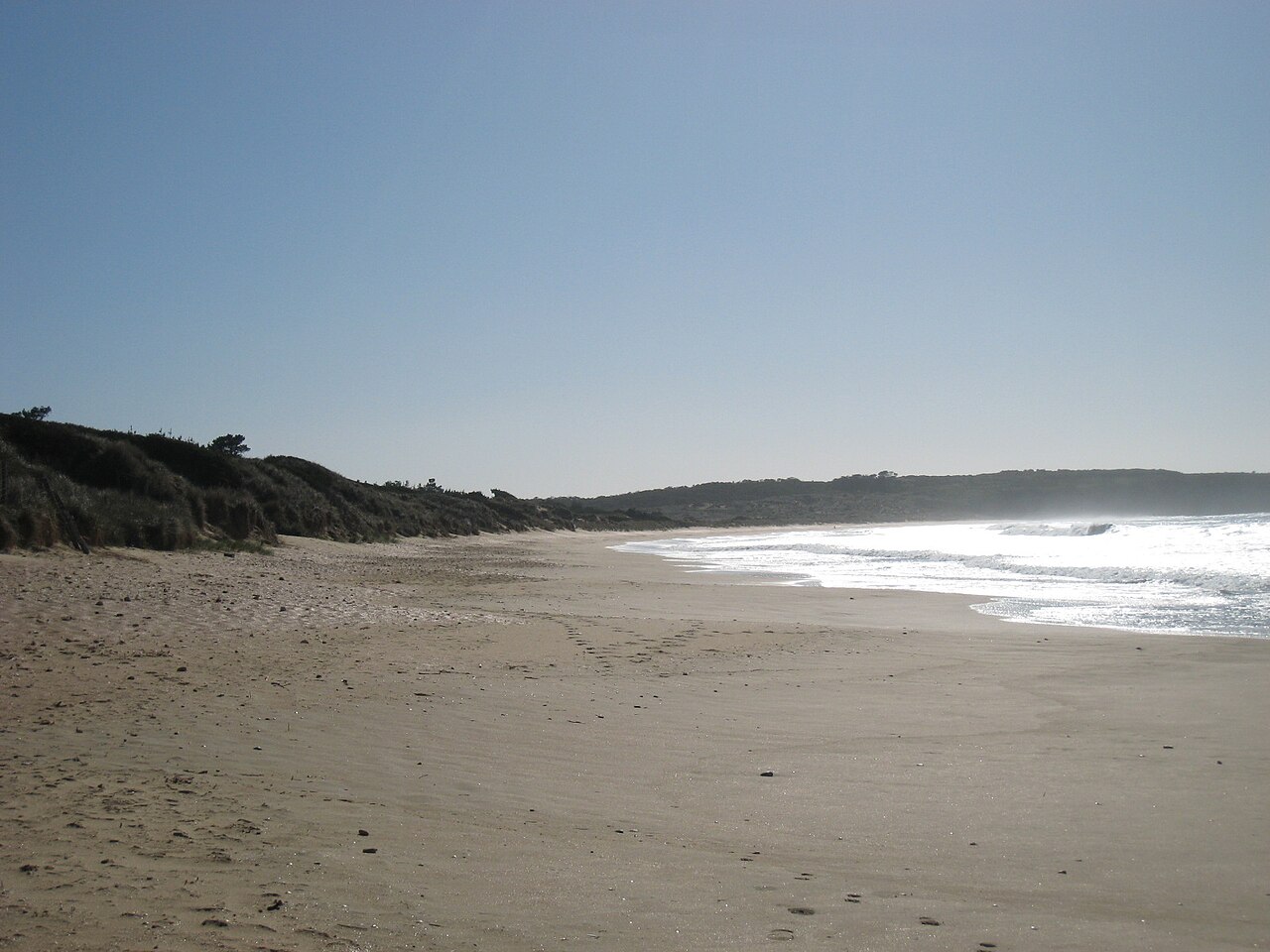
These immense rock walls are precisely what create the protected pocket of calm water used by the race course. {{h2:Iron Pot and the maritime heritage of the Derwent}} Navigating this turbulent coastline has tested mariners for centuries. In 1798, the explorer Matthew Flinders observed that the rocks in Storm Bay generated magnetic pulses capable of disorientating ship compasses. These deceptive waters claimed several vessels in quick succession during early settlement, including the Hope in 1827, the Bombay in 1830, and both the SS Lintrose and Princess Royal in 1832. To stem the loss of life and ships, the Iron Pot Lighthouse was constructed in 1832 on a 1.27-hectare sandstone island situated two kilometres offshore. Completed that year, it became the first lighthouse built in Tasmania and remains the oldest original lighthouse tower standing in Australia. Local lore suggests the name Iron Pot stems from an iron cauldron used by whalers as a crude open beacon fire before the permanent tower went up.
Today, remnants of a derrick crane used to hoist provisions from supply boats are still visible on the rocks, alongside the lighthouse that in 1977 became the first in Australia converted to solar power. The broader waters of the peninsula carry deep maritime traditions. Around 10 kilometres from Clifton Beach, Sloping Island was home to active shore-based whaling stations during the 1820s. Australia's very first shore-based whaling station had been established slightly further up the coast at Trywork Point in Ralphs Bay.
Betsey Island and the wildlife reserves of the peninsula
Just seven kilometres from the race course, natural sanctuaries thrive undisturbed. Betsey Island, together with Little Betsey Island and Betsey Reef, forms a 176-hectare nature reserve positioned right at the entrance of the River Derwent. The island is a designated Important Bird Area, clad in Tasmanian blue gum forest on its northern flank and succulent salt marsh to the west. It provides a secure haven for approximately 15,000 breeding pairs of little penguins and supports an astonishing population of 130,000 to 170,000 nesting burrows of short-tailed shearwaters. Even the tiny sandstone outpost of Iron Pot supports nesting populations of black-faced cormorants, silver gulls, and little penguins. A 171-hectare conservation area confirmed in 2010 shelters migratory waders such as the red-necked stint, which arrives each year after an epic journey from Siberia.
In the waters below, Ralphs Bay and the Derwent estuary provide a vital sanctuary for the critically endangered spotted handfish, a remarkable creature found only in this localized pocket of Tasmania. After a two-century absence caused by colonial hunting, southern right whales have also returned to these coastal bays in winter and spring to calve and migrate.
Sources: Ralphs Bay · Clifton Beach, Tasmania · Betsey Island · South Arm Peninsula
Course
A welcoming beach start sends swimmers out and back within the protection of the cliffs. Perfect for newer ocean swimmers, juniors, or anyone keen for a shorter hit-out with maximum coastal views.
A longer loop that allows you to settle into your stroke and enjoy the dramatic cliff-lined backdrop. Ideal for swimmers looking to build endurance or notch up series points.
Awards
1st place: 12 Points, 2nd place: 9 points, 3rd place: 7 points, 4th place: 5 points, 5th place: 3 points, All entries: 1 point. Age categories: Junior (12-16), Open (17-29), Masters (30-44), Senior Masters (45-59), Legends (60-69), True Tridents (70+).
Previous editions
- 2026Mar 8, 2026
How to get there
Deep South Cliff Swim
Frequently asked questions
- When is Deep South Cliff Swim?
- Deep South Cliff Swim takes place on March 6, 2027.
- What distances does Deep South Cliff Swim offer?
- Deep South Cliff Swim offers 300 m, 500 m, 600 m, 900 m, 1.2 km, 1.5 km, and 2 km.
- How much is the entry fee for Deep South Cliff Swim?
- The entry fee is 35 AUD.
- Where does Deep South Cliff Swim take place?
- Deep South Cliff Swim is a sea swim. Location: Clifton Beach, Tasmania, Australia.
- How do I register for Deep South Cliff Swim?
- The reference page for registering for Deep South Cliff Swim is https://www.tasmanianoceanswimseries.com/.
Where to stay
The South Arm peninsula offers a quiet, coastal atmosphere perfect for a race weekend. Options range from self-contained holiday rentals and traditional beach houses in the local area to more secluded camping spots near the coastline. For those preferring modern amenities, boutique stays are reachable within a short drive toward the greater Hobart area. Expect nightly rates to vary significantly based on proximity to the beach, typically ranging from $150 for modest holiday units to $350+ for well-appointed coastal retreats.
Things to do nearby
Beyond the race, the South Arm region is ideal for low-impact exploration. Visitors often spend the weekend sea kayaking or stand-up paddleboarding in the sheltered corners of the bay, which offer a different perspective of the cliffs. The area is also known for its coastal hiking trails that provide panoramic views of the Derwent River estuary. For a more relaxed afternoon, exploring the local history at nearby heritage sites or sampling cool-climate produce from the surrounding Tasmanian orchards rounds out the weekend experience.
Swimmers
Other races by this organiser
- Boat Harbour Ocean SwimBoat Harbour Beach, AU
- Team Challenge SwimCarlton, AU
- 7MB 1200 Team ChallengeSeven Mile Beach, AU
- Swim The PierBridport, AU
- 2XU Ocean Swim Series - River to BluffDevonport, AU
Similar races


Comments
Transparency: some links on this page (stays, flights, experiences, gear) are affiliate links — if you book or buy through them, Omniathlon may earn a commission from the partner at no extra cost to you. As an Amazon Associate we earn from qualifying purchases.