
GALLIPOLI Le Sirene' 3000 + 1500
- Oct 4, 2026
- Last edition date
- Distances: 1.5km and 3km
At a glance
- Last edition date
- October 4, 2026
- Distances
- 1.5 km · 3 km
- Where
- Sea · Gallipoli Le Sirene, Gallipoli, Puglia, Italy
- Entry fee
- 20–35 €
- Registration
- live.idchronos.it
About the race
GALLIPOLI Le Sirene' 3000 + 1500 is an open water swimming race held in the sea off Gallipoli, in Apulia. The competition unfolds in the open waters directly fronting the Ecoresort Le Sirenè, setting its course along a luminous sweep of the coastline. Swimmers head into the open sea under the gentle autumn sun, facing clear horizons that define the western edge. The event offers two distinct distances: a 1500-meter course and a longer 3000-meter test. Participants navigate the coastal swells alongside buoys marking the turns, pacing their rhythm through the open water. In past editions, organizers arranged the starting grid with structured precision, positioning competitors 1.5 meters apart or organizing two separate lines of 25 swimmers. The race takes place on an early October Sunday. Organized by SNALSEA, the gathering has also served as the final stage of the National Ionio AICS Open Water Swimming Championship, drawing swimmers together for a high-stakes finale in southern waters.
Isola di Sant'Andrea: the flat limestone reef and Audouin's gulls
Just over a mile from the historic center of Gallipoli, Isola di Sant'Andrea forms an expansive 50-hectare platform out in the Ionian Sea. Rising to a maximum elevation of no more than three meters, this completely flat islet lies so close to sea level that heavy gale winds can sweep waves straight across its low surface. Yet beneath the water, the surrounding marine environment provides shelter, marked by delicate Posidonia meadows that carpet the seabed. That remote platform has become an ecological sanctuary, standing as the only nesting site across both the Italian Ionian and Adriatic sectors for the rare Audouin's gull. Human history on the low island left subtle traces behind: a freshwater spring on its northern side once supported grazing livestock.
Along the same northern sector, two cut channels connected an ancient marsh to the sea to circulate the water and prevent malaria. Marking this exposed reef for passing ships, the isolated maritime lighthouse of Sant'Andrea was built in 1865 and continues to guide navigation past the shallows.
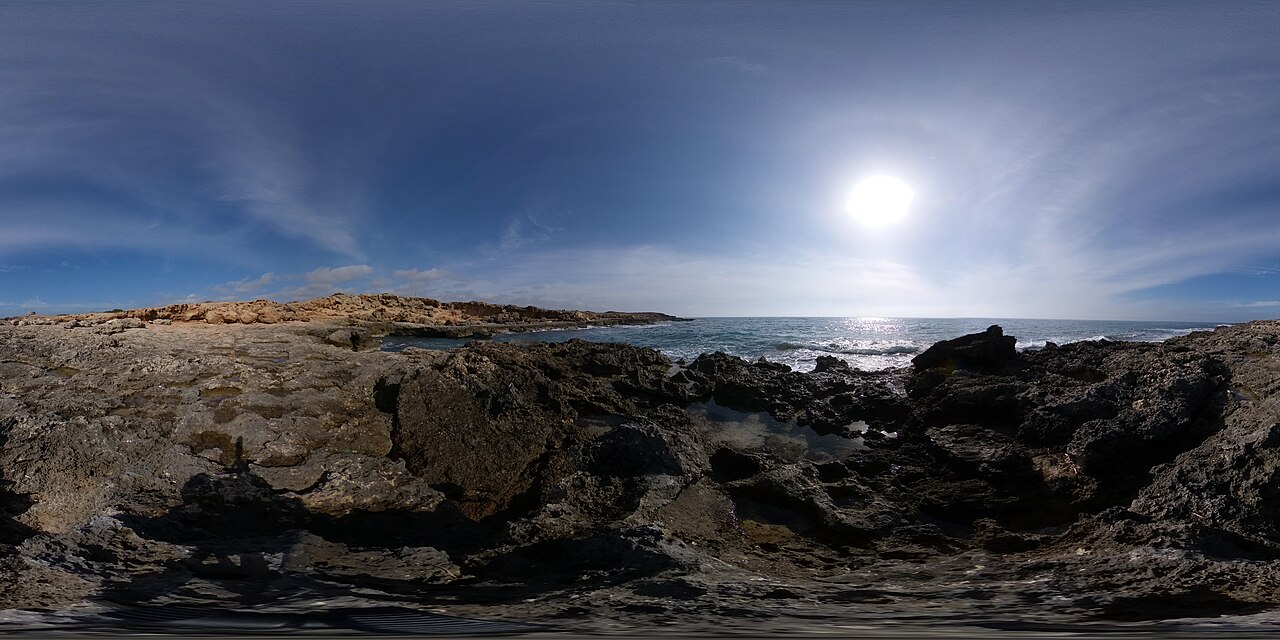
Parco di Punta Pizzo: dunes, sea cliffs and the cornflower
About seven kilometres south of the race venue, the shoreline forms the Parco naturale regionale Isola di Sant'Andrea e litorale di Punta Pizzo. This regional reserve protects a coastal stretch encompassing Li Foggi, the promontory of Punta della Suina, and Torre del Pizzo. At Punta della Suina, a rocky promontory slopes directly into the water, while the immediate shoreline alternates continuously between exposed rock shelves and fine sand. Beneath the surface, the seabed remains predominantly sandy, offering a clean, even underwater terrain alongside the rocks. Further along the Salento coast, about eleven kilometres from the swimming grounds, sits the Grotta del Cavallo. Perched fifteen meters above the present sea level, this historic coastal cavern features a rounded sea-facing entrance measuring five meters across and two and a half meters high. Here lies an ancient stratigraphic sequence that rests directly upon the foundation of an interglacial beach.
The 16th-century watchtowers: San Giovanni la Pedata and Sabea
The shores surrounding Gallipoli were fortified over the centuries to defend against seaward attacks. About one kilometre from the race area, Torre San Giovanni la Pedata was built in the 16th century to detect Saracen incursions. The masonry outpost served as an essential link in a defensive network, passing alert signals between the fortified town of Gallipoli to the north and Torre del Pizzo to the south. About three kilometres away, in the Crocefisso district, stands Torre Sabea, another 16th-century coastal watchtower standing six meters above sea level. In earlier centuries, its lookouts communicated with the northern fortifications of Gallipoli to the south and with Torre dell'Alto Lido to the north. During the second half of the 19th century, the isolated stone sentinel was completely abandoned.
Gallipoli's island fortress, the ancient port, and Spiaggia della Purità
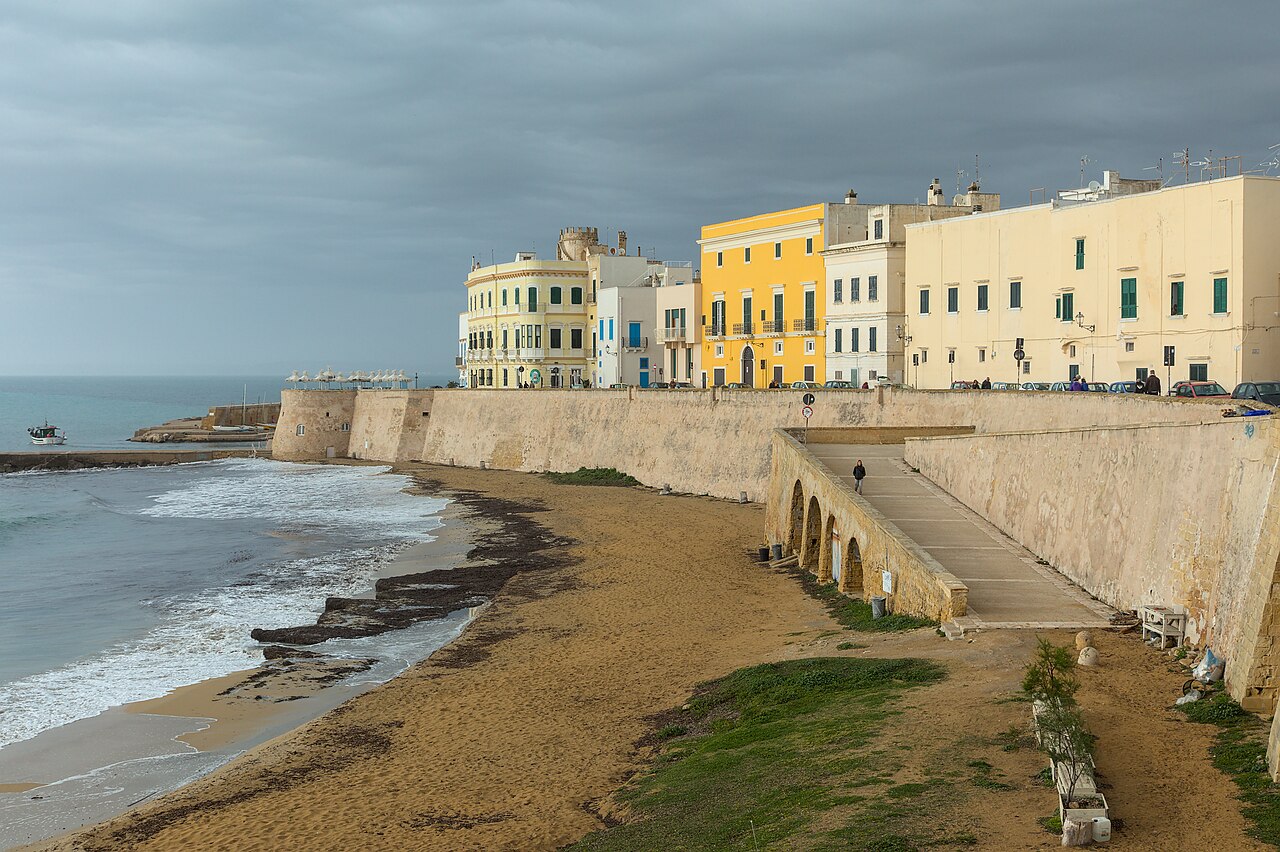
The historic center of Gallipoli is built upon a limestone island connected to the Apulian mainland by a 16th-century bridge. Its original fortifications were established after 265 BC to house Roman legionaries and protect the town, though the stronghold was heavily damaged or destroyed during the 5th century by invading Vandals and Goths. Later in medieval times, the town endured a siege by Charles I of Anjou in 1268, which forced many local inhabitants to seek refuge inland in Alezio. Overlooking the eastern approach to the island stands the castle of Gallipoli, almost entirely ringed by the sea. The castle features the Rivellino, a 16th-century freestanding eastern bastion surrounded by seawater on three sides to repel enemy beachheads.
A dedicated bridge once linked the fortress to the mainland shore near the church of Santa Cristina. Decades later, between 1870 and 1879, the defensive moat was filled in and the fortress facade was partly concealed when a new fish market was built against its walls. Encircling the historic island are 14th-century walls, later rebuilt and upgraded by Spanish engineers with twelve towers and bastions. Resting immediately beneath those high ramparts is Spiaggia della Purità, where swimmers can dip into the sea directly below centuries of stone fortifications. Just outside the walled center, about one kilometre from the race venue, stands the Greek Fountain in an area once known as funtaneddhe, the former site of ancient thermal baths.
Statues that belonged to the fountain were likely abandoned on the sandy shore during the Vandal and Gothic invasions. For generations until the 1950s, water was drawn from the fountain's trough into 85-centimeter barrels and transported into the old town to supply local households. Adjacent to this fountain lies the ancient port of Gallipoli. Originally a modest boat anchorage, it was transformed and expanded by Venetian engineers around 1480 before coming under Aragonese control. Shielded from heavy storm surges by two large protective breakwaters, Molo Foraneo and Molo Tramontana, the port developed under King Ferdinand I of the Two Sicilies into the Mediterranean's leading trade center for olive lamp oil in the 18th century. The mercantile harbor underwent modern renovation in 1980 across an area of 80,000 square meters, continuing a storied seafaring heritage.
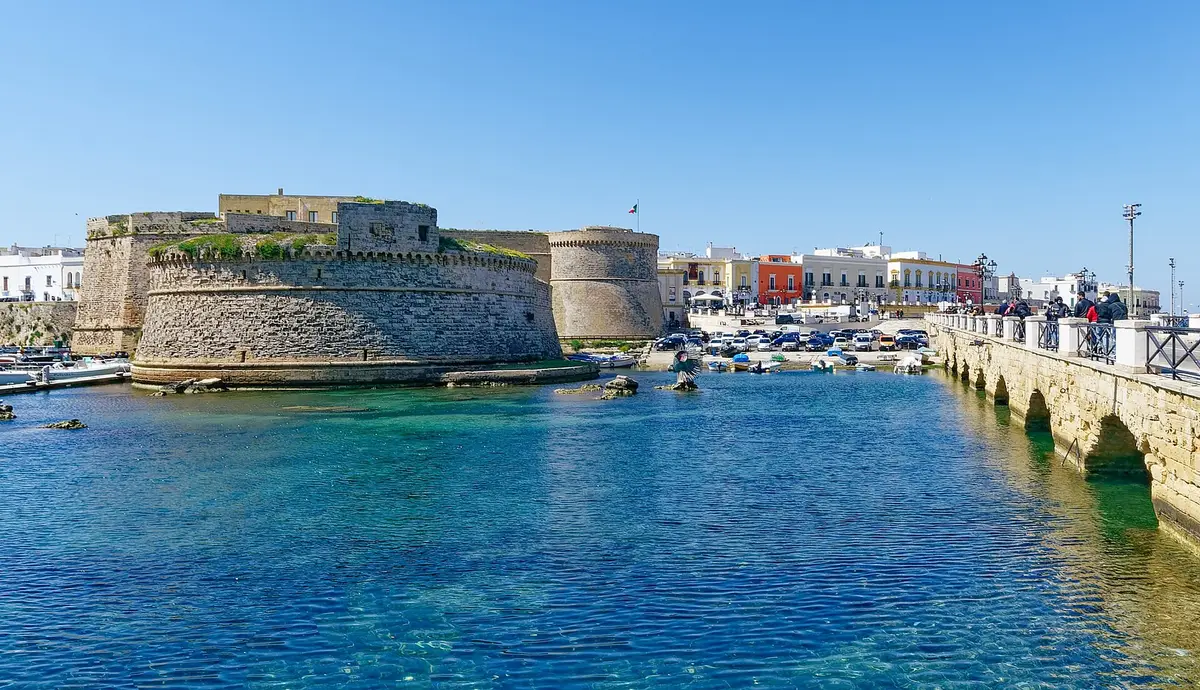
Sources: Fontana greca · Castello di Gallipoli · Torre San Giovanni la Pedata · Porto di Gallipoli · Gallipoli, Apulia · Isola Sant'Andrea Lighthouse
Course
1.5 km Total, 1 Lap (1.5 km/Lap)
3 km Total, 1 Lap (3 km/Lap)
How to get there
GALLIPOLI Le Sirene' 3000 + 1500
Frequently asked questions
- When was the last edition of GALLIPOLI Le Sirene' 3000 + 1500?
- The last edition of GALLIPOLI Le Sirene' 3000 + 1500 took place on October 4, 2026.
- What distances does GALLIPOLI Le Sirene' 3000 + 1500 offer?
- GALLIPOLI Le Sirene' 3000 + 1500 offers 1.5 km and 3 km.
- How much is the entry fee for GALLIPOLI Le Sirene' 3000 + 1500?
- The entry fee ranges from 20 € to 35 €.
- Where does GALLIPOLI Le Sirene' 3000 + 1500 take place?
- GALLIPOLI Le Sirene' 3000 + 1500 is a sea swim. Location: Gallipoli Le Sirene, Gallipoli, Puglia, Italy.
- How do I register for GALLIPOLI Le Sirene' 3000 + 1500?
- The reference page for registering for GALLIPOLI Le Sirene' 3000 + 1500 is https://live.idchronos.it/it/gara/8229/gallipoli-le-sirene-3000-1500.
Where to stay
Gallipoli offers a diverse range of stays, from traditional 'case di pescatori' in the historic center to modern boutique hotels overlooking the harbor. For those seeking a closer connection to the coastline, camping areas are available near the southern beaches. Prices typically range from €80 to €180 per night, depending on proximity to the old town and the level of service provided. Explore local housing options to find a base that balances easy access to the race start with the quiet atmosphere of the off-season.
Things to do nearby
The weekend provides an excellent opportunity to explore the Salento peninsula beyond the race course. You can visit local oil mills to learn about the region's historic trade, or take a kayak tour to observe the marine biodiversity near the coastal watchtowers. For those who prefer land-based activities, trekking along the rocky cliffs or touring the local archaeological sites offers a view of the landscape that complements the perspective from the water. Discover activities for your race weekend to make the most of your time in Puglia.
Swimmers
Similar races


Comments
Transparency: some links on this page (stays, flights, experiences, gear) are affiliate links — if you book or buy through them, Omniathlon may earn a commission from the partner at no extra cost to you. As an Amazon Associate we earn from qualifying purchases.