
Grand Prix de la ville de Schoelcher - Coupe Wendy BADIAN
- Dec 6, 2026
- Distances from 500m to 5km
At a glance
- Next edition date
- December 6, 2026
- Distances
- 500 m · 1 km · 5 km
- Where
- Sea · SAINT-PIERRE & LE CARBET, Le Carbet, Martinique, France
- Registration
- ffneaulibre.fr
About the race
Off the northwest coast of Martinique, the coastal course stretches across open sea from Saint-Pierre to the beaches of Le Carbet. This passage hosts the Grand Prix CTM en Mer, an open water swimming race held in the Caribbean Sea along the western coastline of the island. Swimmers gather in January to take on a traditional coastal crossing connecting the two settlements across open water. The event provides courses over 500 meters, 1,000 meters, and a distance of 5,000 meters that has also been known as the 'Volcano Relay'. In the open sea, competitors face the regular rhythm of swells while maintaining their sighting lines parallel to the shoreline.
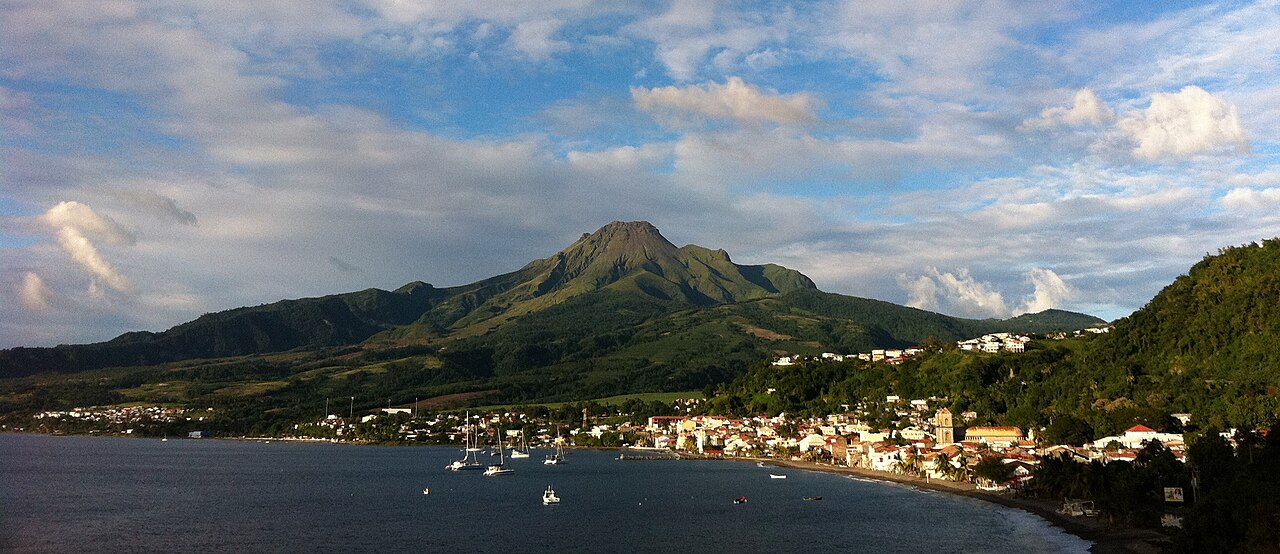
Mount Pelée: volcanic slopes down to the Caribbean
Rising about eleven kilometres from the course area, Mount Pelée belongs to the Lesser Antilles island arc, a chain of active volcanoes formed by the subduction of the Atlantic oceanic crust under the Caribbean Plate. Long before modern times, the indigenous Carib people were already aware of the volcano's activity from eruptions that occurred in ancient eras.
The roadstead of Saint-Pierre: shipwrecks turned into reefs
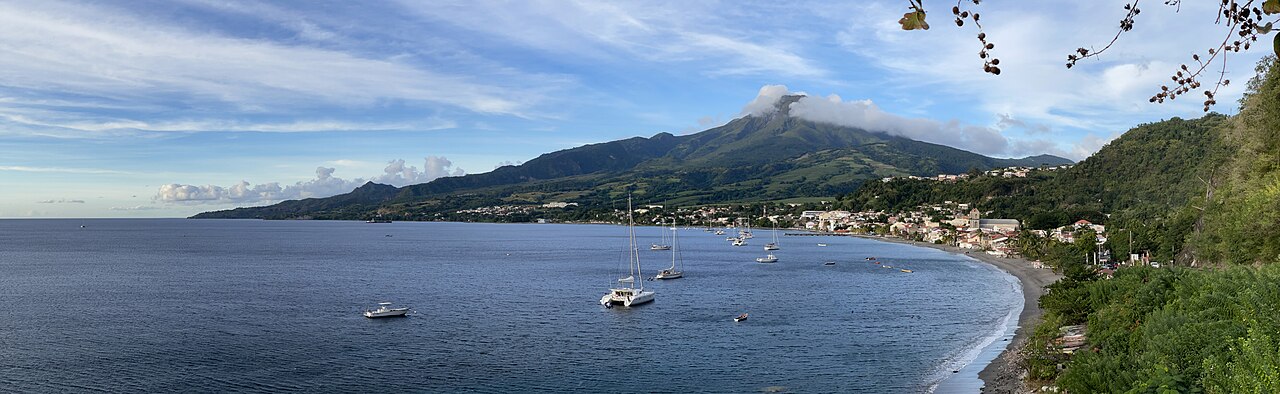
The waters of the roadstead of Saint-Pierre, about three kilometres from the race area, were historically protected by volcanic terrain and served as a major maritime hub for the Caribbean. That role ended abruptly on May 8, 1902, when a violent eruption of Mount Pelée destroyed the city of Saint-Pierre and sank the fleet of ships anchored in the bay. The crisis had begun days earlier; on May 5, a mudflow crashed into the sea, generating three destructive tsunamis that damaged boats and coastal structures. That same day, the sea at Saint-Pierre suddenly receded about one hundred meters before rushing back to flood low-lying parts of the city. When the main pyroclastic flow slammed into the coast on May 8, the intense heat caused the sea in the roadstead to boil.
Amid the catastrophe, remarkable stories of survival emerged from the water: a ten-year-old girl named Havivra Da Ifrile survived the deadly blast by rowing a small boat to shelter inside a sea cave. The steamship Diamant went down when its boilers exploded during an attempt to flee the erupting bay. The Biscaye, a 32-meter wooden schooner, was also swallowed by the sea and settled on the bottom with cargo barrels still packed with cod skeletons. The Canadian cargo liner Roraima was struck by the pyroclastic flow and burned upon the water for three continuous days before sinking offshore. Following the catastrophe, the cold mud of the roadstead quickly buried the sunken hulls, sealing them away from oxidation and looters for decades.
The Roraima, the largest shipwreck lying in the bay of Saint-Pierre, was discovered in 1974 by diver Michel Météry three hundred meters from the coast at a depth of 40 to 45 meters. When Jacques-Yves Cousteau explored the site, he nicknamed the vessel 'the white-haired wreck' due to the waving colonies of sea pens clinging to its hull. Over time, the sunken fleet has transformed into flourishing artificial reefs colonized by marine life, while south along the coast, the town of Le Carbet was shielded from the 1902 blast by a high promontory.
The 1667 naval battle off Fort Saint-Pierre
Centuries before the volcanic blast, these roadstead waters served as the arena for the naval battle of Martinique in July 1667. A French fleet lay anchored under the protection of artillery mounted at Fort Saint Pierre and two neighboring harbor fortifications. When an English squadron moved in to attack, the English flagship Lion and companion vessels became becalmed in the sheltered bay, forcing their crews to tow them. The clash reached its climax on July 6, 1667, when an English fireship set the French flagship Lys Couronée ablaze, with flames rapidly spreading to the Saint Jean and Lion d’Or. The engagement proved disastrous for the anchored fleet: out of twenty-five French vessels present in the bay, only two or three managed to escape destruction.
The French defense relied on coastal batteries positioned at Pointe des Nègres, Fort Saint-Louis, the îlot à Ramiers, and Cap Salomon, while the British operated from an anchorage in nearby Saint Lucia to monitor Fort Royal. After the 1779 battle, small boats salvaged cargo from grounded vessels before the wrecks were burned, and British commander Hyde Parker later died in a 1782 shipwreck while traveling to the Indies. Even during the Second World War, submarine warfare reached this coastline: on May 21, 1942, the German submarine U-156 torpedoed the SS Presidente Trujillo about nine kilometres away off Fort-de-France, sending the vessel to the bottom in four minutes at coordinates 14°38′N 61°11′W.
Le Carbet and Anse Turin: black volcanic shores
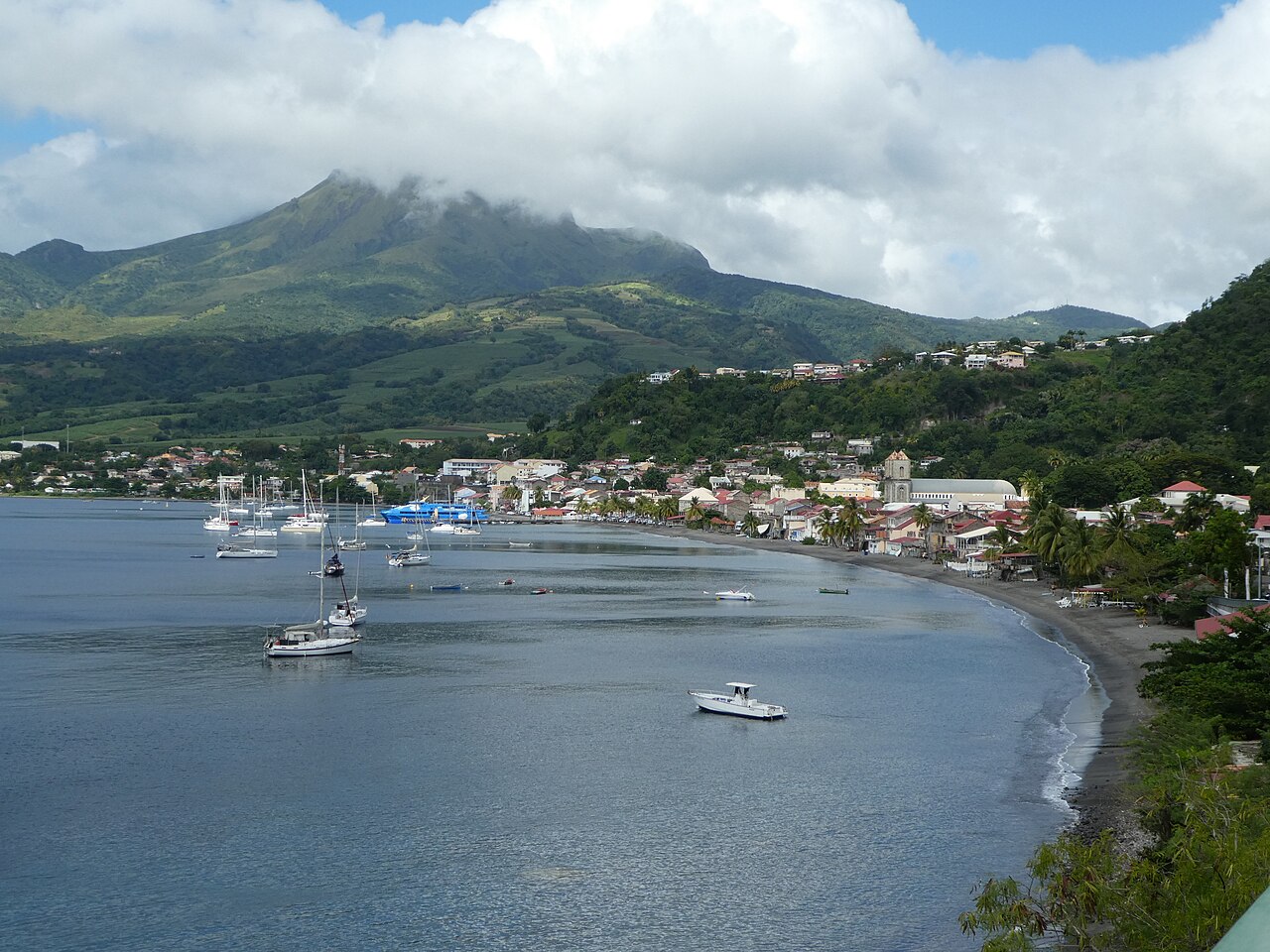
At the start of the crossing, the beach of Saint-Pierre extends along the stone ruins of the former 'Paris of the Antilles', composed of fine black volcanic sand. Directly on the water's edge, tables at the Bela Beach restaurant sit facing the submerged Manman Dlo site and the heights of Mount Pelée. Anse Turin is celebrated as one of the most picturesque beaches in northern Martinique. The course leads onward to the volcanic beaches of Le Carbet, a picturesque village nestled on the northwest coast overlooking the open sea. Because of their volcanic origin, the dark sands along the beach of Le Coin absorb the sun and heat up quickly during the day.
Coming ashore, swimmers find an authentic harbor setting where colorful wooden fishing boats rest on the sand beside bright waterfront houses. The beachfront is lined with relaxed bars and seaside restaurants, where finishers can rest in the shade and enjoy local specialties beside the warm waters of the Caribbean.
Sources: Battle of Martinique (1667)
Course
Previous editions
- 2025results
How to get there
Grand Prix de la ville de Schoelcher - Coupe Wendy BADIAN
Frequently asked questions
- When is Grand Prix de la ville de Schoelcher - Coupe Wendy BADIAN?
- Grand Prix de la ville de Schoelcher - Coupe Wendy BADIAN takes place on December 6, 2026.
- What distances does Grand Prix de la ville de Schoelcher - Coupe Wendy BADIAN offer?
- Grand Prix de la ville de Schoelcher - Coupe Wendy BADIAN offers 500 m, 1 km, and 5 km.
- Where does Grand Prix de la ville de Schoelcher - Coupe Wendy BADIAN take place?
- Grand Prix de la ville de Schoelcher - Coupe Wendy BADIAN is a sea swim. Location: SAINT-PIERRE & LE CARBET, Le Carbet, Martinique, France.
- How do I register for Grand Prix de la ville de Schoelcher - Coupe Wendy BADIAN?
- The reference page for registering for Grand Prix de la ville de Schoelcher - Coupe Wendy BADIAN is https://www.ffneaulibre.fr/evenements/6343.
Where to stay
Le Carbet offers a mix of traditional wooden bungalows and small guesthouses often run by local families, providing a direct view of the volcanic coastline. For those seeking more comfort, boutique hotels located near the harbor offer direct beach access. Expect to find double rooms ranging from €90 to €180 per night, depending on the proximity to the waterfront and the season. Camping options are limited, but several beachfront properties cater to short-term stays, placing you within walking distance of the start line for the race morning.
Things to do nearby
Beyond the water, the area is defined by its agricultural and volcanic history. You can explore the ruins of old sugar refineries or participate in rum tasting sessions at local distilleries that still use water from the mountain slopes. Hiking trails around the base of the volcano offer views of the coastline you just swam, while kayak and stand-up paddleboard rentals are available for those wanting to explore the calmer sections of the bay at a slower pace.
Swimmers
Similar races


Comments
Transparency: some links on this page (stays, flights, experiences, gear) are affiliate links — if you book or buy through them, Omniathlon may earn a commission from the partner at no extra cost to you. As an Amazon Associate we earn from qualifying purchases.