
H2OMAN Openwater Pico de Loro
- Jan 18, 2026
- Last edition date
- Distances from 250m to 5km
At a glance
- Last edition date
- January 18, 2026
- Distances
- 250 m · 500 m · 1 km · 2.5 km · 5 km
- Where
- Sea · Pico de Loro Beach & Country Club, Hamilo Coast, Nasugbu, Batangas, Philippines
- Entry fee
- 54–95 €
- Registration
- register.raceya.fit
About the race
It is along the coast of Nasugbu in Batangas that H2OMAN Openwater Pico de Loro takes place, an open water swimming event staged at the Pico de Loro Beach & Country Club along Hamilo Coast. Swimmers enter a tropical sea framed by limestone walls and dense green hillsides, setting out from the cove into open sea passages. Athletes travel to this corner of Batangas to test their endurance across five distinct course options that trace the shoreline between rocky points and sheltered bays.
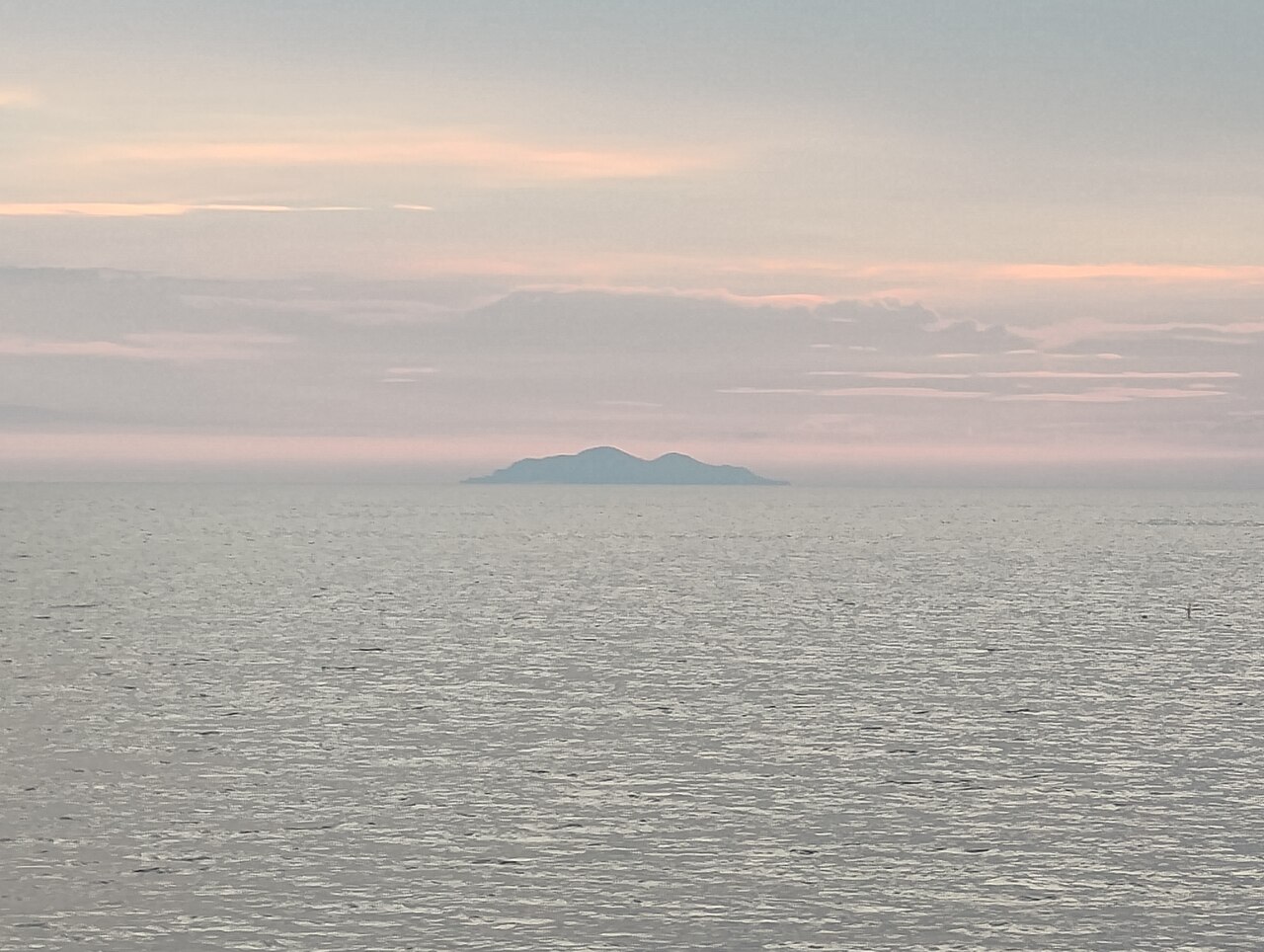
H2OMAN at Pico de Loro: from Layag beach to Santelmo
The competition caters to different endurance levels with a spread of five official distances: the 250-meter Quick Splash, the 500-meter Enduro Splash, the 1-kilometer Ripple, the 2.5-kilometer Surge, and the 5-kilometer Tsunami. Race day logistics have previously taken advantage of the region's isolated coves to stage remote deep-water starts. In past editions, swimmers were transported by boat to Layag beach, beginning their race directly in the water roughly twenty meters off the shore. In past editions, participants navigated past an island featuring jagged rock formations that rose sharply out of the water. The open sea stretches require steady sighting and concentration. Conditions in the outer passages can demand serious physical output when the wind picks up across the surface.
In a past edition, the race start was delayed due to early darkness, and swimmers subsequently faced choppy sea conditions driven by the wind. Swimmers have encountered challenging currents and relentless waves along the exposed stretches of the course. Maintaining an efficient rhythm and holding a steady line through rougher water becomes the central challenge before turning back toward the coast. Relief comes as the course enters Santelmo beach. Santelmo beach has served as both a hydration station and a key location for race markers, giving swimmers an essential checkpoint during the crossing. The cove features a designated snorkeling area where swimmers can observe sea creatures living across the seabed. Gliding through these transparent shallows leads swimmers smoothly along the course.
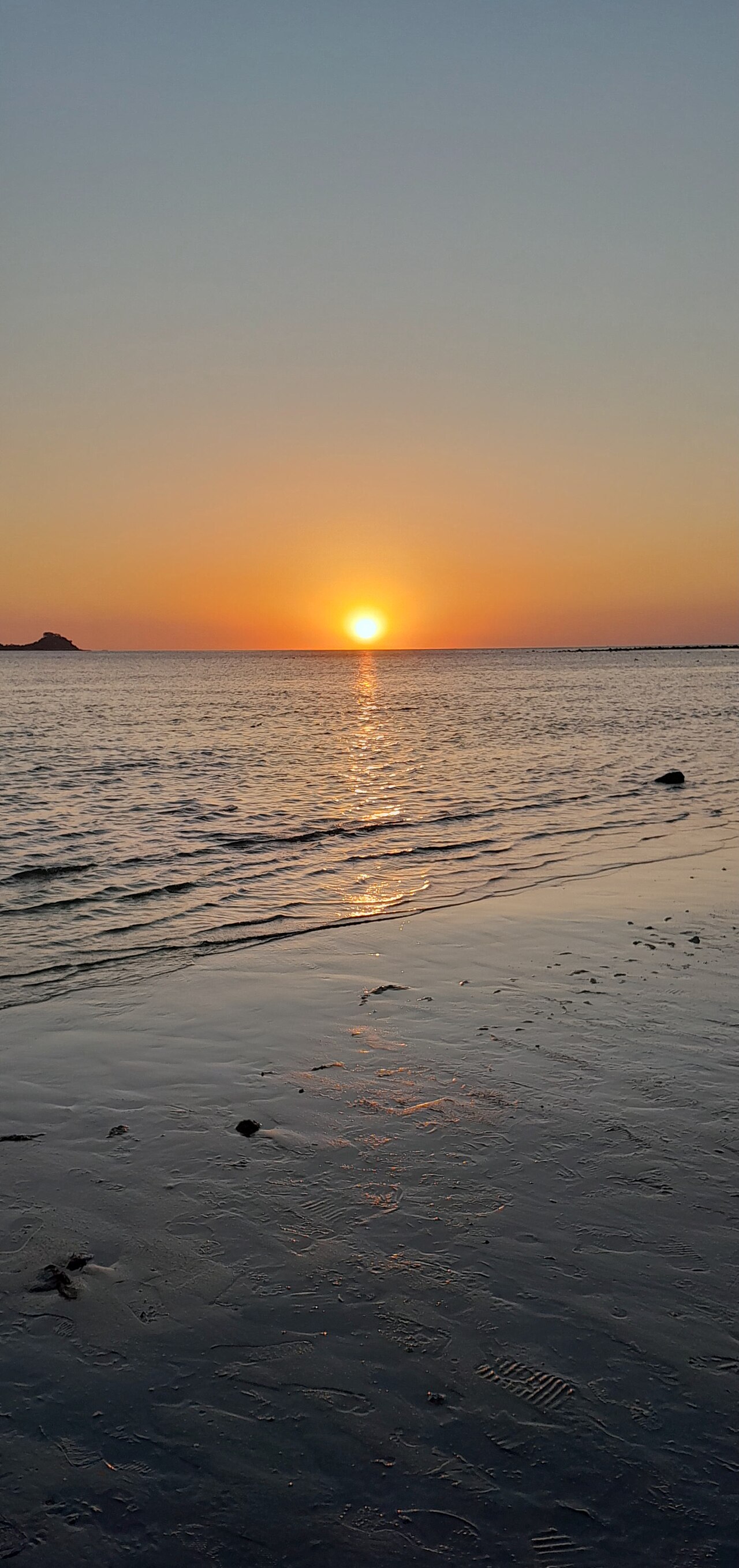
Santelmo Reef: the giant clams of Hamilo Coast
The waters of Pico de Loro Cove are crystal-clear, surrounded by dense tropical forests and sheer limestone cliffs that rise from the water's edge. At Santelmo Reef along Hamilo Coast, the seabed hosts a dedicated marine conservation project that reintroduced giant clams, known locally as taklobos. These massive mollusks were planted along the reef to help restore local biodiversity and support the marine ecosystem. Fortune Island, located 14 kilometers off the coast of Nasugbu, was officially designated as a marine reserve in 1978. For swimmers heading down the coast, knowing that these surrounding waters are protected adds a deep appreciation for the living marine life beneath the surface.
Punta Fuego and Fortune Island: the San Diego galleon
Punta Fuego is a 2.9-kilometer-long promontory extending into the South China Sea. This moderately high, rocky headland features an islet off its northern side, while two islets connected by a reef lie to the southeast. Within this southeastern reef sits a prominent pinnacle rock that is awash at low water. Punta Fuego takes its name from historical warfare at sea. It is believed to originate from the Spanish naval command to fire cannons during the Battle of San Diego, fought off the point in 1600 between Spanish and Dutch forces. That engagement between the Spanish galleon San Diego and the Dutch warship Mauritius took place under severe weather, with strong winds and heavy seas pounding the wooden hulls.
The battle ended catastrophically on December 14, 1600, when the San Diego sank near Fortune Island, about 13 kilometers from the race area. The wreck settled at a depth of approximately 50 meters, resting undisturbed on the seabed for nearly four centuries. Over time, the wreck site evolved into a sand-covered hill measuring 25 meters in length, 8 meters in width, and 3 meters in height. In 1992, underwater archaeologist Franck Goddio discovered the sunken galleon. The subsequent archaeological recovery yielded over 34,000 artifacts from the site, including bronze cannons, Japanese swords, navigational instruments, and a hardened block of resin that had been stored aboard for caulking the ship. The surrounding municipality of Nasugbu is steeped in maritime and terrestrial history. American forces staged an amphibious landing directly on the beaches of Nasugbu on January 31, 1945.
Pico de Loro Cove: white sand, parrot's peak and seafront life
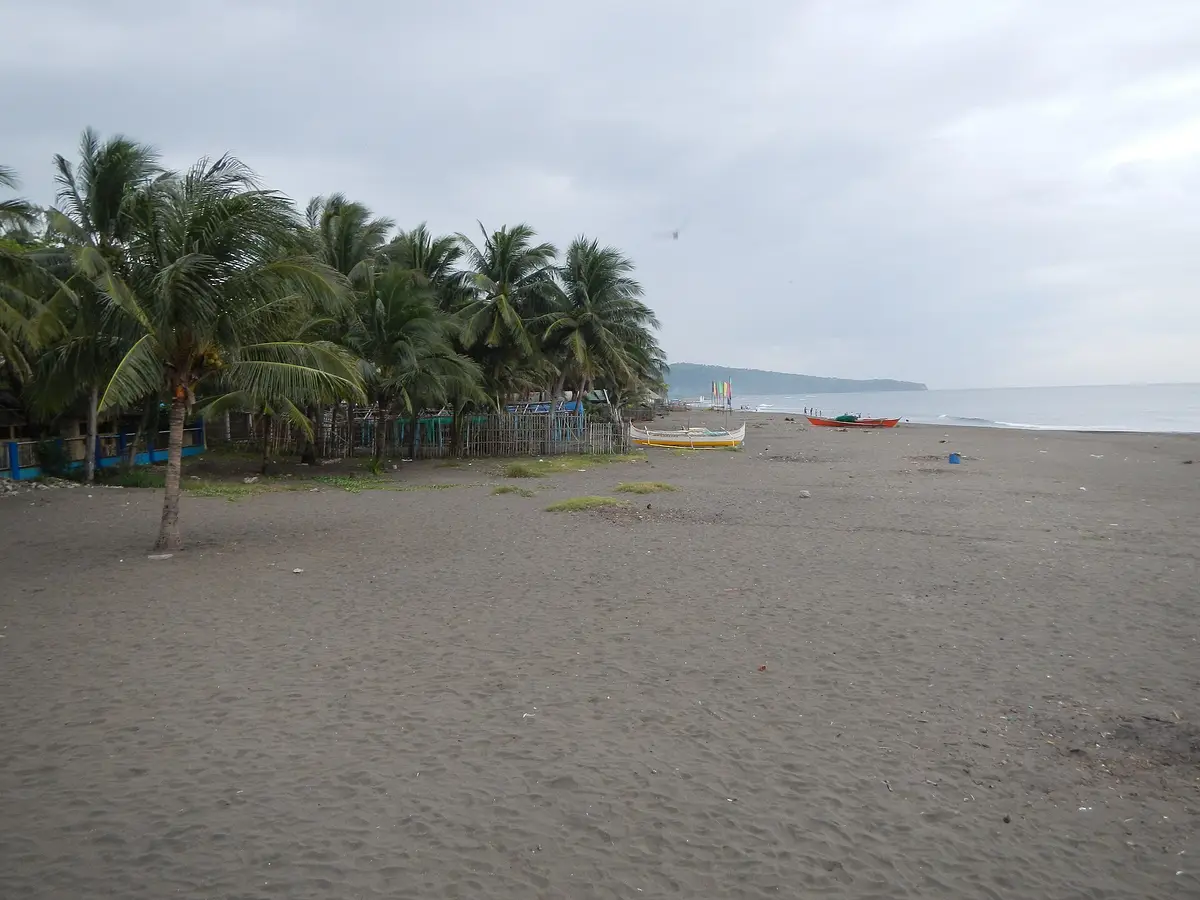
The heart of the event remains Pico de Loro Cove itself, an inlet defined by Mt. Pico, which has the shape of a parrot's beak. Across the municipality of Nasugbu, the land slopes steadily downward toward the South China Sea, creating a natural amphitheater around the bay. The cove features a 1.5-kilometer stretch of fine white sand beach, where swimmers gather to prepare their gear and return to celebrate after the finish. Within this crescent, the water along the main beach is clear, calm, and shallow, making it an inviting place to wade in and cool down. Framing the shoreline, the residential buildings scattered through the cove take their names from bird species.
The resort environment keeps civilization compact, leaving the sandy curve open for spectators and athletes. After completing the race, swimmers gather at the Reef Bar, a beachside spot right on the sands of the resort that specializes in grilled dishes. Floating in the calm shallows of Pico de Loro Cove provides the ultimate conclusion to a weekend of open water adventure.
Sources: Nasugbu
Course
Previous editions
- 2025results
How to get there
H2OMAN Openwater Pico de Loro
Frequently asked questions
- When was the last edition of H2OMAN Openwater Pico de Loro?
- The last edition of H2OMAN Openwater Pico de Loro took place on January 18, 2026.
- What distances does H2OMAN Openwater Pico de Loro offer?
- H2OMAN Openwater Pico de Loro offers 250 m, 500 m, 1 km, 2.5 km, and 5 km.
- How much is the entry fee for H2OMAN Openwater Pico de Loro?
- The entry fee ranges from 54 € to 95 €. Multiple bundles available for aquathlon/openwater combinations.
- Where does H2OMAN Openwater Pico de Loro take place?
- H2OMAN Openwater Pico de Loro is a sea swim. Location: Pico de Loro Beach & Country Club, Hamilo Coast, Nasugbu, Batangas, Philippines.
- How do I register for H2OMAN Openwater Pico de Loro?
- The reference page for registering for H2OMAN Openwater Pico de Loro is https://register.raceya.fit/event/h2oman2027.
Where to stay
The Hamilo Coast area is defined by exclusive residential beach clubs and serviced apartments. Options range from luxury ocean-view condominiums to boutique units within the Pico de Loro development. Prices vary significantly based on the proximity to the waterfront and the level of service, typically ranging from 120 to 300 EUR per night during the peak season of the race.
Things to do nearby
Beyond the race, the Batangas region offers extensive opportunities for exploration. Visitors can engage in guided trekking along the trails of the Mounts Palay-Palay–Mataas-na-Gulod Protected Landscape or take to the water with kayak and SUP tours that explore the hidden coves of the coast. Local culinary experiences focus on fresh seafood, reflecting the town’s long-standing maritime heritage and the academic influence of the local fisheries institution.
Swimmers
Similar races


Comments
Transparency: some links on this page (stays, flights, experiences, gear) are affiliate links — if you book or buy through them, Omniathlon may earn a commission from the partner at no extra cost to you. As an Amazon Associate we earn from qualifying purchases.