
Möhneseeschwimmen 2026
- May 1, 2026
- Last edition date
- Distances from 500m to 1.5km
At a glance
- Last edition date
- May 1, 2026
- Distances
- 500 m · 1 km · 1.5 km
- Where
- Lake · Möhnesee (Vorstaubecken), Möhnesee, Nordrhein-Westfalen, Germany
- Wetsuit
- The event is known for very cold water, often below 5°C (41 °F). Wetsuits are common, but specific temperature-based rules are not explicitly detailed in the provided text.
- Registration
- soest.dlrg.de
About the race
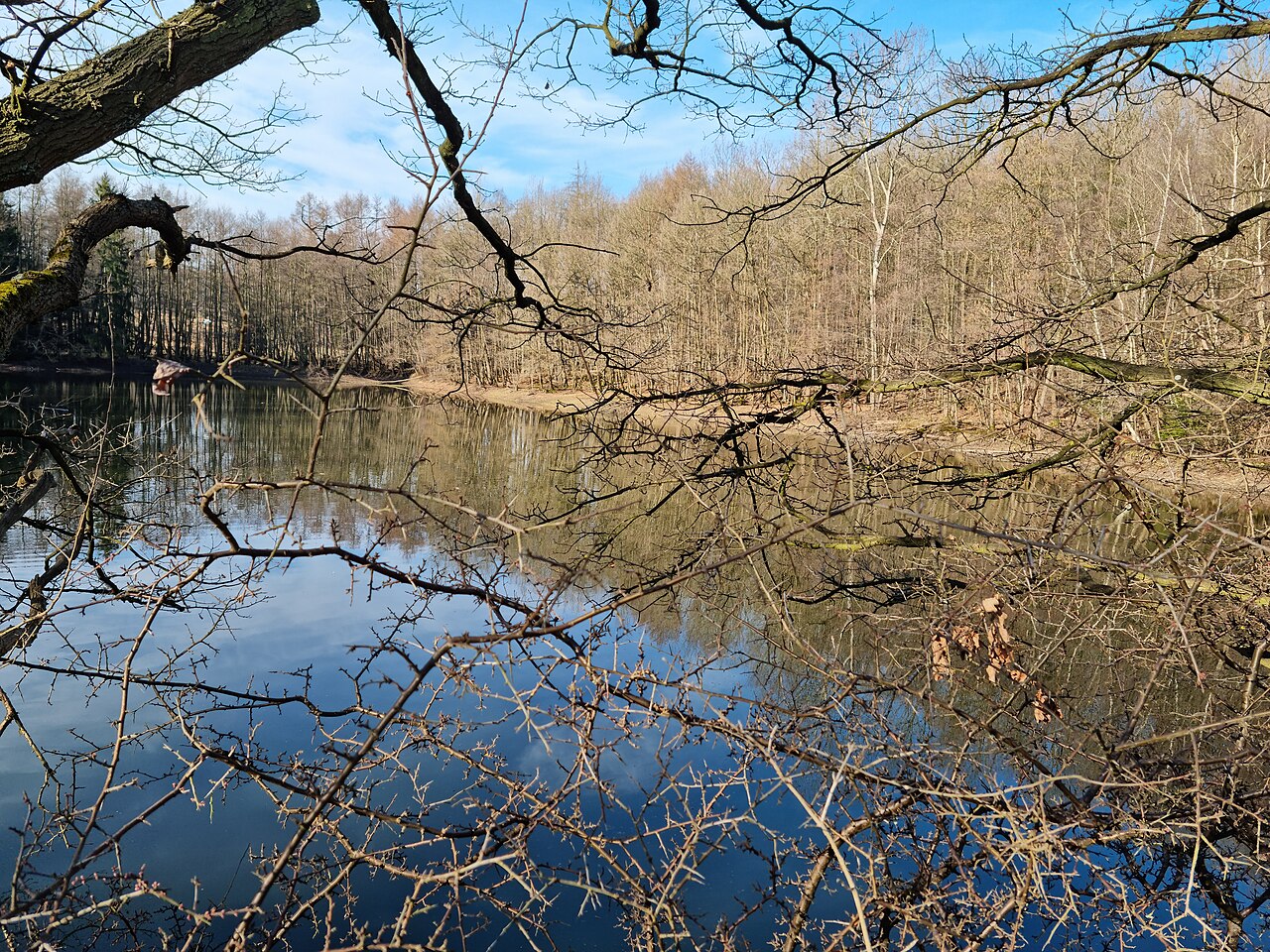
On the first of May, swimmers gather at the Vorstaubecken of the Möhnesee to test their nerve against reservoir waters that frequently drop below ten degrees Celsius. The Möhneseeschwimmen is an open water swimming race held in the reservoir basin of the Möhnesee, located in the district of Soest in North Rhine-Westphalia, Germany. Fresh, cold water feeds into this staging basin directly from the headwaters of the Möhne river in Brilon, making the event a famously bracing, traditional start to the open water swimming season. Stepping into water this cold demands intense focus and a steady rhythm as the chill hits your skin. To keep the challenge both exhilarating and manageable, the organizing club DLRG Ortsgruppe Soest e.V. offers targeted distances of 500, 1,000, and 1,500 meters.
Lifeguards from the DLRG shadow the pack in canoes throughout every heat, maintaining a close, reassuring safety watch over every stroke. The atmosphere on the lakeside is warm and familiar, creating a welcoming club environment where first-timers and seasoned cold-water veterans swim side by side. Once swimmers exit the water, the event moves smoothly to an awards ceremony and a communal barbecue where competitors thaw out together over hot food. The shared relief and the smell of the grill make the May Day plunge an enduring regional tradition for open water enthusiasts.
May Day at the Vorstaubecken: three races, fins and cold water
The 2026 edition, on 1 May, is the 39th Möhnesee long-distance and fin swimming meet and the 16th Hans Fahrenhorst swim. For the 16th time the meet carries the name of Hans Fahrenhorst, the creator of the club's open-water competition. Water temperatures below 5 degrees Celsius are not unusual, because the race is held in the Vorstaubecken of the Möhnesee. The 1,000 m race is swum in rubber fins, with separate rankings for men and women. The 1,500 m can be swum with or without fins, and monofins and fiberglass fins are also allowed.
From Brilon to the Ruhr: the Möhne river basin and the 1912 dam
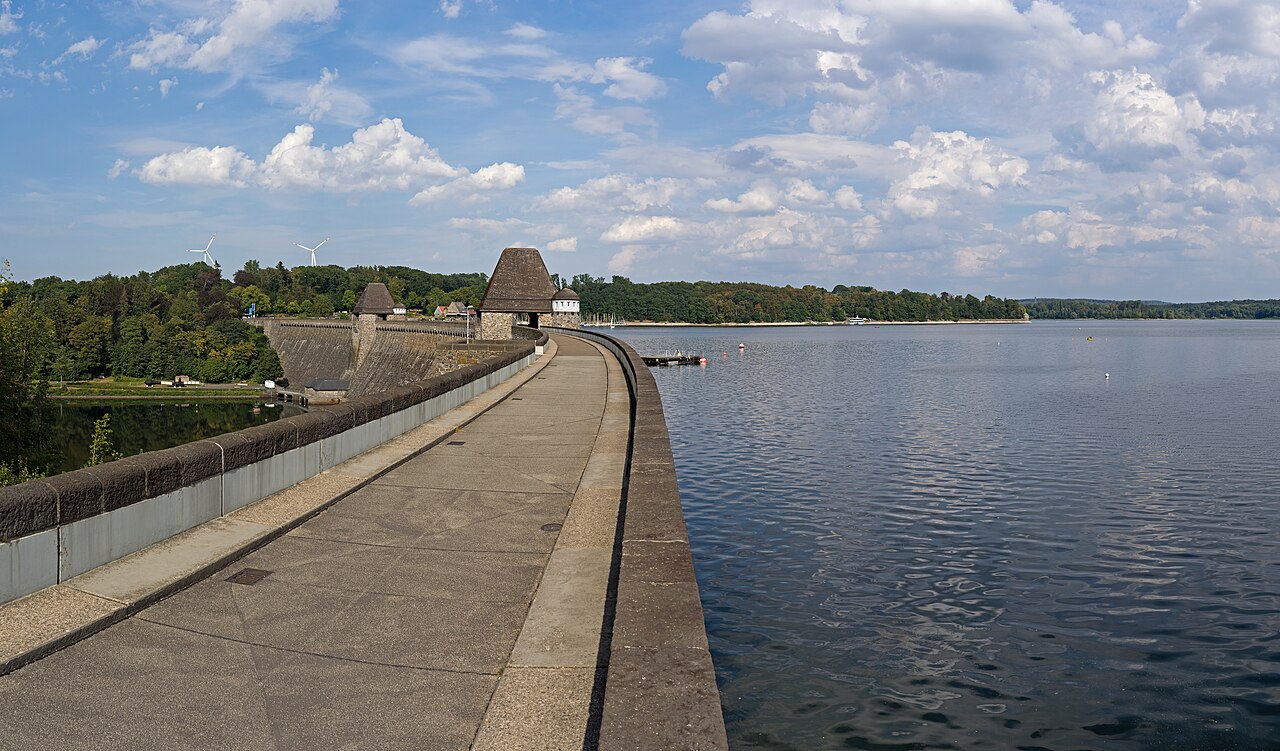
Between 1908 and 1912, engineers dammed the Möhne and Heve rivers to create the reservoir, building a massive masonry structure that stood as the largest dam in Europe when it opened. At a water level of 213.7 meters, the impounded lake spreads across an area of 10.37 square kilometers, holding a storage capacity of 135 million cubic meters. The reservoir basin is located within the district of Soest. Continuing its descent through the lower valley, the Möhne river ultimately discharges into the Ruhr at an elevation of approximately 153 meters. The dam also carries a somber wartime history that shaped the valley forever. On the night of May 16-17, 1943, RAF bombers attacked the masonry wall in the Günne district using specialized bouncing bombs, breaching the structure and triggering the catastrophic Möhne disaster. The resulting floodwave swept down the valley, claiming the lives of at least 1,579 people.
The Möhnesee bird sanctuary: great crested grebes and river ranunculus
Established in 1983, the protected bird sanctuary of the Möhnesee covers approximately 12 square kilometers and forms part of the European Natura 2000 network. The reservoir serves as an internationally significant stopover and wintering site that regularly hosts between 4,000 and 6,000 waterbirds, with regional concentrations swelling to as many as 20,000 individuals during peak migration seasons. Beneath the surface of the lake, the stony bed is lined with dense beds of zebra mussels. These bivalves provide a rich and steady feeding ground for flocks of diving ducks and coots that winter on the open water. Westphalia's largest breeding colony of great crested grebes makes its home on the lake, with around fifty breeding pairs nesting there.
The protected river habitats in the basin harbor diverse aquatic plants, including specific vegetation communities of Ranunculion fluitantis and Callitricho-Batrachion water-crowfoot. Along the margins, alluvial forests of black alder and common ash are found. Steep, eroding earthen banks offer the exact diggable substrate kingfishers require to excavate their nesting burrows near the water.
Hevearm and Hevesee: flooded bays and alluvial willow forests
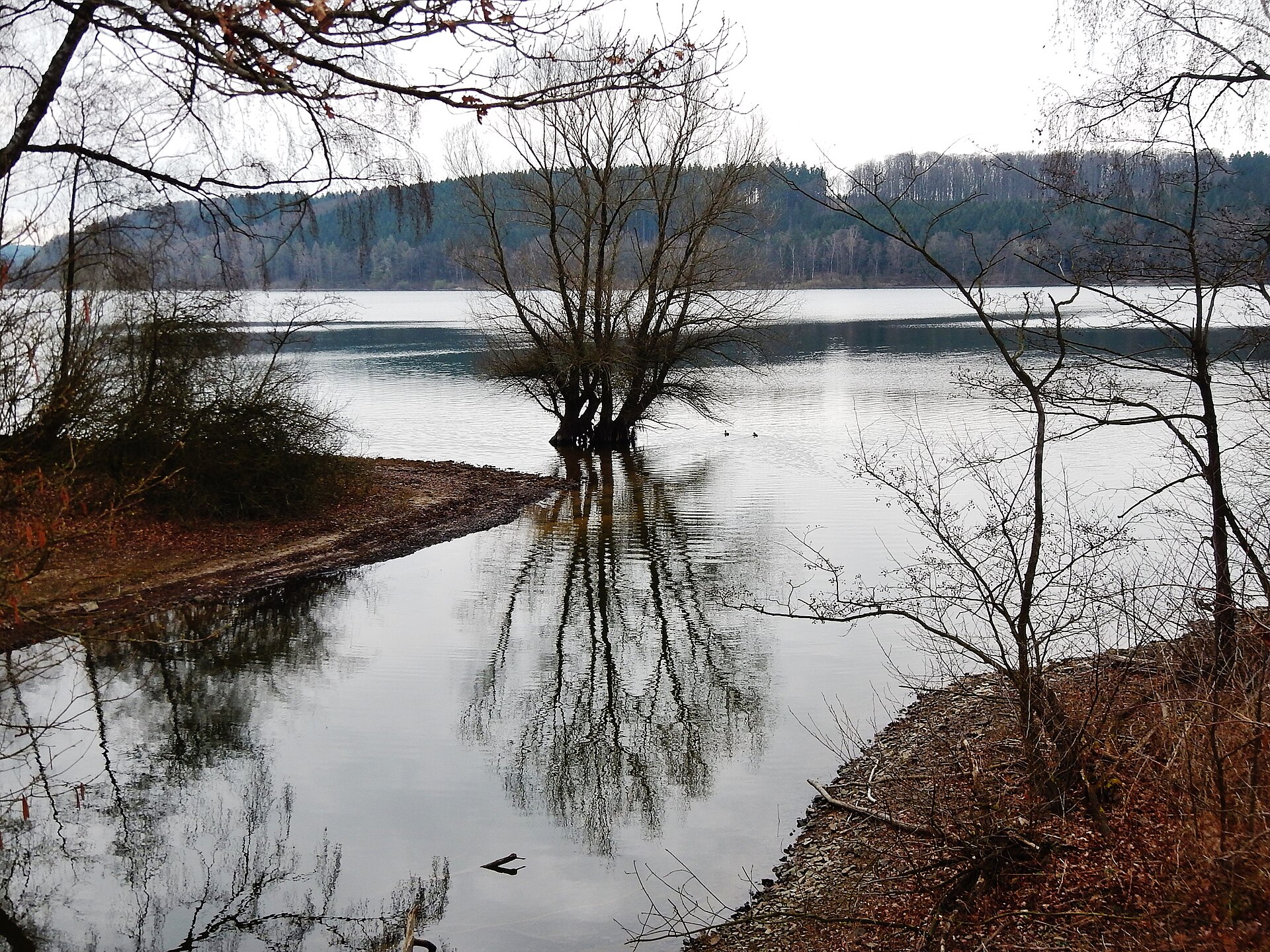
About three kilometres from the race area, the protected waters extend into the Hevearm und Hevesee nature reserve, a 302.8-hectare ecological zone. This reserve incorporates the inlet where the Heve river empties into the Hevesee section of the Möhnetalsperre reservoir. The area is traversed by the B229 federal road running over an impoundment dam, while the tranquil waters encompass the bays of Krusmecke and Schlibbecke. Along the low, flat southern shore, the water line fluctuates through the seasons. As muddy shores dry out, annual carpets of pioneer vegetation take hold, including bur-marigold, orache, and toad rush. Landscape protection zones around Bilmer Büsche, Himmelpforter Heide, and Riesenberg lie about three kilometres from the race course, connecting with the Waldreservat Moosfelde protected under the EU Habitats Directive. These adjacent woodlands serve as an important retreat and buffer zone for the Möhne river near Niederense.
Downstream along the Möhne: Enser See and the renatured wetlands
Just four kilometres downstream from the race area, the river passes through the Enser See nature reserve, a 23-hectare wetland complex. Situated at an elevation of 162.5 meters, this small impoundment is surrounded by flood zones, reed beds, and river woodlands. A seven-hectare sector has been designated as an FFH protected site called Weichholzaue Ense since 2004, offering secure breeding grounds for mute swans, Canada geese, mallards, moorhens, and coots. In 2006, engineers undertook an ambitious project that widened a 600-meter section of the Möhne riverbed to up to 50 meters, restoring its natural ecological functions. About six kilometres downstream from the race area, the Möhneaue landscape protection area remains defined by shallow groundwater, surface wetness, and regular seasonal flooding. A significant portion of this southern river bend operates as a major drinking water extraction facility. Rigorous protection of these flood meadows guarantees high groundwater recharge, securing clean water supplies for surrounding communities.
Sources: Möhnesee · Möhnesee (Vogelschutzgebiet) · Möhne Reservoir · Landschaftsschutzgebiet Bilmer Büsche/Himmelpforter Heide/Riesenberg · Möhne
Course
Held in the Vorstaubecken (pre-reservoir) of the Möhnesee. Cold water temperatures are common as the water is fed from the Möhne river source.
Held in the Vorstaubecken (pre-reservoir) of the Möhnesee. Cold water temperatures are common as the water is fed from the Möhne river source.
Held in the Vorstaubecken (pre-reservoir) of the Möhnesee. Cold water temperatures are common as the water is fed from the Möhne river source.
Awards
- Age group awards
- Wetsuit/No-wetsuit separated
Awards are categorized by gender, age, and use of fins/no-fins.
How to get there
Möhneseeschwimmen 2026
Frequently asked questions
- When was the last edition of Möhneseeschwimmen 2026?
- The last edition of Möhneseeschwimmen 2026 took place on May 1, 2026.
- What distances does Möhneseeschwimmen 2026 offer?
- Möhneseeschwimmen 2026 offers 500 m, 1 km, and 1.5 km.
- Is a wetsuit required at Möhneseeschwimmen 2026?
- The event is known for very cold water, often below 5°C (41 °F). Wetsuits are common, but specific temperature-based rules are not explicitly detailed in the provided text.
- Where does Möhneseeschwimmen 2026 take place?
- Möhneseeschwimmen 2026 is a lake swim. Location: Möhnesee (Vorstaubecken), Möhnesee, Nordrhein-Westfalen, Germany.
- How do I register for Möhneseeschwimmen 2026?
- The reference page for registering for Möhneseeschwimmen 2026 is https://soest.dlrg.de/hans-fahrenhorst/.
Where to stay
Accommodations in the Möhnesee municipality range from traditional family-run guesthouses and local 'Pensionen' to camping sites positioned directly along the reservoir shores. The area is popular for its proximity to the Arnsberger Wald, with many options offering a view of the water. Expect to pay between €70 and €130 per night for a double room, depending on the proximity to the reservoir bank and the level of amenities provided.
Things to do nearby
The weekend at Möhnesee offers a variety of ways to explore the valley beyond the race. Visitors often engage in light trekking across the Haarstrang ridge or rent kayaks and SUPs to traverse the reservoir at a slower pace. The area is also known for regional culinary tastings, particularly in the village centers. For those interested in regional heritage, the local history trails lead to various points of interest, including the historic chapel sites and the landscaped paths of the nature park.
Swimmers
Similar races



Comments
Transparency: some links on this page (stays, flights, experiences, gear) are affiliate links — if you book or buy through them, Omniathlon may earn a commission from the partner at no extra cost to you. As an Amazon Associate we earn from qualifying purchases.