
Provas de Águas Abertas da Horta
- Oct 2, 2026
- Last edition date
- Distances: 500m and 3km
At a glance
- Last edition date
- October 2, 2026
- Distances
- 500 m · 3 km
- Where
- Sea · Baía da Horta, Horta, Azores, Portugal
- Registration
- anara.pt
About the race
The stone docks of Horta harbour form an open-air canvas of crests, dates, and ship emblems painted by mariners before heading out across the vast Atlantic ocean. Set against this storied waterfront is the Provas de Águas Abertas da Horta, an open water swimming race held in the sea of Baía da Horta on the southeast coast of Faial Island in the Azores. The race course unfolds right between the protected harbor docks. Swimmers can select between two distances depending on their goals and training. The event program features a core 3,000-metre course alongside a 500-metre promotional swim designed for sprinters and less experienced competitors. Both routes challenge athletes to pace their efforts and spot sighting markers within the inner basin of the harbor.
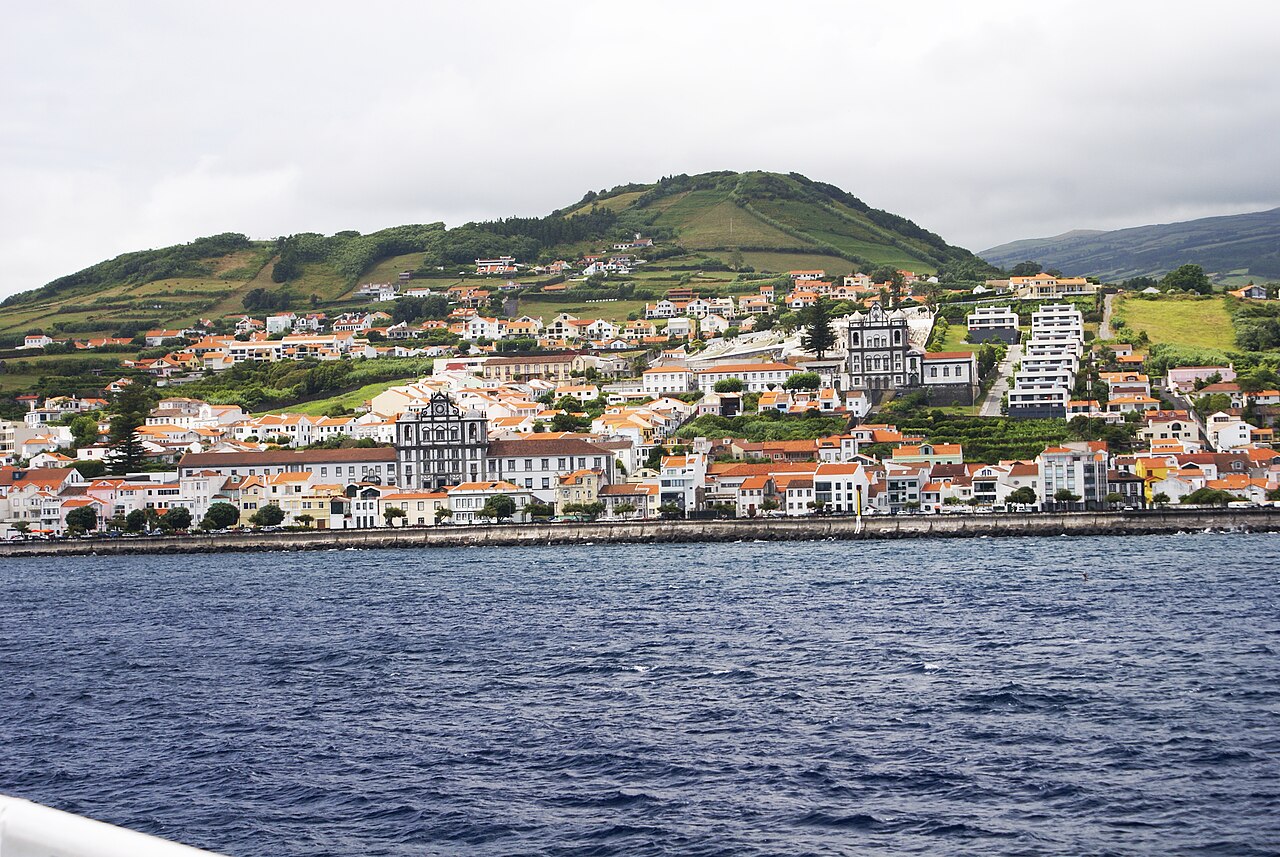
Organized by ANARA in collaboration with Clube Naval da Horta, the competition forms part of the regional open water circuit, the Circuito Regional de Águas Abertas. Staged in early October, the event welcomes both swimmers affiliated with the Federação Portuguesa de Natação and non-affiliated participants. Every competitor is ranked in an individual classification divided by category and separated by gender.
The Faial race at the Cais de Cruzeiros
A sister race of the Horta event, the Prova de Águas Abertas do Faial, was announced for 27 September and organised jointly by ANARA and Clube Naval da Horta. That race belonged to the Circuito Regional de Águas Abertas and was held at the Cais de Cruzeiros, the cruise quay in Horta. Its programme offered a shorter promotional route of about 500 metres and a 3,000 m route. The 500 m was open to any swimmer, while the 3,000 m was reserved for swimmers registered in open water with the Portuguese swimming federation (FPN).
Baía da Horta: the volcanic shelter of Monte da Guia
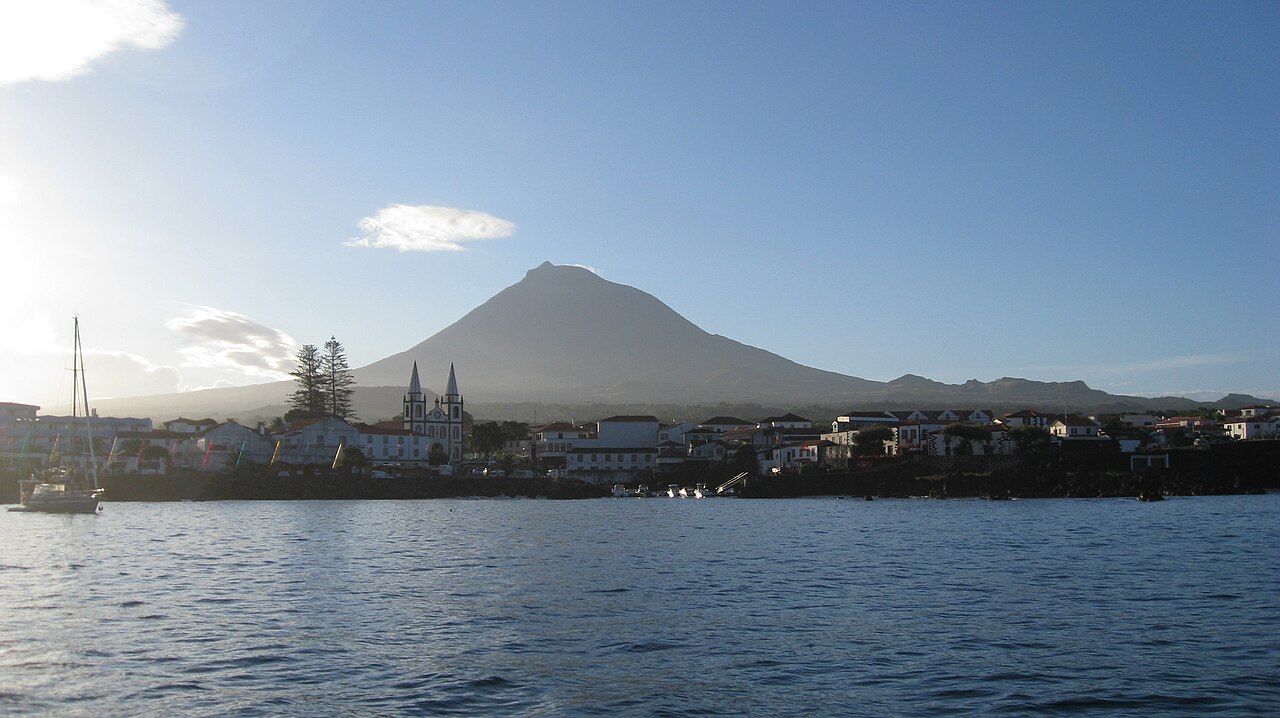
Geographically, the sheltered bay is defined between Ponta da Espalamaca to the north and the volcanic headland of Monte da Guia to the south. Monte da Guia rises to an elevation of 145 metres, forming an ancient volcanic structure connected to the island by a low sand isthmus. This southern headland forms a protected landscape covering 73 hectares that serves as a natural barrier against dominant winds and heavy ocean swells. Baía da Horta is recognized as a member of the Most Beautiful Bays of the World Club under UNESCO patronage. The local climate is continually moderated by the Gulf Stream, resulting in mild winters with average February temperatures around 14 °C (57 °F).
In the Faial channel roughly 500 metres off Ponta da Espalamaca, researchers discovered an active submarine hydrothermal vent. The thermal vent is located at depths between 30 and 40 metres along an underwater ridge that connects the headland to the Madalena Islets. The Madalena Islets themselves represent the eroded remnants of a submarine volcano formed from compacted palagonite tuff. The open channel between the two islets hides an ancient volcanic crater roughly 20 metres deep. Classified as a Natura 2000 protected site since June 1995, the islets host endemic Azorean flora such as Spergularia azorica and Azorina vidalii, while the surrounding depths are home to bottlenose dolphins, Atlantic bonito, groupers, and needlefish.
The seabed off Horta: galleons, cannons and shipwrecks
Josse van Huerter first disembarked on Faial in 1465 at Praia do Almoxarife, initiating the island's permanent settlement. Known until the 19th century as Praia de Santo Cristo, the beach looks directly across the channel that separates Faial from Pico Island. Praia do Almoxarife still preserves the remnants of an ancient fortified structure standing near the local port. A smaller cove called Praia dos Ingleses sits in a bay just to the north, and the shoreline shifts throughout the seasons between sand and pebbles, revealing more stones in winter. On June 22 and 23, 1594, English warships attacked and sank the Portuguese carrack Cinco Chagas immediately off the coast of Faial.
Decades later, on November 7, 1615, the Portuguese ship Nossa Senhora da Luz was wrecked near Porto Pim, resulting in more than 150 deaths. Underwater archaeological surveys in Baía da Horta uncovered a site containing fourteen 18th-century English iron cannons, likely belonging to an armed shipwreck. In 2022, archaeological explorations identified the hull of an unknown modern-era vessel and the submerged wreck of the English steamship Main, which sank in these coastal waters in 1892. In 1817, Cleopatra's Barge visited Horta, remembered in maritime records as the first American recreational vessel to cross the Atlantic. In later times, military engineering left its mark on the heights: during World War II, a coastal artillery battery was built on Ponta da Espalamaca because of its commanding strategic position.
Horta Marina and Porto Pim: sailors' murals and black sands
Horta Marina was the first recreational port inaugurated in the Azores archipelago. Because of its geographic position, it remains a mandatory stop for sailboats and modern crews undertaking transatlantic crossings. Just on the southern side of the town, the coastline curls into Porto Pim Bay, framed between the 145-metre Monte da Guia and the 89-metre Monte Queimado. The bay features a distinctive beach of dark volcanic sand resting at the edge of the isthmus. The Faial Nature Park was established in 2008 to protect 13 ecological reserves such as the Nature Reserve of the Caldeirinhas. About 10 kilometres from the race course stands Vulcão dos Capelinhos, one of the most famous geological sites in the Azores.
The volcano erupted for 13 continuous months between September 27, 1957, and October 24, 1958. The event began as a submarine eruption 300 metres off Ponta dos Capelinhos that caused the sea water to boil, eventually burying the original Ilhéus dos Capelinhos beneath volcanic sand and ash by March 1958. That dramatic event created a new isthmus and enlarged the total area of Faial Island by about 2.4 square kilometres. Classified as a Natural Monument and integrated into the Azores UNESCO Global Geopark, the volcanic terrain is now an important nesting habitat for protected seabirds, including Cory's shearwaters, common terns, and roseate terns. Between Horta's docks, swimmers complete their strokes immersed in the living geology of the Atlantic.
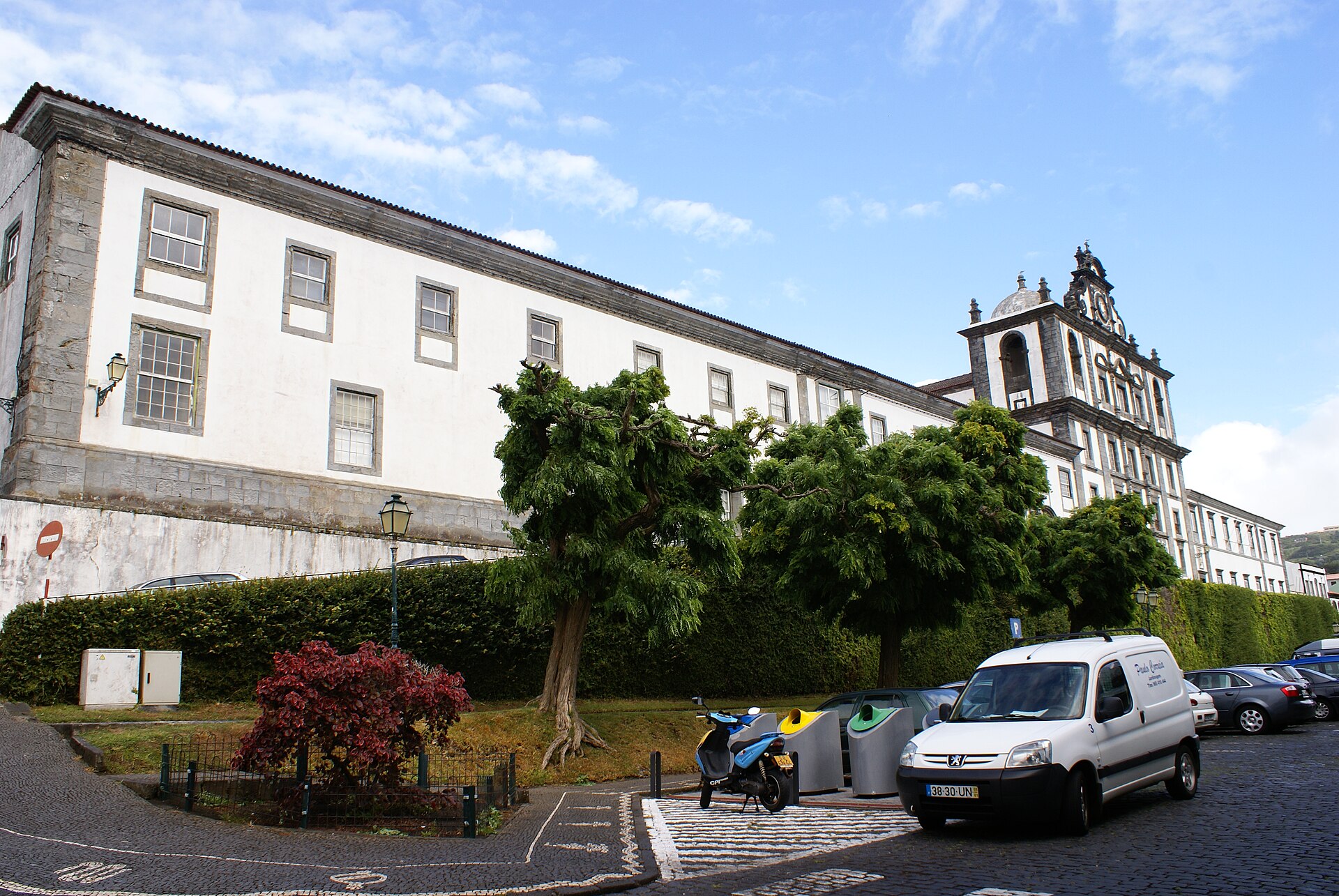
Sources: Faial Island · Horta · Ponta da Espalamaca · Vulcão dos Capelinhos · Baía da Horta
Course
Promotional course located in the Baía da Horta (between docks).
Main course located in the Baía da Horta (between docks).
Awards
- Age group awards
Individual classification by category and gender.
How to get there
Provas de Águas Abertas da Horta
Frequently asked questions
- When was the last edition of Provas de Águas Abertas da Horta?
- The last edition of Provas de Águas Abertas da Horta took place on October 2, 2026.
- What distances does Provas de Águas Abertas da Horta offer?
- Provas de Águas Abertas da Horta offers 500 m and 3 km.
- Where does Provas de Águas Abertas da Horta take place?
- Provas de Águas Abertas da Horta is a sea swim. Location: Baía da Horta, Horta, Azores, Portugal.
- How do I register for Provas de Águas Abertas da Horta?
- The reference page for registering for Provas de Águas Abertas da Horta is https://anara.pt/provas-de-aguas-abertas-da-horta/.
Where to stay
Horta offers a mix of traditional converted manor houses, boutique hotels overlooking the marina, and local guesthouses. Budget-conscious swimmers can find rooms starting around €60-€80 per night, while harbor-view boutique properties typically range from €120 to €200 per night. Booking in advance is recommended, as the port city remains a primary hub for international sailing traffic.
Things to do nearby
Beyond the race, the island is defined by its volcanic heritage. Visitors often explore the Capelinhos volcano interpretation center, hike the rim of the central Caldeira, or engage in whale watching tours, which are highly accessible from the Horta marina. Local taverns near the port offer opportunities to sample volcanic wines and fresh Atlantic seafood, reflecting the maritime culture of the Azores.
Swimmers
Similar races


Comments
Transparency: some links on this page (stays, flights, experiences, gear) are affiliate links — if you book or buy through them, Omniathlon may earn a commission from the partner at no extra cost to you. As an Amazon Associate we earn from qualifying purchases.