
Rei e Rainha do Mar — Etapa Copacabana
- Dec 12 – 13, 2026
- Distances from 1km to 3.5km
At a glance
- Next edition date
- December 12 – 13, 2026
- Distances
- 1 km · 2 km · 3.5 km
- Where
- Sea · Praia de Copacabana, Rio de Janeiro, Brazil
- Registration
- reierainhadomar.com.br
About the race
Swimming out through the break at Praia de Copacabana puts racers into the waters where the marathon swimming competition took place during the 2016 Olympic Games. Rei e Rainha do Mar — Etapa Copacabana brings open-water athletes to the South Atlantic waters of Rio de Janeiro, Brazil, for a festival of sea swimming. The event gathers competitors in December across two days of competition along the wide crescent of sand. Organized by Effect Sport, the festival offers three core swimming distances: the 1,000-meter Sprint, the 2,000-meter Classic, and the 3,500-meter Challenge. Even when the ocean surface appears calm and glassy from the sand, swimmers quickly encounter persistent currents that demand steady sighting and continuous course management. Copacabana's wide, continuous beach gives swimmers ample space to settle into a rhythm and find clean water away from the shore break. Navigating through the ocean swell requires keeping a rhythm while scanning the horizon for turning markers.
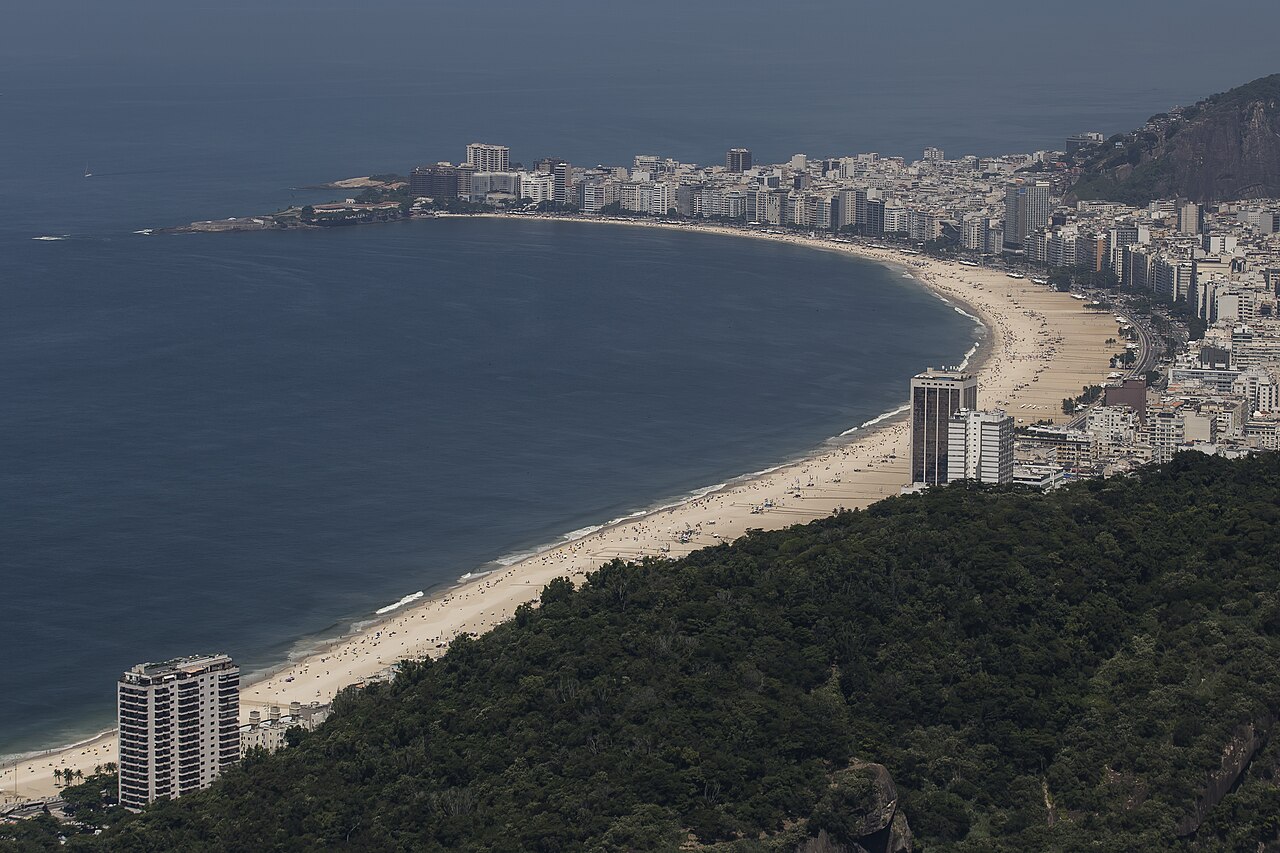
Ponta do Arpoador and the southern ocean currents
The city of Rio de Janeiro lies near the western end of a strip of Brazil's Atlantic coast where the shoreline faces south. At the southern edge of Copacabana, the small peninsula of Arpoador forms the headland dividing this bay from neighboring Ipanema. The granite outcropping at Arpoador shapes powerful left-breaking surf between seven and ten feet high, accompanied by a strong rip tide that runs along the rocky promontory and provides board surfers with a swift return path to the waves. Walkways built across Arpoador make the rock formations accessible to walkers, who gather on the promontory during midsummer to witness the sun setting directly over the open Atlantic Ocean.
Originally inhabited by the Tamoios indigenous people, who referred to it as Piraguá or Sacopenapan, the Rodrigo de Freitas Lagoon connects to the ocean through the Jardim de Alah canal. The dredging of this canal in 1922 produced the soil that created the island of Caiçara inside the lagoon basin. On the western side of the water, Piraquê Island hosts the sports department of the Naval Club. Today, a paved 7.5-kilometer cycling path encircles the lagoon's perimeter, providing swimmers with a peaceful and scenic circuit to loosen up their legs before taking on the ocean race.
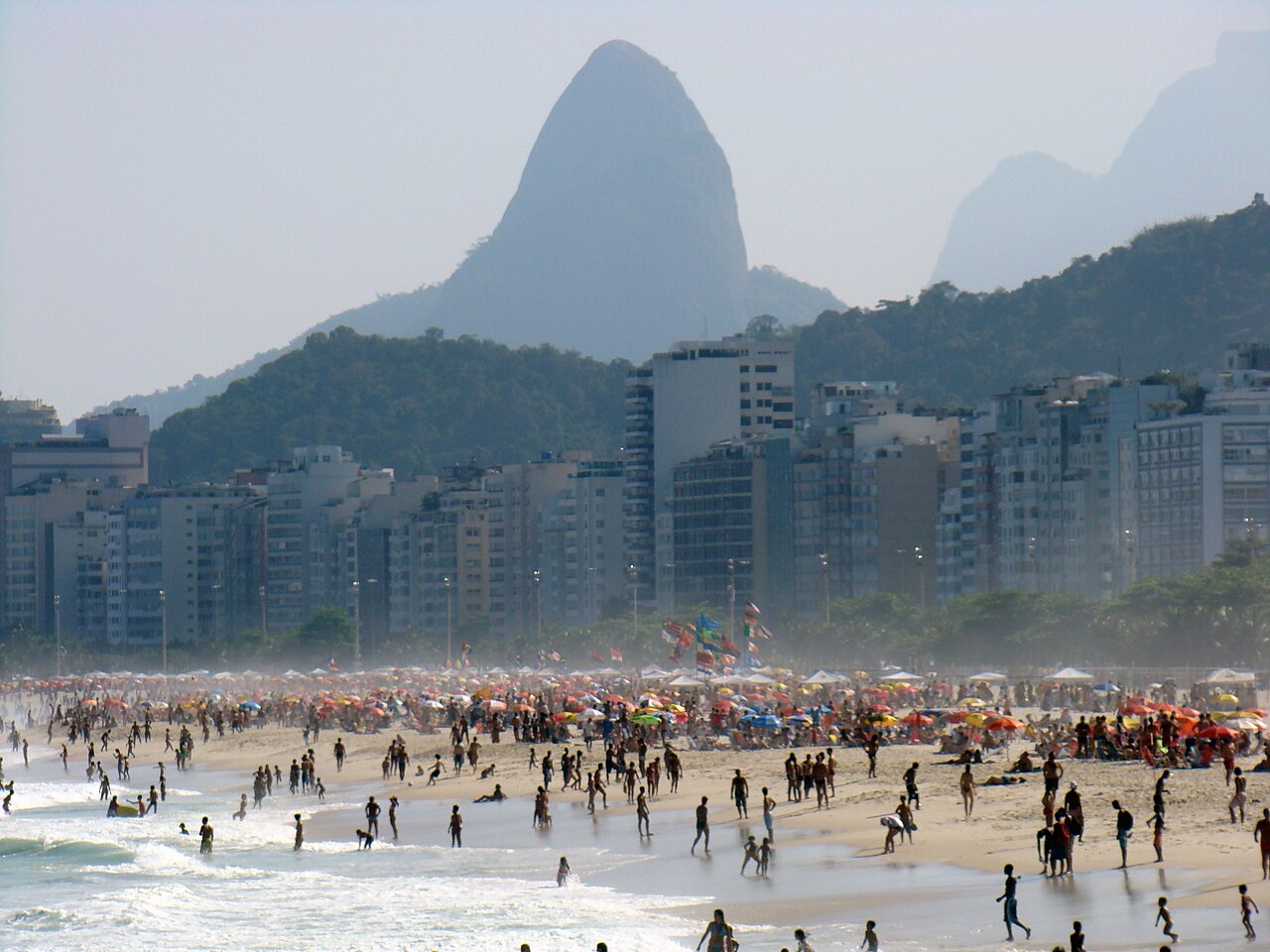
Morro do Leme and the offshore reserve of Cotunduba
Praia do Leme extends the continuous strip of white sand for 900 meters until it meets the base of Pedra do Leme. Thick native Atlantic Forest vegetation blankets the rock face. High atop Morro do Leme stands Forte Duque de Caxias, originally constructed between 1776 and 1799. The Sugarloaf mountain marks the entrance to Guanabara Bay. European explorers first arrived at Guanabara Bay on January 1, 1502. The race course remains in the open Atlantic off Copacabana, completely outside the bay's enclosed shoreline. Within Guanabara Bay, the historic Ilha de Villegagnon, formerly called Serigipe by indigenous inhabitants and Ilha das Palmeiras by Portuguese settlers, was invaded by French admiral Nicolas Durand de Villegagnon in 1555 to build Fort Coligny.
Portuguese forces under Mem de Sá attacked the outpost on March 15, 1560, prompting the French withdrawal two days later, when the Portuguese celebrated their first Catholic mass on the island. In 1733, Governor Gomes Freire de Andrade leveled the island's hill to construct the Fortaleza de São Francisco Xavier. Along the bay's inner edge in the Glória neighborhood, the Marina da Glória hosted the sailing regattas of the 2016 Olympic and Paralympic Games within the Flamengo Park cluster. Nearby, the Carioca River flows down from the Tijuca Forest into Guanabara Bay at Flamengo Beach, with most of its path running underground aside from three open-air stretches. Ilha de Cotunduba rises 73 meters above sea level, extending toward the southeast into a 340-meter rocky tongue called Lower Cotunduba.
In November 1894, the steamboat Amazonas ran aground on its crags during thick fog. The island later served as a target for coastal artillery batteries firing from Fortaleza de Santa Cruz da Barra, including an official artillery inauguration attended by the Brazilian president in November 1902. Since 1995, Cotunduba has been protected as a Wildlife Conservation Zone that bans waste disposal and resource extraction.
Calçadão de Copacabana: Burle Marx mosaics and beachside kiosks
A seaside chapel dedicated to Our Lady of Copacabana stood on the point until 1914, when the site was transformed into the Copacabana Fort. The first lifeguard stations were erected across the strand in 1936 to watch over swimmers. During the 1970s, a major hydraulic landfill project used dredges to pump sand onto the shoreline, dramatically widening the beach to provide recreational grounds and protect Avenida Nossa Senhora de Copacabana and Avenida Atlântica from flooding caused by storm surges and high tides. Running along the widened beach is the renowned Calçadão de Copacabana, redesigned by landscape architect Roberto Burle Marx in the 1970s. Marx aligned the undulating waves parallel to the surf using black, white, and red Portuguese stones, representing the three ethnic origins of the Brazilian population.
Today, a dedicated bike path and vibrant kiosks flank the seafront promenade, serving cold refreshments and fresh food right beside the sand. The Caminho dos Pescadores skirts the rocky edge, offering a tranquil path where locals cast fishing lines and watch the open sea after the finish line festivities.
Rei do Mar at Copacabana: the first edition and the 2025 stage
Copacabana beach hosted the first Rei do Mar, which brought leading foreign open-water swimmers there, and Australia's Trent Grimsey won that first edition. The 2025 Copacabana stage drew more than six thousand participants, about half from outside Rio de Janeiro state, with every region of Brazil and seventeen countries represented. At the 2025 Copacabana stage the activities on the sand and along the Calçadão were centred on Posto 5. The organisers' page for the 2026 Copacabana stage says whales, dolphins, rays and many other species have returned to the waters off Rio.
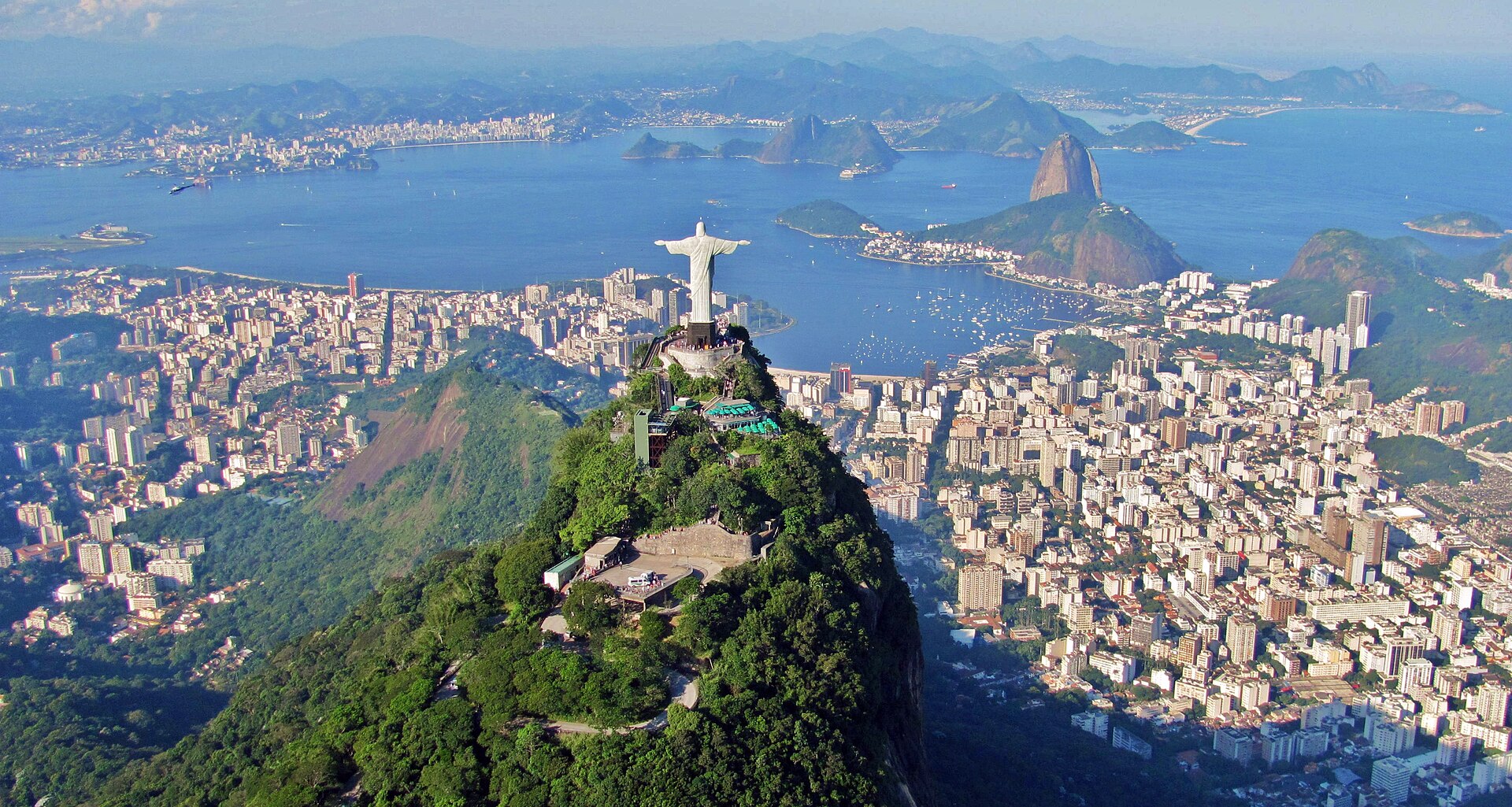
Sources: Rio de Janeiro · Praia de Copacabana · Arpoador
Course
How to get there
Rei e Rainha do Mar — Etapa Copacabana
Frequently asked questions
- When is Rei e Rainha do Mar — Etapa Copacabana?
- Rei e Rainha do Mar — Etapa Copacabana takes place on December 12 – 13, 2026.
- What distances does Rei e Rainha do Mar — Etapa Copacabana offer?
- Rei e Rainha do Mar — Etapa Copacabana offers 1 km, 2 km, and 3.5 km.
- Where does Rei e Rainha do Mar — Etapa Copacabana take place?
- Rei e Rainha do Mar — Etapa Copacabana is a sea swim. Location: Praia de Copacabana, Rio de Janeiro, Brazil.
- How do I register for Rei e Rainha do Mar — Etapa Copacabana?
- The reference page for registering for Rei e Rainha do Mar — Etapa Copacabana is https://reierainhadomar.com.br/.
Where to stay
Accommodations in Copacabana range from high-end international boutique hotels overlooking the harbor to functional mid-range apartments just blocks from the sand. For a more authentic feel, small guesthouses tucked into the side streets offer a quieter base. Expect to pay between $80 and $250 per night depending on your proximity to the beach and the level of amenities. Find your base near the race start to ensure easy access to the early morning registration transitions.
Things to do nearby
Beyond the race, the area offers direct access to the water with kayak and SUP rentals at the Leme end of the beach. For those interested in history, the interior of the military forts provides guided tours of the 20th-century artillery. Alternatively, a hike up to the nearby peaks offers panoramic views of the entire coastline, while the local markets are ideal for sampling traditional Brazilian snacks. Explore activities for your downtime to balance the intensity of your race day with the local culture.
Swimmers
Other races by this organiser
- Rei e Rainha do Mar — Etapa Arraial do CaboArraial do Cabo, BR
Similar races


Comments
Transparency: some links on this page (stays, flights, experiences, gear) are affiliate links — if you book or buy through them, Omniathlon may earn a commission from the partner at no extra cost to you. As an Amazon Associate we earn from qualifying purchases.