
Travessia do Canal de Ilhabela
- Nov 15, 2026
- Distances: 2.5km and 3.6km
At a glance
- Next edition date
- November 15, 2026
- Distances
- 2.5 km · 3.6 km
- Where
- Sea · Praia Grande Balneário dos Trabalhadores, Ilhabela, São Paulo, Brazil
- Registration
- travessiadesaosebastiao.com.br
About the race
The Travessia do Canal de Ilhabela is an open water swimming race held in the sea off the coast of São Paulo, Brazil, finishing at the sands of Praia Grande Balneário dos Trabalhadores. Taking place in the maritime channel that separates the mainland town of São Sebastião from the island of Ilhabela, the competition draws its inspiration directly from the historic crossing of the English Channel. Swimmers navigate the open Atlantic strait to test their endurance against the coastal elements, choosing between a 2,500-meter crossing and a longer 3,600-meter route. Ecooutdoor Sports Business produces the event, orchestrating an open-water challenge shaped by maritime geography.
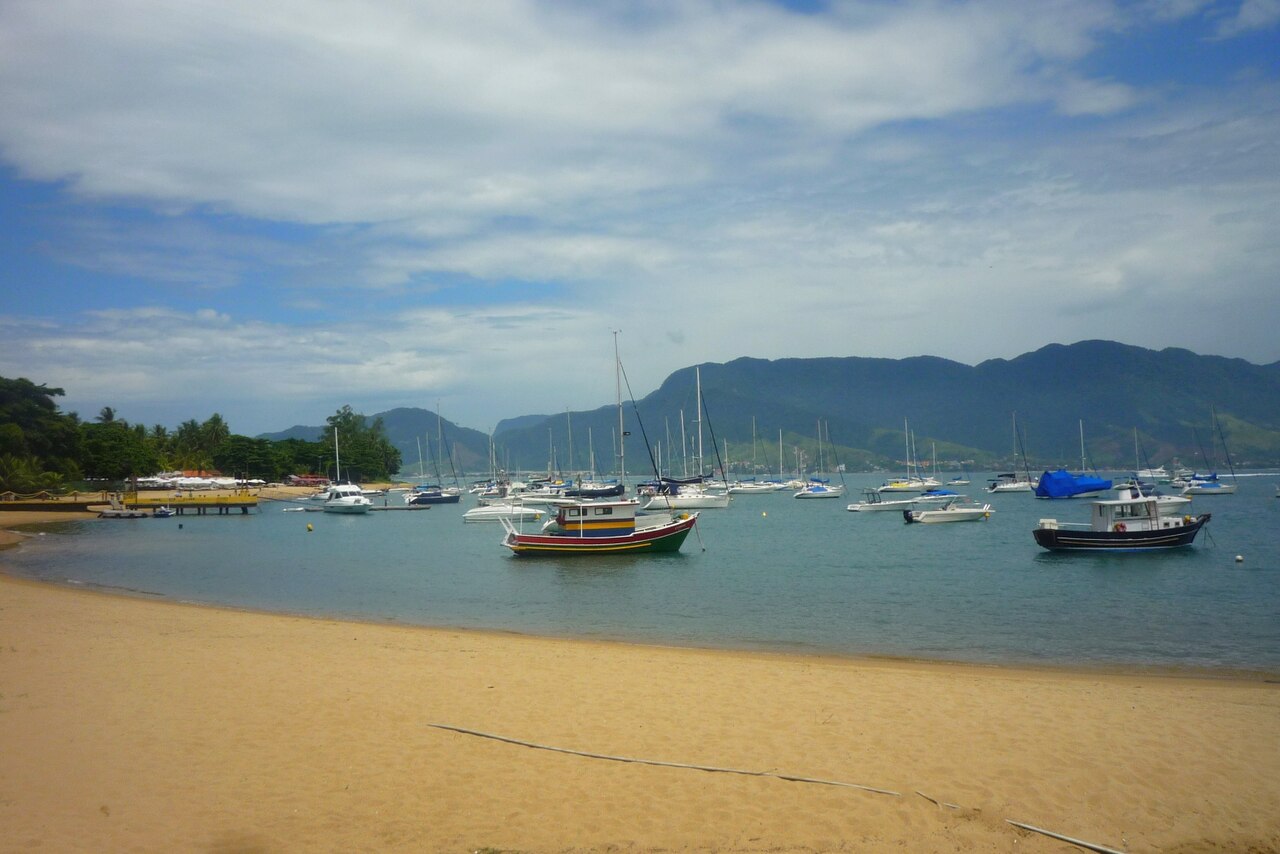
Crossing the Toque-Toque Channel to Praia Grande
Rather than adhering to a rigid geometric course, the exact trajectory across the channel between São Sebastião and Ilhabela is decided on race day based on the real-time direction of sea currents and local wind conditions. For competitors entering the shorter 2,500-meter distance, the starting line lies off Ilha das Cabras, whereas the 3,600-meter event takes swimmers across the broader waters. Stepping off a boat into the deep water of the strait requires steady composure as the open surface stretches ahead. In past editions, swimmers were ferried across by schooners to Praia do Porto Grande on the São Sebastião shoreline, jumping into the sea to undertake the 3.8-kilometer swim back toward the island.
Past crossings have run along the demanding eastern course, where head-on winds often whip across the strait and complicate the early strokes away from the start. Swimmers in previous years have had to battle adverse weather conditions marked by relentless coastal breezes and sweeping currents over distances reaching up to four kilometers. Navigating these shifting currents requires thorough physical stamina as well as mental discipline, keeping your sighting sharp while your arms pull steadily through choppy open water. Held every November, the event establishes clear safety requirements for all entrants venturing into the channel. Swimmers who wish to extend their stay can link this crossing with the Circuito Paulista de Maratonas Aquáticas — Ilhabela (novembro), which takes place just two kilometers away seven days later.
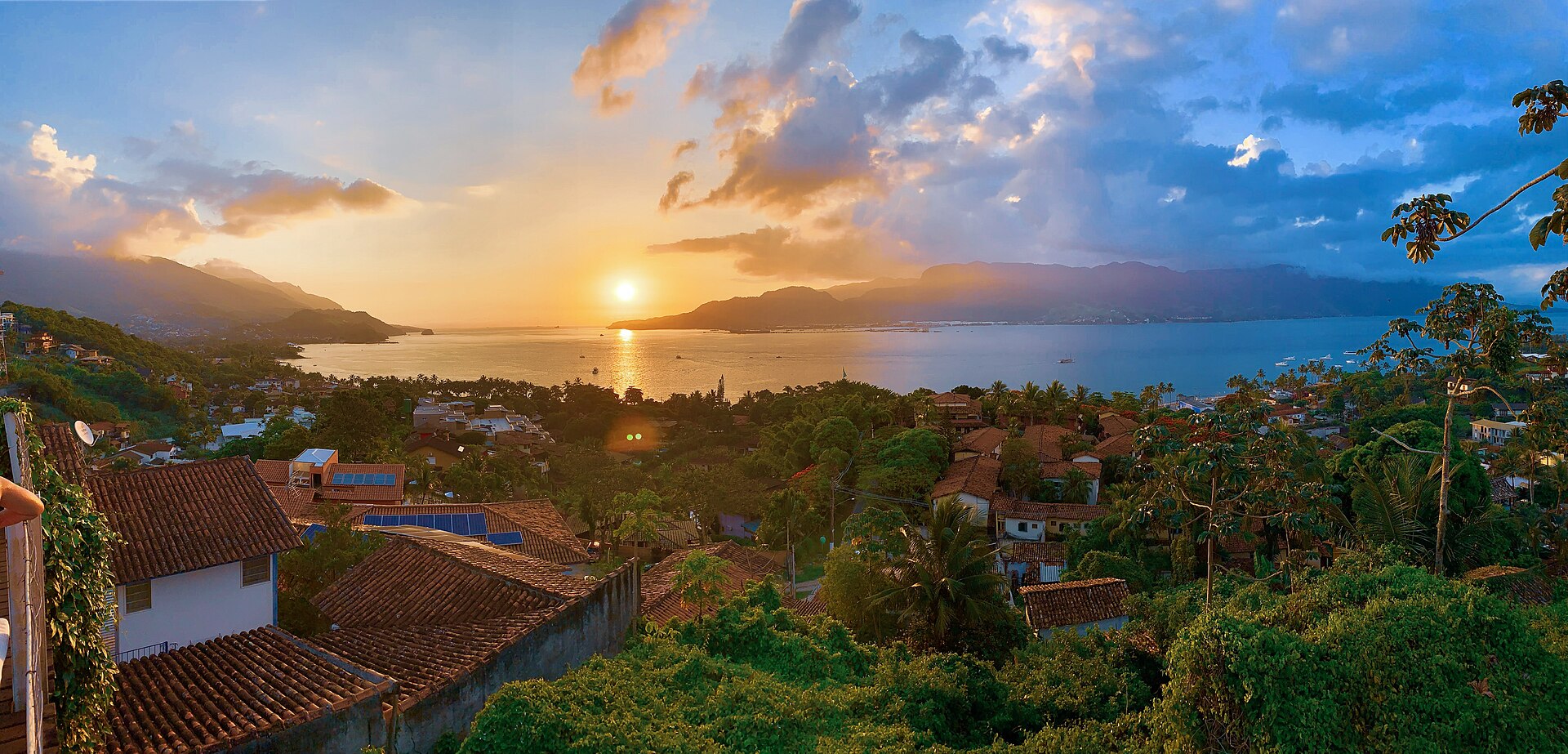
The Toque-Toque Channel: currents and reef life
The crossing traverses the 18-kilometer Toque-Toque Channel, the maritime waterway that separates the mainland from Ilha de São Sebastião, the second-largest maritime island in Brazil. Water flows through this strait, creating variable surface conditions. About eight kilometres away along the mainland coast, the sheltered bay of Barequeçaba presents a completely different aquatic profile, where the sea floor deepens very gradually to reach only waist height twenty meters from the shore. In that mainland inlet, waves remain consistently weak over dark, compact sand favored by runners and walkers, backed by an inviting row of summer homes, inns, and seaside restaurants. Along the rocky shores of the island itself, the underwater margins shelter a rich marine habitat.
Ilhabela State Park: mountain peaks and 250 waterfalls
Ilhabela State Park is a coastal conservation unit spanning 27,025 hectares across twelve islands, two islets, and two reefs. The archipelago incorporates the smaller outer islands of Búzios and Vitória alongside the main landmass of São Sebastião, where rugged mountain peaks soar up to 1,379 metres in altitude. This towering mountainous backbone captures moisture from oceanic winds, feeding thousands of freshwater streams and more than 250 named waterfalls across the territory. On the coastal plains, meandering rivers snake toward the sea, creating sheltered estuaries that support flourishing mangrove ecosystems. At Praia da Feiticeira, two natural waterfalls flow into the coastal strip between the sand and the southern shoreline. Visitors to that cove can also rinse off under an artificial waterfall originally constructed by former local farm owners, which channels freshwater directly onto the beach.
The archipelago also provides a sanctuary for migratory bird species. Swimmers spending extra days on the island can venture past the channel side to explore the dramatic eastern Atlantic coastline. The famous Praia de Castelhanos spans approximately two kilometers inside an oceanic bay whose curved contours form the shape of a heart. Reaching this remote eastern bay requires an adventurous 22-kilometer overland trail suitable only for 4x4 vehicles, making it the only beach on the eastern coast accessible by motorized land transport. Hiking trails departing from the sands of Castelhanos lead into the rainforest to secluded freshwater cascades. Farther along the coast lies Praia do Bonete, a 600-meter sandy beach renowned as a premier surfing destination on the northern coast of São Paulo state.
From shell mounds to pirate hideaways on São Sebastião
Human presence around the channel dates back more than 2,000 years, starting with indigenous shell-mound builders whose middens dot the coast, followed in later eras by ceramic-producing tribes. European explorers arrived in 1502, when an expedition commanded by Gonçalo Coelho and Amerigo Vespucci christened the main island São Sebastião. Maritime trade evolved into resource exploitation during the 18th century, when a dedicated whaling station operated at Ponta das Canavieiras to produce oil until around 1850. Agricultural estates soon reshaped the island interior, beginning with sugarcane cultivation that took root in the 17th century at properties such as Engenho São Mathias, located about seven kilometres from the race venue. By 1912, official cartographic records counted twenty-seven active sugar mills across the island, every one of them dedicated to distilling aguardente.
Praia Grande: sunset pier and beach life
The crossing concludes on the sands of Praia Grande Balneário dos Trabalhadores, an expansive 600-meter beach covered with coarse, yellowish sand. The shore is classified as a 'praia de tombo', meaning the seabed drops off steeply into deep water just paces from the edge of the surf. On the left end of Praia Grande, a rustic wooden pier stretches out over the water, serving as an embarkation point for dive boats. As the afternoon progresses, the beach becomes one of the most celebrated viewpoints on the island for watching the sunset blaze across the channel waters. The shoreline stays lively after dark with open kiosks serving refreshing drinks alongside live music right on the sand. In August, the bay celebrates the annual Tainha Festival, welcoming visitors with festivities. For swimmers emerging from the strait, Praia Grande provides a classic Brazilian beachside recovery where you can celebrate crossing the Toque-Toque Channel.
Sources: Ilhabela · Praia da Feiticeira · Praia de Castelhanos · Barequeçaba · Engenho São Mathias · Ilhabela State Park
Course
Start from Ilha das Cabras (Ilhabela) with finish in São Sebastião.
Start from Praia Grande (Ilhabela) with finish in São Sebastião.
Awards
Award ceremony scheduled for 09:00.
How to get there
Location approximately 197 km from São Paulo Capital via Carvalho Pinto/Tamoios and 3.3 km from the Historic Center of São Sebastião.
Travessia do Canal de Ilhabela
Frequently asked questions
- When is Travessia do Canal de Ilhabela?
- Travessia do Canal de Ilhabela takes place on November 15, 2026.
- What distances does Travessia do Canal de Ilhabela offer?
- Travessia do Canal de Ilhabela offers 2.5 km and 3.6 km.
- Where does Travessia do Canal de Ilhabela take place?
- Travessia do Canal de Ilhabela is a sea swim. Location: Praia Grande Balneário dos Trabalhadores, Ilhabela, São Paulo, Brazil.
- How do I register for Travessia do Canal de Ilhabela?
- The reference page for registering for Travessia do Canal de Ilhabela is https://travessiadesaosebastiao.com.br/.
Where to stay
Ilhabela offers a wide range of stays, from charming boutique hotels tucked into the colonial-style harbor area to more rustic eco-lodges and family-run guesthouses scattered along the coast. Camping options are also available near the beaches for those seeking a more direct connection to the environment. Expect to pay between $80 and $250 per night depending on the proximity to the main channel access points and the level of amenities.
Things to do nearby
Beyond the water, the island is a hub for nature and adventure. You can explore the lush Atlantic Forest trails that lead to hidden waterfalls, or rent a kayak or SUP to navigate the calmer bays where pirate ships once anchored. Local culinary experiences focus on fresh, daily catches from the island's fishing communities, and several sites offer insights into the area's maritime and indigenous history through small, curated exhibitions.
Swimmers
Other races by this organiser
- Aloha Spirit — MaceióMaceió, BR
- Aloha Spirit 2026 — SaquaremaSaquarema, BR
Similar races


Comments
Transparency: some links on this page (stays, flights, experiences, gear) are affiliate links — if you book or buy through them, Omniathlon may earn a commission from the partner at no extra cost to you. As an Amazon Associate we earn from qualifying purchases.