
Rheinschwimmen
- Jun 26, 2027
- Distance: 11km
At a glance
- Next edition date
- June 26, 2027
- Distances
- 11 km
- Where
- River · Rhein, Bad Honnef, Nordrhein-Westfalen, Germany
- Wetsuit
- Wetsuit and fins are mandatory for all participants due to safety regulations.
- Registration
- bad-honnef-unkel.dlrg.de
About the race
Eleven kilometres down the Rhine from Linz am Rhein to Bad Honnef, swimmers catch the steady downstream current. The Rheinschwimmen is an open water swimming event in the Rhine river at Bad Honnef, in North Rhine-Westphalia, Germany. Organized by DLRG Ortsgruppe Bad Honnef-Unkel e.V., the course spans an overall distance of approximately 11,000 metres. For more than four decades, the gathering has taken place not as a timed race but as a collective community experience. Across those many years, the journey has had to be called off only three times, due to COVID-19, high water levels, and low water levels. Swimming down a major European river may sound intimidating because of heavy river traffic and strong currents, but the event is conducted under dedicated professional supervision.
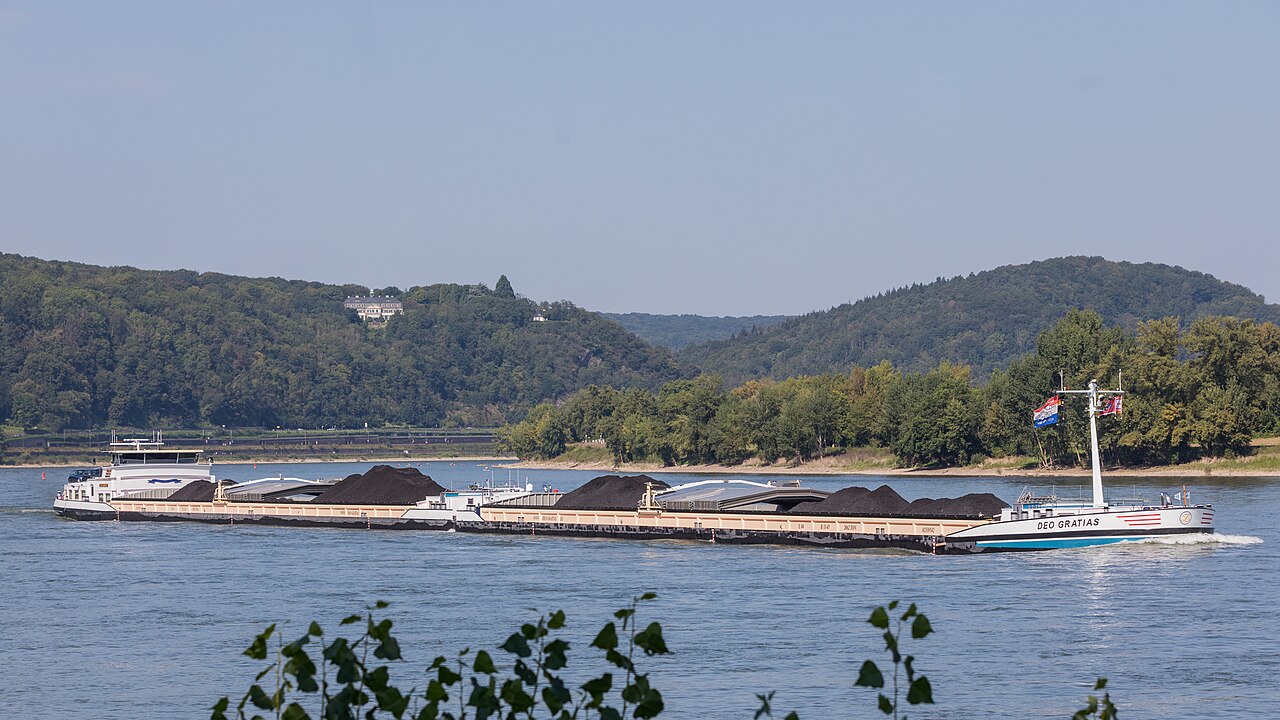
For safety reasons, every participant is required to wear a wetsuit and swimming fins. The neoprene provides essential buoyancy and thermal comfort, while fins allow swimmers to steer and manoeuvre comfortably with the flow. The event takes place in the summer month of June, drawing hundreds of participants into the water. In past editions, low water levels led the start to be set on the beach below the Linz Brauhaus rather than the usual ferry ramp. The atmosphere along the river is unhurried and cheerful, with swimmers bringing along personal float aids such as pool noodles, inflatable rings, and oversized rubber ducks. In one past edition, as many as 413 swimmers completed the 11-kilometre journey down to Bad Honnef in warm summer water.
As you float downstream from Linz, the open waterway opens up views of steep hillside vineyards, historic castles, and the riverfront town of Unkel. Further along the bank lies the riverfront promenade of Rheinbreitbach at Mühlenweg. Two excavated ponds sit northeast of this riverfront area. In the mid-to-late nineteenth century, this shore served as a busy loading point for copper ore extracted from local quarries. In 1887, an industrial cable car measuring 6.3 kilometres was constructed to transport quarried basalt from the Asberg directly to the Rhine bank here. Near this riverfront, the Breitbach stream enters the Rhine after flowing between the two ponds of the Rheinbreitbacher Maar. Over geological time in the Holocene epoch, the stream deposited a broad alluvial fan of clayey-sandy silt across the Rhine valley.
Human industry harnessed its waters early, with the first water mills documented along the Breitbach in 1364. The stream was later used to support copper mining by providing drainage and powering ore-crushing stamp mills. A hammer mill operated along its banks from at least 1828, with its historic building still standing at Rheinstraße 29, while the Bendenmühle, constructed after 1796, was the last mill driven directly by the stream. The long downstream glide eventually brings swimmers to Bad Honnef. After stepping onto the riverbank, participants gather for a festive celebration complete with live music, food, and drinks. It offers an ideal conclusion to a shared float along the Middle Rhine.
The 2026 swim: 430 participants and a coach ride to Linz
On 27 June 2026, 430 participants swam the roughly 11 km of the Rheinschwimmen between Linz am Rhein and Bad Honnef. Because ship capacity was missing in 2026, the Rheinschwimmen took its participants to Linz by coach for the first time. In 2026, 150 rescue workers from DLRG, fire brigade, THW and Malteser, together with local canoe clubs, secured the Rheinschwimmen on the water and on land. The next Rheinschwimmen is set for 26 June 2027.
Nonnenwerth: the monastic river island of Franz Liszt
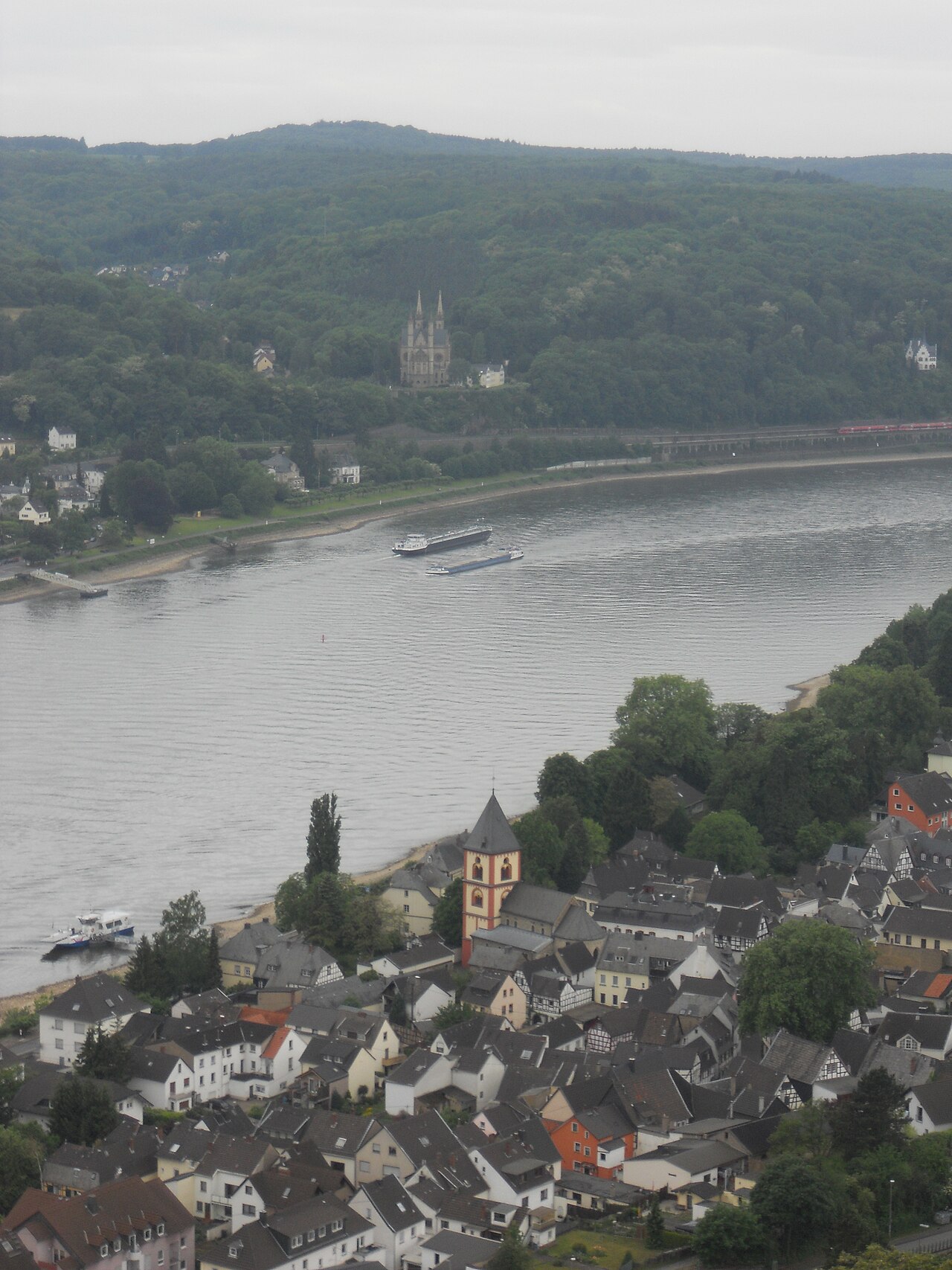
The island of Nonnenwerth measures approximately two kilometres in length and reaches a width of up to 180 metres. Between 1866 and 1872, river regulation works artificially extended both the northern and southern tips of Nonnenwerth. Floods have long shaped its history, and in 1773 the monastery buildings on the island were reconstructed on ground raised by 1.20 metres to protect them from high water. Today, Nonnenwerth is recognized as an 18-hectare biotope complex of international ecological importance. The island also preserves a celebrated musical connection from the nineteenth century. The composer Franz Liszt resided on the island between 1841 and 1843, and for his thirtieth birthday he planted a plane tree. Floating by its green shoreline, swimmers get a quiet view of an island where nature and cultural heritage remain closely linked.
Grafenwerth: historic eel cutter Aranka and the finish island
The name of the island of Grafenwerth is believed to come from an ancient Gallo-Celtic word for a sandbank. Grafenwerth is linked to the mainland of Bad Honnef by two bridges: the Grafenwerther Brücke, built in 1911, and the Berck-sur-Mer-Brücke, constructed in 1976. The island park also features an environmental sculpture park showcasing works by contemporary artists including Antye Guenther, Achim Mohné, and Silvia Narohna. In the old arm of the Rhine alongside Grafenwerth, visitors can admire the historic eel fishing boat known as the Aalschokker Aranka. Built in 1917, this preserved vessel is anchored in the channel as a protected cultural monument. This same channel receives the waters of the Ohbach, a silicate mountain stream that flows down from Bad Honnef into the Rhine at Grafenwerth.
The Ohbach has its own documented industrial and water-management past. A water mill known as the lower mill stood on the stream beginning in the Middle Ages. In 1961, a violent storm destroyed the artificial concrete bed that had previously confined the stream.
The mouth of the Ahr: re-naturalised gravel floodplains
Along the river landscape of the region, the Ahr river flows towards its confluence with the Rhine. To accommodate modern roads and infrastructure in the mid-nineteenth century, the Ahr riverbed was heavily modified through grading and bank stabilization. Yet at its mouth, where the river meets the Rhine, conservationists took a different approach, systematically re-naturalizing the confluence area since 1979. Today, the river mouth is preserved as a protected nature reserve, just like the largest bend of the river at Altenahr, which is protected for its unique local flora and fauna.
Bad Honnef: Drachenfels spa slopes above the Rhine ferry
On the eastern bank of the Rhine, Bad Honnef rises along the lower slopes of the Drachenfels mountain, part of the scenic Siebengebirge range. Historically, the settlement grew as a traditional wine-growing town, but its character changed decisively at the end of the nineteenth century. In 1897, a natural mineral spring known as the Drachenquelle was uncovered in the town. That discovery spurred Bad Honnef to transition from wine production into a prosperous spa destination, where the mineral waters were tapped for curative drinking and bathing. The mountain slopes around Bad Honnef are also drained by the Möschbach stream, which springs from the Annatal valley in the Siebengebirge at 265 metres above sea level.
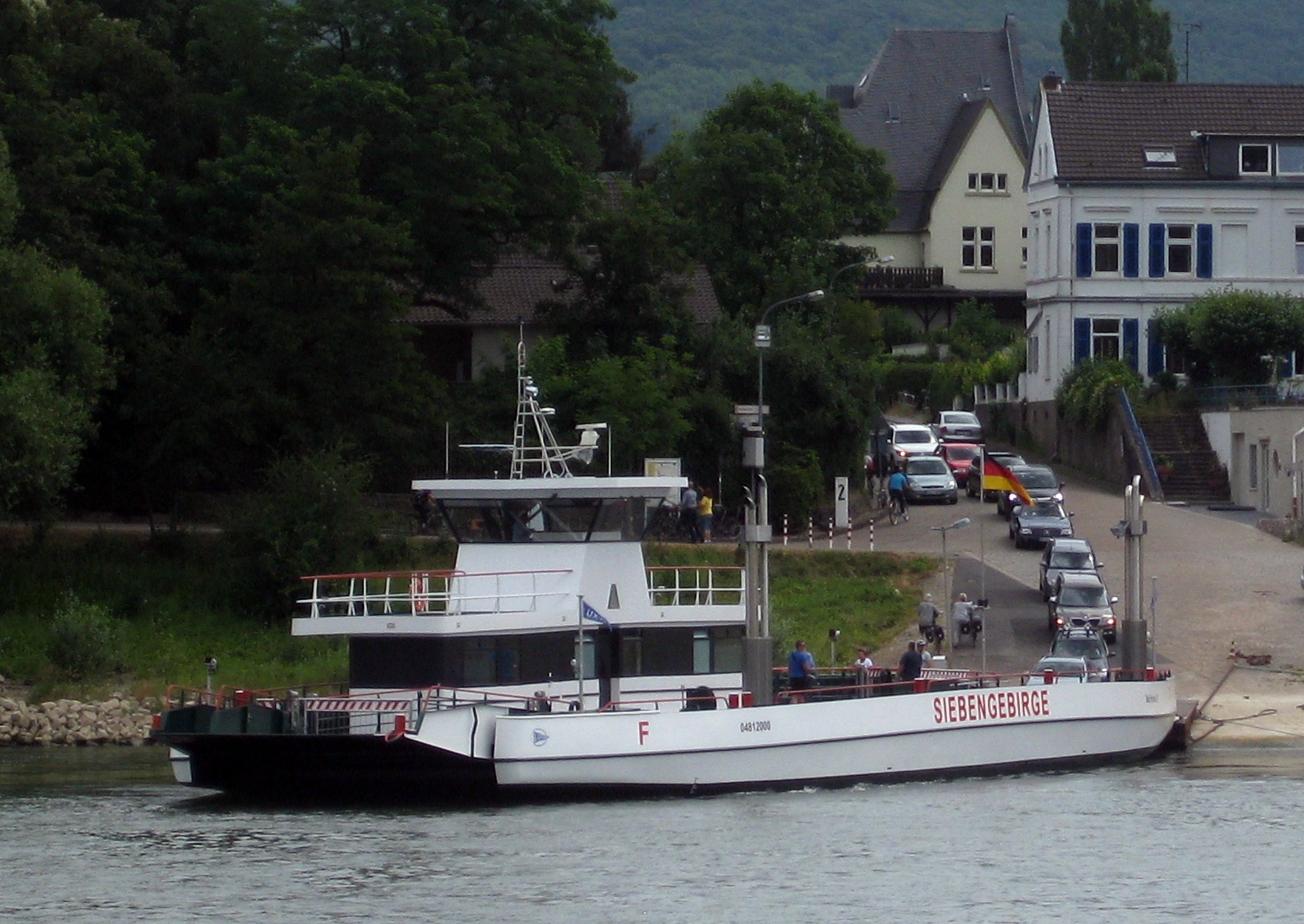
The stream runs for approximately 3.4 kilometres before reaching the Rhine at an elevation of 49 metres. Known historically as the Rommersdorfer Bach on a Jesuit map from about 1749, the stream built up an extensive Holocene alluvial fan of clayey-sandy silt where it enters the Rhine valley. In 1922, its waters through Rommersdorf were channelled into a concrete bed with basalt retaining walls, though in 2008 a 220-metre stretch along Wilhelmstraße was uncovered and returned to a natural bed. Down on the riverfront, the district of Lohfelderfähre highlights the ongoing connection between the town and the water. The district sits beside the active ferry crossing back and forth across the Rhine to Rolandseck.
Sources: Bad Honnef · Nonnenwerth · Möschbach (Rhein) · Ohbach
Course
The course covers approximately 11km in the Rhine river, starting in Linz am Rhein and finishing in Bad Honnef. It is a non-competitive event focused on the experience of swimming the river under professional safety supervision.
Awards
This is a non-competitive event; no timing or awards are provided.
Previous editions
- 2026Jun 27, 2026
How to get there
Rheinschwimmen
Frequently asked questions
- When is Rheinschwimmen?
- Rheinschwimmen takes place on June 26, 2027.
- What distances does Rheinschwimmen offer?
- Rheinschwimmen has a single distance: 11 km.
- Is a wetsuit required at Rheinschwimmen?
- Wetsuit and fins are mandatory for all participants due to safety regulations.
- Where does Rheinschwimmen take place?
- Rheinschwimmen is a river swim. Location: Rhein, Bad Honnef, Nordrhein-Westfalen, Germany.
- How do I register for Rheinschwimmen?
- The reference page for registering for Rheinschwimmen is https://bad-honnef-unkel.dlrg.de/rheinschwimmen/.
Where to stay
Bad Honnef offers a range of stays from traditional guesthouses and boutique hotels located near the riverfront to family-run inns in the town center. Prices typically range from €80 to €150 per night depending on the season and proximity to the Rhine. For those seeking a quieter environment, smaller apartments in the surrounding Siebengebirge hills are common options. Find your base for the weekend among these local hospitality providers.
Things to do nearby
The region is defined by the Siebengebirge, a low mountain range perfect for hiking trails that overlook the Rhine valley. Visitors often spend the weekend exploring the ruins of Drachenfels, visiting local thermal spas linked to the historic mineral springs, or taking boat trips to navigate the river at a more leisurely pace. For active recovery, the area offers various kayak and cycling routes along the river banks. Discover activities around the race course to round out your visit.
Swimmers
Similar races


Comments
Transparency: some links on this page (stays, flights, experiences, gear) are affiliate links — if you book or buy through them, Omniathlon may earn a commission from the partner at no extra cost to you. As an Amazon Associate we earn from qualifying purchases.