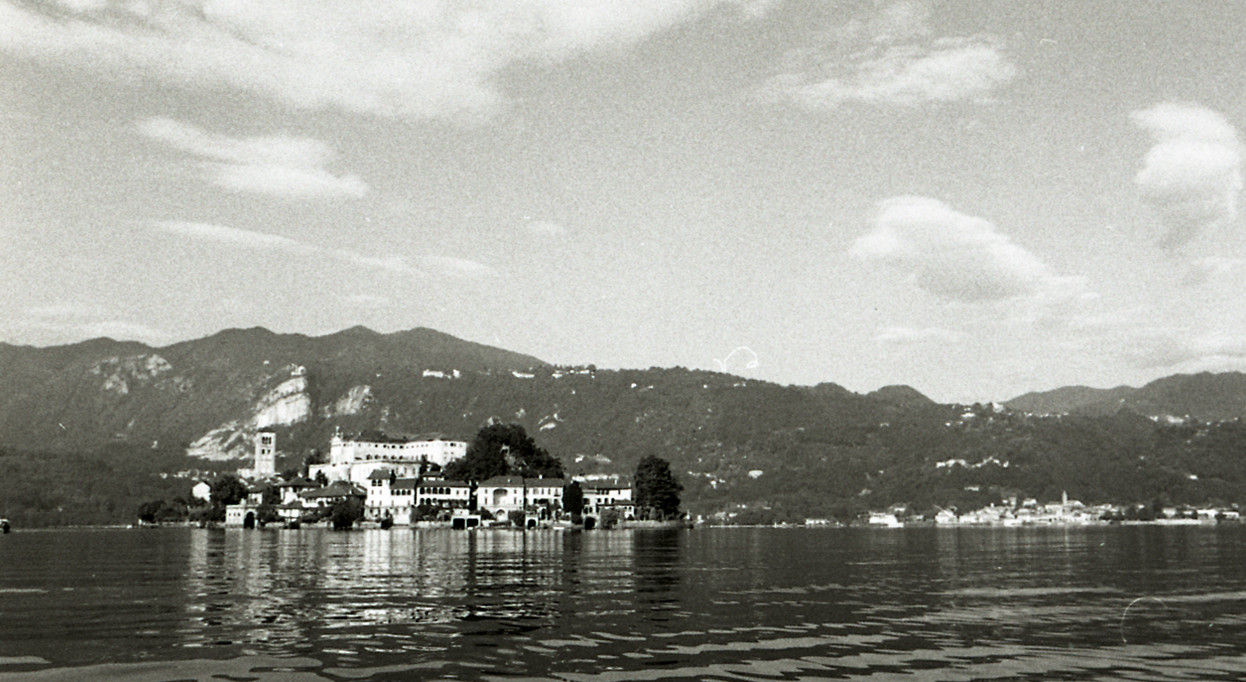
On February 13, 1968, Carla Bonacina collected her first sample from Lake Orta, also known as Cusio (Treccani). A fresh biology graduate, she was on her first research job. In the bottles, the transparent water looked like tap water. Swimming inside were two small Cyclops, crustaceans of the copepod group that are part of the lake's zooplankton.
Bonacina also reports that the plankton nets (fine-mesh nets that researchers drag through the water to collect algae and small animals) never clogged. The temperature sensor did not give the slight quiver that signals the touch of a fish, because there was not a trace of fish to be found. According to the researcher's testimony, in the summer, the rare swimmers would swim up to the researchers' boat to ask why their eyes were burning. There was so much ammonium that, in all likelihood, there was even free ammonia in the water (Bonacina's preface to the Journal of Limnology 60(1), 2001).
The most perverse thing, Bonacina wrote more than thirty years later, was that "no one wanted to believe that a lake so beautiful, with such clear water, without the ugly algal blooms that infested Lake Maggiore, was actually so polluted." For this reason, in the battle to recover the lake, the researchers did not have the support of the people (Bonacina's preface, 2001).
Where not even an eel tries to survive
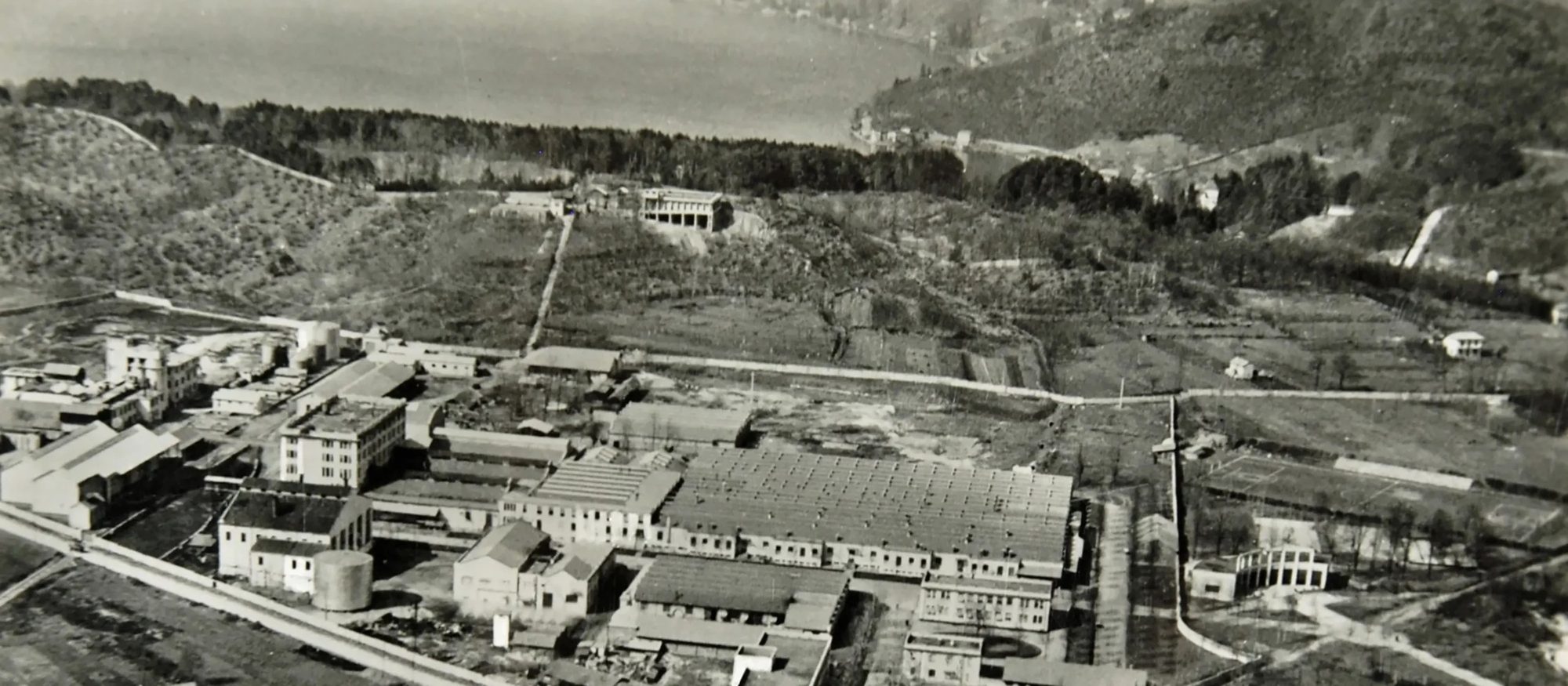
In the second half of the 1920s, Bemberg, which produced rayon, opened a plant in Gozzano, at the southern end of the lake. It had chosen Orta for its water: the factory's commemorative volume described it as the purest in Italy, because the thread is formed in the water (CNR, "Bemberg"). Copper and ammonia discharges began immediately (Bonacina 2001). In 1930, zoologist Rina Monti published a study titled "The gradual extinction of life in Lake Orta" and identified copper as the cause (CNR, "1925-1937"). The great fish die-off, which for months had moved from Gozzano towards Omegna with tons of dead fish pushed to the shore, was still "very vivid in the memory of the oldest lakeside residents" in 1986, when a local newspaper went looking for traces of it in the press of the time and did not find any.
"The inhabitants were divided between the fishermen deprived of their work and those who had found work at the factory," wrote Bonacina. "In the end, all the fishermen were hired by the factory and the controversy ended. But the problem of the lake remained."
The ammonia transformed in the water and made the lake increasingly acidic. On October 26, 1975, three days after the Nobel Prize, the Corriere della Sera published Sul lago d'Orta. It is a poem by Eugenio Montale. It does not speak of factories or pollution. However, it contains these lines: "it would be strange to find it where not even an eel / tries to survive." The poem later entered Quaderno di quattro anni (Mondadori, Milan 1977) and can be read in Eugenio Montale, Tutte le poesie, edited by Giorgio Zampa, Mondadori ("I Meridiani"), Milan 1996, p. 582.
In 1978, Gianni Rodari, a native of Omegna, published C'era due volte il barone Lamberto. He placed the old and sick protagonist in a villa on the island of San Giulio. The baron paid people to repeat his name day and night. Among them, Mr. Giacomini asked to fish from the attic window. "But there are no fish in Lake Orta," the baron objected. The butler Anselmo replied that he had already pointed that out to him: "I explained to him that the Cusio is a dead lake." Giacomini replied that the important thing for him was to fish, not to catch fish. He added that "a dead lake or a living lake, for a true fisherman, are absolutely the same thing." (Gianni Rodari, I cinque libri, Einaudi, Turin 2007, p. 480). Despite the lake being dead, the baron swam in it. Rejuvenated, "he made a habit of swimming around the island every morning to keep in shape" (same volume). One morning he wakes his nephew Ottavio in a swimsuit: "Come on, Ottavio! Shall we do a bit of freestyle? Two laps of the lake, I'll give you a half-lap head start." Ottavio makes excuses: the lake water gives him hives (same volume). The passage therefore attests to and confirms a practice widespread among the inhabitants of the lakeside villages.
Later, the baron dreams of a lake where it is impossible to swim. From there he pulls up an arm loaded "with seaweed, dead fish, scrap paper and waste." The book, however, does not end with a dead lake. The baron dies and wakes up in his coffin: for the butler Anselmo he is "more alive than before," for him it was "a temporary death, nothing serious." In the novel, a rule applies: "the man whose name is spoken remains alive," and while his employees repeat his name faster and faster, the baron rejuvenates to 25 years old, then to 17. In the same scene, Mr. Giacomini, who had cast his line from the window to keep busy, pulls up an eight-hectogram fish: "Who said this is a dead lake? Anselmo, prepare the pan for frying, and anyone who speaks ill of the Cusio will have to deal with me." When Rodari was writing it, there were no fish in the real lake. However, reread today, his irony has something prescient about it: in the climax of the novel, the baron returns to life and the lake with him, just as more than twenty years later the Cusio would truly return to life.
The lake's rebirth process was, however, much more laborious than that of Baron Lamberto. The first step occurred when, in compliance with the provisions of the 1976 Merli Law, which imposed limits on discharges, Bemberg had to equip itself with a treatment plant in the early eighties. The ammoniacal nitrogen poured into the lake dropped from 3,350t (the peak reached in 1970) to about 30t per year. Copper fell from 4t to 0.2t (Bonacina 2001).
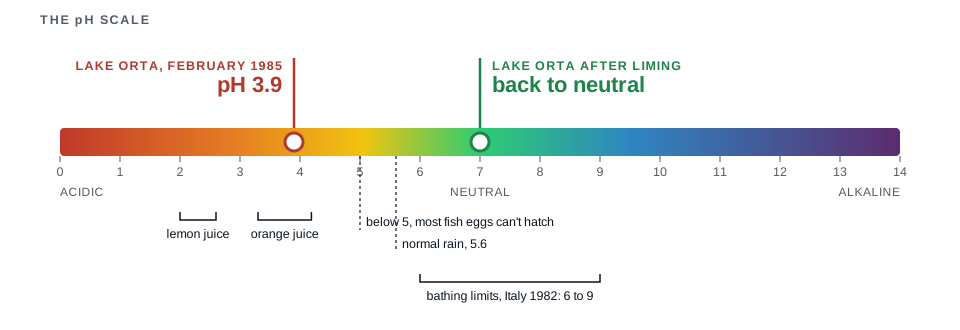
However, even these limitations were not enough to heal the lake. In February 1985, the pH reached 3.9, a value that corresponds more or less to the acidity of orange juice. What remained of the ammonia continued to acidify it (Bonacina 2001).
Between 1987 and 1988, two CNR chemists, Alcide Calderoni and Rosario Mosello, built a model. To return to equilibrium on its own, they estimated that the lake would have needed about twenty years (CNR, "1976-1990. From the Merli Law to liming").
Acidic as orange juice
Starting in 1984, bathing water analyses were conducted on all parameters required by the law at the time. From that year, writes the Piedmont Region Water Protection Plan, "the entirety of the beaches were found to be non-swimmable, mainly due to the exceeding of pH limits." The 1982 decree implemented the European directive on bathing water. The text mandated a pH between 6 and 9. Derogations were only permitted for exceptional geological or geographical conditions, and a discharge, evidently, could not fall under those exceptions.
Despite the ban, people continued to swim in the lake. On July 5, 1986, L'Azione of Novara wrote that the water remained more acidic than the law allowed. The article specified that "despite this, the lake is crowded with numerous people who are bathing peacefully; also because the prohibition signs, in many places, have disappeared."
Today, the European directive classifies bathing water by evaluating only two parameters: Escherichia coli and intestinal enterococci, the two indicators we wrote about in Swimming in the Thames, the Seine, or Venice. pH no longer counts. A Lake Orta as acidic as the one in 1985, but without fecal bacteria, would be rated excellent if evaluated under today's rules.
The cannon on the Sant'Angelo
In 1986, Giuliano Bonomi, a researcher at the Italian Institute of Hydrobiology in Pallanza and husband of Carla Bonacina, went to Sweden to study an innovative method used for lakes acidified by rain. They called it liming, and it consisted of spreading calcium carbonate into the water to neutralize it. It was a practice for small lakes (CNR). No one had ever used it for one as large and deep as Orta: according to his colleague Piero Guilizzoni, who wrote his obituary in 2023, it was the first intervention of its kind in the world on a lake of that size.
The institute's project was approved by the Province and the Region (Bonacina 2001). Supporting it was also Franco Fornara, president of the Province of Novara. He worked at Bemberg and knew its processes (CNR).
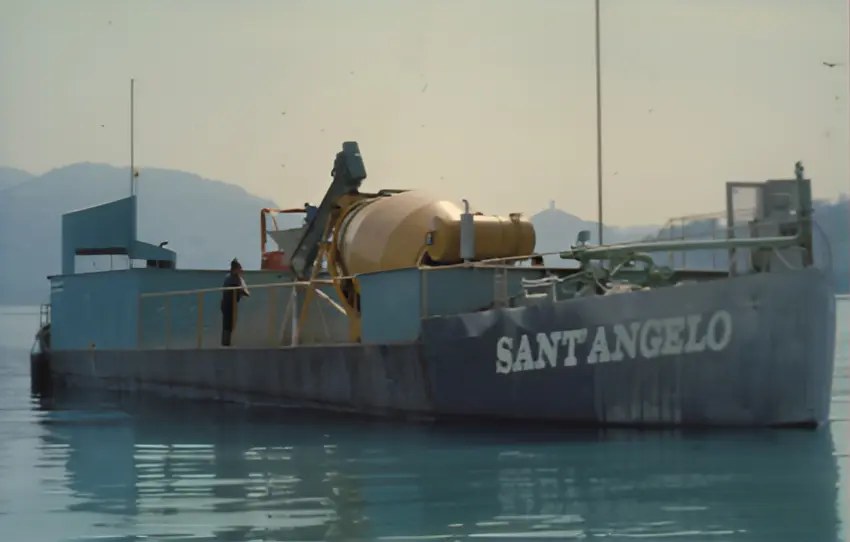
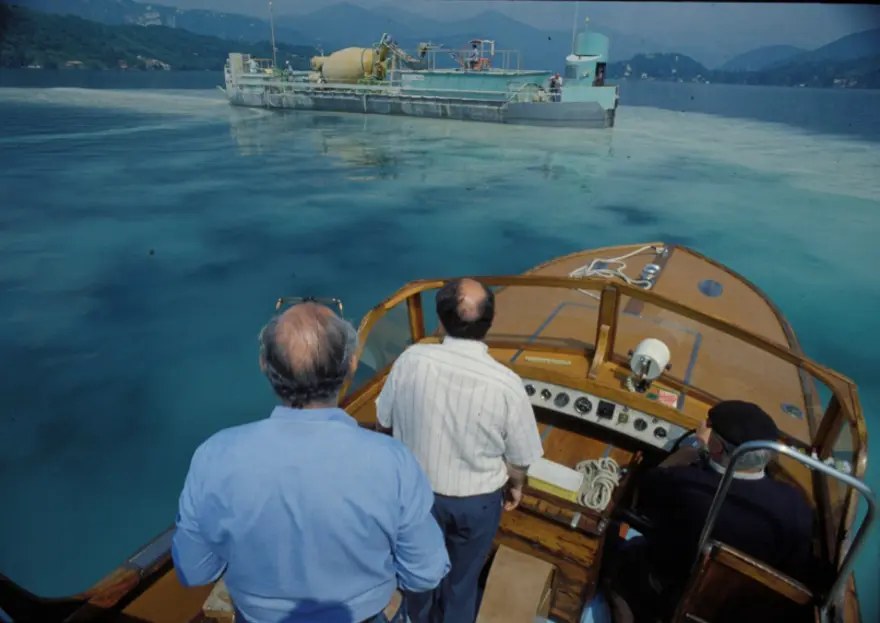
The carbonate was easily available in Italy because it came from the waste of a quarry in the Lecco area. It was loaded onto the Sant'Angelo, a 28 m boat equipped with a tank, a concrete mixer, and a jet pump (CNR; Bonacina 2001). On May 13, 1989, L'Azione reported on the "cannon" mounted on the boat, which was "equipped in the Scandinavian fashion." The newspaper wrote: "The carbonate only whitens the surface of the lake involved in the spreading for a short time, then the cloud sinks."
In winter, the mixture of water and carbonate would freeze in the pipes, and work had to stop. In other months, the obstacle was funding, which only covered a portion of the planned carbonate (Bonacina 2001). On April 14, 1990, Il Verbano described a "disgusting" foam that had washed up for meters against the shores in the previous days. In town, they discussed for a long time whether it was the fault of the liming, and the Green Party filed an interpellation against the intervention. 42 researchers responded in writing. On October 20, Il Verbano headlined: "CNR researchers: 'Greens are liars, liming is okay'" and the words used by the Pallanza team were even sharper.
From May 1989 to June 1990, the spreading continued from Gozzano to the island of San Giulio (CNR, "Il liming"), and by the beginning of 1991, the entire water mass was neutralized.
However, in July 1990, Dr. Sandrini of the local health authority (USSL), speaking with L'Azione, explained that coliforms and streptococci did not survive in the acidic lake. Now that the acidity was dropping, the bacterial flora was increasing. "If this is a positive sign for the health of the lake, it is also evident that in those spots we will have to prevent swimming." The lake was healing, and paradoxically, precisely because of this, in some places, swimming would once again be banned due to bacteria.
Finally, between 1999 and 2000, the pH returned to the values of a natural lake, and after decades, all the beaches were reopened (Calderoni and Tartari 2001).
In 2001, Carla Bonacina concluded the preface to the volume that the journal Journal of Limnology dedicated to the lake: "Today, if you walk along the shore, you see fishermen fishing. And they are even catching fish! Music to an hydrobiologist's ears!"
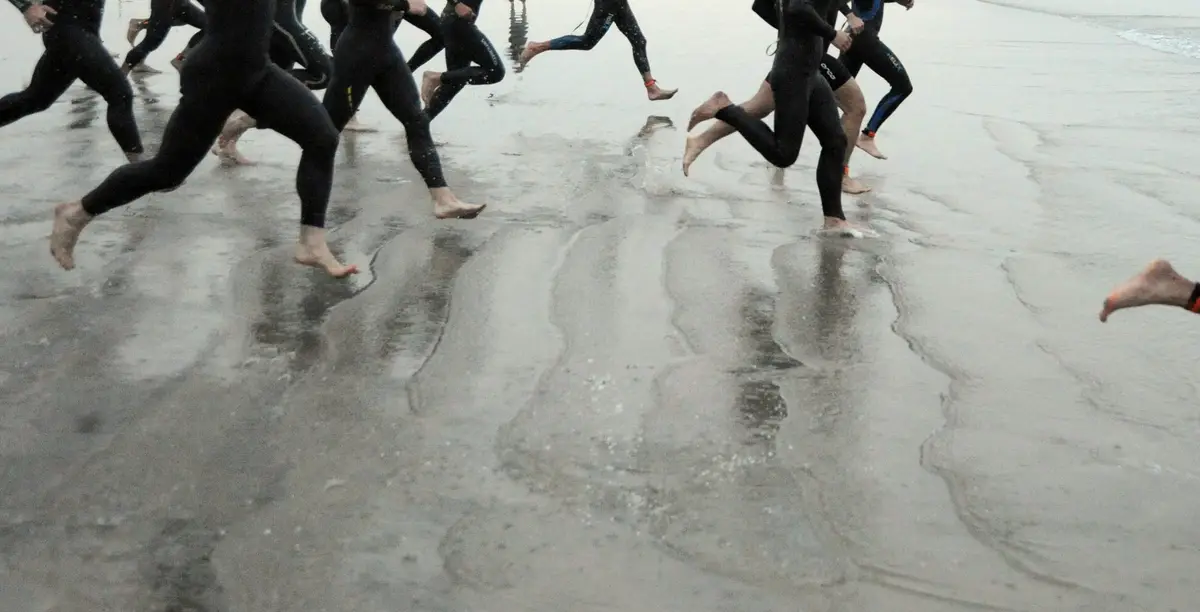
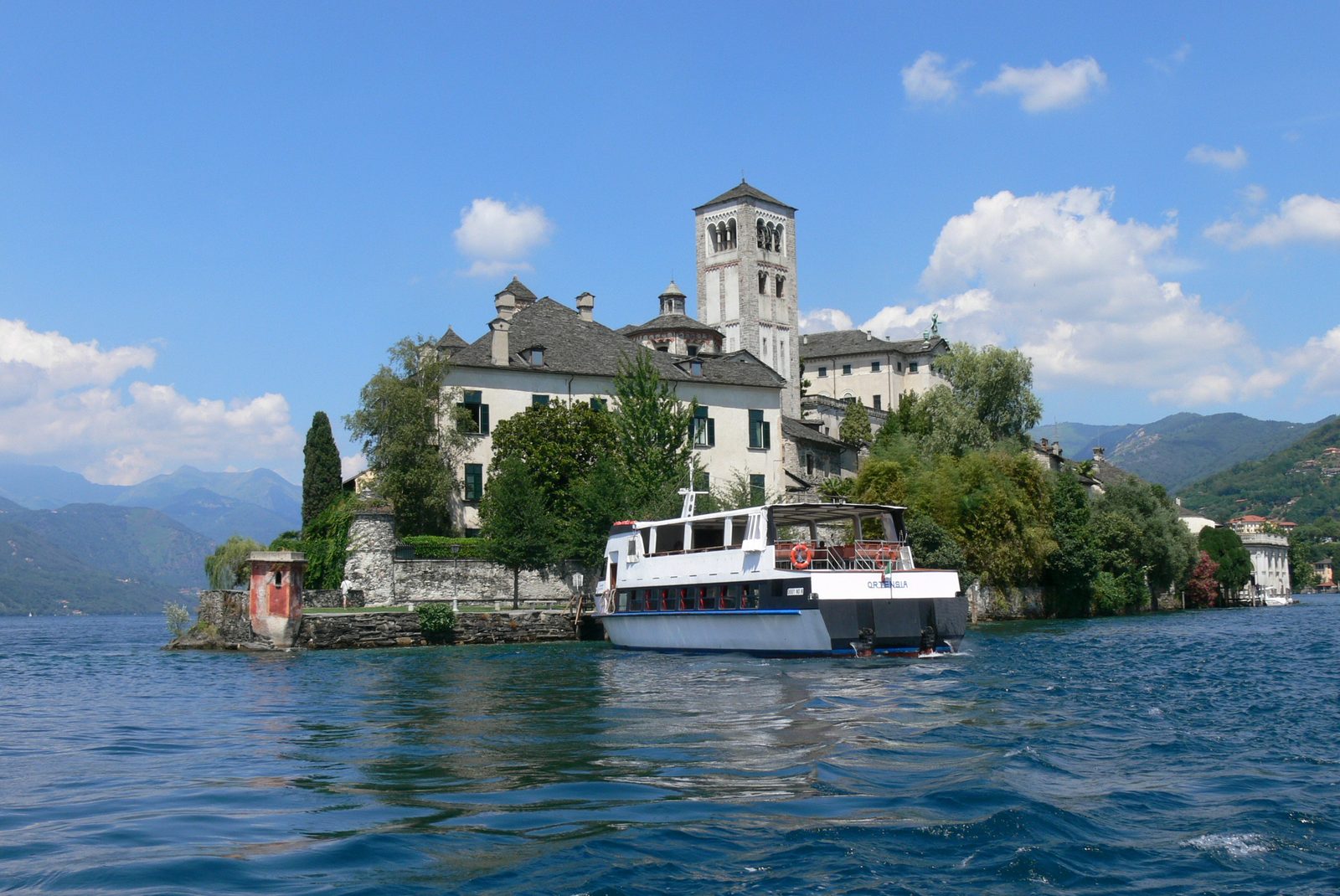
In the 2025 season, there were 16 monitored swimming spots: 12 in the excellent class, 2 in the good class, and 2, in Omegna, in the sufficient class. Today, many open water swimming competitions are held there, and swimming in Lake Orta, especially if you go around the island of San Giulio, is truly magical. The season begins in May with La sfida del Drago in Gozzano. Then come the Grand Prix CusioCup in Pettenasco, the Oceanman, the Traversata della Nonna in Pella, L'antica Via del Legname and Da Riva a Riva in Omegna, the crossing from Pella to Orta, the Nuotata sotto le stelle in Orta, and in September the "un bacino per ADMO" crossing in Pettenasco. In 2015, the Nuotata sotto le stelle brought over 550 people into the water in three stages; the following year, one of the routes was a loop of about 1,400 m around the island (Centro d'Incontro Legrese, press release of 7/18/2016).
The last races of the year are organized by Andrea Vietti: at the end of October, there is the Swim Brulé, up to 3 km (1.9 mi) at the Gozzano lido (regulations), which, as the name suggests, includes a glass of mulled wine after the invigorating swim at 16 °C (61 °F). Then, in December, there is the Ice Swim Xmas Cup in the Gulf of Omegna: you swim from 50 to 1,000 m in a 50 m pool marked by buoys, with or without a wetsuit (regulations). These last two are colorful and very fun competitions.
The beautiful Lake Orta no longer has the pH of 3.9 it had in 1985, and the fish have returned. To go for a swim, there is no longer any need to ignore a prohibition, as the bathers reported by the local press in 1986 did. When you take a dip, think also of Baron Lamberto, who, like this lake, lived twice, of Carla Bonacina, and of all the hardships this lake had to endure. We like this story because it shows that even a compromised situation like that of Lake Orta can be recovered, allowing everyone to return to enjoying it. While on one hand the redevelopment fills us with some optimism for the future, it also forces us to reflect on the gravity of certain development choices and the impact they can have on future generations.