
Swim Loch Lomond End-to-End 2026
- Jun 8, 2026
- Last edition date
- Distance: 35km
At a glance
- Last edition date
- June 8, 2026
- Distances
- 35 km
- Where
- Lake · Loch Lomond, Balloch, Scotland, United Kingdom
- Wetsuit
- Suitable for wetsuit or 'skins' (Channel swim rules) athletes. 'Skins' swimmers must confirm experience and capability with organizers.
- Registration
- swimyourswim.com
About the race
Organized as the Swim Loch Lomond End-to-End, this open water endurance challenge takes place in the freshwater of Loch Lomond, setting out from the village of Balloch in West Dunbartonshire, Scotland. The course spans the full length of Great Britain's largest inland body of freshwater, covering an uninterrupted 35 kilometres between Balloch and the northern settlement of Ardlui. Swimmers chart an ambitious northbound path across an expansive body of water that shifts continuously in width, scenery, and character. Completing the entire loch end-to-end demands unwavering endurance, navigating past solitary islands and steep shoreline bluffs. The event takes place across the long daylight hours of June, when northern summer days offer the maximum light needed for a full lake crossing.
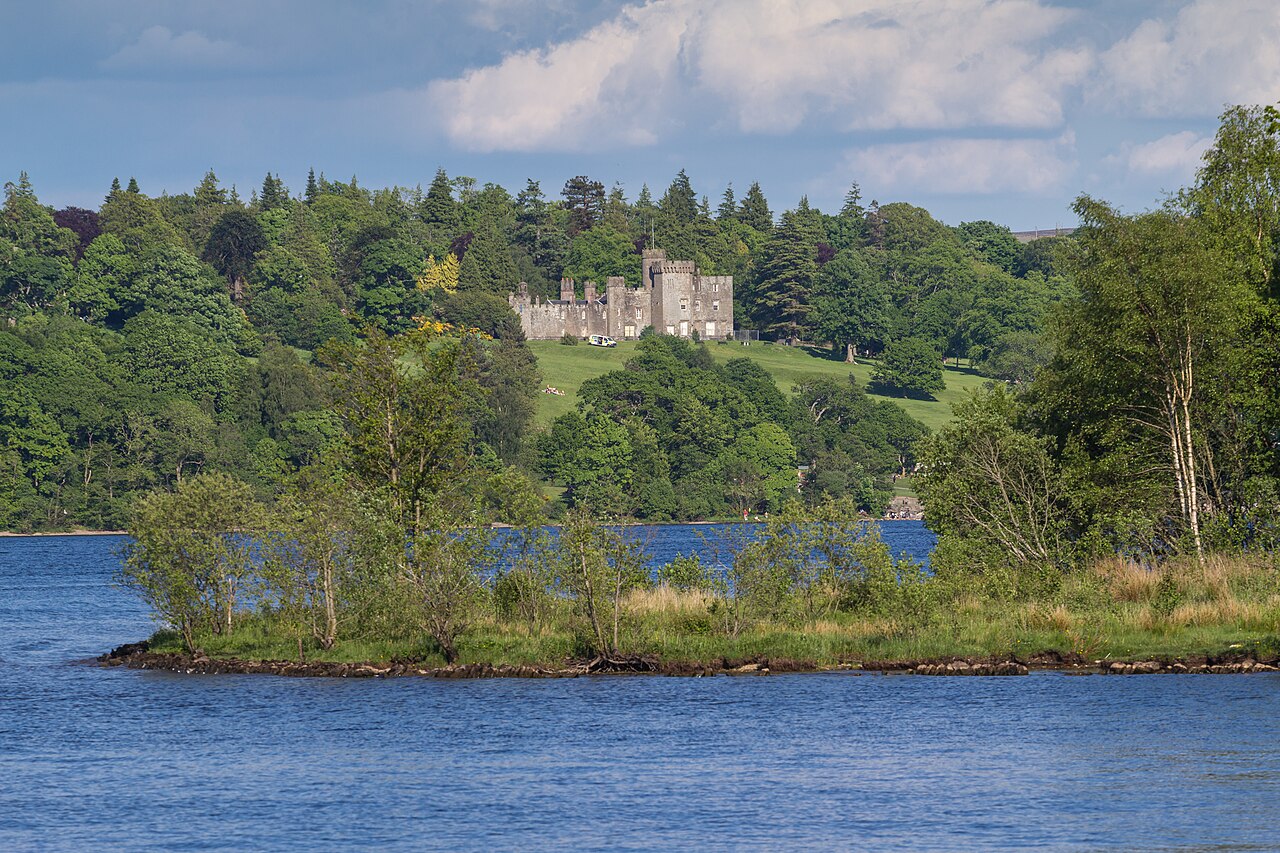
Swimmers are required to complete the 35-kilometre course within a strict cutoff time of 14 hours. Pacing is essential to meet the time limit as wind, surface conditions, and stamina come into play across the long hours in the water. Athletes can tackle the crossing as solo swimmers, or share the distance by entering as a pair or as a relay team of three. The crossing is open to both wetsuit competitors and skins swimmers who swim in traditional standard costumes. Swimmers opting to take on the loch without neoprene must confirm their prior cold-water experience and distance capability with swimyourswim to ensure they are fully prepared for the long immersion.
Balloch Pier and the Gateway to the Loch
The bustling village waterfront functions as the departure point for the majority of passenger cruise boats operating on Loch Lomond. Right beside the pier stands the historic paddle steamer Maid of the Loch, a landmark vessel that is currently undergoing careful restoration at the water's edge. The maritime setting gives the morning departure a storied atmosphere of Scottish lake navigation.
Glacial Depths and the Highland Boundary Fault
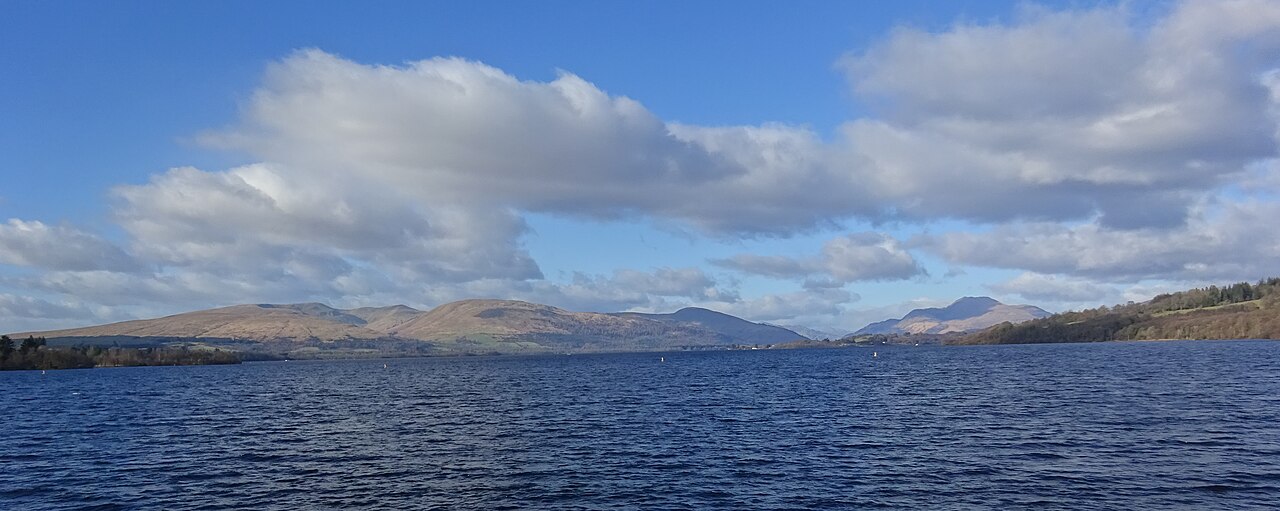
The immense basin beneath the swimmers was carved out by massive glaciers during the Younger Dryas period between 20,000 and 10,000 years ago. As the ice retreated, it scoured a vast trench into the bedrock that now holds millions of cubic metres of pristine Scottish freshwater. Swimming down the loch means stroking above an ancient glacial trough defined by millennia of ice movement. Moving north, the underwater profile changes dramatically beneath your stroke. The broad southern basin is relatively shallow, rarely exceeding 30 metres in depth, but as you pass the narrows, the northern basin plunges downward to an abyss reaching 190 metres. Loch Lomond is a dimictic lake that undergoes two complete water column mixings each year, turning over in spring and autumn as temperature-driven density changes circulate the water from top to bottom.
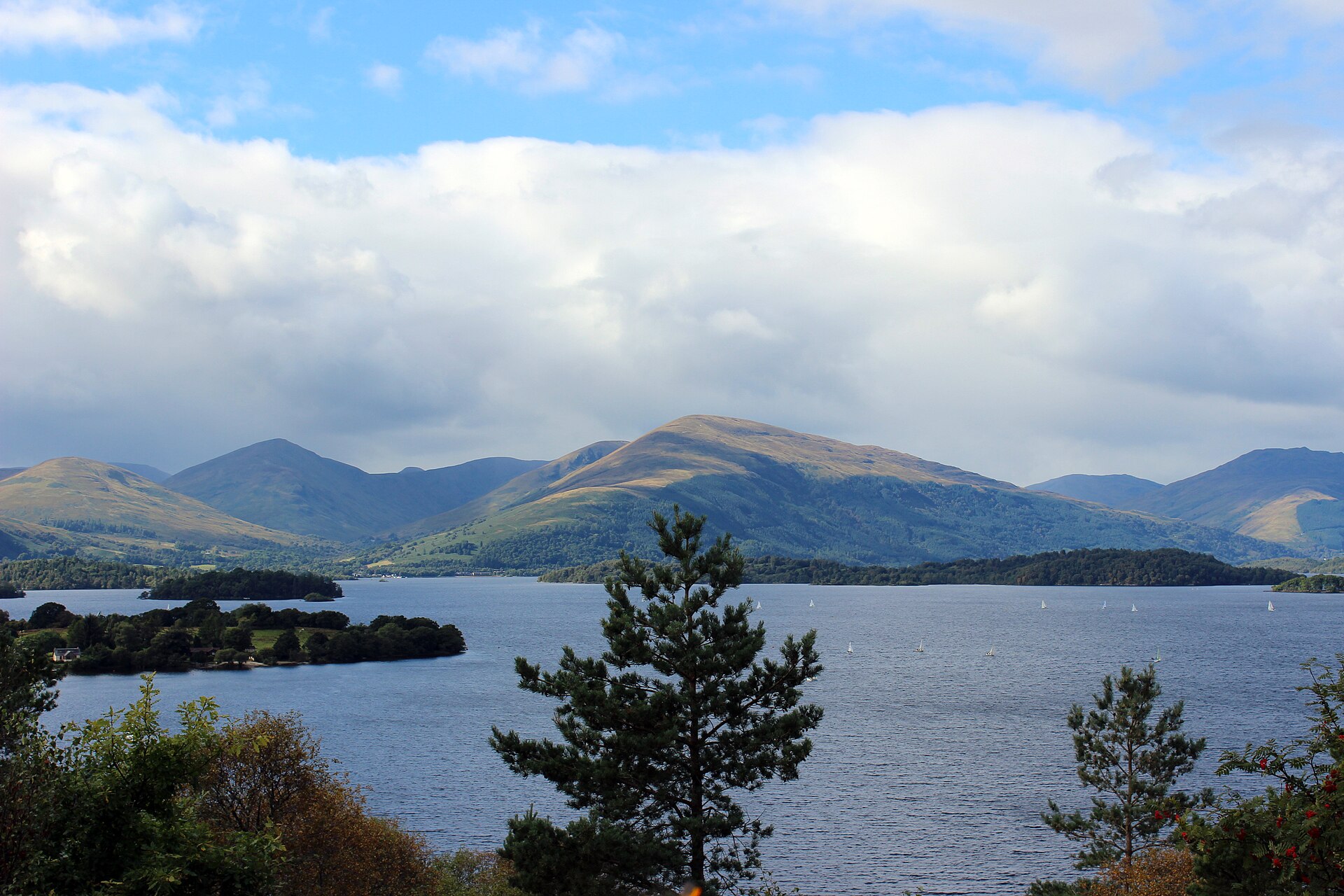
Cutting right across the waist of the loch lies the Highland boundary fault, an ancient geological fracture line that separates the rolling Lowlands from the rugged Highland peaks. A chain of wooded islands marks this subterranean collision, including Creinch, Torrinch, Inchcailloch, and Inchmurrin. Crossing this invisible fault line in the water marks a literal passage into the Scottish Highlands.
Crannogs, Monasteries, and Viking Portages Across the Basin
Human history in these shallows reaches back over five millennia to when Neolithic communities built crannogs. On tiny islets like Inchgalbraith, the crumbling masonry of a ruined castle rises atop what may have begun as one of those very prehistoric timber platforms. Inchmurrin is the largest freshwater island in the British Isles. In the 7th century, Christian monks established a monastery on its shores, and by the early 14th century, King Robert I of Scotland turned the island into a royal hunting deer park. Later, in 1425, Isabella, Countess of Lennox, retired to live out her years inside Lennox Castle. The waters surrounding Inchmurrin later witnessed clan rivalries and turbulent frontier life.
The legendary Highland outlaw Rob Roy MacGregor navigated these exact passages, using boats across Loch Lomond and the mouth of the River Endrick to carry off raided cattle from the island. Stroking past these silent shores brings to mind the hidden skiffs and clan raids of early Scottish history. Naval incursions on the loch date back even further to the Early Medieval period, when Viking fleets entered the sea loch of Loch Long, hauled their heavy wooden longboats overland across the narrow isthmus at Tarbet, and launched them directly into Loch Lomond to raid the isolated islands. Later maritime traffic left its own marks on the loch floor, including the wreck of the vessel Pilot, which foundered and sank near the Ross Isles in 1850.
Wallabies and Ancient Woodlands Along the Island Archipelago
Hidden within the woods of Inchconnachan stands a derelict colonial-style timber bungalow built in the 1920s for Admiral Sullivan. Amid these native Scottish oaks lives one of the country's most unusual wildlife residents: a thriving colony of wild red-necked wallabies, introduced to the island in the 1940s. The narrow channels between the islands and the mainland remain wildlife corridors today. At the shallow crossing between the mainland shore and Inchcailloch, wild deer are known to wade and ford the channel, while roe deer inhabit the woods of nearby Inchtavannach. Dominating the island passage is Inchtavannach's northern peak, Tom nan Clag, which reaches 86 metres above the water and marks the highest island point anywhere on the loch.
Along the shores near Balmaha and the island shallows grows the Scottish dock, Rumex aquaticus, a rare botanical endemic found nowhere else in Great Britain. Leaving the islands behind, the loch narrows into a glacial fjord where the Highland mountains plunge straight into the cold northern water, carrying you toward the final finish line at Ardlui.
Sources: Loch Lomond · Inchmurrin
Course
One-way swim route of approximately 35km from Balloch to Ardlui. The swim takes place in Loch Lomond, the largest inland stretch of freshwater in Great Britain.
How to get there
Swim Loch Lomond End-to-End 2026
Frequently asked questions
- When was the last edition of Swim Loch Lomond End-to-End 2026?
- The last edition of Swim Loch Lomond End-to-End 2026 took place on June 8, 2026.
- What distances does Swim Loch Lomond End-to-End 2026 offer?
- Swim Loch Lomond End-to-End 2026 has a single distance: 35 km.
- Is a wetsuit required at Swim Loch Lomond End-to-End 2026?
- Suitable for wetsuit or 'skins' (Channel swim rules) athletes. 'Skins' swimmers must confirm experience and capability with organizers.
- Where does Swim Loch Lomond End-to-End 2026 take place?
- Swim Loch Lomond End-to-End 2026 is a lake swim. Location: Loch Lomond, Balloch, Scotland, United Kingdom.
- How do I register for Swim Loch Lomond End-to-End 2026?
- The reference page for registering for Swim Loch Lomond End-to-End 2026 is https://swimyourswim.com/loch-lomond-2026/.
Where to stay
Balloch and the surrounding villages offer a mix of traditional stone-built guesthouses, small-scale B&Bs, and lakeside holiday parks. Prices range from £90 for comfortable rooms in family-run inns to £250+ per night for luxury suites near the water’s edge. Camping options are available at designated sites along the southern banks, typically costing £25–£40 per night for a pitch.
Things to do nearby
Beyond the water, the region offers structured boat tours for those wanting to explore the loch's islands further. On land, the Trossachs National Park provides extensive hiking trails, including the climb up Conic Hill for a panoramic view of the Fault Line. Visitors often explore the local distilleries for whisky tastings or rent kayaks to access the shallower southern inlets, providing a different perspective of the landscape traversed during the race.
Swimmers
Other races by this organiser
- Swim Loch Ness 2026 — Fort Augustus → LochendFort Augustus, GB
- BLDSA Loch LomondArrochar, GB
Similar races


Comments
Transparency: some links on this page (stays, flights, experiences, gear) are affiliate links — if you book or buy through them, Omniathlon may earn a commission from the partner at no extra cost to you. As an Amazon Associate we earn from qualifying purchases.