
Travesía Rosa
- Distance: 10km
At a glance
- Distances
- 10 km
- Where
- River · Río de la Plata, Zona Norte, Buenos Aires, Argentina
- Registration
- donaronline.org
About the race
Eighty swimmers move together down the brown expanses of the Río de la Plata, connecting the nautical heart of San Isidro with the edge of Buenos Aires. This is Travesía Rosa, an open water swimming event covering 10,000 meters along the broad river in the Zona Norte of Buenos Aires, Argentina. Conceived in 2019 by Julieta O'Connor, the journey strips away the competitive pressure typical of distance racing. Out on the vast river, there are no timing chips to chase and no winners' podiums waiting at the end of the course. The Travesía Rosa event is designed to raise funds for free mammograms dedicated to low-income women, transforming athletic endurance into direct community health support.
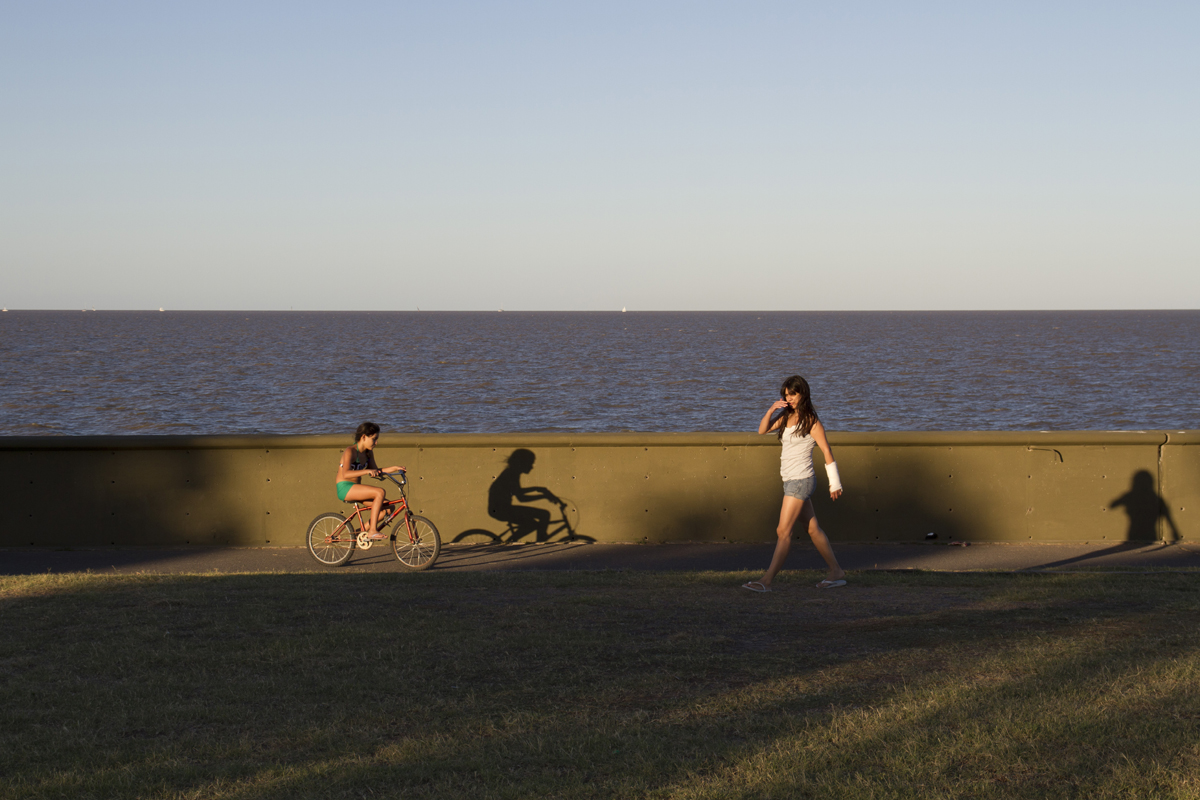
At the same time, the spectacle of dozens of swimmers moving in unison along the urban riverfront raises widespread awareness about the life-saving impact of early breast cancer detection. The 10-kilometer route follows the riverbanks from Club Náutico San Isidro down to Club CUBA Núñez. Because participants swim together as a cohesive unit rather than scattering across the water, the group occasionally halts to wait for slower participants and maintain a unified pack. In past editions, pausing in spring water temperatures of around 17 degrees Celsius has brought chilly interludes, making a wetsuit an essential piece of gear for every participant. When the river settles with few waves, the pack glides steadily over the expansive freshwater surface. The arrival at Club CUBA Núñez culminates in a spirited reception, greeted by cheering crowds, blaring boat horns, and escort craft that welcome the swimmers ashore.
The Río de la Plata's tides and the clubs on its banks
In its inner fluvial zone the Río de la Plata is about 180 kilometres long and up to 80 kilometres wide, with a depth that varies from about 1 to 5 metres. Currents in the Río de la Plata are dominated by tides, which reach beyond its sources into the Uruguay and Paraná rivers. The Club Náutico San Isidro was founded on 26 February 1910, and a municipal ordinance of 10 April that year granted it the occupation of Sarandí island. The club later added Isla B in the delta, ten minutes by launch from Sarandí island. Among the swimmers associated with the Club Náutico San Isidro is Lilian Harrison, the first woman to swim across the Río de la Plata from Colonia to Buenos Aires. The Club Universitario de Buenos Aires, known as CUBA, has three sites in the city: its central site, one in Palermo, and the nautical site in Núñez.
Parque Natural Municipal Ribera Norte: the primeval riparian forest
About three kilometres from the swimming area, the Parque Natural Municipal Ribera Norte preserves the original character of this sprawling riverine environment. This coastal wetland is governed entirely by the tidal regime of the Río de la Plata, experiencing the daily rise and fall of freshwater currents. Geologically, the reserve shares the alluvial sediment deposits that form the delta islands of the Paraná River, accumulating fine silt over centuries to build fertile shoreline habitats. Within its borders, the refuge protects a rare, intact remnant of the lush riparian forest that once stretched continuously along the entire coast of the Río de la Plata. The habitat faces powerful natural forces, especially during the fierce southeasterly wind storms known as sudestadas, which can completely submerge the low ground.
Behind this protective vegetal barrier thrives an extraordinary concentration of wildlife, encompassing 200 distinct bird species, with around 50 species actively nesting within the sanctuary's borders. To safeguard these delicate habitats, the park strictly closes on December 25th and January 1st each year, ensuring that nesting colonies of herons remain undisturbed by celebratory fireworks exploding along the riverfront.
Reserva Ecológica de Vicente López and Arroyo Raggio
Roughly two kilometres from the race course, the Reserva Ecológica de Vicente López anchors a regional biodiversity corridor along the right bank of the upper Río de la Plata, connecting the Paraná Delta down to Punta Lara. A significant portion of this municipal sanctuary rests directly on ground that was once part of the active riverbed before being reclaimed from the water. At the core of the reserve lies an artificial lagoon built in the late 1990s by enclosing an arm of the river, reaching a maximum depth of two meters. The lagoon does not sit stagnant; an engineered tunnel links it directly to the Río de la Plata, allowing its interior water level to fluctuate continuously with the estuary's tides.
Native reed beds fringe the coastal perimeter here as well, blunting wave action and maintaining shoreline stability just above the water level. Continuing downriver toward the federal capital, about five kilometres from the race area lies the Arroyo Raggio. This small watercourse serves as the geographic border separating the Autonomous City of Buenos Aires from Buenos Aires Province. Although most of the stream was channeled underground into pipes in 1999, an open channel of approximately 800 meters remains uncovered before pouring into the upper Río de la Plata. This daylighted section of the stream stretches up to five meters across, bordered by a dense gallery forest of native seibos, creole willows, and curupíes.
The green waterway is bracketed by two major public green spaces: the Paseo de la Costa in Vicente López and the 32-hectare Parque de los Niños in the capital, joined together since 2004 by a slender pedestrian footbridge suspended over the water.
Playa Norte and Club de Pescadores: the city's riverfront heritage
The open lawns and coastal groves surrounding Playa Norte provide fertile ground for diverse bird life, including southern lapwings, chalk-browed mockingbirds, great kiskadees, shiny cowbirds, rufous-bellied thrushes, and rufous-collared sparrows. Further down the capital's shoreline, the Club de Pescadores highlights the deep historical relationship between Buenos Aires and its sweeping river. Founded in 1903 on an old wooden jetty previously employed by a French enterprise for coal delivery boats, the club quickly learned the volatile nature of the estuary when a severe storm destroyed the original pier in August 1905.
Sources: Reserva ecológica de Vicente López
Course
10 km swim in the Río de la Plata, starting from Club Náutico San Isidro and finishing at Club CUBA Núñez.
Awards
Non-competitive event. There is no timing or podium; the focus is on solidarity and fundraising.
Useful info
Annual solidarity event (October) to fund mammograms. This is not a competitive race. Registration via direct contact ([email protected]). 2026 edition scheduled for October 17 in Buenos Aires.
How to get there
Ministro Pistarini International Airport (EZE) at 35km or Aeroparque Jorge Newbery (AEP) at 10km. Mitre line train stations (Retiro-Tigre) serve the area. Access via Avenida del Libertador or General Paz. Limited street parking; the use of ride-sharing apps (Uber/Cabify) or official taxis is recommended to reach the event site.
Travesía Rosa
Frequently asked questions
- What distances does Travesía Rosa offer?
- Travesía Rosa has a single distance: 10 km.
- Where does Travesía Rosa take place?
- Travesía Rosa is a river swim. Location: Río de la Plata, Zona Norte, Buenos Aires, Argentina.
- How do I register for Travesía Rosa?
- The reference page for registering for Travesía Rosa is https://donaronline.org/fundacion-potenciar-solidario/travesia-rosa-inscripciones-2026.
Where to stay
The Zona Norte area, particularly near San Isidro and Núñez, offers a range of options from boutique hotels along the riverfront to comfortable serviced apartments. You will find classic residential-style lodging and established rowing club guesthouses that cater to visiting athletes. Prices typically range from $60 to $150 per night, depending on proximity to the water and the level of amenities chosen. Many participants prefer staying within walking distance of the start or finish clubs to simplify pre-race logistics.
Things to do nearby
Beyond the water, the weekend invites exploration of the riparian landscape. The area is ideal for kayak or SUP excursions through the delta, providing a closer look at the local biodiversity. You can also engage in guided historical walks through the colonial centers of San Isidro or visit local vineyards for tastings. For those interested in the natural heritage, the nearby wetlands offer birdwatching and light trekking, perfect for winding down after the long-distance effort.
Swimmers
What to see around
1. Bosques de Palermo (park ideal for running), 2. Latin American Art Museum (MALBA), 3. Tigre Delta (boat excursions at 20km), 4. Recoleta (monumental cemetery and architecture), 5. Monumental Stadium (tour for sports fans).
Similar races



Comments
Transparency: some links on this page (stays, flights, experiences, gear) are affiliate links — if you book or buy through them, Omniathlon may earn a commission from the partner at no extra cost to you. As an Amazon Associate we earn from qualifying purchases.