
Travessia Nedant al Port de Tarragona
- Sep 26, 2026
- Last edition date
- Distances from 100m to 2km
At a glance
- Last edition date
- September 26, 2026
- Distances
- 100 m · 1 km · 2 km
- Where
- Sea · Puerto de Tarragona, Tarragona, Cataluña, Spain
- Entry fee
- 5–10 €
- Registration
- rcntarragona.org
About the race
Since 1925, swimmers have dived into the harbor waters of Tarragona, competing along a course that holds the title of Spain's oldest open water event. This historic sea swim, known as the Travessia del Port de Tarragona, takes place inside Puerto de Tarragona on the Mediterranean coastline of Cataluña, Spain. Organized by the Reial Club Nàutic de Tarragona, the competition is held each year in September, coinciding with the city's festive celebrations of Santa Tecla. Swimmers choose between two race distances: a 1,000-meter dash and a 2,000-meter harbor circuit. To begin, competitors line up and enter the sea directly from the stone steps of the Escales Reials in Port Tarraco.
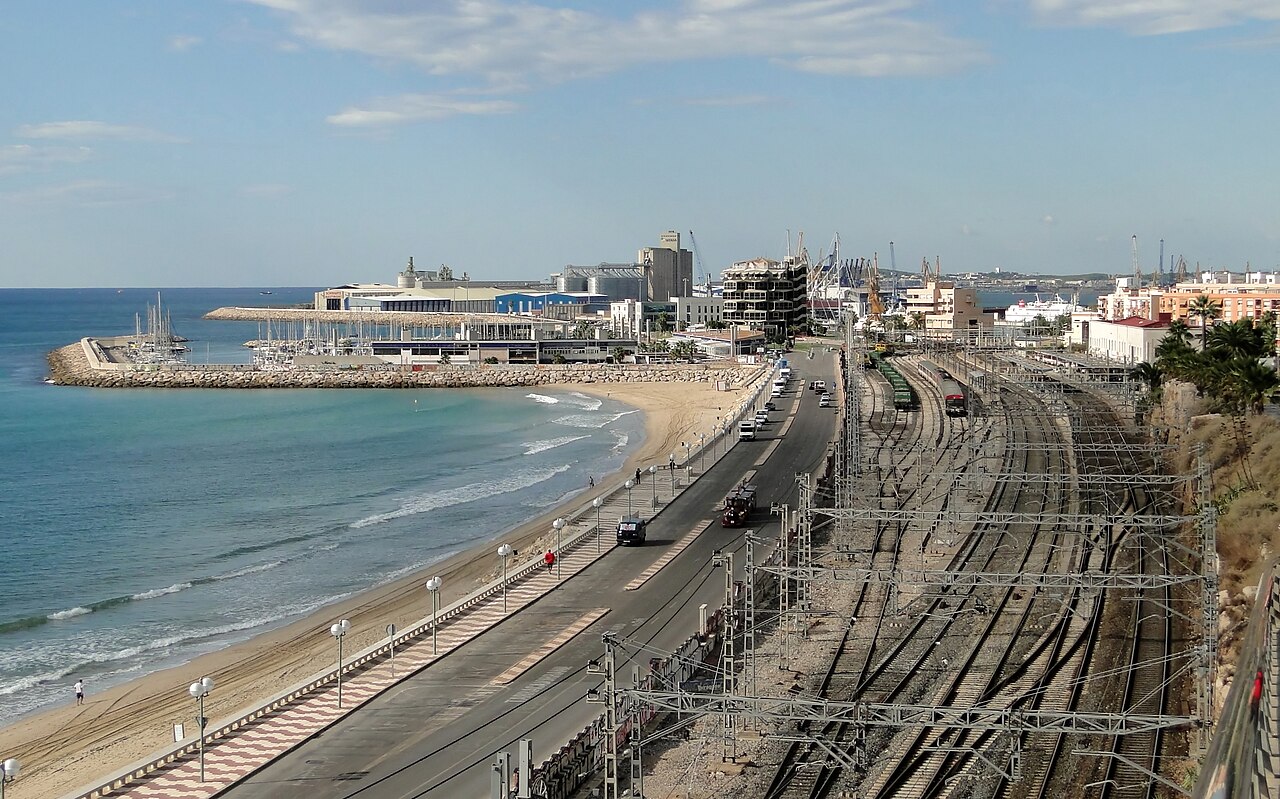
The swim takes place entirely inside the protected docks of the port, with courses threading past large moored yachts. While races have encountered windy weather, the harbor basin allows competitors to find a steady open water rhythm. The race concludes through a distinctive cork funnel measuring only one meter in width. Athletes must channel single file into this floating gate, where official referees register each finish time. The host yacht club stands at one extremity of the Port of Tarragona, maintaining a dedicated mooring basin of 500 square meters. The club's earliest headquarters was swept away by a Francolí River flood in 1917. New club installations were eventually established away from the commercial harbor docks.
Over 100 swimmers and the road to the centenary
The 2025 Travessia Nedant al Port de Tarragona, its 98th edition, put more than 100 swimmers into the waters of Port Tarraco. The Reial Club Nàutic de Tarragona describes the Travessia as the oldest swim of its kind in Spain, one that was already approaching its hundredth edition. For the 99th edition on 26 September 2026, more than 120 swimmers jumped in from the Escales Reials at Port Tarraco. The club congratulated Siro Juarez of Club Natació Sabadell and Arlet Baeza of Reus Ploms on their victories in the two distances. Its report on the 99th edition closes by inviting swimmers back next year for the Travessia del Centenari.
Port de Tarragona from Roman Tarraco to the mole
Before Roman ships dropped anchor, Greek and Phoenician mariners had already established trading outposts along this coast. Roman legions first landed on the Iberian Peninsula at the port of Tarraco in 218 BC. During the siege of Carthago Nova, local fishermen from Tarraco put their own boats to sea to support the Roman army. By the 1st century, writer Pomponio Mela celebrated Tarraco as the wealthiest maritime harbor along the entire coast. The city grew across a coastal hill elevated between 75 and 90 meters above sea level, looking down over the Mediterranean bay. Ancient chroniclers debated its accessibility by sea, with Eratosthenes describing a dedicated naval station while Strabo portrayed the shore as harbourless.
By 45 BC, Tarraco had become an active shipping center, exporting local agricultural goods in return for Italian and North African ceramics and glassware. Roman builders constructed two stone breakwaters by taking advantage of the natural beach profile between Punta de Miracle and Cabo de Salou. Down near the sea, Roman engineers constructed an amphitheater. In 259 AD, the arena witnessed the execution of Bishop Fructuosus and his two deacons. Following the fall of the Western Roman Empire, the amphitheater was used as a stone quarry, before the Knights Templar built the church of Santa Maria del Miracle within the arena. In 1799, Joan Smith designed a harbor expansion that included a 1,337-meter-long breakwater. The commercial port later added an oil platform for the chemical industry and began exporting livestock in 2012, shipping 1,300,000 animals by 2020.
Naval battles off the Tarragona roadstead and Tamarit
During the 17th century, the shoreline around Tarragona was defined by fifteen miles of open beach. In the Naval battle of Tarragona, French forces seized the fort of Salou on 9 May 1641 to establish a naval blockade. French troops captured the tower of Los Alfaques on 13 May 1641, and constructed a third fortification at Tamarin on 8 June to seal the coastal approaches. During the conflict, the Spanish galley Santa Olalla ran aground near Salou and was destroyed by French cavalry. On the night of 6 July 1641, French fireships burned abandoned Spanish galleys moored directly at the Tarragona mole. Seaborne warfare returned during the Peninsular War in 1811, when a British naval squadron bombarded French siege positions and ferried troops and supplies ashore.
About ten kilometers from the race venue stands the Castillo de Tamarit, poised on a rocky headland on the Mediterranean shore. Constructed in the 11th century, the fortress guarded the Gaià basin, an area defended by roughly forty strongholds during the Reconquista. A fortified wall surrounding the complex was built in the 14th century to defend against Barbary and Ottoman corsairs. In the 17th century, master builders erected its central tower and shaped the defensive walls that survive today.
Cabo de Salou and the Torredembarra coastline
The wider coastal reach outside the harbor includes Cabo de Salou, a prominent rocky headland jutting into the sea. Marine erosion has sculpted the rocky cape into several small coves, including Cala Morisca, Cala de la Viña, Cala de la Fuente, Cala de la Peña Tallada, and Cala los Cangrejos. On land, the headland preserves a wooded area filled with pine trees. The cape remains subject to consistent wave action brought by easterly winds, with the Salou Lighthouse lit in 1858. About thirteen kilometers from the harbor, the coastline reaches the seaside town of Torredembarra. Right at the edge of the water stands the Faro de Torredembarra, which holds the distinction of being the last lighthouse built in Spain during the 20th century. Its light beam was switched on for the first time at midnight on January 1, 2000. Closer to the race basin, about three kilometers away, the Savinosa headland separates the beaches of Rabasada and Sabinosa.
El Serrallo fishermen quarter and the Miracle waterfront
Along the modern waterfront, a 300-meter pedestrian footbridge provides a link from the city center down to Miracle Beach, the marina, and the harbor promenade. The Miracle Beach walkway features a two-way bike path and broad pavements planted with native Mediterranean greenery. Hikers walking the coastal GR 92 trail pass through Tarragona. El Serrallo is the city's historic fishing community celebrated for its maritime heritage and restaurants. After swimming, participants can head to the neighborhood to sample regional seafood. At night, the district square is illuminated by a sculptural fountain crafted by Béatrice Bizot, producing a display of light and flowing water. Visitors can study two millennia of seafaring at the Port Museum of Tarragona, which illustrates port life from Roman times to the present. Walking out to the outer tip of the Llevant breakwater leads to the historic Far de la Banya, a cast-iron lighthouse brought here from the Ebro Delta.
Sources: Tarragona · Puerto de Tarragona · Tarraco · Naval battle of Tarragona
Course
How to get there
Travessia Nedant al Port de Tarragona
Frequently asked questions
- When was the last edition of Travessia Nedant al Port de Tarragona?
- The last edition of Travessia Nedant al Port de Tarragona took place on September 26, 2026.
- What distances does Travessia Nedant al Port de Tarragona offer?
- Travessia Nedant al Port de Tarragona offers 100 m, 1 km, and 2 km.
- How much is the entry fee for Travessia Nedant al Port de Tarragona?
- The entry fee ranges from 5 € to 10 €. Prices may vary based on federation or club membership. Fees listed are for non-federated participants.
- Where does Travessia Nedant al Port de Tarragona take place?
- Travessia Nedant al Port de Tarragona is a sea swim. Location: Puerto de Tarragona, Tarragona, Cataluña, Spain.
- How do I register for Travessia Nedant al Port de Tarragona?
- The reference page for registering for Travessia Nedant al Port de Tarragona is https://www.rcntarragona.org.
Where to stay
Tarragona offers a range of options, from historic boutique hotels set within the ancient city walls to functional apartments near the port area. For a more immersive experience, look for stays in the El Serrallo fishing quarter, where the maritime tradition is most palpable. Prices generally range from €90 to €220 per night, depending on the proximity to the waterfront and the level of service. For those seeking coastal views, hotels overlooking the Balcó del Mediterrani are popular choices during the race weekend.
Things to do nearby
The weekend provides ample opportunity to explore the region's Roman heritage, including the well-preserved circus ruins and the seaside amphitheatre. Beyond the sites, visitors often engage in local seafood tastings in the El Serrallo district, known for its traditional maritime cuisine. For active recovery, the coastline is ideal for kayak and stand-up paddleboarding excursions, allowing you to view the city's defensive towers from the water. Local wine and distillery tours, reflecting the region's history with Chartreuse, offer a perfect cultural conclusion to your swim.
Swimmers
Similar races


Comments
Transparency: some links on this page (stays, flights, experiences, gear) are affiliate links — if you book or buy through them, Omniathlon may earn a commission from the partner at no extra cost to you. As an Amazon Associate we earn from qualifying purchases.