
VIII Travessia Solidària Nedant Vilassar
- Oct 3, 2026
- Last edition date
- Distances from 200m to 4km
At a glance
- Last edition date
- October 3, 2026
- Distances
- 200 m · 1.5 km · 4 km
- Where
- Sea · Platja de Vilassar de Mar, Vilassar de Mar, Catalunya, Spain
- Entry fee
- 10–21 €
- Registration
- iniciativas.fundacionvicenteferrer.org
About the race
On the coarse golden sand of Platja de Vilassar de Mar, swimmers gather directly in front of the Club Nàutic for an open-water morning focused purely on shared community and solidarity. The VIII Travessia Solidària Nedant Vilassar is an open water swimming event held in the Mediterranean Sea along the Maresme coast of Catalonia, just north of Barcelona. Organized to support the Fundación Vicente Ferrer, a non-governmental organization dedicated to rural transformation in India, the crossing turns an autumn morning into collective aid where every stroke contributes to communities thousands of kilometers away. Rather than chasing timing chips and podium finishes, participants find a relaxed, festive, and family-oriented gathering right by the tideline.
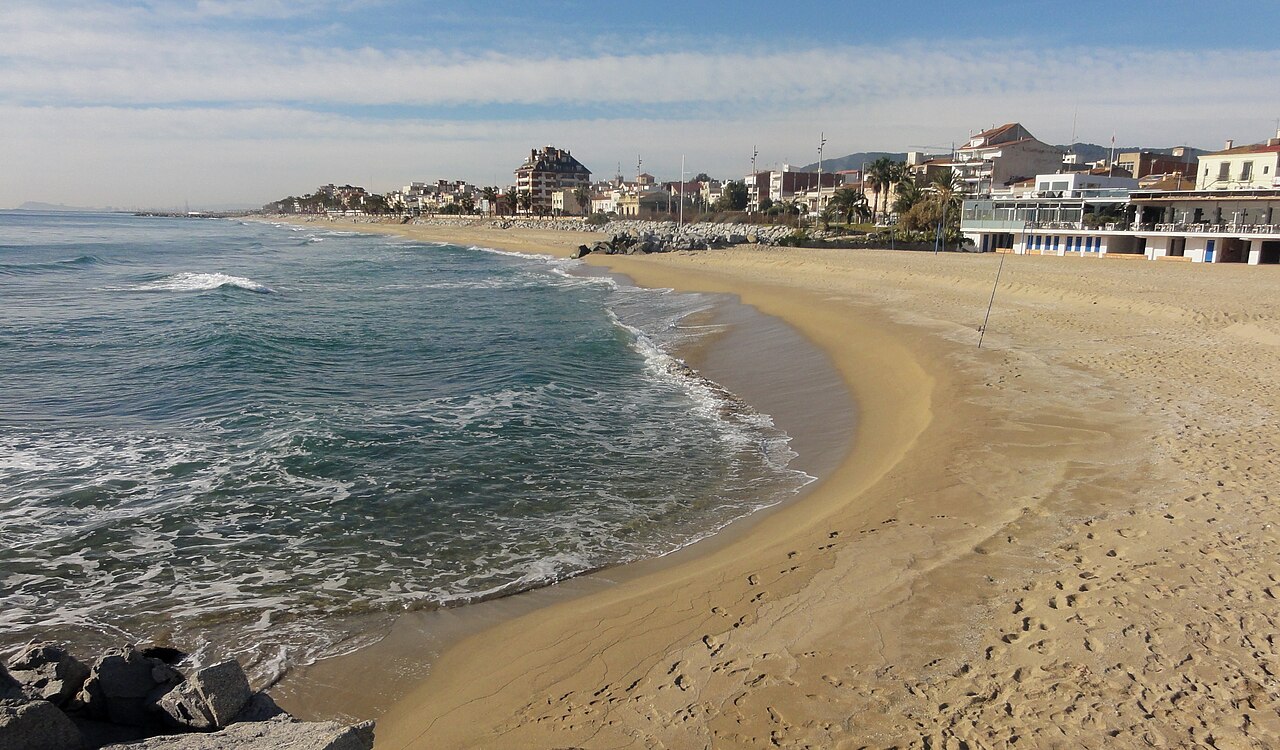
Both the starting line and the finish arches sit directly on the beach opposite the Club Nàutic de Vilassar de Mar, allowing family and spectators to cheer swimmers straight off the sand and welcome them back ashore. Once out of the water, the sailing club opens its pool, changing rooms, and shore facilities to all entrants, keeping the celebratory atmosphere buzzing well past the final strokes. The swim offers three distinct courses to accommodate every level of open-water experience: a demanding 4,000-meter crossing, a popular 1,500-meter route, and a gentle 200-meter dash designed specifically for children. Taking place in early October, the event sits perfectly alongside other coastal challenges in the regional open-water calendar, including the nearby Ciutat de Mataró held just five kilometers away, making the Maresme coast an ideal destination for a multi-swim journey.
The Maresme shore: Riera de Cabrils and shifting sands
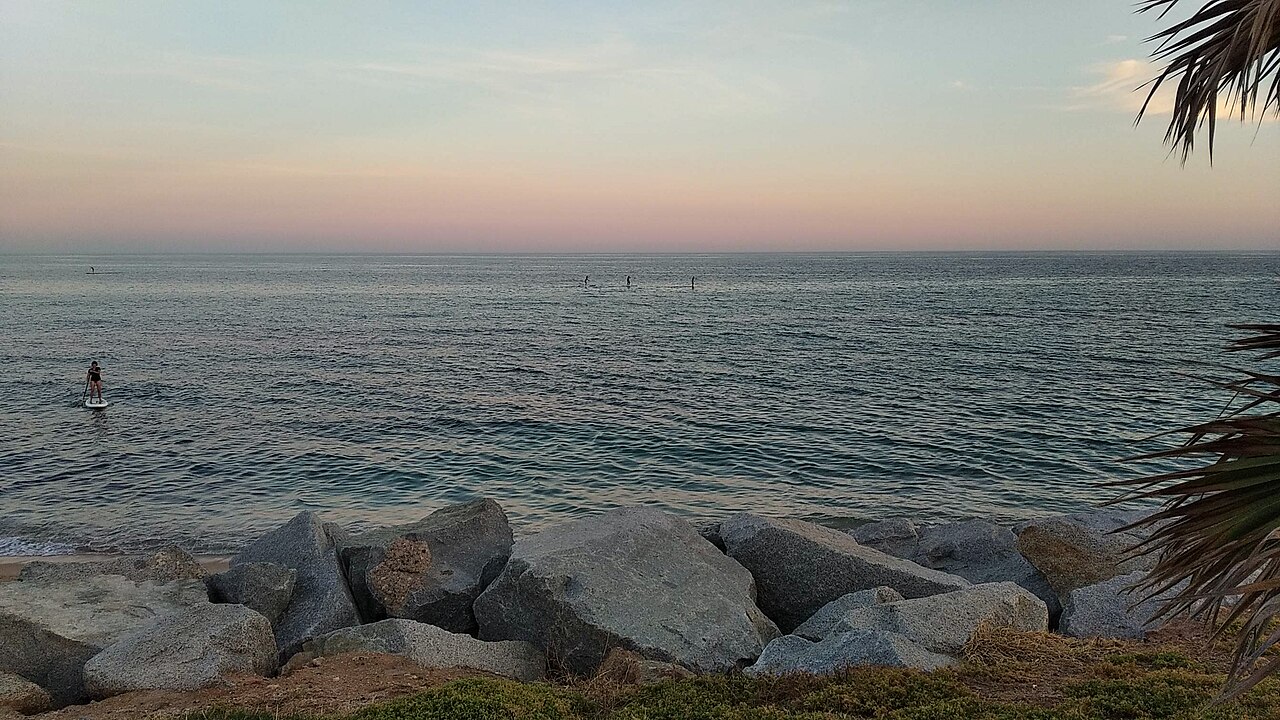
The open sea off Vilassar de Mar unfolds in full Mediterranean clarity along the urban stretch of L'Astillero beach. This kilometer-long strip of coarse golden sand drops into the water with a pronounced slope at the shoreline, plunging swimmers quickly into deep water without long wading shallows. Just inland, the coastal hydrology is shaped by the Riera de Cabrils, a torrential watercourse under five kilometers in total length that originates on the eastern slopes of the Sierra de la Marina. Flowing down through the municipality of Cabrils and cutting across Vilassar de Mar, it empties directly into the Mediterranean Sea right alongside the town's beaches. Human intervention has long had to reckon with the restless, shifting nature of these dynamic shorelines. Farther along the coast, heavy coastal erosion and an alarming retreat of the sandy beaches prompted the construction of a major breakwater in 1965 to stabilize the moving sands.
Roman Iluro and Baetulo: coastal settlements along the ancient shore
Long before modern sea defenses were built, ancient maritime civilizations anchored themselves along these sheltered rises. About five kilometers from the race area, the Roman town of Iluro was established on a low knoll commanding sweeping views across the central Maresme coastal plain. Framed on either side by seasonal watercourses, the settlement had thick walls built from Roman concrete and substantial granite blocks reinforced with square watchtowers. The relationship between Iluro and the surrounding water was woven into daily life and civic luxury. On a rise inside the town, Roman builders erected an extensive bath complex featuring two separate pools positioned to look out across the open sea. In one of the wealthy private townhouses, archaeologists uncovered a vibrant mosaic panel depicting confronted dolphins, while high-imperial cemeteries were laid out just beyond the city limits along the banks of the riera.
Fourteen kilometers away, the Roman city of Baetulo mirrored this profound connection to the Mediterranean. Positioned on a slight hill close to the shore between two freshwater streams, the Folc and the Matamoros, the town was defended by sturdy walls with alternating square and semicircular towers.
Puerto de Mataró: shipyards, lateen sails, and transatlantic trade
Maritime activity expanded through the centuries into major commercial power, centered on Puerto de Mataró. Up until the middle of the nineteenth century, Mataró stood as a premier maritime center, hosting bustling shipyards and serving as a launch base for long-distance transatlantic expeditions sailing toward the Americas. Between 1750 and 1867, its thriving merchant fleet and high density of registered mariners earned Mataró the official title of capital of a maritime province. Today, the harbor remains a working maritime center with an eighty-meter-wide entry channel maintaining a draft of six meters. At the harbor entrance, the Mataró lighthouse flashes four green signals every 16 seconds, guiding mariners from up to five miles out at sea. Moored along the inner quays is the 'San Ramon', a traditional lateen-rigged wooden vessel built in 1904.
Passeig Marítim and Platja de Ponent: fishermen's huts and grilled sardines
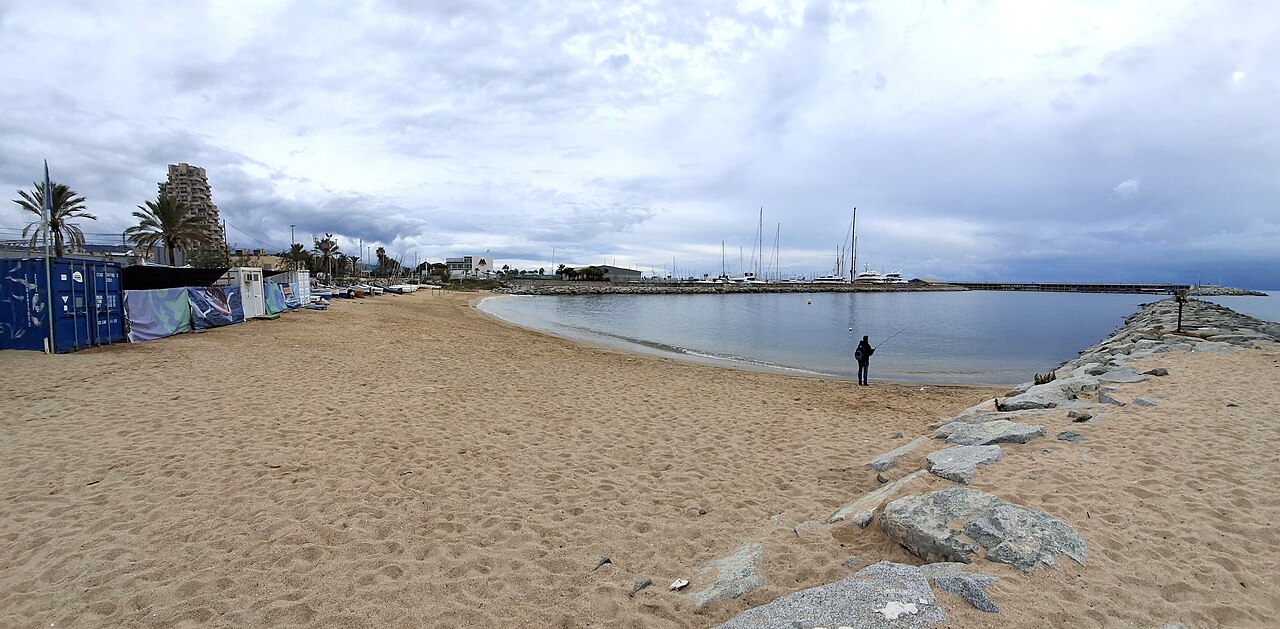
For generations, fishermen's cottages were constructed directly over the sand, where working families dragged their wooden skiffs up onto the dry shore and spread their fishing nets out in the sun. Traces of that seafaring life survive down the beach at Platja de Ponent, where picturesque fishermen's huts stand clustered beside the Garbí breakwater. In the heat of summer, this sandy enclave becomes a traditional gathering spot where local residents and fishermen light open fires directly on the sand to prepare communal meals of grilled sardines. The smoky aroma and seaside laughter continue an unbroken custom of coastal camaraderie. After completing the swim, the seafront promenade invites athletes to linger beneath its tall palm trees and seaside vegetation, taking in expansive Mediterranean panoramas.
Swimmers can head to the restaurant at Club Nàutic Vilassar de Mar, enjoying fresh Mediterranean dishes directly on the sand while looking out over the water they just crossed. With the promenade illuminated well into the evening, visitors can stroll along the water long after sunset, watching the swell roll gently against the sands.
Sources: Iluro (Hispania Tarraconensis)
Course
How to get there
VIII Travessia Solidària Nedant Vilassar
Frequently asked questions
- When was the last edition of VIII Travessia Solidària Nedant Vilassar?
- The last edition of VIII Travessia Solidària Nedant Vilassar took place on October 3, 2026.
- What distances does VIII Travessia Solidària Nedant Vilassar offer?
- VIII Travessia Solidària Nedant Vilassar offers 200 m, 1.5 km, and 4 km.
- How much is the entry fee for VIII Travessia Solidària Nedant Vilassar?
- The entry fee ranges from 10 € to 21 €.
- Where does VIII Travessia Solidària Nedant Vilassar take place?
- VIII Travessia Solidària Nedant Vilassar is a sea swim. Location: Platja de Vilassar de Mar, Vilassar de Mar, Catalunya, Spain.
- How do I register for VIII Travessia Solidària Nedant Vilassar?
- The reference page for registering for VIII Travessia Solidària Nedant Vilassar is https://iniciativas.fundacionvicenteferrer.org/retosdeportivos/otros/travessiavilassarVIII.
Where to stay
Vilassar de Mar offers a mix of traditional Mediterranean charm and modern comfort. You will find small, family-run guesthouses near the old town, boutique hotels overlooking the harbor, and several well-equipped camping sites located directly along the coastline. During the October season, prices are generally more accessible, ranging from €80 to €150 per night for double occupancy, depending on the proximity to the beach and the specific level of service.
Things to do nearby
Beyond the water, the area invites exploration of its Roman heritage and natural landscapes. Visitors can tour the archeological sites of ancient Iluro or spend time in the nearby hills for coastal trekking. The region is also known for its local wine cellars and gastronomy, with frequent opportunities for seafood-focused tastings in the harbor area. For those active on the water, the local clubs provide equipment rentals for kayak and SUP excursions to explore the rocky coves and protected seagrass meadows located just outside the race perimeter.
Swimmers
Similar races


Comments
Transparency: some links on this page (stays, flights, experiences, gear) are affiliate links — if you book or buy through them, Omniathlon may earn a commission from the partner at no extra cost to you. As an Amazon Associate we earn from qualifying purchases.