
Trittico dei Caruggi - Italian Open Water Tour
At a glance
- Where
- Sea · Genova, Camogli, Noli, Liguria, Italy
- Registration
- italianopenwatertour.com
About the race
Three storied coastal settlements along the Ligurian arc set the course for the Trittico dei Caruggi, taking open water swimmers across diverse stretches of the sea. The Trittico dei Caruggi is an open water swimming circuit held in the Ligurian Sea across Genova, Camogli, and Noli in Liguria, Italy. Organized by the Italian Open Water Tour, this cumulative ranking competition was created to celebrate the historic maritime villages and coastal waters of the region. Swimmers who take on the challenge must register for at least two of the three legs in the same category, whether lining up for the smile swim, the hard swim, or the relay. The circuit spans the open water season from late spring through late summer, starting with the Genoese waters in May, continuing in July, and finishing in September. Committing to the multi-stage format means adapting your stroke to varying coastal conditions, shifting from open city shorelines to secluded bays.
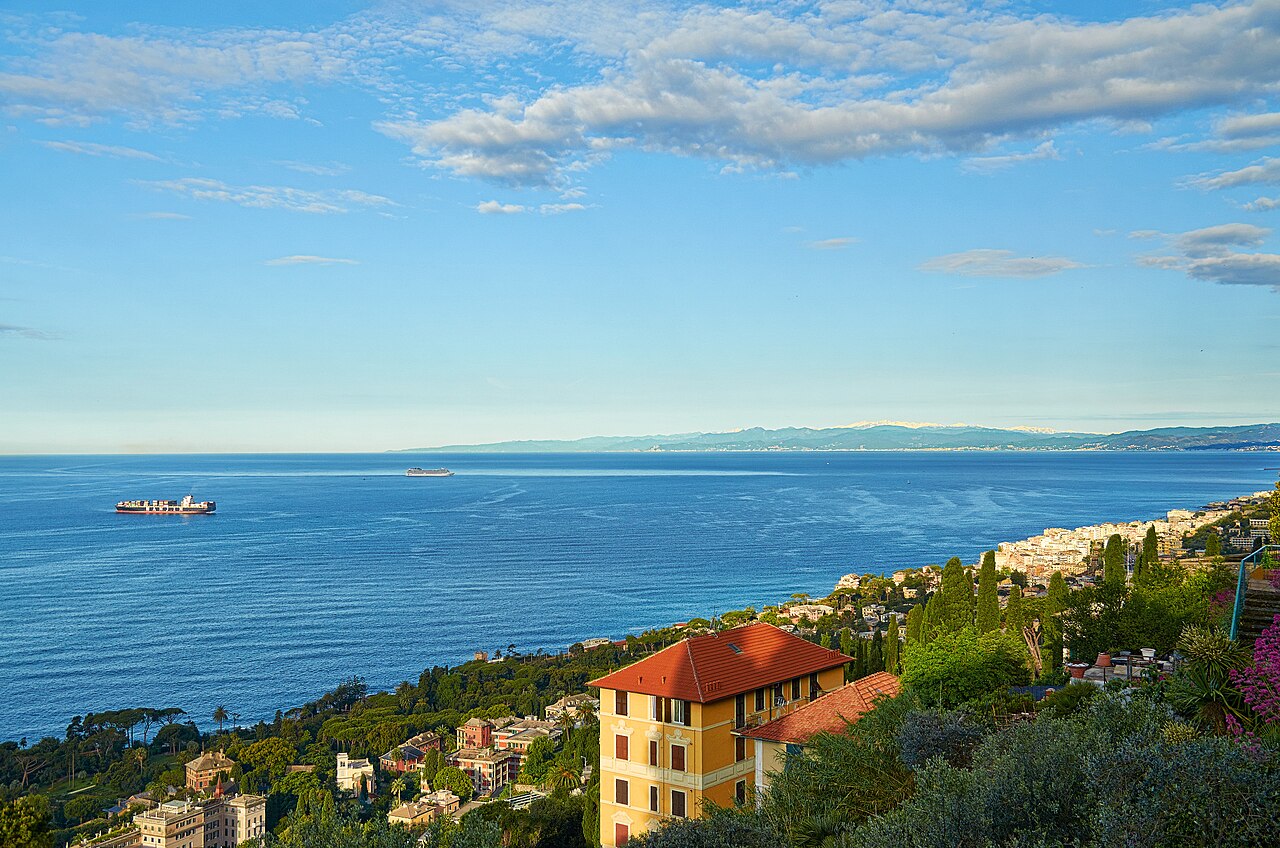
Trittico dei Caruggi: three open water stages across Liguria
The circuit opens in Genoa with the Traversata Crêuza de Mä, swum between the historic cove of Boccadasse, Priaruggia, and Bagni San Nazaro. The name refers to the traditional mule tracks and hillside paths that drop straight down to the sea, made famous by the singer-songwriter Fabrizio De André whose music accompanies swimmers along the course. Wading into the salt water with those melodies drifting across the urban shoreline gives this opening stage an unmistakable local rhythm. During the event, hundreds of multicolored buoys bring the water to life directly beneath the iconic, towering buildings that line Camogli's harbor. The final leg takes place in Noli, departing from the traditional Fishermen's beach into the open waters of the Riviera di Ponente. Described as an insidious and fascinating open-water crossing, this western stage tests endurance against the exposed coastal elements. Reaching the shore after navigating the open bay brings the multi-stage summer tour to an exhilarating finish.
Camogli and Noli: San Fruttuoso, Fishermen's beach and long swims
Camogli's beach hosts races both at night and in daylight, a combination that comes round only once a year. The Abbey of San Fruttuoso looks onto the waters of the Marine Protected Area, and the point-to-point open water race of the Camogli stage is swum in that setting. The Camogli Hard Swim is 6 km long, with a time limit of 2 h 45 min and a gate at 3,000 m, timed at 1 h 20 min. The swims of the Noli stage are based at the Fishermen's beach, in the heart of the historic Maritime Republic. The Noli Hard Swim is 7 km long, with a time limit of 3 h and a gate at 3,500 m, timed at 1 h 30 min. The Hard Swim of the Noli stage starts at Finale Ligure, and swimmers are taken there by shuttle.
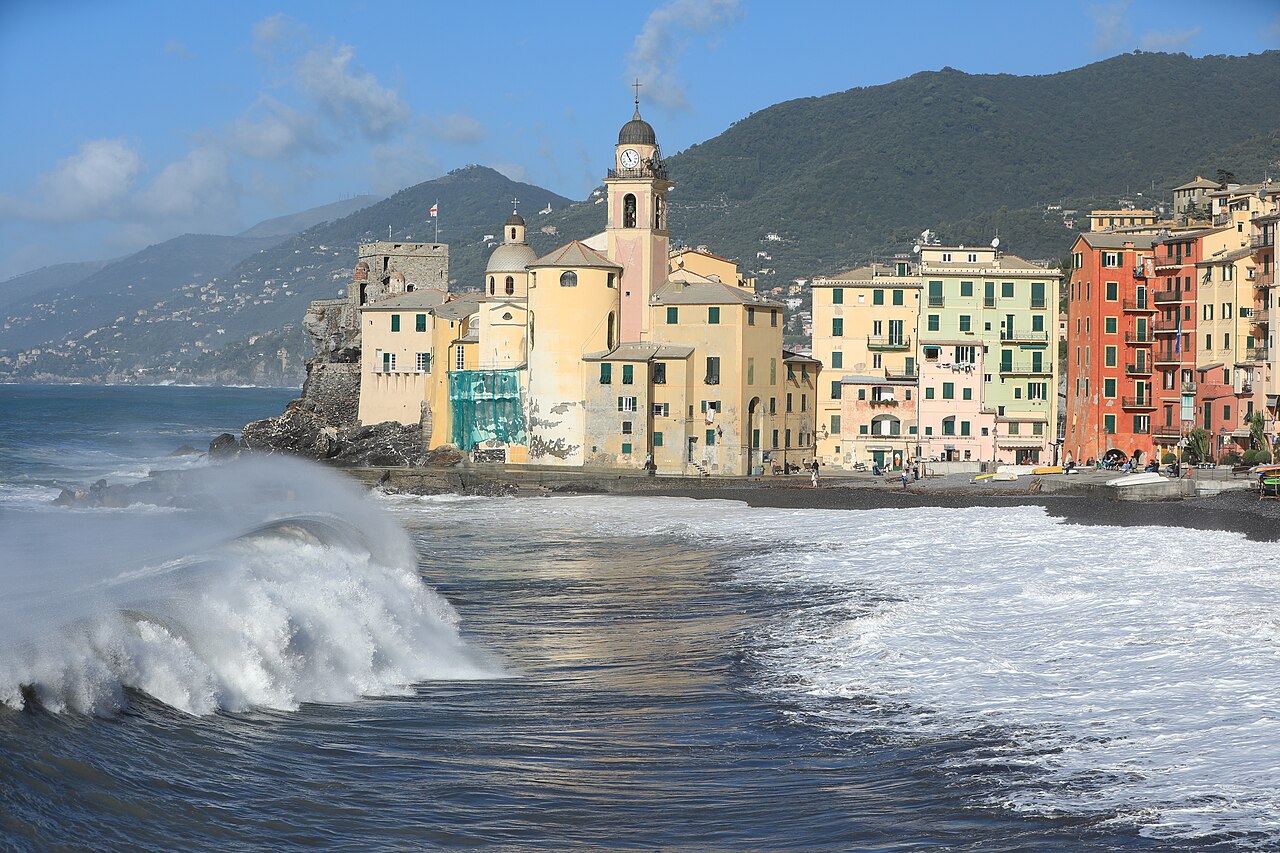
Boccadasse to Foce along Genoa's Corso Italia promenade
The picturesque inlet of Boccadasse is an ancient village traditionally said to have been founded around the year 1000 by Spanish fishermen seeking shelter from a storm. The bay features a cobblestone beach that is still actively used today by local fishermen for their traditional work. The medieval-style Castello Türcke, designed by architect Gino Coppedè in 1903, looks out over Capo Santa Chiara. Corso Italia is a seaside promenade connecting the neighbourhoods of Boccadasse and Foce over a distance of approximately 2.5 kilometres. The mouth of the Bisagno is that of a river whose pre-Roman bed was once four times wider and deeper than it is today. The Punta Vagno lighthouse has been along Corso Italia since its installation in 1931.
Nearby stands the San Giuliano Abbey, founded back in 1282, alongside the San Giuliano fortress, one of sixteen defensive fortresses that formed the historical Walls of Genoa. Sailing heritage runs deep with the Yacht Club Italiano, whose very first regatta took place in 1880 in the Bay of La Spezia with 177 yachts. The club also organizes the famed Giraglia Cup, following an offshore route that rounds the Giraglia at the northern tip of Corsica.
The seabed between Sturla and Nervi: reefs and seahorses
The coastal waters shelter a precious underwater environment. The sea bottom stretching between Sturla and Nervi is designated as an official Site of Community Importance, featuring lush meadows of Posidonia oceanica and extensive natural reef formations. A variety of native fish species inhabit this protected underwater corridor. Having such a delicate marine ecosystem flourishing right alongside an active urban coast highlights the environmental riches of the Ligurian Sea.
The Gulf of Genoa: galleys, blockades, and naval history
Genoa sits within a dramatic natural amphitheater formed by two fortified mountain ridges and the Mediterranean Sea. The waters off the city have witnessed major naval confrontations through the centuries, such as the siege of 1522 when imperial troops directed artillery fire near the Lighthouse of Genoa. While the French fleet fled toward Savona, Genoese admiral Andrea Doria sailed into the port with four galleys to resist the assault, only to be turned back toward Monaco when the attackers used captured harbour guns. During the eighteenth century, the British Royal Navy maintained strict naval blockades of Genoa in 1746 and 1747 to cut off maritime access to the city. A major siege occurred again in 1800, when a British squadron including HMS Minotaur, Phoenix, Mondovi, Entreprenante, and the tender Victoire blockaded the port, with gunboats bombarding coastal forts on April 30.
Near the inner harbour area, historical layers surface close to the water at the Casa del Boia, positioned between the walls of the Grazie and the 13th-century Malapaga prison. Twentieth-century naval history also marked these roadsteads, beginning on June 14, 1940, when a French fleet under Admiral Émile Duplat conducted the first naval bombardment of Genoa and Savona. On February 9, 1941, Britain's Force H fired on the port from nineteen kilometers away while Swordfish aircraft from HMS Ark Royal bombed ports down the coast. Italian coastal batteries and armed pontoons were hampered by fog, and about half the British shells fell into the water, though the training ship Garaventa sank in the harbour.
Today, the port waters preserve extraordinary maritime relics, including the historic floating crane Langer Heinrich, moored here since 1997. Built on a massive pontoon measuring 50.42 by 30.92 meters with a draft of 3.05 meters, it lifted sunken ships in Bremen and Bremerhaven in 1945, was moved to Sardinia in 1985 on a 10,000-ton barge, and was named a Monument to Industrial Archaeology in 2002. Just about two kilometers from the race area, visitors can also see the submarine Nazario Sauro, built at Monfalcone starting in 1974 and towed from La Spezia in 2009 to become Italy's first in-water museum ship. Swimmers returning to shore after competing in the Trittico dei Caruggi exit into waters deeply steeped in seafaring life.
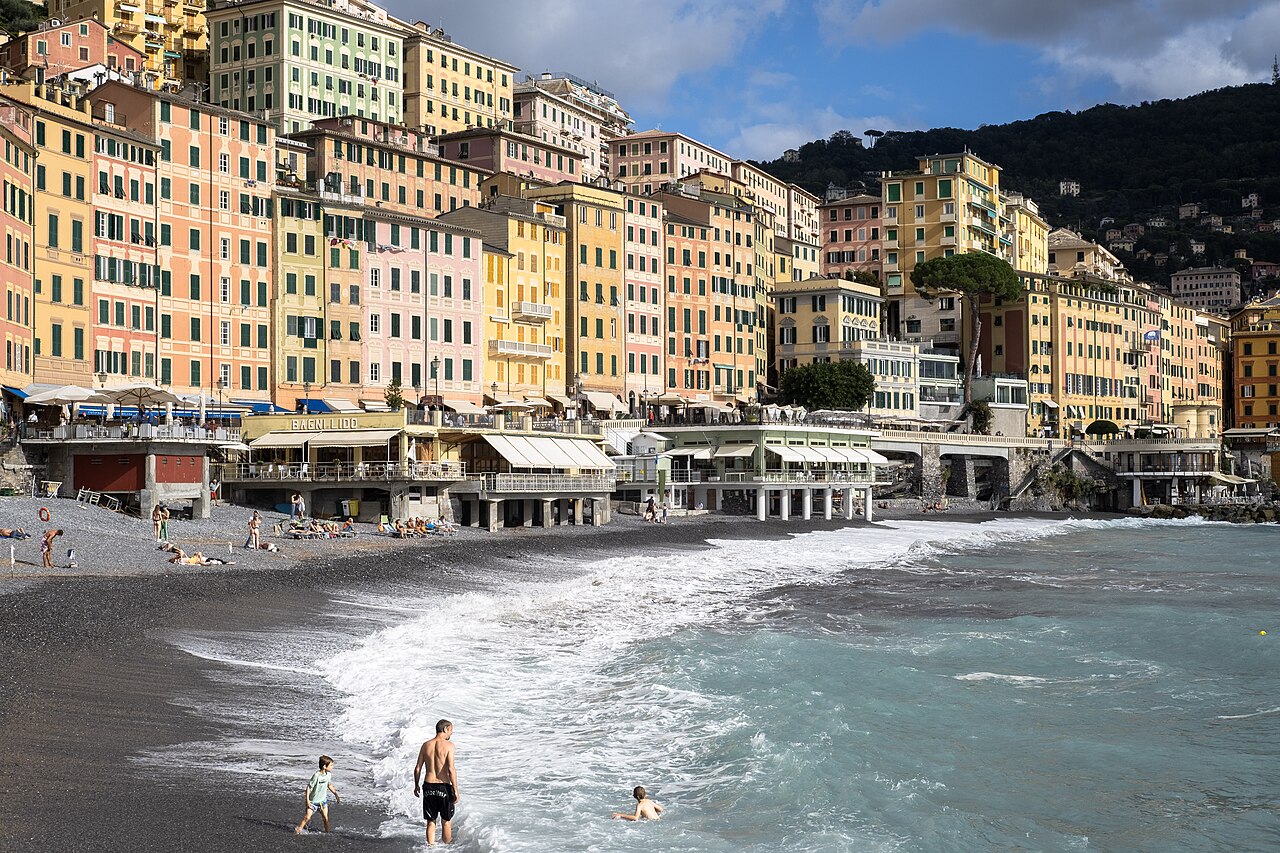
Course
Cumulative circuit that includes the stages of Genova, Camogli, and Noli. Open sea courses along the Ligurian coast, characterized by Mediterranean waters. Technical specifications (buoys, currents, obstacles) vary for each individual stage of the tour. The format includes three race categories: Smile Swim, Hard Swim, and Relay Swim.
Awards
The scoring system is the same as the general Challenge: points based on the finishing position in each race, with special prizes for those who complete all three stages of the Trittico.
Previous editions
- 2024results
Useful info
To participate in the Trittico, you must register for at least two of the three stages in the same race category. The stages take place between May and September. Regulations are based on the point system of the Challenge Italian Open Water Tour. Consult the official website for registration deadlines and details on wetsuits and categories.
How to get there
Genova Airport (GOA) is 10-50km away. Train stations: Genova Brignole, Camogli-San Fruttuoso, and Spotorno-Noli (coastal line). Traveling by train is recommended to avoid traffic and limited parking. By car: A10/A12, paid parking in the city center or park-and-ride areas. Access to race sites is primarily pedestrian.
Trittico dei Caruggi - Italian Open Water Tour
Frequently asked questions
- Where does Trittico dei Caruggi - Italian Open Water Tour take place?
- Trittico dei Caruggi - Italian Open Water Tour is a sea swim. Location: Genova, Camogli, Noli, Liguria, Italy.
- How do I register for Trittico dei Caruggi - Italian Open Water Tour?
- The reference page for registering for Trittico dei Caruggi - Italian Open Water Tour is https://italianopenwatertour.com/trittico-caruggi.php.
Where to stay
Genoa offers a dense concentration of 'caruggi' guesthouses and boutique hotels overlooking the historical port area. Expect to pay between €120 and €220 per night for central locations. In Camogli and Noli, the lodging shifts toward traditional fishermen’s houses converted into charming apartments or small family-run hotels near the beach. During the peak summer period, weekend rates for these coastal properties typically range from €150 to €300 per night, with limited availability, so booking well in advance is standard practice for participants.
Things to do nearby
The region is defined by its deep-rooted culinary and maritime traditions. Participants often spend their afternoons exploring the 'caruggi' through guided focaccia and pesto tastings, or renting kayaks to explore the sea caves near Noli that are inaccessible from the shore. The coastal paths connecting Camogli to the Portofino Promontory offer some of the most technical trekking in the region, providing views of the submerged statues and marine life. Historical tours of the maritime museums and the lantern of Genoa provide a deeper context to the waters you compete in.
Swimmers
What to see around
1. Trekking on the Monte di Portofino (Camogli). 2. Aquarium of Genova and Porto Antico. 3. Medieval village of Noli and walk along the Via Aurelia. 4. Abbey of San Fruttuoso (accessible by sea). 5. Snorkeling in the Bergeggi Marine Protected Area.
Other races by this organiser
- Genova – Italian Open Water Tour 2026Genova, IT
- Tremiti – Italian Open Water Tour 2026Isole Tremiti, IT
- Monate – Italian Open Water Tour 2026Travedona Monate, IT
- Gaeta – Italian Open Water Tour 2026Gaeta, IT
- Leggiuno – Italian Open Water Tour 2026Leggiuno, IT
- Camogli – Italian Open Water Tour 2026Camogli, IT
Similar races


Comments
Transparency: some links on this page (stays, flights, experiences, gear) are affiliate links — if you book or buy through them, Omniathlon may earn a commission from the partner at no extra cost to you. As an Amazon Associate we earn from qualifying purchases.