
Wuhan Yangtze River Crossing
- Jul 16, 2027
- Distance: 1.8km
At a glance
- Next edition date
- July 16, 2027
- Distances
- 1.8 km
- Where
- River · Yangtze River, Wuhan, Hubei, China
- Entry fee
- 200 CNY
- Registration
- english.wuhan.gov.cn
About the race
The Wuhan Yangtze River Crossing is an open water swimming race held in the Yangtze River in Wuhan, within Hubei province, China. Organized by the Wuhan Municipal Sports Bureau, the event sends swimmers across an 1,800-meter straight-line course through the heavy flow of freshwater. Plunging into the river requires swimmers to battle lateral currents from the outset, steering hard on calculated diagonals to avoid being swept far downstream past the landing zone. In past editions, competitive swimmers have discovered how ferocious that pull can be, forcing them to turn and drive directly upstream near the finish line to make the final exit ramp. Summer conditions dictate the exact nature of the crossing, with lower water levels offering smoother crossings than flood seasons, while modern river management has delivered noticeably cleaner water and carefully maintained shorelines. Competitors stepping ashore have been met with enthusiastic crowds, requests for photographs, and an evening cultural celebration aboard the Zhiyinhao cruise ship complete with traditional acting, dance, and music.
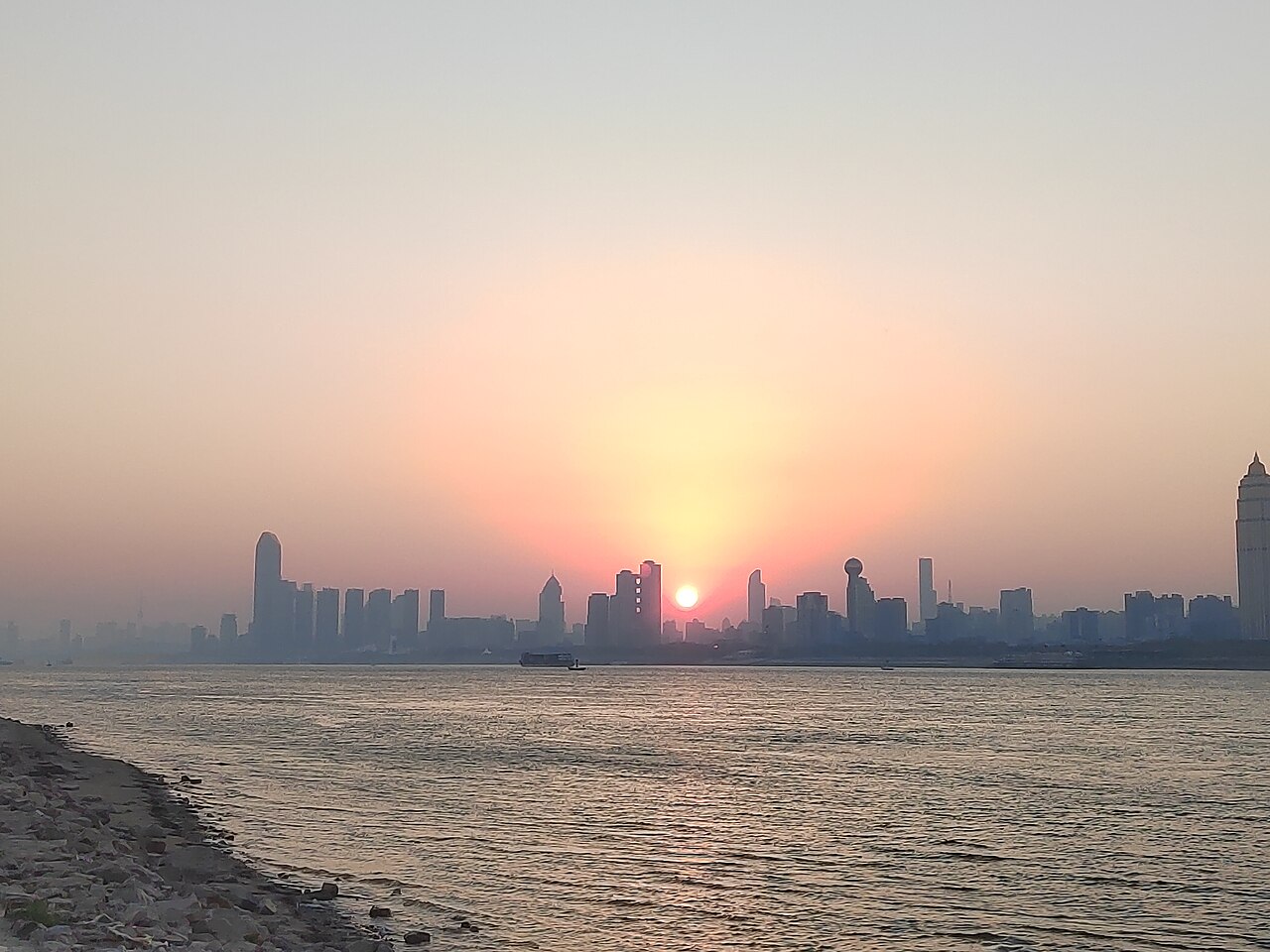
The confluence at Wuhan: Yangtze, Han, and water currents
Wuhan's relationship with water is rooted in the dramatic junction where the Han River, the largest tributary of the Yangtze, pours its discharge into the main river channel. This meeting point of two massive waterways physically cleaves the metropolis into three historic sectors: Wuchang on the southern bank, Hankou on the northern bank, and Hanyang. Right at the confluence sits a sharp headland known as the Tip of China, where the two waterways collide head-on. The two rivers do not immediately blend; instead, they clash along a crisp, visible boundary where two distinct shades run side by side down the middle of the riverbed.
From the Yellow Crane Tower to the Wuhan Yangtze Bridge
The river bluffs that rise above these currents carry centuries of military and literary heritage, beginning with Sun Quan ordering the construction of the Yellow Crane Tower on the Wuchang bank in 223 AD. Local tradition also links these sheer river cliffs along the Yangtze to the legendary clashes recounted in the Romance of the Three Kingdoms. About three kilometers from the crossing area, the ancient fortress of Tie'men Pass guarded the river bluffs from the Three Kingdoms era through the early Tang Dynasty, before shifting in 621 AD into a gateway for peaceful commerce. Spanning the river's width has challenged armies and engineers for generations. As far back as the Han Dynasty, military commanders assembled the first recorded floating pontoon bridge across the Yangtze, a feat repeated in 1853 when the Taiping army joined Qingchuan Pavilion to Wuchang with temporary floating barges.
The river proved its destructive power during the massive 1954 flood, the largest recorded on the river since 1865. Four kilometers from the race area, the double-deck Wuhan Yangtze River Bridge spans the river between Turtle Hill and Snake Hill, carrying road and rail lanes. {{h2:Hankou Customs and the 19th-century treaty port riverfront}} The riverfront at Hankou tells another chapter of the waterway's history, marked by the arrival of British naval vessels in December 1858 to enforce foreign commercial access. Following the treaties signed that year, Hankou became an official treaty port, leading to the creation of a foreign concession zone that stretched across more than thirty square kilometers of riverfront. To manage and survey the relentless maritime traffic, the Hankou Customs House was constructed on a plot of land that jutted directly into the Yangtze.
Hankou Riverside: floating promenades and illuminated Yangtze waters
Along the northern bank, the working riverfront has transformed into the massive Hankou Riverside, an urban waterfront park covering 1.6 million square meters. Its seven-kilometer shoreline connects natural reedbeds and musical fountains with historic Republican-era shipping piers that once handled commercial cargo. The park adapts to the changing river through a floating promenade built from decommissioned barges, rising and dropping with every shift in water level. Local residents embrace this movement, visiting the riverfront promenade throughout summer high waters as part of an enduring river culture. At daybreak, the riverside fills with groups practicing tai chi and morning dances along the paved promenades. By night, the shoreline shifts once again as the daily light show illuminates the Yangtze from early evening, projecting neon patterns and lasers across the river to turn the opposing Wuchang skyline into a glowing backdrop over the open water.
Sources: Wuhan
Course
Open water swim across the Yangtze River.
Awards
Awards presentation takes place on July 16th.
Previous editions
Since 1934
How to get there
Participants depart from New Zealand on July 12th and return after the event on July 17th.
Wuhan Yangtze River Crossing
Frequently asked questions
- When is Wuhan Yangtze River Crossing?
- Wuhan Yangtze River Crossing takes place on July 16, 2027.
- What distances does Wuhan Yangtze River Crossing offer?
- Wuhan Yangtze River Crossing has a single distance: 1.8 km.
- How much is the entry fee for Wuhan Yangtze River Crossing?
- The entry fee is 200 CNY.
- Where does Wuhan Yangtze River Crossing take place?
- Wuhan Yangtze River Crossing is a river swim. Location: Yangtze River, Wuhan, Hubei, China.
- How do I register for Wuhan Yangtze River Crossing?
- The reference page for registering for Wuhan Yangtze River Crossing is https://english.wuhan.gov.cn/.
Where to stay
Wuhan offers a diverse range of lodging near the Yangtze riverfront. Options include high-end international hotels with views of the river in the Hankou district and more modest boutique guesthouses located within converted heritage buildings. Camping is not standard in the dense urban core, but visitors can find comfortable modern apartments and business hotels. Prices range significantly, typically between $60 and $250 per night depending on proximity to the riverbanks and the level of service provided.
Things to do nearby
Beyond the water, the city provides access to significant historical and cultural activities. Visitors can explore the archaeological remains at the Panlongcheng site or climb the Yellow Crane Tower for an elevated view of the river's scale. The region is well-known for its culinary scene, particularly local river fish preparations and regional street food tours. For active recovery, the riverfront parks offer extensive walking paths that provide a unique perspective on the city's connection to the Yangtze and Han rivers.
Swimmers
Similar races


Comments
Transparency: some links on this page (stays, flights, experiences, gear) are affiliate links — if you book or buy through them, Omniathlon may earn a commission from the partner at no extra cost to you. As an Amazon Associate we earn from qualifying purchases.