
24 Hour Swim Relay
At a glance
- Where
- Sea · Aquatic Park, San Francisco, California, United States
- Entry fee
- 80 €
About the race
Sliding into the water reveals the true nature of Aquatic Park's round-the-clock relay. The 24 Hour Swim Relay is an open water team event held in the protected sea lagoon of Aquatic Park along the northern waterfront of San Francisco, California. Swimmers take to the salt water of San Francisco Bay to keep a steady rotation moving without interruption for a full day and night. The relay was founded in 2014 by Suzie Dods and is organized by Suzie Dods Swim Coaching alongside the Dolphin Club. Its endurance format draws inspiration from the legendary 24 Heures La Tuque two-person relay, which was sanctioned by the World Professional Marathon Swimming Federation back in the 1970s.
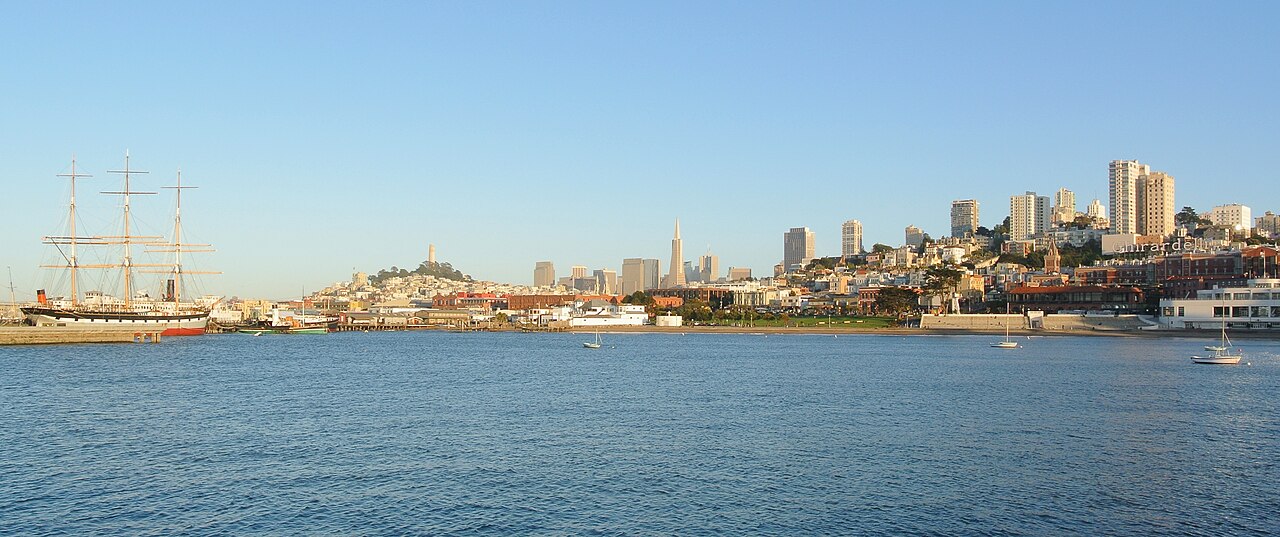
The mechanics of the relay demand relentless teamwork and strict timing. Each squad must ensure that at least one swimmer remains in the water at all times across the entire twenty-four hours. Swimmers trace an established loop of roughly 0.75 miles inside the lagoon, navigating past the flag, the goalpost, the harbor opening, and back toward the sand. As each swimmer finishes their circuit and approaches the shallows, the next teammate waits directly on the beach, ready to plunge into the surf. Hand-offs happen without pause, requiring swimmers to make a clear verbal tag to the dock crew before stepping out of the tide. Swimmers return to the water lap after lap, confronting the dark hours of midnight and early dawn.
The atmosphere carries an eccentric, weirdly fun spirit, where participants often strap bright rubber dolphins to their swim caps to lighten the mood. The physical demands are genuine, with San Francisco Bay winter water temperatures averaging around 51 degrees Fahrenheit (10.5 degrees Celsius). Swimmers prepare carefully by undergoing cold water acclimation or choosing to wear wetsuits during their shifts. The grinding accumulation of cold and exhaustion can fray tempers and make teammates wonder why they ever signed up, yet the collective rhythm of the dock and the humor on the beach keep everyone swimming forward.
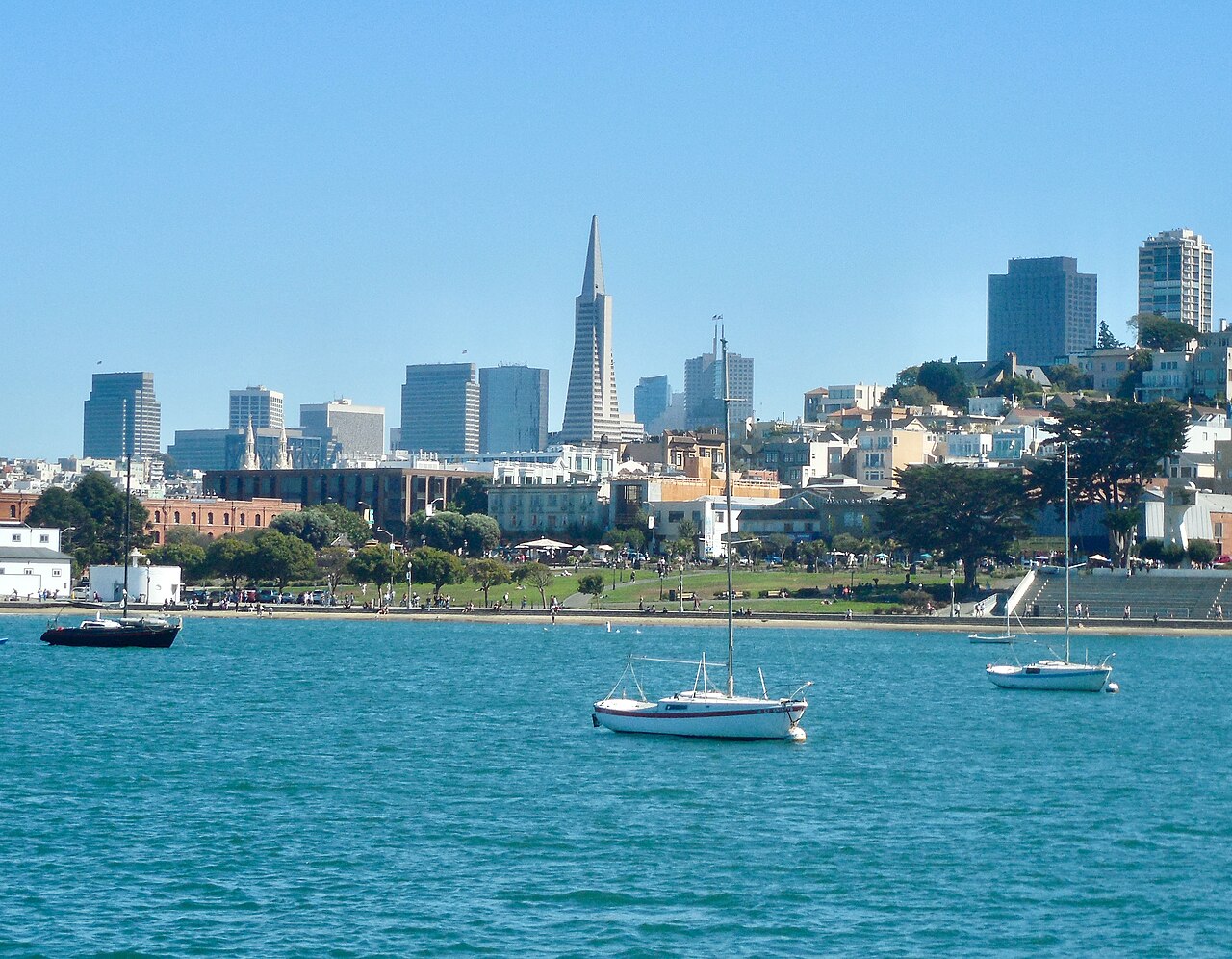
Aquatic Park: the sheltered waters and historic bathhouse
The race unfolds inside Aquatic Park, a man-made cove carved out of San Francisco Bay that serves as the heart of Northern California open water swimming. This enclosed lagoon is a designated haven for both everyday training and long-distance ocean preparation. Swimmers entering the gentle surf look back upon a storied shoreline anchored by the Dolphin Club and the South End Rowing Club. The striking Maritime Museum building is an architectural centerpiece erected in 1939 originally as a public bathhouse for beachgoers. A short walk from the sand stands the visitor center of the San Francisco Maritime National Historical Park, housed inside a brick waterfront warehouse dating to 1909. Between relay legs, standing by these maritime relics offers a profound sense of the waters you are stroking through.
Hyde Street Pier: the historic fleet of San Francisco
Less than one kilometer from the swimmers' beach lies the Hyde Street Pier. Long before the Golden Gate Bridge or the Bay Bridge linked the headlands, this bustling wooden pier operated as the primary automobile ferry terminal for San Francisco. The Southern Pacific-Golden Gate Ferries took over ferry operations at the pier in May 1929. Today, the pier forms an integral part of the national park, serving as the permanent floating home to an exceptional fleet of historic working vessels. Dominating the slips is the 1886 square-rigged sailing ship Balclutha. Beside her floats the 1895 C.A. Thayer, built across the narrows of Humboldt Bay in Northern California to haul timber from Grays Harbor to San Francisco.
The hardy wooden schooner later ventured as far as Hawaii and Fiji, spent summers in the Alaskan salmon fishery, carried fir and redwood to Australia during World War I, and ended her commercial career chasing cod into the Bering Sea. The pier celebrated modern seafaring when the voyaging canoe Hōkūleʻa moored here during its Pacific circumnavigation. Moored nearby is the steam tugboat Hercules, launched in 1907 and sailed all the way from New Jersey around South America via the Straits of Magellan. Heavy ocean tugs were essential for towing timber schooners like the C.A. Thayer northward through the stubborn northwest winds of the Pacific coast. Over her long career, the Hercules towed massive log rafts down to Southern California, transported heavy equipment during the construction of the Panama Canal, and towed the battleship USS California from Mare Island.
Also tied to the docks is the 1890 ferryboat Eureka, the largest wooden ship still afloat anywhere on Earth. Stretching 277 feet with a round-bottomed hull, she transported troops during World War II and remains the only floating vessel preserved with a walking beam engine. The pier fleet also safeguards the 1891 scow schooner Alma, built at Hunters Point in San Francisco to haul hay and lumber across the shallows of the Sacramento and San Joaquin River Delta. Fitted with an engine in 1926 to dredge oysters, she is the sole surviving scow schooner still floating in the United States. Further down the dock rests the Eppleton Hall, a 1914 paddle tug built to tow colliers along England's Rivers Wear and Tyne that journeyed across the sea to San Francisco in 1969.
The Wave Organ: carved stone and bay acoustics
Extending from the Golden Gate Yacht Club, the Wave Organ sits exposed to the bay's natural rhythm. Visitors and tired swimmers can sit directly on the smooth, weathered masonry, surrounded by the open waters of the bay. Woven through the stonework are twenty-five PVC acoustic pipes that extend deep down into the water. As the swells roll against the jetty, trapped air and shifting water within the pipes create resonant, bubbling musical sounds. The acoustic performance changes with every shift in the tide, delivering its richest and most melodious notes when the water rises toward high tide. Sitting by the pipes provides a serene conclusion to one of the most distinctive open-water challenges on the Pacific coast.
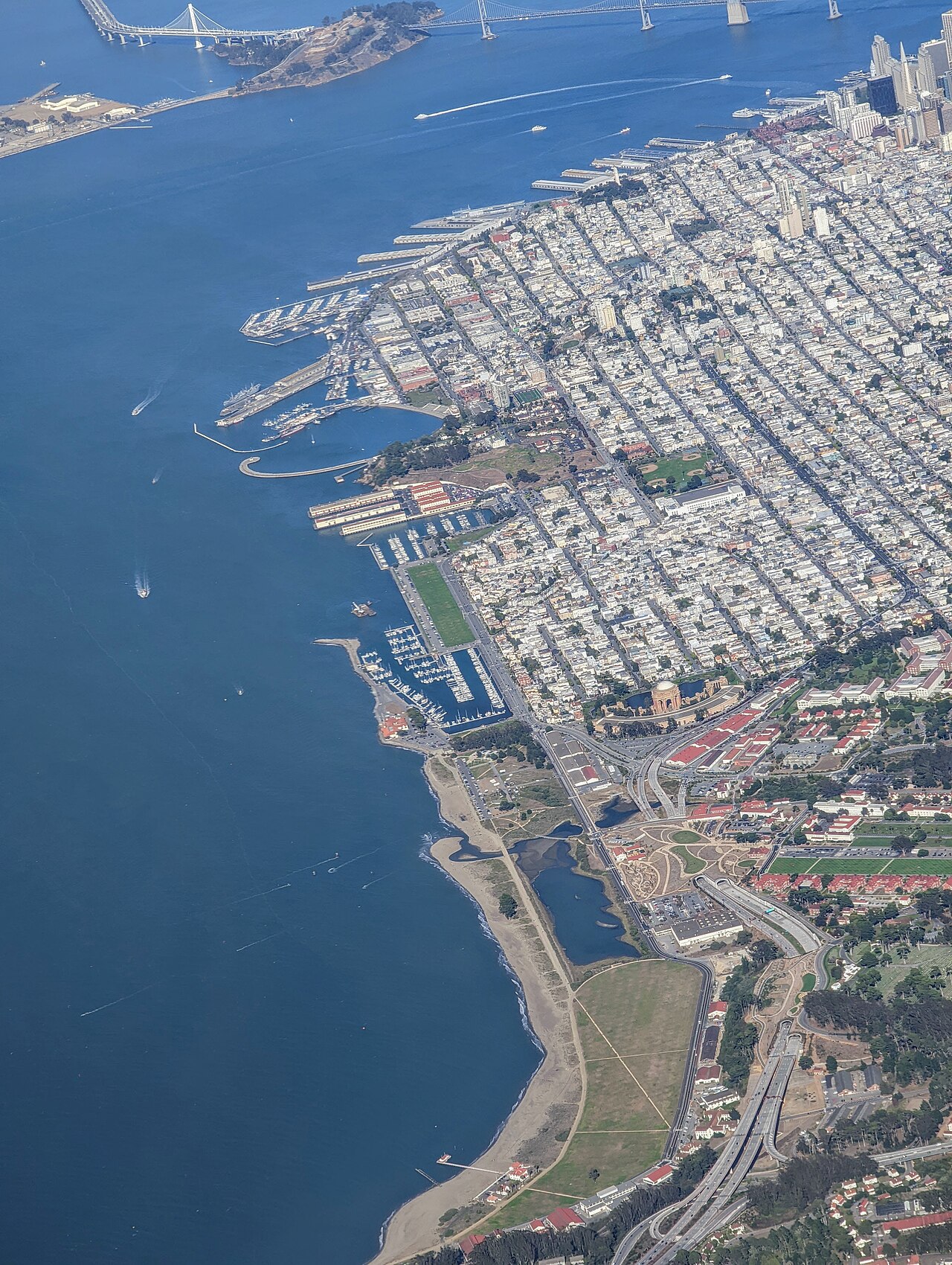
Course
Continuous relay in Aquatic Park, San Francisco.
Awards
Chance to win a pair of Snake & Pig goggles.
Aid stations
A meal and snacks are included for participants.
How to get there
SFO Airport (25km) or OAK (30km). Nearest BART station: Embarcadero, then bus or ride-sharing. For the venue (Aquatic Park), driving is discouraged due to limited parking; use public garages at Fisherman's Wharf or public transport (Muni F-Line). Within walking distance from most of the waterfront.
24 Hour Swim Relay
Frequently asked questions
- How much is the entry fee for 24 Hour Swim Relay?
- The entry fee is 80 €.
- Where does 24 Hour Swim Relay take place?
- 24 Hour Swim Relay is a sea swim. Location: Aquatic Park, San Francisco, California, United States.
Where to stay
The area surrounding Aquatic Park and Fisherman’s Wharf features historic boutique hotels housed in refurbished warehouses, typically ranging from $250 to $450 per night. For a more traditional experience, small inns near the marina offer direct access to the waterfront. Budget-conscious participants often look toward the northern districts or utilize established camping facilities located just across the Golden Gate Bridge, where site fees fluctuate between $40 and $80 depending on the season and amenities provided.
Things to do nearby
Visitors often prioritize guided kayak expeditions to explore the tidal marshes, providing a unique vantage point of the bay's complex ecosystem. Weekend schedules frequently include historical walking tours of the decommissioned maritime fortifications or local sourdough and seafood tastings at the historic wharf. For those seeking active recovery, the coastal trails along the Presidio offer extensive hiking paths with unobstructed views of the bridge, balancing the intensity of the relay with the rugged terrain of the Northern California coastline.
Swimmers
What to see around
1. Alcatraz Island (historical tour), 2. Golden Gate Bridge (cycling/running), 3. Pier 39 and Fisherman's Wharf, 4. Presidio of San Francisco (coastal trails), 5. Legion of Honor museums.
Similar races


Comments
Transparency: some links on this page (stays, flights, experiences, gear) are affiliate links — if you book or buy through them, Omniathlon may earn a commission from the partner at no extra cost to you. As an Amazon Associate we earn from qualifying purchases.