
358 Swim
- Distances from 500m to 5km
At a glance
- Distances
- 500 m · 1 km · 2.5 km · 5 km
- Where
- Sea · Pico de Loro Cove, Nasugbu, Batangas, Philippines
- Entry fee
- 500 m: 4500 PHP · 1 km: 4500 PHP · 2.5 km: 5500 PHP · 5 km: 6000 PHP
About the race
Pico de Loro Cove welcomes swimmers into the tranquil, transparent waters of a protected bay facing the South China Sea. 358 Swim is an open water swimming race held in the sheltered waters of Pico de Loro Cove, within the coastal municipality of Nasugbu in the Philippines. It offers an ideal setting where swimmers can focus entirely on stroke rhythm and pacing without battling relentless ocean swells. The cove is formally designated as a Marine Protected Area, a conservation status that keeps its waters calm, shallow, and remarkably clear throughout the swimming zone. Swimmers eager for open water challenges can also look to events like H2OMAN Openwater Pico de Loro. Organized by Gold Sports Management Solutions Inc., the event features four distinct course distances: a 500-meter sprint, a 1,000-meter course, a mid-distance 2,500-meter test, and an endurance 5,000-meter route mapped inside the cove. The circuit guides competitors across crystalline expanses, where navigation markers stand out sharply against the cove.
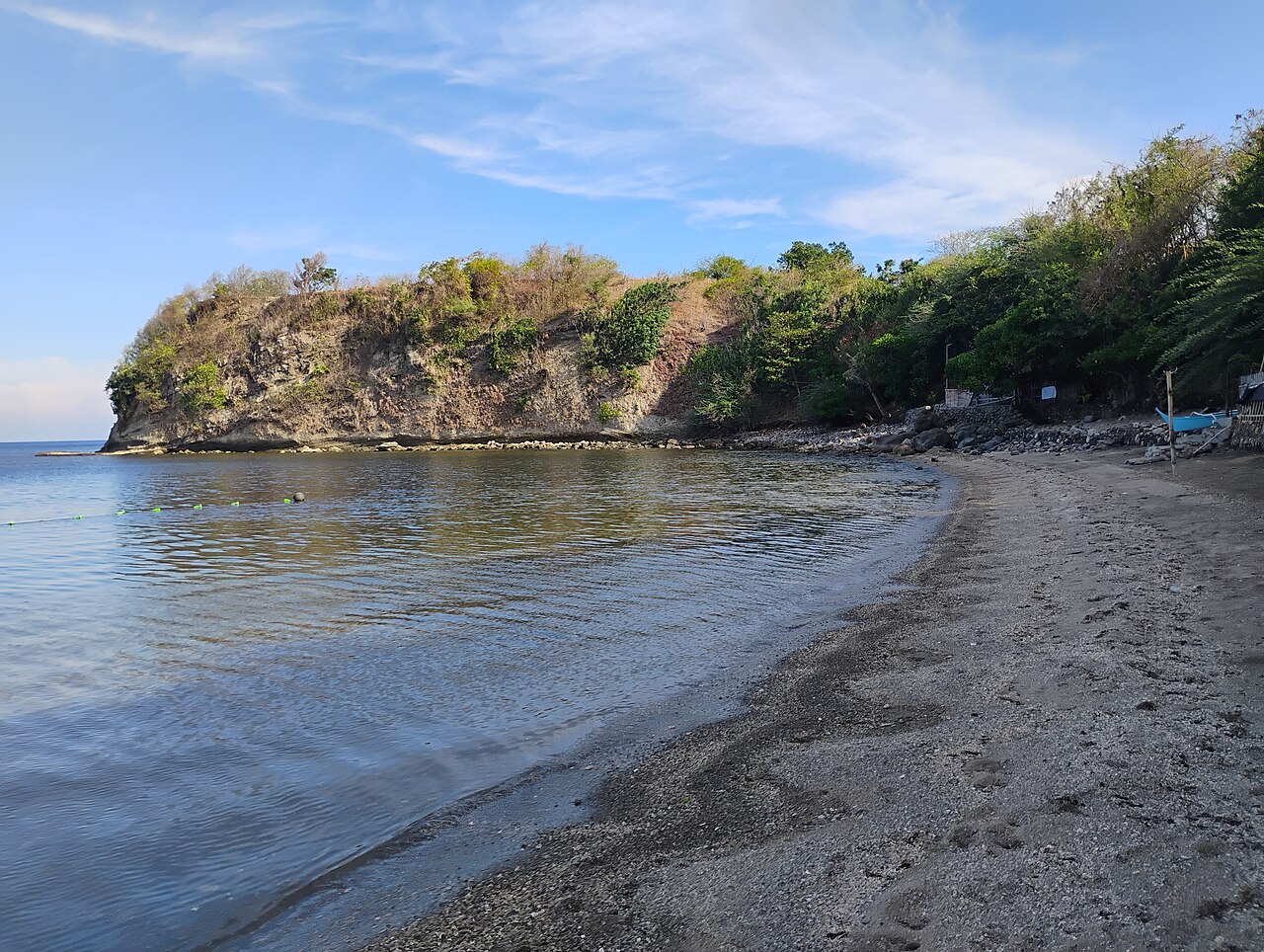
An earlier 358 race at Pico de Loro Cove: the Hamilo edition of 2011
The 2nd Hamilo 358 Open Water Swimming Race, an earlier 358 race, was held at Pico de Loro Beach and Country Club in Hamilo Coast, Nasugbu, Batangas, on 5 November 2011. The 3 km race was an out-and-back swim of 1.5 km out and 1.5 km back, along a straight line within Pico de Loro Cove. The 5 km race was also out and back, with 2.5 km out and 2.5 km back, on a straight line that curved slightly to the next cove on the right until the 2.5 km marker, where swimmers turned around. The 8 km race was the 5 km route followed by the 3 km route, with a short beach run after the first 5 km before swimmers returned to the water for the last 3 km. Wetsuits and speed suits were allowed, as were fins and snorkels, except for swimmers going for the top-three male and female awards. Water and energy drinks were available at floating aid stations, and swimmers were asked to return used bottles and gel wrappers to the boats.
The coast of Nasugbu: sloping terrain and wartime beachheads
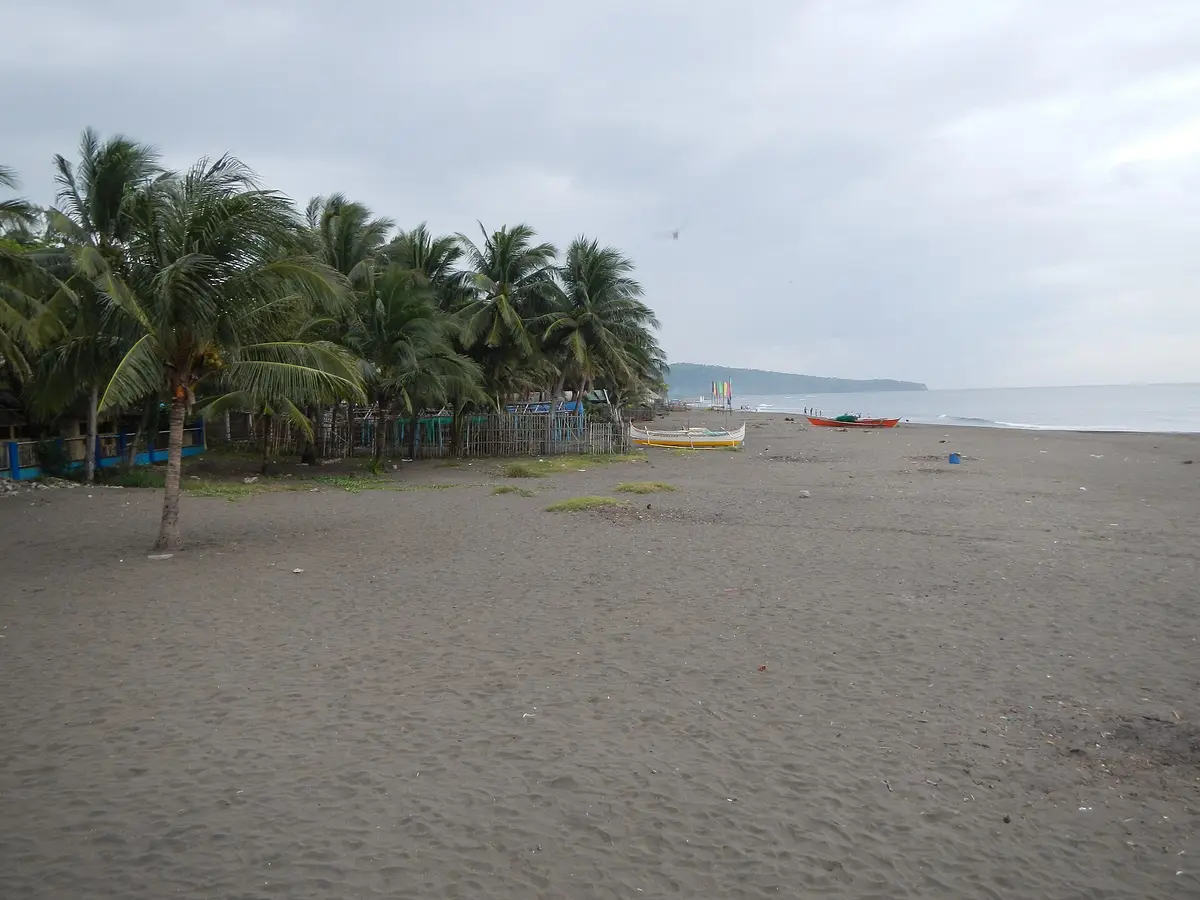
Beyond the sheltered waters of Pico de Loro Cove, the municipality of Nasugbu is bordered entirely to the west by the South China Sea. The topography of the municipality slopes downward toward the South China Sea, creating an undulating landscape where mountain greenery rolls down to meet the tide. Due to this extended coastal position, aquaculture developed as one of the primary industries sustaining the local community in Nasugbu. Life along this shoreline has always adapted to the movements of water. This stretch of coastline played a crucial role in modern Pacific naval history. On January 31, 1945, American armed forces executed an amphibious landing directly onto the beaches of Nasugbu. Today, the peaceful shoreline carries little reminder of wartime operations, welcoming traveling athletes to its sandy shores.
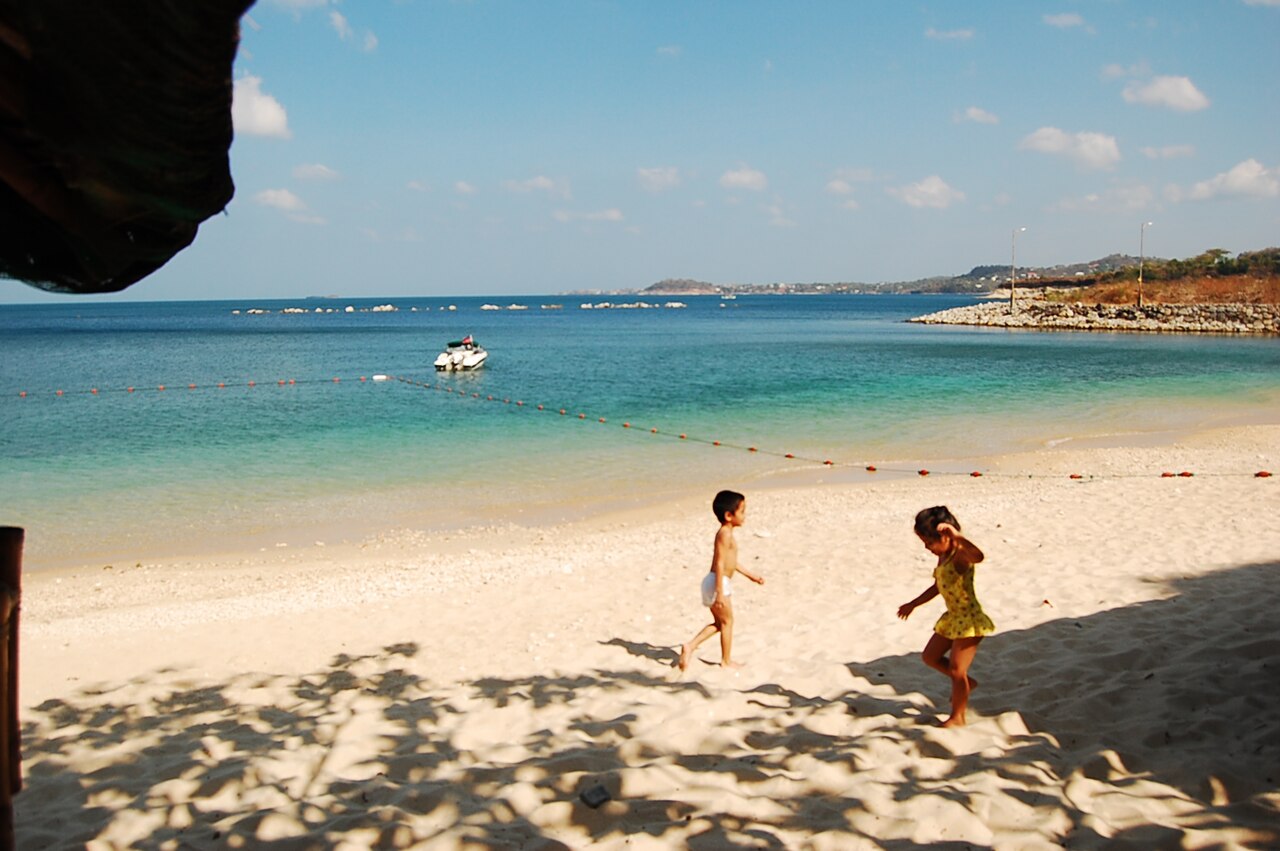
Punta Fuego: rocky headland of the Spanish galleon battle
The maritime landscape is defined by Punta Fuego, a rocky headland that extends 2.9 kilometres out into the South China Sea. The promontory rises to moderate heights above the waterline, with an islet situated just off its northern flank. Extending southeast from the point lie two additional islets connected by a reef, marked by a dramatic pinnacle rock that becomes awash at low water. These waters witnessed dramatic naval encounters during the Age of Discovery. In 1600, the Battle of San Diego was fought off Punta Fuego between Spanish colonial defenders and Dutch warships.
Fortune Island: the sunken galleon and deepwater marine reserve
Approximately 14 kilometres off the coast of Nasugbu lies Fortune Island, an offshore outpost officially established as a marine reserve in 1978. The historic confrontation between the Spanish galleon San Diego and the Dutch warship Mauritius culminated near this island on December 14, 1600, under intense meteorological conditions. That fateful duel took place amidst strong winds and heavy seas, and the San Diego foundered and sank beneath the waves. Such ocean conditions illustrate the dynamic nature of open water environments. The sea state describes the overall condition of the water surface regarding wind waves and swell at any given time and place. These conditions are never static and can shift significantly over short periods of time.
When gales accelerate through narrow mountain gaps, they reach high velocities that produce turbulent, erratic conditions. Over open expanses, strong winds drive the vertical mixing of ocean layers, churning up cooler, nutrient-rich water from the deep to replenish the surface. Centuries after the battle, underwater archaeologist Franck Goddio discovered the sunken San Diego in 1992, resting at a depth of roughly 50 meters near Fortune Island. On the seabed, the wreck site presented itself as a sand-covered hill measuring 25 meters long, 8 meters wide, and 3 meters high.
The subsequent archaeological excavation yielded over 34,000 artifacts, including bronze naval cannons, Japanese swords, and sophisticated navigational instruments. Divers even salvaged an intact block of hardened resin, originally stored aboard to caulk and waterproof the wooden vessel. A shipwreck is formally defined as the remains of any vessel that has run aground on land or sunk to the bed of a body of water.
Pico Beach: lagoon life and open views at sunset
Back on dry land inside Pico de Loro Cove, resort residences are arranged around a tranquil man-made lake. A scenic hanging pedestrian bridge spans the water, connecting the lakeside paths to a small islet that serves as an attractive vantage point for photos. As evening falls, the buildings illuminate the resort grounds, casting bright reflections across the quiet surface of the lake. For swimmers completing their laps in the bay, the shore facilities feature a multi-level pool complex equipped with an infinity lap pool, a lounge pool, a dedicated kiddie pool, and a relaxing jacuzzi. These amenities provide an ideal environment for post-race warm-downs and muscle recovery right next to the beach. When the competition concludes, athletes can walk over to the left side of Pico Beach for the finest sunset views on the coast.
Sources: Nasugbu · Punta Fuego
Course
One-loop course.
One-loop course that takes you past the stunning and exclusive Santelmo Beach at Pico De Loro.
Awards
All finishers will receive a medal, and top performers in each category will be awarded special prizes.
Aid stations
Water stations stationed along the course.
How to get there
Travel time from Manila to Hamilo Coast is 2.5-3 hours.
358 Swim
Frequently asked questions
- What distances does 358 Swim offer?
- 358 Swim offers 500 m, 1 km, 2.5 km, and 5 km.
- How much is the entry fee for 358 Swim?
- Entry fees by distance: 500 m: 4500 PHP · 1 km: 4500 PHP · 2.5 km: 5500 PHP · 5 km: 6000 PHP.
- Where does 358 Swim take place?
- 358 Swim is a sea swim. Location: Pico de Loro Cove, Nasugbu, Batangas, Philippines.
Where to stay
Accommodations in the area range from secluded luxury boutique hotels overlooking the Hamilo Coast to more accessible beachfront resorts and apartment-style lodgings. Visitors often find mid-range options starting at $80-$120 per night, while high-end coastal properties can exceed $250 per night depending on the season. Many participants choose to stay in nearby town-center guesthouses to remain close to the local market and community transport hubs before heading to the swim venue.
Things to do nearby
The weekend is often spent exploring the coastal geography through sea kayaking or paddleboarding around the rocky reefs of the headland. Inland, visitors frequent the public market to sample the regional rice cake varieties. For those interested in the local geography, trekking trails offer vantage points over the coastline where the historical naval battles took place. The region also provides access to small, quiet coves reachable only by boat, ideal for post-race recovery and snorkeling in the shallow protected waters.
Swimmers
What to see around
1. Mount Pico de Loro: scenic trekking with views of the bay. 2. Fortune Island: boat excursion for snorkeling and Greek ruins. 3. Hamilo Coast: marine protected area ideal for kayaking. 4. Wawa Beach: post-race relaxation. 5. Caleruega Church: evocative architecture surrounded by greenery a short distance away.
Similar races


Comments
Transparency: some links on this page (stays, flights, experiences, gear) are affiliate links — if you book or buy through them, Omniathlon may earn a commission from the partner at no extra cost to you. As an Amazon Associate we earn from qualifying purchases.