
Circuito MASF 2026 — Praia do Flamengo
- May 17, 2026
- Last edition date
At a glance
- Last edition date
- May 17, 2026
- Where
- Sea · Praia do Flamengo, Rio de Janeiro, Brazil
- Registration
- inscricaomasf.com
About the race
Framed between the promontories of Outeiro da Glória and Morro da Viúva, Praia do Flamengo opens directly onto the protected inner waters of Guanabara Bay. This urban sea shoreline in Rio de Janeiro, Brazil, serves as the home of Circuito MASF, organized by Maratona Aquática Sem Fronteiras. Founded in 2014, the circuit was established to connect swimming technique and athletic sport with a clear community purpose in open water. Held in May, the race offers courses over 500 meters, 1,250 meters, and 2,500 meters in the calm seawater of the inlet. Swimmers can establish a steady, relaxed stroke.
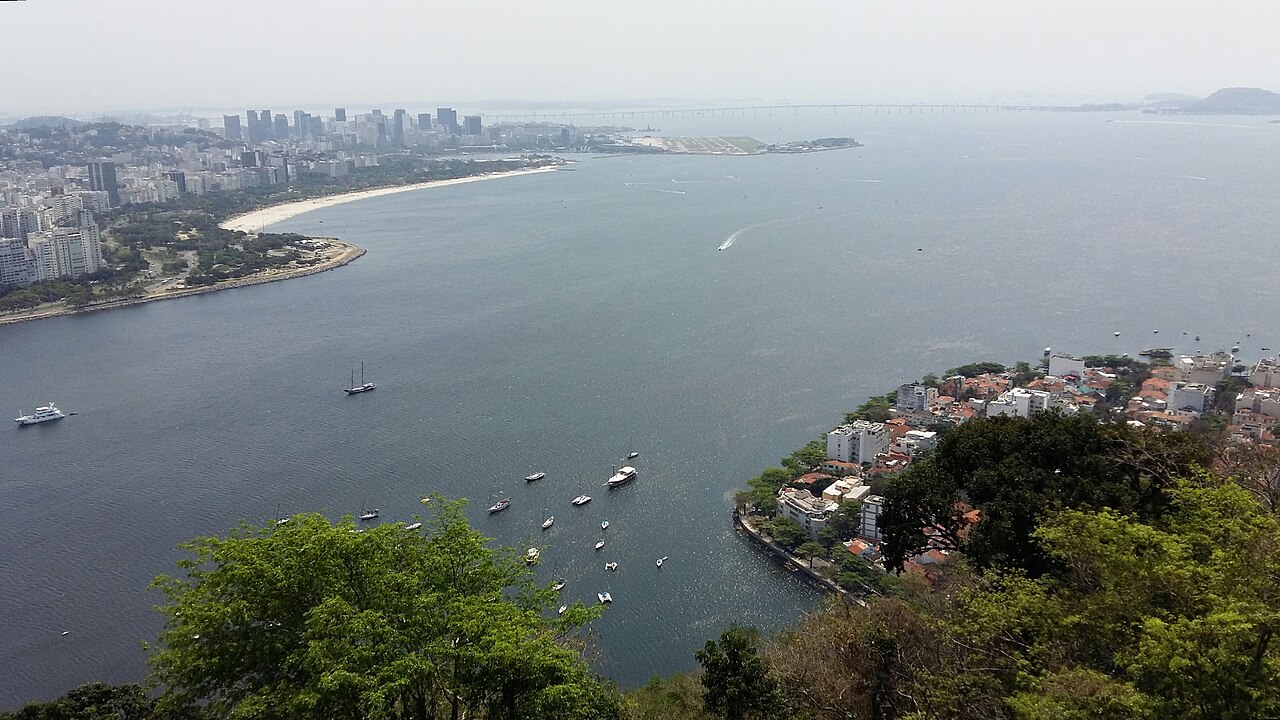
Guanabara Bay: environmental recovery and morning open-water swimming
European navigators first sailed into Guanabara Bay on January 1, 1502, exploring a rare stretch of Brazil's Atlantic coastline where the shore turns to face south. Guarding the natural entrance to the bay stands the granite monolith of Sugarloaf Mountain. For decades, the bay wrestled with heavy pollution caused by domestic and industrial sewage, oils, and heavy metals that accumulated across its inner basin. In recent years, Praia do Flamengo has undergone remarkable environmental recovery, shaking off its polluted past to emerge as a vibrant hub for the city's aquatic community. The bay now welcomes racers into clean, restored sea waters backed by a thriving local swimming culture.
Ilha de Villegagnon: sixteenth-century fortresses and colonial naval raids
Ilha de Villegagnon was originally named Serigipe by indigenous tribes and Ilha das Palmeiras by Portuguese explorers. In 1555, French admiral Nicolas Durand de Villegagnon invaded the island and established Fort Coligny to claim a foothold in Guanabara Bay. Portuguese forces commanded by Mem de Sá stormed the island on March 15, 1560, forcing the French garrison to abandon the stronghold two days later, after which the victors celebrated their first mass on the site. In 1733, Governor Gomes Freire de Andrade leveled the island's central hill to construct the Fortaleza de São Francisco Xavier. About 3 km from the race area, in August 1710, a French squadron led by Jean-François Duclerc attempted an assault on colonial Rio de Janeiro, ending in defeat and the capture of over six hundred men.
The following year, on September 12, 1711, French commander René Duguay-Trouin forced his fleet directly into the bay during the Battle of Rio de Janeiro, weathering cannon fire from harbor forts that inflicted 300 casualties before passing beyond their reach. During the fierce engagement inside the harbor, three Portuguese warships were run aground and scuttled by their own crews to avoid capture, while a fourth ship was seized and burned by the invaders. Duguay-Trouin ultimately sailed away with four million pounds in plunder, though a violent Atlantic storm off the Azores sank two of his ships, taking a vast hoard of treasure down with them.
Ilha Fiscal: the neo-Gothic island inside Rio harbor
About four kilometres from the race area rises Ilha Fiscal, an islet originally known to the Portuguese as Ilha dos Ratos. Before building its distinctive customs palace, engineers enlarged the island from 4,400 square meters to 7,000 square meters using land reclamation. The stone masonry was chiseled from crystalline gneiss quarried at Morro do Pasmado, while the interior customs office was fitted with a marquetry floor composed of fourteen native Brazilian woods. During the 1893 Naval Revolt, the fortress sustained artillery bombardments that shattered its stained glass, pierced its walls, and brought down iron spires. In 1930, workers poured a concrete jetty that permanently tied Ilha Fiscal to neighboring Ilha das Cobras into a single landmass. Marina da Glória is located in Rio's Glória district. This protected nautical harbor served as the sailing venue for the 2016 Olympic and Paralympic Games.
Aterro do Flamengo: Burle Marx gardens and coastal promenades
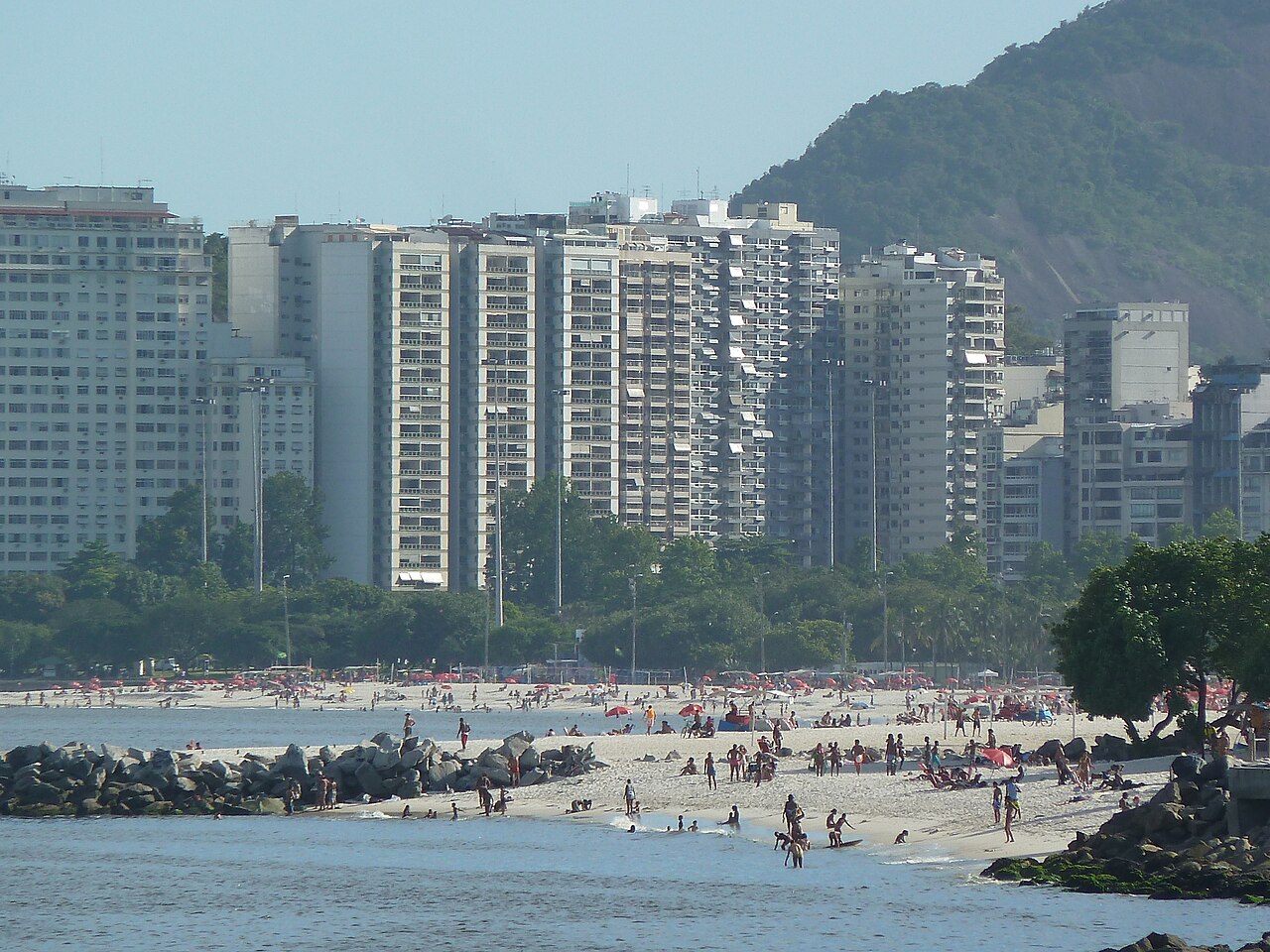
From the water, the vista opens into an unbroken panorama of Guanabara Bay, with the sheer peak of Sugarloaf Mountain framing the entire southern horizon. The sand connects directly to Aterro do Flamengo, an expansive urban park featuring landscaped gardens, bicycle tracks, open sports areas, and museums. The parkland was designed by renowned landscape architect Roberto Burle Marx, who filled the coastal grounds with native plant species that attract abundant wild birds along the water. Behind the trees stands a historic 1920s apartment building by French architect Joseph Gire, sporting elegant Parisian mansard roofs. Because Flamengo is far less crowded than the open-ocean shores of Copacabana or Ipanema, the beach maintains a peaceful, neighborhood feel suited for relaxed sunbathing and outdoor training.
On Sundays and holidays, the multi-lane avenues of the Aterro are closed to traffic, transforming the beachfront into a vast open boulevard for cyclists, runners, and walkers. After finishing your swim, you can walk straight off the sand to the shoreline kiosks for fresh coconut water or a cold beer. Sitting in the shade of Burle Marx's gardens as the salt dries on your shoulders, you can watch the morning light illuminate Sugarloaf across the calm waters of the bay.
Sources: Aterro do Flamengo · Rio de Janeiro · Marina da Glória
Course
Previous editions
Since 2014
How to get there
Circuito MASF 2026 — Praia do Flamengo
Frequently asked questions
- When was the last edition of Circuito MASF 2026 — Praia do Flamengo?
- The last edition of Circuito MASF 2026 — Praia do Flamengo took place on May 17, 2026.
- Where does Circuito MASF 2026 — Praia do Flamengo take place?
- Circuito MASF 2026 — Praia do Flamengo is a sea swim. Location: Praia do Flamengo, Rio de Janeiro, Brazil.
- How do I register for Circuito MASF 2026 — Praia do Flamengo?
- The reference page for registering for Circuito MASF 2026 — Praia do Flamengo is https://www.inscricaomasf.com/.
Where to stay
Accommodations around Praia do Flamengo range from traditional boutique hotels housed in restored colonial-era buildings to efficient short-term apartment rentals overlooking the Aterro park. Expect a price range of $80–$150 USD per night depending on proximity to the water. For a more authentic feel, many athletes prefer the guesthouses located in the nearby Catete and Glória neighborhoods, which offer convenient access to the race site and local transport links.
Things to do nearby
The weekend at Flamengo is best complemented by exploring the cultural history of the area. Visitors often spend time wandering the colonial streets of the Santa Teresa neighborhood or visiting the museums housed in former grand mansions along the park. For active recovery, renting a kayak or SUP at the nearby marina offers a peaceful way to observe the bay's geography, while the extensive cycling paths of the Aterro do Flamengo provide perfect routes for a post-race stretch.
Swimmers
Other races by this organiser
- Circuito MASF — Colégio Naval (Angra dos Reis)Angra dos Reis, BR
- Maratona Aquática Sem Fronteiras - Praia VermelhaRio de Janeiro, BR
Similar races


Comments
Transparency: some links on this page (stays, flights, experiences, gear) are affiliate links — if you book or buy through them, Omniathlon may earn a commission from the partner at no extra cost to you. As an Amazon Associate we earn from qualifying purchases.