
Lighthouse To Big Bay Swim
At a glance
- Where
- Sea · Big Bay, Cape Town, Western Cape, South Africa
- Entry fee
- 200 €
- Wetsuit
- Follows CLDSA (Cape Long Distance Swimming Association) rules.
- Registration
- bigbayevents.co.za
About the race
A line of ten and a half kilometres of open ocean stretches northward from the base of Milnerton Lighthouse to the sands of Big Bay, pushed along by a steady Atlantic current. This is the Lighthouse To Big Bay Swim, an extreme open water ocean crossing organized along the Western Cape coastline of South Africa by Big Bay Events. Swimmers step into the surf facing a sweeping coastal route where the prevailing drift aids progression, making this ambitious passage an unforgettable open water undertaking. The course was pioneered as an official 10.5-kilometre event by Derrick Frazer, charting a direct line through the Atlantic swells between Milnerton and the beach at Big Bay.
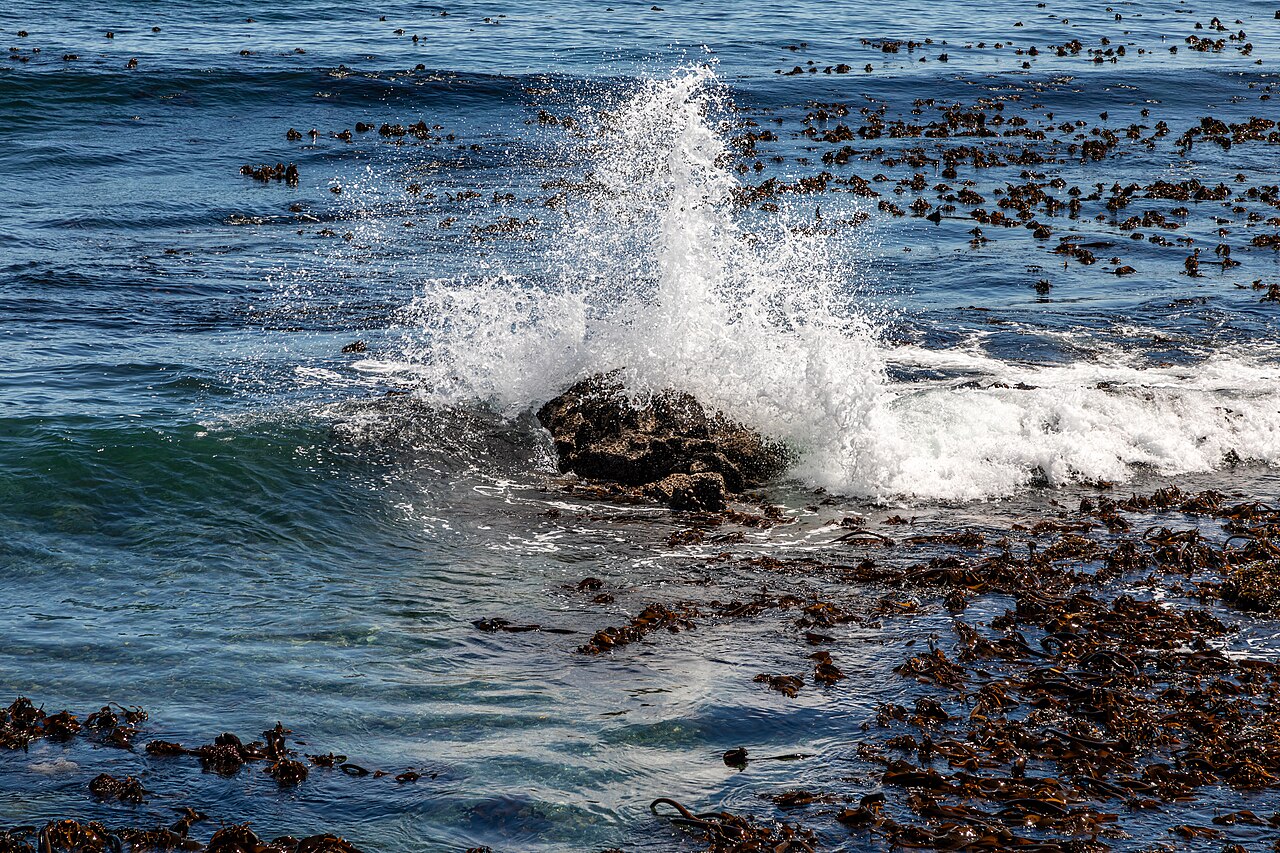
The route follows the prevailing north-setting current, yet it demands genuine endurance due to the cold Atlantic temperatures that characterize this dramatic stretch of coast. To take advantage of favorable seasonal patterns, the event is scheduled during the southern hemisphere summer months of November, December, and January, and it also features a relay option that allows less experienced swimmers to tackle the distance together. Safety and companionship define the passage through these exposed waters. Entry is strictly limited to eight swimmers per event, ensuring focused logistical support and uncompromised safety out at sea. Swimmers must abide by Cape Long Distance Swimming Association (CLDSA) rules, wear the official swim cap for the entire journey, and solo entrants must be at least 15 years old. When swimmers share a support boat, they are required to stay within five metres of each other, swimming shoulder to shoulder through the rolling swell.
Big Bay: cold Benguela water and the local swim tradition
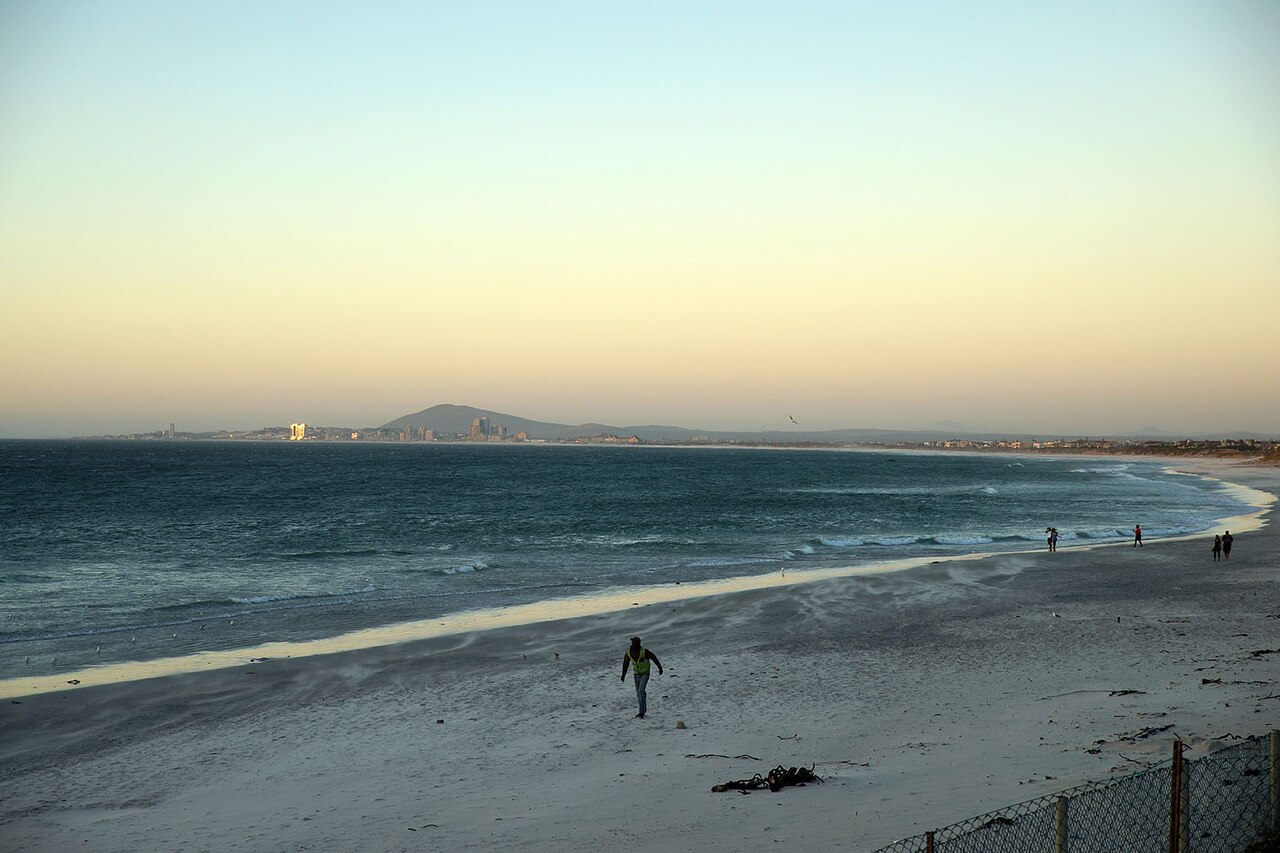
Bloubergstrand is a seaside suburb of Cape Town on the shores of Table Bay, 15 kilometres due north of the city centre. Bloubergstrand has a long white sand beach on the Atlantic Ocean, with a few rocky outcrops where black mussels are found, and its water is cold because of the Benguela current. Around the Rocks, one of the Big Bay Events swims, is described as the oldest organized ocean swim in Cape Town. The swim around the Big Bay rock islands is about 2,500 metres, and Big Bay Events gives its average water temperature as between 12 and 15 degrees. Between 2012 and 2020 the Lighthouse Swim ran annually between Milnerton Lighthouse and Big Bay, with support from the local lifeguards. Swimmers looking for longer challenges use the Lighthouse Swim route as a step between a Robben Island crossing and a planned double Robben Island crossing.
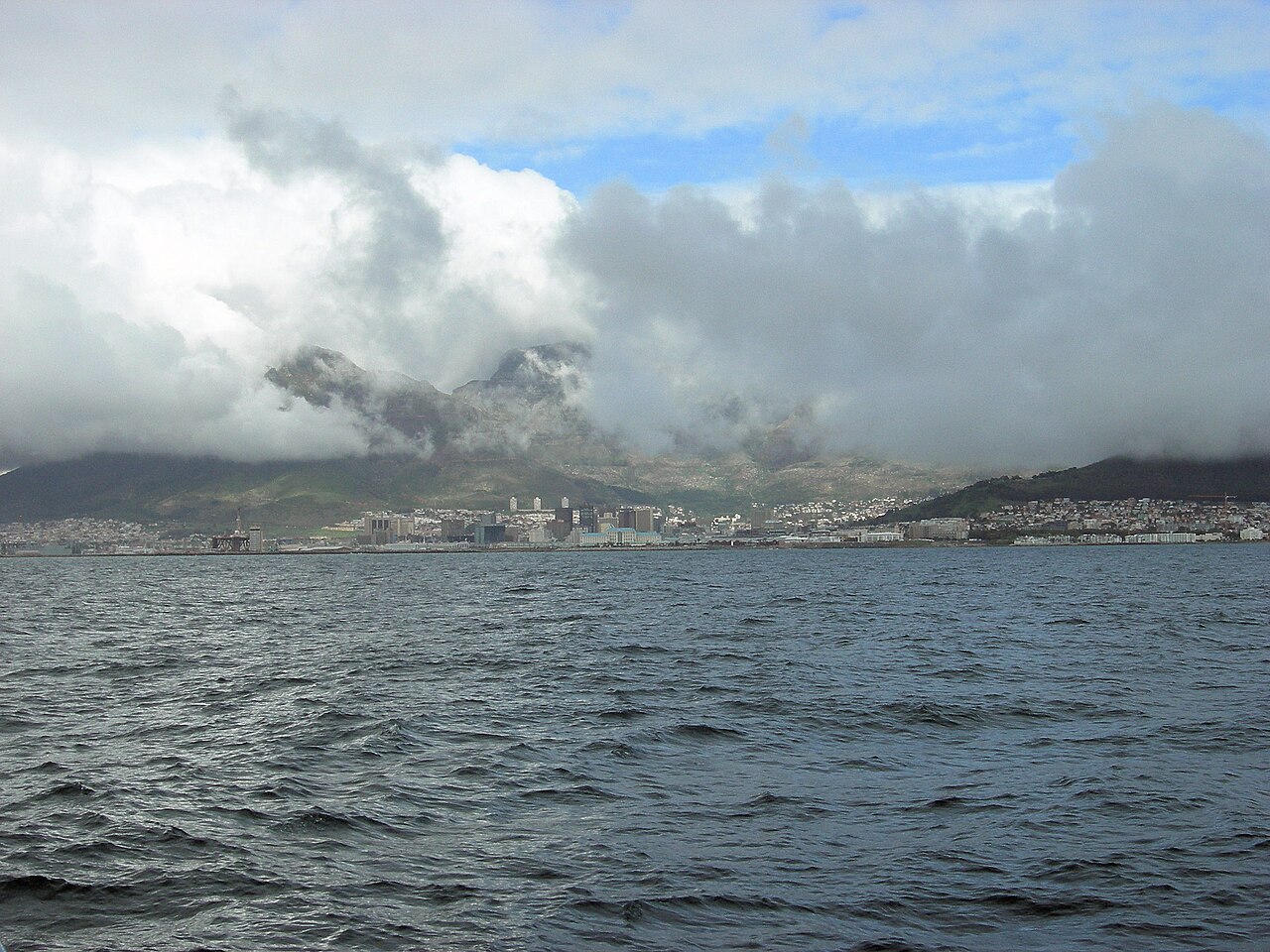
Table Bay: Atlantic currents, deep swells, and winter storms
The course cuts across the outer edge of Table Bay, a marine expanse covering approximately 100 square kilometres that drops to a depth of 35 metres at the centre of its entrance. Anchoring the western horizon of the bay lies Robben Island, a landmass underlain geologically by the ancient sedimentary rock of the Tygerberg Formation. Table Bay has long been exposed to fierce northwesterly storm waves. During the seventeenth and eighteenth centuries, powerful gale-force swells frequently drove wooden sailing vessels onto the shoals, and dangerous winter storms earned these waters a fearsome reputation among mariners. The perils of the bay reached a dramatic peak in 1858, when a single violent winter gale wrecked thirty ships along the shore with catastrophic loss of life.
That catastrophe triggered a historic turning point for maritime engineering along this coast. Following the 1858 disaster, Lloyd's of London took the unprecedented step of refusing to insure ships anchoring in Table Bay during the dangerous winter season. In response, the British colonial government initiated the construction of the harbour's first breakwater in 1860.
From Salt River to the Castle of Good Hope
The human story of this shoreline stretches back to the earliest European voyages around the Cape. Portuguese navigator António de Saldanha was the first European to cast anchor in Table Bay in 1503, opening the waters to subsequent passing fleets. Seven years later, in late February 1510, a Portuguese fleet dropped anchor here to replenish its fresh water casks, leading to the historic Battle of Salt River about six kilometres from the swim area. When the flagship's master relocated the landing boats to another watering point along the beach, the retreat was cut off, and viceroy Francisco de Almeida was killed on the sand and buried on the shore that afternoon.
By 1652, the Dutch East India Company established a permanent revictualing station on the bay, founding a settlement designed to supply trading ships navigating the treacherous passage around southern Africa. To secure the anchorage, fortifications like the Kyckuit and Duijnhoop redoubts were thrown up at the mouth of the Salt River in 1654. Soon after, the Castle of Good Hope was constructed right on the waterline of Table Bay, its original entrance facing directly out to sea before subsequent land reclamation pushed the coastline outward. Further along the historic waterfront, about eight kilometres from the swim venue, the Dutch East India Company built the Chavonnes Battery between 1714 and 1725 as a U-shaped coastal fort perched on a rocky outcrop at the water's edge. Its military role ended in 1861, when stone and rubble from its walls were dismantled and repurposed into the new breakwater for the Alfred Basin.
Rietvlei Wetland Reserve and the Diep River mouth
The Diep River flows for 65 kilometres from the Riebeek Kasteel Mountains before spilling into the ocean right at Milnerton. At the Rietvlei Wetland Reserve, about three kilometres from the swim course, the water levels cycle naturally from heavy winter flooding to summer dry periods as the estuary mouth closes off from the sea. This wetland network ranks as the sixth most important coastal wetland for waterbirds anywhere in South Africa, providing rich seasonal feeding grounds. The calm inland waters are dominated by perennial vegetation like Ruppia, Potamogeton, and Enteromorpha.
Milnerton Lighthouse and the surf coast of Bloubergstrand
The starting point of the swim is crowned by the Milnerton Lighthouse, an active maritime beacon commissioned on March 10, 1960. In addition to guiding vessels along the coast, the lighthouse features a specialized red sector that shines across the water to Robben Island. This stretch of coast around Bloubergstrand saw the cargo ship MV Seli 1 driven aground by powerful westerly winds on September 8, 2009, about six kilometres from the race area. The vessel was completely dismantled and removed from the surf by March 2013, clearing the waters. Remarkably, the years the ship spent stranded in the swell reshaped the seabed, creating offshore sandbanks. Today, the entire coastline around Table Bay thrives with ocean activity, from commercial and fishing craft to fleets of pleasure vessels docking at the historic Victoria and Alfred Basins. Swimmers arriving at Big Bay conclude their journey where the cold ocean pulse and favorable summer currents deliver an incomparable open water adventure.
Sources: Milnerton Lighthouse
Course
The route runs from Milnerton Lighthouse to Big Bay, finishing at the Big Bay Lifesaving Club.
Aid stations
Support boat provided for each entry; swimmers must provide their own feeds in a provided plastic box.
Previous editions
Since 2012
Useful info
The provided website is the portal for the organizer Big Bay Events and does not contain specific details or a dedicated page for the 'Lighthouse To Big Bay Swim' race. It is recommended to check the event calendar on the site or contact the organization directly for information regarding registration, logistics, and rules.
How to get there
Airport: Cape Town International (CPT), 25km away. There are no direct trains to the beach; car rental or Uber is recommended. To reach Big Bay, take the R27 (West Coast Rd) heading north. Ample parking is available at the Seaside Village shopping center or along the coast, but arrive early due to race crowds.
Lighthouse To Big Bay Swim
Frequently asked questions
- How much is the entry fee for Lighthouse To Big Bay Swim?
- The entry fee is 200 €. Fees: R4,000 per boat plus R1,000 per swimmer. R1,000 deposit required.
- Is a wetsuit required at Lighthouse To Big Bay Swim?
- Follows CLDSA (Cape Long Distance Swimming Association) rules.
- Where does Lighthouse To Big Bay Swim take place?
- Lighthouse To Big Bay Swim is a sea swim. Location: Big Bay, Cape Town, Western Cape, South Africa.
- How do I register for Lighthouse To Big Bay Swim?
- The reference page for registering for Lighthouse To Big Bay Swim is https://bigbayevents.co.za/events/lighthouse-swim/.
Where to stay
Big Bay and the surrounding Bloubergstrand area offer a mix of modern surf-side apartments and boutique guest houses with direct access to the beach. You will find comfortable self-catering units often used by local athletes, alongside small hotels overlooking the Atlantic. Rates for a double room typically range from 80 EUR to 180 EUR per night, depending on proximity to the water and seasonal demand.
Things to do nearby
Beyond the water, the Western Cape provides extensive opportunities for active recovery. You can hike the trails of Table Mountain National Park for a panoramic view of the bay, or rent a kayak to explore the coastline near the harbor. Local vineyards offer professional tasting sessions within a short drive, providing a quiet way to experience the regional flora and history after your swim.
Swimmers
What to see around
1. Table Mountain (hiking or cable car); 2. Robben Island (historical ferry tour); 3. V&A Waterfront (shopping and dining); 4. Bloubergstrand (iconic view of Table Mountain); 5. Rietvlei Nature Reserve (birdwatching and water sports).
Other races by this organiser
- Shipwreck SwimBloubergstrand, ZA
Similar races


Comments
Transparency: some links on this page (stays, flights, experiences, gear) are affiliate links — if you book or buy through them, Omniathlon may earn a commission from the partner at no extra cost to you. As an Amazon Associate we earn from qualifying purchases.