
Miglio Marino Open
- Sep 12, 2026
- Last edition date
- Distances: 450m and 1.8km
At a glance
- Last edition date
- September 12, 2026
- Distances
- 450 m · 1.8 km
- Where
- Sea · Taranto, Puglia, Italy
- Entry fee
- 30 €
- Registration
- icron.it
About the race
Very few open water courses guide swimmers directly beneath the stone flanks of a fifteenth-century fortress and under a revolving naval bridge. The Miglio Marino Open is an open water sea swimming competition held in Taranto, along the sunlit coast of Puglia in southern Italy. Organized by Mediterraneo Open Water, the race takes place late in the summer, drawing swimmers into the city's historic heart. For those looking to extend their stay and line up for back-to-back events, the Grand Prix Nazionale FIN — Taranto (Finale) takes place in the same waters just seven days later, making it easy to pair both races on a single journey. The event unfolds inside the Navigable Channel, a strategic waterway measuring 375 meters in length, 73 meters in width, and 12 meters in depth, passing right beneath the Ponte Girevole and beside the colossal bastions of the Aragonese Castle.
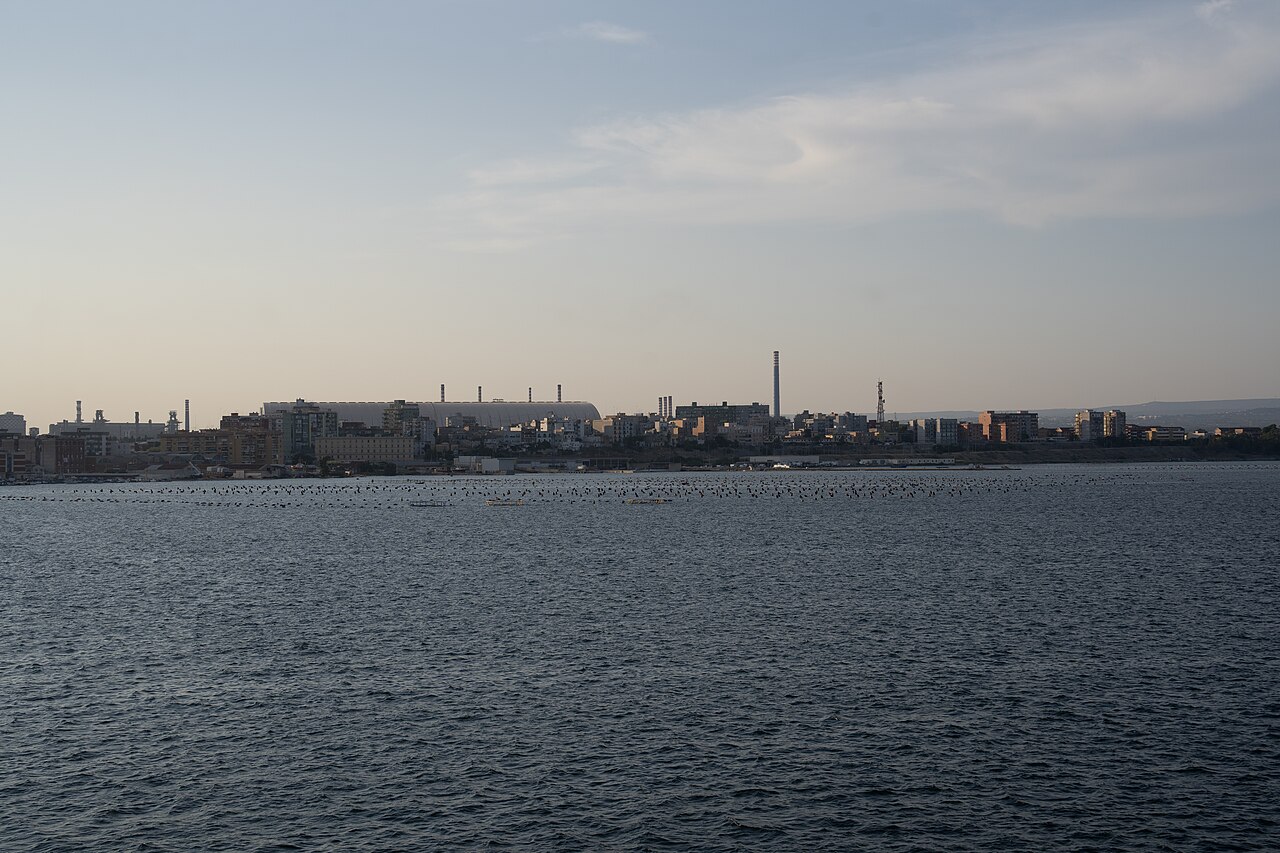
At a distance of 1,800 meters, the course is an homage to the classic nautical mile—the Italian miglio marino, traditionally calculated as the length of a sexagesimal minute at 1,852 meters. Navigation along the channel is remarkably straightforward, with organizers laying out a dense corridor of sighting buoys that eliminates any guesswork over direction and lets athletes lock into their rhythm. Event logistics and post-race gatherings have been anchored at the Mon Reve Ecogreen Resort, offering swimmers a comfortable base on the coastal edge. The race also bridges competitive sport and marine science: in past editions, volunteer swimmers have towed miniature samplers to help researchers from CNR Irbim collect environmental DNA directly from the channel currents, documenting the invisible microscopic life circulating through the water.
Taras and the Ionian: Spartan ships and Roman sieges
Today, swimmers walking the rim of Piazza Castello before or after their race can look up at two weathered Doric columns, the striking remnants of a sixth-century BC temple dedicated to Poseidon that once watched over the inlet. The ancient Greek port of Taras possessed a sprawling harbor with a perimeter of one hundred stadia, protected by a grand bridge and bounded by a low-lying isthmus. Because the barrier separating the outer and inner water was narrow and level, sailors routinely dragged their vessels across the dry ground from one sea to the other. In 282 BC, the Tarantines intercepted a Roman flotilla attempting to force its way into the basin, sinking four warships and capturing another.
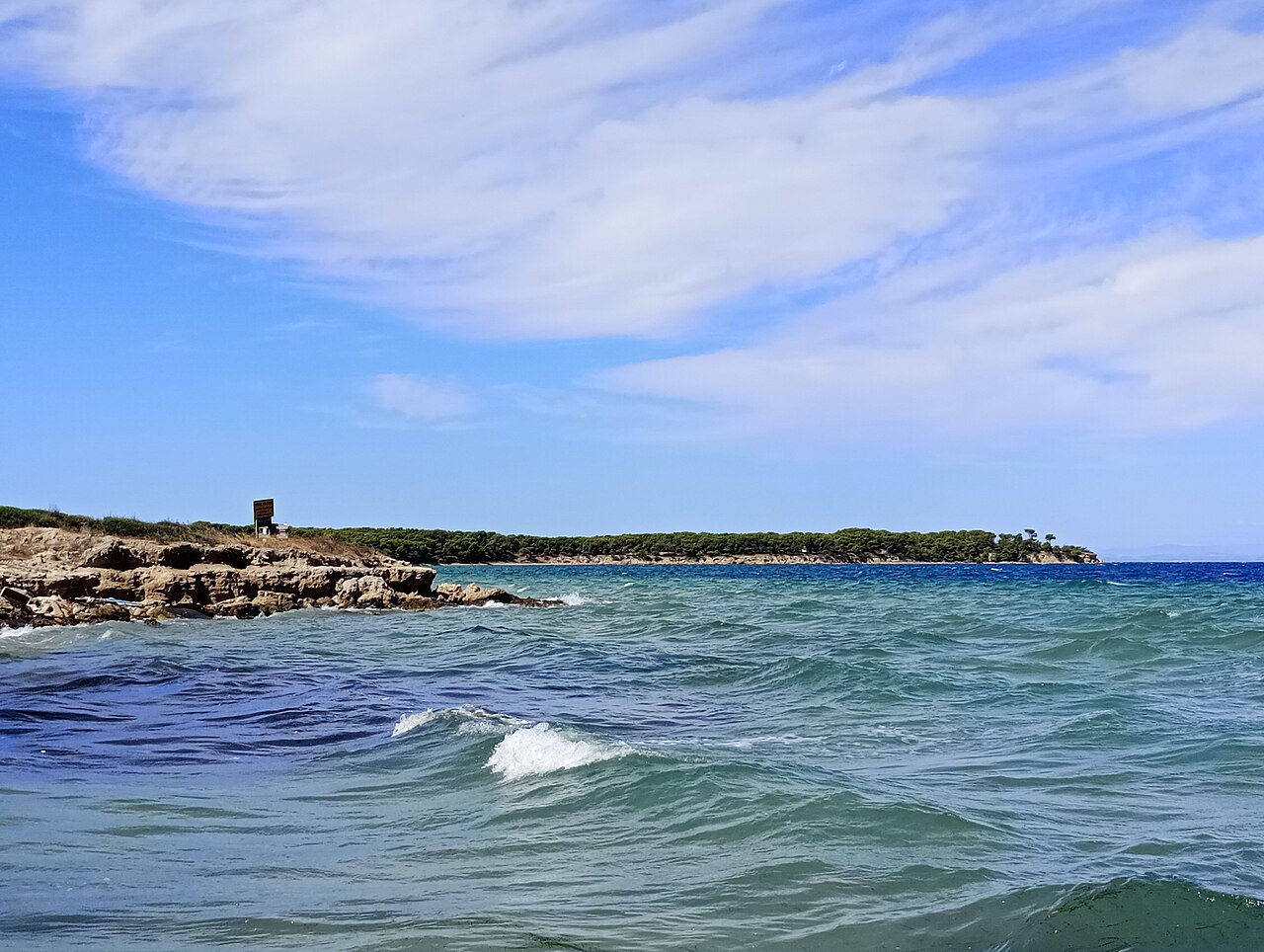
Centuries later during the Battle of Tarentum, the Carthaginian general Hannibal instructed the citizens to drag their war galleys straight through the city streets to reach the open sea, completely sealing off the Roman citadel from naval reinforcement until relief troops were ferried in from Metapontum.
Castello Aragonese: the sea moat turned channel
Towering immediately over the race course, the Aragonese Castle dominates the channel with monumental stone walls. Erected between 1486 and 1492 over the remains of earlier Greek defenses and a ninth-century Byzantine fortress, the citadel was commissioned to shield the harbor from Turkish incursions. To secure the stronghold, workers excavated the ground in front of the ramparts in 1481, carving out a deep ditch to let boats pass through and cutting the ancient promontory off from the mainland to create Taranto's island. Further reinforced in 1496, the water-bound fortress proved its tactical value when its artillery repelled an Ottoman assault in 1594. The fortress remained a guarded bastion for centuries, even holding captive French generals whose battered ship sought emergency shelter in Taranto harbour in 1799.
The military moat underwent its modern transformation in 1883, when engineers pulled down the ancient San Angelo tower to build the iconic swing bridge, the Ponte Girevole. The structure still operates today to connect the city's old and modern quarters: when naval ships need to access the Italian Navy Arsenal in the Mar Piccolo, the bridge swings apart, rotating 45 degrees on the Borgo Antico side and 90 degrees on the Borgo Nuovo side. Swimming through that channel feels like cutting through the living hinge of Italian maritime history.
Mar Grande: Cheradi Islands and the 1940 naval strike
Beyond the mouth of the channel lies the expansive outer harbor of the Mar Grande, guarded by the Cheradi Islands. This small archipelago consists of San Pietro and San Paolo, two low islands that act as natural breakwaters, sheltering the deep commercial roads. A third tiny islet, San Nicolicchio, once stood here before it was dismantled to make space for the expansion of the cargo terminal. With a uniform depth of about twelve meters, the broad roads of the Mar Grande offered ideal shelter for naval armadas. On the night of November 11, 1940, British carrier aircraft carried out the Battle of Taranto, the first naval strike in history launched entirely by aircraft.
The low-flying torpedo bombers took advantage of anti-torpedo netting that stopped roughly 60 centimeters short of the harbor floor, slipping their ordnance beneath the defenses. Torpedo strikes crippled the battleships Littorio and Conte di Cavour; to keep them from plunging to the bottom, crews ran both vessels aground in the harbor shallows, leaving their superstructures and heavy turrets rising eerily above the waterline. Today, the harbor has long returned to peace, but the seabed still preserves the echoes of that dramatic night.
Mar Piccolo and Palude La Vela: cetaceans, wetlands, and seahorses
Beyond military drama, Taranto's dual sea basins remain vibrant natural habitats. The Mar Piccolo basin shelters one of the largest concentrations of seahorses in the entire Mediterranean, hosting both Hippocampus hippocampus and the long-snouted Hippocampus guttulatus. The reserve's sheltered seagrass and muddy bottoms also nurture noble pen shells, encrusting sponges, spiny spider crabs, and visiting loggerhead sea turtles.
Sources: Taranto · Castello Aragonese (Taranto)
Course
How to get there
Venues are spread across the city of Taranto, the province of Taranto, and the surrounding region of Apulia.
Miglio Marino Open
Frequently asked questions
- When was the last edition of Miglio Marino Open?
- The last edition of Miglio Marino Open took place on September 12, 2026.
- What distances does Miglio Marino Open offer?
- Miglio Marino Open offers 450 m and 1.8 km.
- How much is the entry fee for Miglio Marino Open?
- The entry fee is 30 €.
- Where does Miglio Marino Open take place?
- Miglio Marino Open is a sea swim. Location: Taranto, Puglia, Italy.
- How do I register for Miglio Marino Open?
- The reference page for registering for Miglio Marino Open is https://www.icron.it/newgo/#/evento/20265104.
Where to stay
Taranto offers a range of stays, from historic boutique hotels nestled within the winding alleys of the old town—often converted from traditional residences—to practical camping options located near the coastal beaches of the surrounding province. Visitors can expect to find double rooms in central boutique properties ranging from €90 to €150 per night, while coastal campsites and guesthouses further from the city center typically offer more accessible rates starting around €60 per night during the late August season.
Things to do nearby
The weekend provides opportunities to explore the Ionian coast beyond the race course. Visitors can join guided kayak excursions to observe the dolphins near the Cheradi Islands or participate in local mussel-tasting sessions, which highlight the unique 'citri' freshwater spring ecosystems. For those interested in history, the archaeological museum (MArTA) houses significant findings from the Greek period, while the nearby coastline offers extensive trekking paths that wind through the Chidro River wetlands and protected Mediterranean scrublands.
Swimmers
Similar races


Comments
Transparency: some links on this page (stays, flights, experiences, gear) are affiliate links — if you book or buy through them, Omniathlon may earn a commission from the partner at no extra cost to you. As an Amazon Associate we earn from qualifying purchases.