
Revezamento Caraguatatuba × Ilhabela
- Nov 21, 2026
At a glance
- Next edition date
- November 21, 2026
- Where
- Sea · Canal de São Sebastião, Caraguatatuba, São Paulo, Brazil
- Registration
- instagram.com
About the race
The Revezamento Caraguatatuba × Ilhabela is an open water relay race across the Canal de São Sebastião, on the northern coast of the state of São Paulo in Brazil. Held in November, the event challenges teams of swimmers to take turns in the sea, navigating an offshore passage where the open Atlantic funnels between the continent and the offshore island. The crossing tests team stamina and tactical planning against powerful oceanic currents and shifting swells. In past editions, sea currents running through the channel have proven so demanding that in 2002 only a single squad out of twenty starters succeeded in completing the full 22-kilometre course. Waiting on an escort vessel between relay legs brings its own trial, where the constant rocking of the boat has occasionally prompted competitors to withdraw from seasickness while resting for their next turn in the water.
Yet when the rhythm clicks, the channel turns into a fast, cooperative marathon where each swimmer alternates between bursts of effort in the water and tracking their teammate from the deck. Recent years have produced remarkably tight competition and growing fields. In one past running, after 22 kilometres of swimming across the channel, a mere fourteen seconds separated the winning team from the runners-up at the finish line. In another edition, hundreds of swimmers gathered under overcast skies and light coastal rain to take on the crossing together, filling the channel with escort boats and relay swimmers trading places stroke for stroke across the sea.
Canal de São Sebastião: the drowned river valley
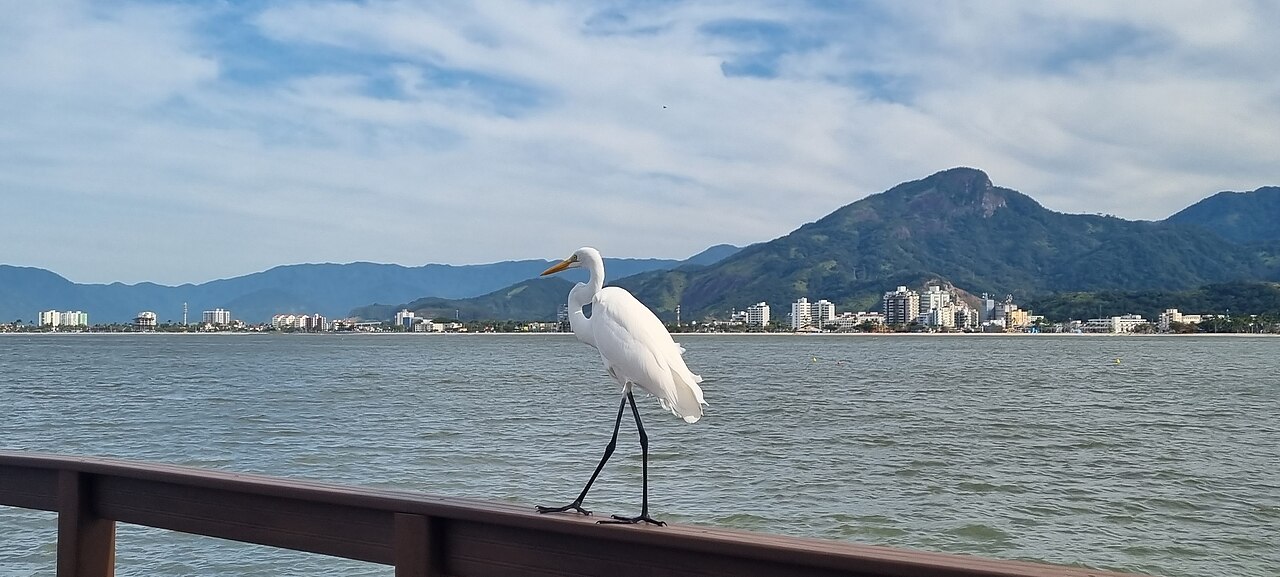
The São Sebastião Channel forms a 30-kilometre-long waterway separating the mainland coast from Ilhabela. Around 8,000 years ago, this passage was not an arm of the sea at all, but an ancient river valley that became submerged as global sea levels rose. Today, the seabed drops into a deep trench, descending to a maximum depth of 42 metres beneath the surface where swimmers make their crossing. Although the channel hosts industrial shipping and port facilities, its natural hydrodynamics keep the sea surprisingly clean. Powerful marine currents sweep continuously through the channel, constantly flushing the passage and dissipating contaminants. The channel is also a bustling playground for regional nautical life, its surface dotted with sailboats, cruising speedboats, and traditional schooners sharing the deep channel waters with open-water swimmers.
Caraguatatuba: coastal bays beneath the Serra do Mar
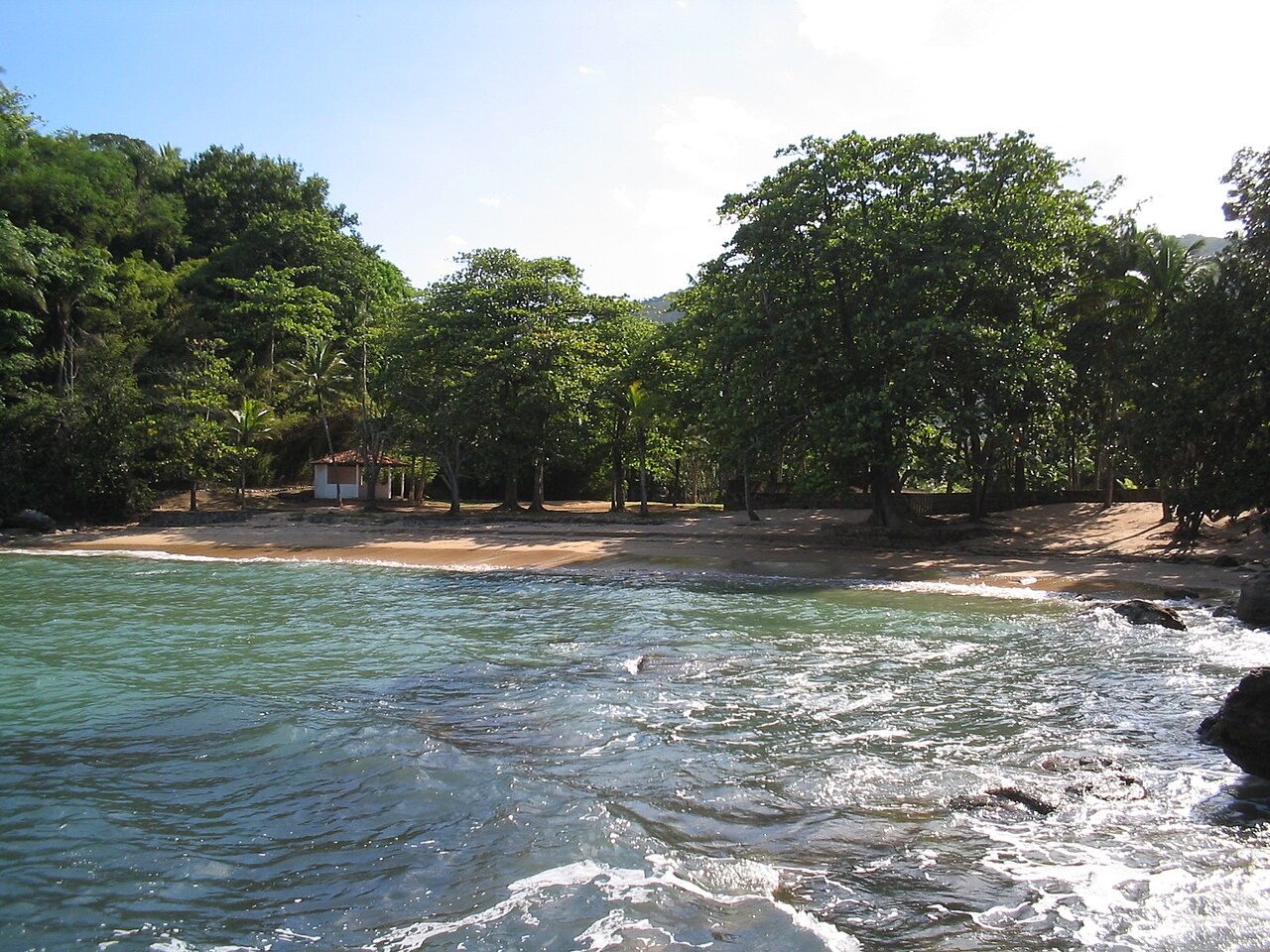
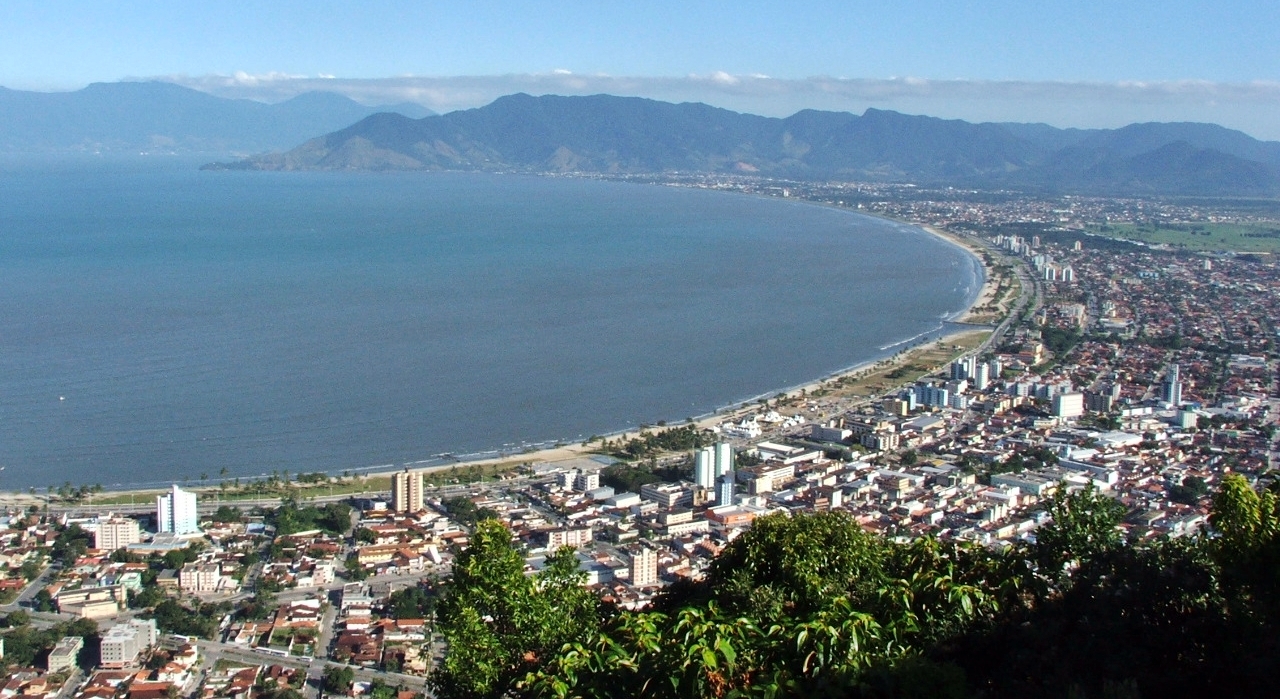
On the mainland shore, the municipality of Caraguatatuba—often called the capital of the northern coast—occupies a position between the Atlantic Ocean and the Serra do Mar. Formed by the urban core and the district of Porto Novo, the city unfolds across a coastline that encompasses seventeen distinct beaches. Close to the urban center lies Prainha, a sheltered cove characterized by calm waters that make it an easy base for acclimatising before taking on the open channel. Bordered by the beaches of Martim de Sá and Pedra da Freira, Prainha is famous for the Pedra do Jacaré, perched on the mountain's edge. A seaside walking trail follows the contour of the headland, allowing bathers to hike straight to the summit of the rock.
Those seeking wilder shores can follow the coast north past Praia do Martim de Sá, where occasional rip currents require attention from swimmers, toward the secluded curve of Praia Brava. Shaped like an amphitheatre shell embracing the steep hillside, Praia Brava remains completely undeveloped, with neither kiosks nor residences lining its sand. Reached by a twenty-minute trail winding through a preserved tract of the coastal Atlantic Forest, its shore drops away steeply into the sea with powerful swells and currents running along its entire length.
Praia da Cocanha and Mococa: mussel beds and coastal reserves
Continuing up the coast, Praia do Massaguaçu stretches between the lagoon of Praia do Capricórnio to the south and Praia da Cocanha to the north. Here, strong oceanic currents run very close to a steep nearshore drop-off, while the outline of Ilhabela rises visibly on the horizon across the water. At the northern end of the beach sits a traditional fishing village where local artisans still handcraft classic canoes. Adjacent to Massaguaçu, Praia da Cocanha shifts into a much gentler maritime environment, offering clear, calm waters ideal for diving and coastal fishing. Just off the beach, a small islet attracts divers who come to observe the marine life swimming around its submerged rocks.
Cocanha is also the center of São Paulo state's largest mussel farming operation, producing roughly 8,000 tons of fresh shellfish each year in the nutrient-rich coastal currents. Praia da Mococa sits at the mouth of the Mococa River between Cocanha and Tabatinga. Sheltered by light waves that rarely turn rough, the shallows near the river mouth offer gentle spots for short dives, backed by protected mangroves and coastal restinga vegetation.
Sources: Caraguatatuba · São Sebastião (São Paulo) · Praia do Martim de Sá · Praia Brava (Caraguatatuba) · Prainha (Caraguatatuba)
Course
How to get there
Revezamento Caraguatatuba × Ilhabela
Frequently asked questions
- When is Revezamento Caraguatatuba × Ilhabela?
- Revezamento Caraguatatuba × Ilhabela takes place on November 21, 2026.
- Where does Revezamento Caraguatatuba × Ilhabela take place?
- Revezamento Caraguatatuba × Ilhabela is a sea swim. Location: Canal de São Sebastião, Caraguatatuba, São Paulo, Brazil.
- How do I register for Revezamento Caraguatatuba × Ilhabela?
- The reference page for registering for Revezamento Caraguatatuba × Ilhabela is https://www.instagram.com/igor.maratonaaquatica/.
Where to stay
The area offers a mix of modest seaside guesthouses, often managed by local families, and more structured hotel options closer to the town center. Prices typically range from $60 to $150 per night depending on proximity to the channel. For a more immersive experience, camping facilities are available near the northern beaches, generally costing between $20 and $40 per night.
Things to do nearby
The weekend provides opportunities to explore the region's natural geography through kayak expeditions along the channel or trekking the trails that lead to the viewpoints overlooking the coastline. Culinary excursions focused on local seafood are standard, and historical walking tours can be arranged to visit the sites of the former agricultural estates that shaped the local landscape.
Swimmers
Similar races


Comments
Transparency: some links on this page (stays, flights, experiences, gear) are affiliate links — if you book or buy through them, Omniathlon may earn a commission from the partner at no extra cost to you. As an Amazon Associate we earn from qualifying purchases.