Sunk Rock Ocean Swimathon
- Feb 23, 2026
- Last edition date
- Distances from 1km to 5km
At a glance
- Last edition date
- February 23, 2026
- Distances
- 1 km · 2 km · 5 km
- Where
- Sea · Arabian Sea, near Gateway of India, Mumbai, Maharashtra, India
- Entry fee
- 26.5 €
- Registration
- maharashtraaquaticassociation.com
About the race
Out in Mumbai Harbour, a stone tower perched on a submerged reef marks the offshore starting point where swimmers plunge into the Arabian Sea. This is the Sunk Rock Ocean Swimathon, an open water sea challenge held off the coast of Mumbai in the state of Maharashtra, India. Swimmers embark on support boats to reach the beacon, trading the dense buzz of the metropolis for the open surface of the bay. The race takes its name and offshore setting from Sunk Rock Lighthouse, a solitary stone tower built on an isolated reef in the harbour waters about three kilometres off the coast. Setting out from a stone pier anchored directly in the open sea immediately tests your orientation, with only the skyline and distant mainland quays ahead.
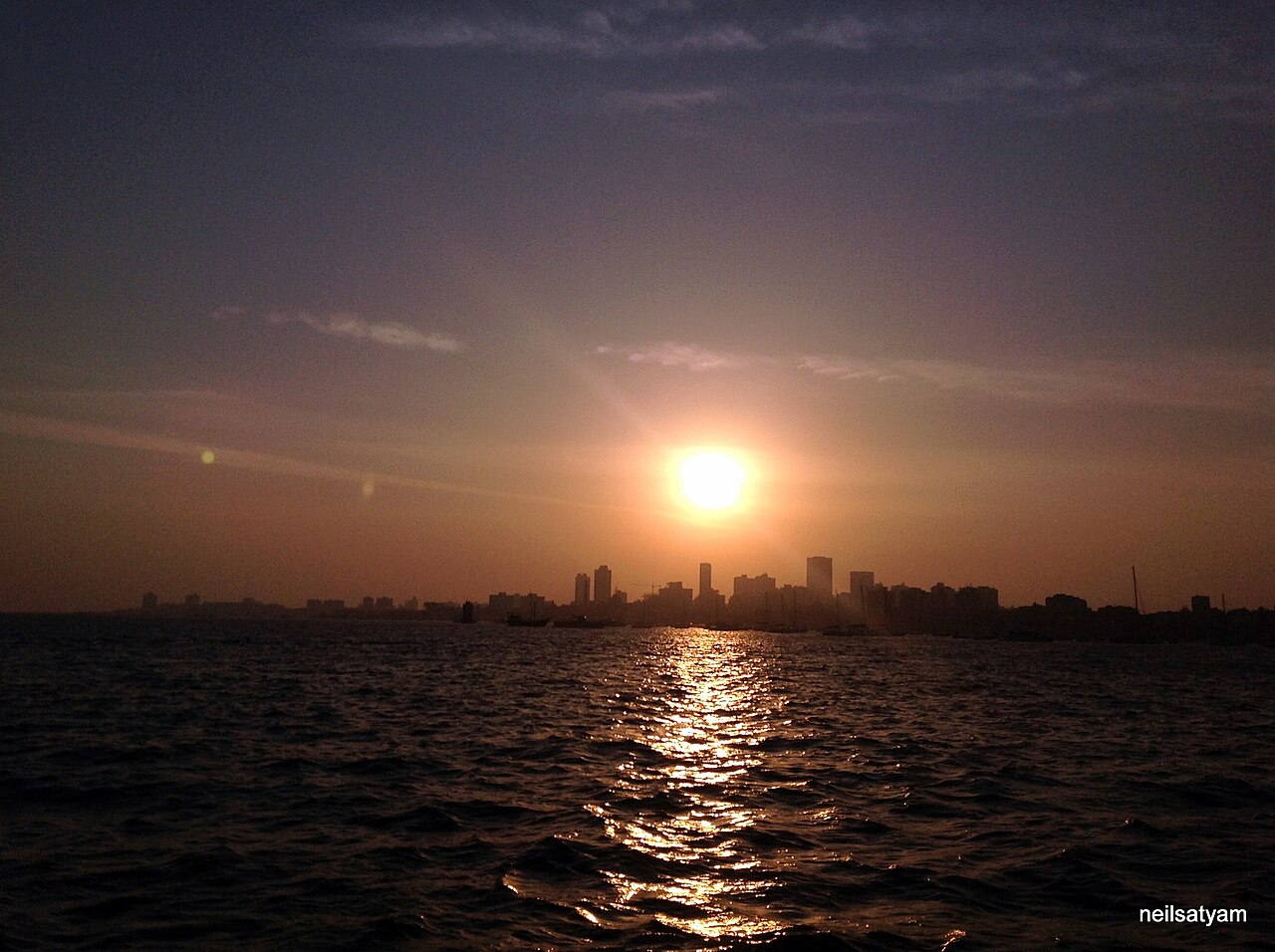
In past editions, participants were ferried out by boat to take their positions beside the beacon before the horn signaled the plunge. From Sunk Rock, the premier course stretches approximately 5 kilometres across the working harbour fairway back to the grand arch of the Gateway of India. Organized by the Maharashtra State Amateur Aquatic Association (MSAAA), the event is staged in February and features sea courses of 1,000 metres, 2,000 metres, and the complete 5,000-metre offshore route. Swimming through these wide harbour channels is a physical challenge against rolling sea waves that demands sharp pacing, steady sighting, and resilient stamina.
February water and the 62nd edition in 2026
The average sea temperature in Mumbai in February is 25.4°C (78 °F), which a sea-temperature record rates as suitable for comfortable swimming. In February the warmest sea off Mumbai reaches 27.6°C (82 °F) and the coldest is 23°C (73 °F). The 62nd Sunk Rock Ocean Swimathon, organised by the Maharashtra State Amateur Aquatic Association in 2026, drew 337 swimmers from six states, including Maharashtra. Of those 337 swimmers, 330 completed the race. The 2026 edition of the Sunk Rock Ocean Swimathon featured eight categories including boys, girls, men, women and para swimmers. In the men's open 5 km of the 2026 swimathon, Chaitanya Shinde of Pune won gold in 39 minutes 15 seconds.
Middle Ground and Oyster Rock: island batteries in the harbour
About one kilometre from the race area rises Middle Ground, an isolated basalt rock formation that juts directly from the seabed. In 1682, the British East India Company fortified this rocky reef against coastal piracy, posting a dedicated marine police force of Bhandaris to keep watch over incoming vessels. During the Second World War, the Royal Indian Navy reinforced the basalt islet by installing heavy anti-aircraft guns to shield Mumbai Harbour from aerial bombardment. Berthing along the islet's jagged margins is notoriously difficult at low tide, making it a rugged, inaccessible sentinel. Oyster Rock is another heavily fortified military island belonging to the Indian Navy. The island retains its strict operational status, where naval tradition endures in the 21-gun salutes fired from its ramparts when an Admiral of the Fleet enters or exits the port.
Cross Island and the outer waters of the bay
Further inside the wider reaches of Mumbai harbour, between the coastal wharves of Dockyard Road and Elephanta Island, sits Cross Island. The depths hold a layered underwater history; in 2010, dredging operations around Cross Island brought up a submerged World War II bomb containing 45 kilograms of explosives, followed a year later by two gold bars recovered from a dredger hopper. The outer seaward approaches have also tested mariners against the power of the Arabian Sea. About three kilometres out from the race zone, near Gull Island—also known as Kashyacha Khadak—the coastal passenger vessel SS Ramdas encountered violent storms and heavy seas on July 17, 1947, and capsized five miles from Colaba Point.
In an extraordinary display of open water resilience, survivors battled the waves and swam all the way to the northern coast of Raigad near Rewas, where local fishermen pulled them safely from the water. In recognition of that courageous sea rescue, the government awarded the fishermen coastal land and a dedicated jetty, creating the maritime settlement of Bodni, while the sunken wreck of the Ramdas eventually resurfaced off Ballard Pier a decade later.
Colaba waterfront and the Royal Bombay Yacht Club
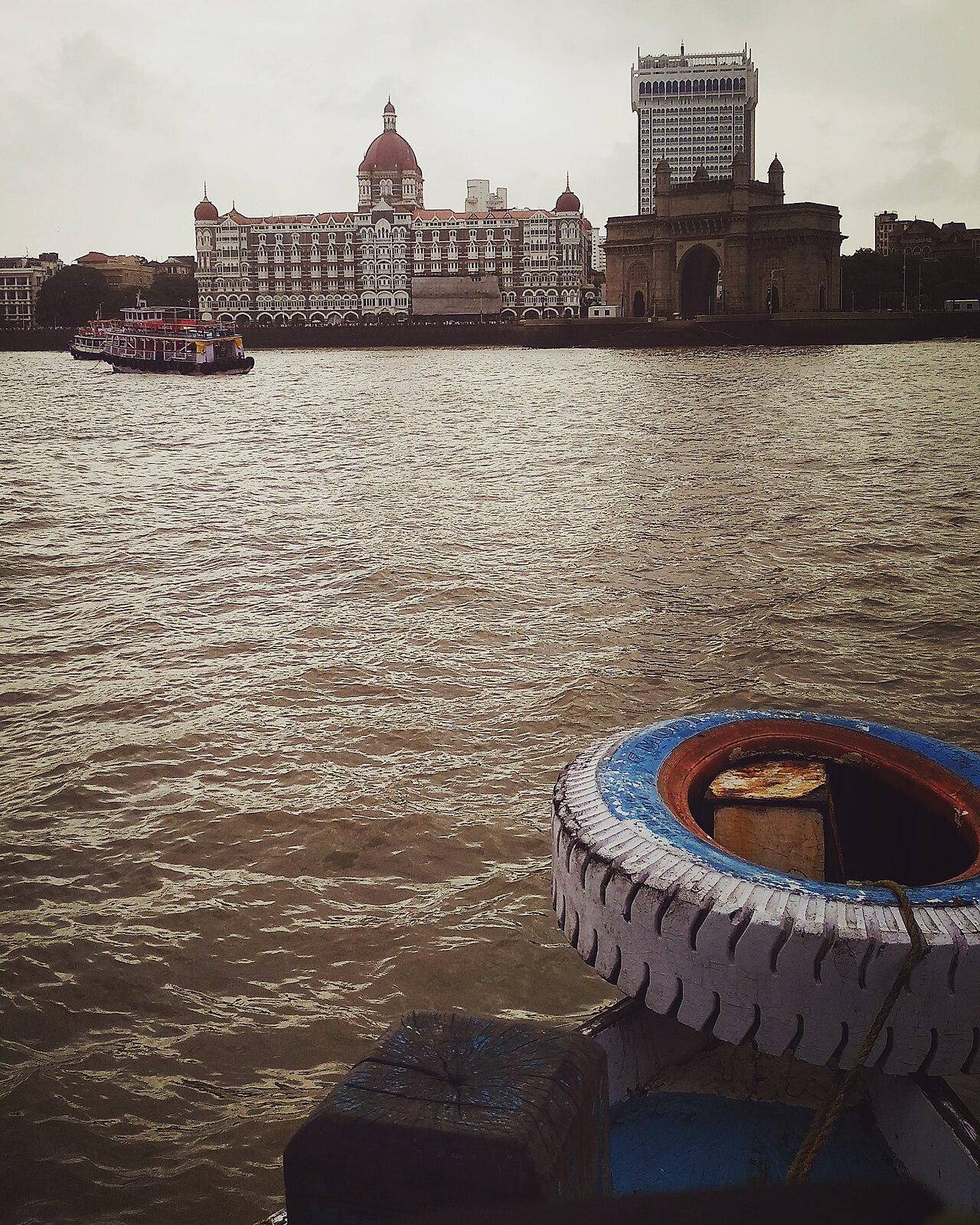
Nearing the end of the swim, the city's celebrated colonial waterfront looms into sharp focus as you sight toward the monumental arch of the Gateway of India. At Wellington Pier in Colaba stands the Royal Bombay Yacht Club, established in 1846. Its ornate seafront clubhouse, known as the Old Yacht Club, was constructed in 1881, and the institution was later granted an Admiralty Blue Ensign bearing the Star of India and an Imperial Crown. The Royal Bombay Yacht Club has fostered competitive offshore navigation through honours like Prince Philip's Challenge Cup for long-distance sailing races. It was also here that club member Philip Bragg constructed the famous Suhaili, the storied vessel that completed the first solo, non-stop circumnavigation of the globe.
About two kilometres down the Colaba shore, the historic waterfront extends into Sassoon Docks. Built in 1875, it was the first commercial wet dock in western India and the very first wet basin in Bombay, constructed overlooking Oyster Rock. In 1879, the government incorporated the docks and surrounding foreshore into the Bombay Port Trust, creating the bustling maritime hub that continues to define Mumbai's working harbour life.
From Bombay Castle to Marine Drive and Back Bay
Bombay Castle, the fortified Portuguese manor at the heart of the old harbour, was built using local blue Kurla stone and rich red laterite transported from the Konkan region, and three of its main bastions—named Flag Staff, Flower tree, Tank, and Brab Tree—were originally lapped directly by the sea. While the coastline has expanded over the centuries, two historic gates of the original Portuguese manor still stand protected inside the INS Angre naval station. Crossing over the Colaba promontory to its western flank brings you to the broad, sweeping waters of Back Bay, which open out into the open Arabian Sea beneath the headland of Malabar Hill. Sweeping along the curve of the bay is Chowpatty Beach, a lively sandy shoreline where locals gather to take the evening sea breeze. Back Bay is skirted by Marine Drive, the famous seaside promenade and boulevard constructed by Pallonji Mistry in 1940, running all the way from the southern tip up to Girgaon Chowpatty.
Sources: Royal Bombay Yacht Club
Course
Awards
Gold, silver, and bronze medals were awarded to the top three finishers in each of the eight categories, including boys, girls, men, women, and para swimmers.
How to get there
Sunk Rock Ocean Swimathon
Frequently asked questions
- When was the last edition of Sunk Rock Ocean Swimathon?
- The last edition of Sunk Rock Ocean Swimathon took place on February 23, 2026.
- What distances does Sunk Rock Ocean Swimathon offer?
- Sunk Rock Ocean Swimathon offers 1 km, 2 km, and 5 km.
- How much is the entry fee for Sunk Rock Ocean Swimathon?
- The entry fee is 26.5 €. Registration fee is US$28 for all distances.
- Where does Sunk Rock Ocean Swimathon take place?
- Sunk Rock Ocean Swimathon is a sea swim. Location: Arabian Sea, near Gateway of India, Mumbai, Maharashtra, India.
- How do I register for Sunk Rock Ocean Swimathon?
- The reference page for registering for Sunk Rock Ocean Swimathon is https://maharashtraaquaticassociation.com/event/sunk-rock-ocean-swimathon-2026/.
Where to stay
Mumbai offers a diverse range of lodging, from historic boutique hotels overlooking the harbour to practical guesthouses in the Colaba district. Swimmers often prefer the heritage properties near the waterfront for proximity to the race start. Prices fluctuate significantly based on proximity to the Gateway of India, ranging from 60 EUR per night in budget-friendly guesthouses to over 250 EUR for luxury suites in colonial-era establishments. Booking in advance is recommended due to the high volume of maritime tourism.
Things to do nearby
The weekend in Mumbai provides a deep dive into urban history and coastal culture. Beyond the swim, participants can explore the ancient rock-cut architecture of the Elephanta Caves, accessible via ferry from the harbour. The city is also known for its Parsi cafe culture, offering a unique culinary experience, alongside guided walking tours through the Art Deco districts. For those preferring active recovery, kayaking sessions in the protected creeks offer a different perspective on the region’s mangrove ecosystems.
Swimmers
Similar races


Comments
Transparency: some links on this page (stays, flights, experiences, gear) are affiliate links — if you book or buy through them, Omniathlon may earn a commission from the partner at no extra cost to you. As an Amazon Associate we earn from qualifying purchases.