
98ª Travessia Port de Barcelona
- Oct 3, 2026
- Last edition date
- Distances from 400m to 5km
At a glance
- Last edition date
- October 3, 2026
- Distances
- 400 m · 1 km · 2.5 km · 5 km
- Where
- Sea · Moll de Bosch i Alsina, Barcelona, Cataluña, Spain
- Entry fee
- 14.5 €
- Registration
- natacio.cat
About the race
At the foot of the city's historic quays, the sheltered sea basin turns Barcelona's urban harbour into an open-water arena. The 98ª Travessia Port de Barcelona is an open water swimming race held in the Mediterranean sea waters of the Moll de Bosch i Alsina, right in the heart of Barcelona in Catalonia. Diving directly from the central wharves, swimmers enter a saltwater arena completely enclosed by the bustling quaysides of the Catalan capital. Organized in early October when the summer heat has mellowed and the inner basin settles into autumn calm, the event caters to every level of swimmer. The competition offers four distinct courses spanning 400 metres, 1,000 metres, 2,500 metres, and a challenging 5,000-metre distance.
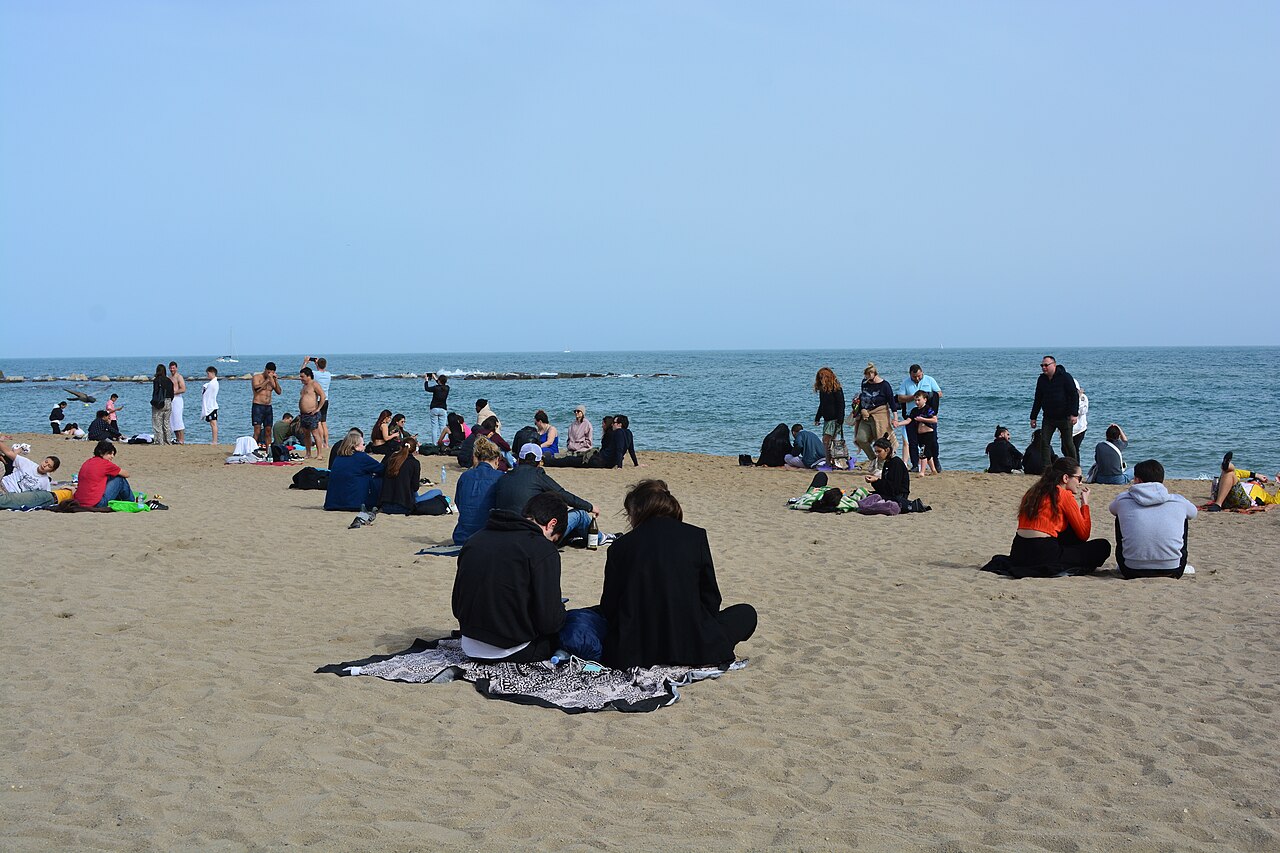
Out on the buoy line, the harbour water provides steady, sheltered conditions far removed from the open swells of the outer coastline, allowing competitors to lock into an unbroken rhythm beneath the urban skyline. The race carries one of the deepest traditions in Spanish aquatic sports, having been contested for nearly a century since its debut in 1926. It was first conceived by Club Natació Atlètic as an outright sporting challenge against their local rivals, Club Natació Barcelona. What began as a fierce duel between neighbourhood clubs soon grew into an enduring city institution that drew generations of swimmers into the harbour basin. Since 1992, the event has been steered by the merged entity Club Natació Atlètic-Barceloneta, which brought together the original founders and the Barceloneta Amateur Club.
Their stewardship has preserved the race's identity as a communal gathering while expanding its courses to modern open-water distances. Standing on the stone edge of the wharf before the start, you feel the weight of this century-old rivalry echoing across the enclosed salt water.
From Maians Island to Port Vell: shaping the sheltered harbour
Long before stone wharves lined the waterfront, this coastline existed as an open natural shore inhabited by the ancient Laietani tribe, who settled the coastal territory between the Llobregat and Tordera rivers around the fourth century BCE. The earliest recorded maritime activity in the immediate vicinity took place along the northern flank of Montjuïc during the first century CE. In those early Roman centuries, vessels had little natural refuge, beaching where they could along an unpredictable seaside. For centuries thereafter, ships that dropped anchor between the shore and the city remained entirely exposed to violent storms, and the fierce winds driven across the open sea caused frequent and devastating shipwrecks.
Mariners faced perilous anchorages along this unprotected stretch of Mediterranean coast until 1477, when engineers launched the city's first successful harbor project. By constructing a massive stone pier that physically linked the mainland coast to offshore Maians Island, Barcelona finally created a protected basin where ships could shelter securely from coastal gales. This ambitious engineering work reshaped the shoreline permanently, altering the sea currents that moved along the coast. The newly built harbor dike began to trap heavy deposits of drifting sand behind its breakwater, steadily accumulating sediment over generations. This captured sand eventually built up into an entire peninsula, giving rise to the maritime neighbourhood of Barceloneta where the racing club makes its home today.
Drassanes Reials: the medieval shipyards on the shoreline
The historic shoreline reveals layers of naval history that predate the modern quays. Archaeological excavations at the site of the royal shipyards uncovered an ancient Roman graveyard along the sandy edge of the sea. By 1241, recognizing the strategic importance of this open beachfront, James I of Aragon formally banned all construction along the coastline between the city walls and the shipyard, keeping the shore accessible for maritime defense. When the great medieval shipyard complex was built, workers quarried ashlar stone directly from the slopes of Montjuïc and mixed it with sand taken straight from the beach fronting the slips. From these stone vaults emerged mighty vessels, most famously the royal galley Real, constructed here in 1571 to serve as the flagship at the decisive Battle of Lepanto.
As the port developed into a bustling commercial gateway, navigational safety called for permanent guidance at the harbour mouth. In 1772, a historic beacon was erected upon the Moll de Pescadors dock to direct incoming traffic through the newly enclosed channels. The stone beacon still stands as a testament to the harbour's transformation from a treacherous open roadstead into an orderly maritime haven.
Montjuïc: the coastal fortress watching over the harbour
Above the harbour rises Montjuïc, the coastal hill that has guarded Barcelona's waters since antiquity. Archaeological evidence reveals Iberian settlements flourishing on these heights as early as the third and second centuries BCE. In later eras, the mountain's commanding vantage over the sea prompted the construction of an early watchtower, which signaled the distant approach of sails to the merchants and soldiers down below. By 1694, the fortress atop the hill was refashioned with a distinctive line of saw-toothed ramparts engineered specifically to face the open sea. During the siege of 1641, Montjuïc had already proved its decisive role as the vital strategic pivot that allowed royal forces to supply themselves directly from the Mediterranean.
The mountain's prominence also etched its name into the history of modern science. Between 1792 and 1798, French astronomers used Montjuïc's summit as the southern terminus for measuring the meridian arc running all the way from Dunkirk, an extraordinary geodetic survey that ultimately defined the universal length of the decimal metre. The very standard of measurement that determines every race distance was calibrated right above the water you swim in.
Port Vell today: classic yachts, piers, and waterfront promenade
These waters regularly celebrate seafaring heritage during regattas like the annual Puig Vela Clásica, held each July. The event draws majestic classic and traditional wooden sailing ships to Barcelona's harbour, filling the roads with billowing canvas and varnished timber. The transformed waterfront surrounding the race course offers plenty to explore once you dry off after your swim. The inner harbour hosts the floating exhibits of the annual boat show, while the popular Barcelona Aquarium sits prominently along the piers. Further along the coastline, wide waterfront promenades lead toward the modern coastal developments built on land reclaimed from the sea during the harbour's entrance redesign, making this one of the most vibrant urban marine arenas in the Mediterranean.
Sources: Aquarium Barcelona · Real Club Náutico de Barcelona · Port Vell
Course
How to get there
98ª Travessia Port de Barcelona
Frequently asked questions
- When was the last edition of 98ª Travessia Port de Barcelona?
- The last edition of 98ª Travessia Port de Barcelona took place on October 3, 2026.
- What distances does 98ª Travessia Port de Barcelona offer?
- 98ª Travessia Port de Barcelona offers 400 m, 1 km, 2.5 km, and 5 km.
- How much is the entry fee for 98ª Travessia Port de Barcelona?
- The entry fee is 14.5 €.
- Where does 98ª Travessia Port de Barcelona take place?
- 98ª Travessia Port de Barcelona is a sea swim. Location: Moll de Bosch i Alsina, Barcelona, Cataluña, Spain.
- How do I register for 98ª Travessia Port de Barcelona?
- The reference page for registering for 98ª Travessia Port de Barcelona is https://www.natacio.cat/convocation/?id=6363.
Where to stay
Barcelona offers a dense concentration of lodging options. Swimmers typically opt for boutique hotels located in the historic harbor district or restored apartments in the nearby Barceloneta area, which was traditionally home to fishing communities. For those preferring a more social atmosphere, several hostels and modern guesthouses are situated within walking distance of the Moll de Bosch i Alsina. Expect to pay between €120 and €250 per night for high-quality central accommodation, depending on the proximity to the waterfront and the season.
Things to do nearby
The race weekend in Barcelona serves as an ideal base for exploring maritime culture. Swimmers can dedicate time to visiting the Maritime Museum, located in the historic shipyards, or take guided kayak tours to view the harbor’s architecture from a different angle. The area surrounding the port also offers extensive opportunities for coastal trekking along the paths of Montjuïc, where history and panoramic views of the Mediterranean converge. Many athletes conclude their stay by exploring the local gastronomy, specifically the traditional seafood tapas found in the narrow streets of the old town.
Swimmers
Similar races


Comments
Transparency: some links on this page (stays, flights, experiences, gear) are affiliate links — if you book or buy through them, Omniathlon may earn a commission from the partner at no extra cost to you. As an Amazon Associate we earn from qualifying purchases.