
Wörthersee Night Swim
- Jul 3, 2027
- Distances from 500m to 2km
At a glance
- Next edition date
- July 3, 2027
- Distances
- 500 m · 1 km · 2 km
- Where
- Lake · Strandbad Maiernigg, Klagenfurt am Wörthersee, Kärnten, Austria
- Entry fee
- 40–60 €
- Registration
- woerthersee-swim.com
About the race
At dusk on Lake Wörthersee, the open water turns pitch-black while swimmers illuminate the lake with glowing tow floats and chemiluminescent sticks. The Wörthersee Night Swim is an open water swimming race held in the lake waters off Strandbad Maiernigg, along the shore of Klagenfurt am Wörthersee in Carinthia, Austria. First held in July 2025 and returning each July, the gathering offers race distances of 500, 1,000, and 2,000 meters, organized by Wörthersee Swim. Venturing into deep open water after sunset can naturally heighten apprehension, but the event transforms the lake into a sparkling constellation of light. Swimmers receive glow sticks inside their starter packages to boost night visibility in the dark water, while neon tow floats and luminous regatta buoys outline the entire course.
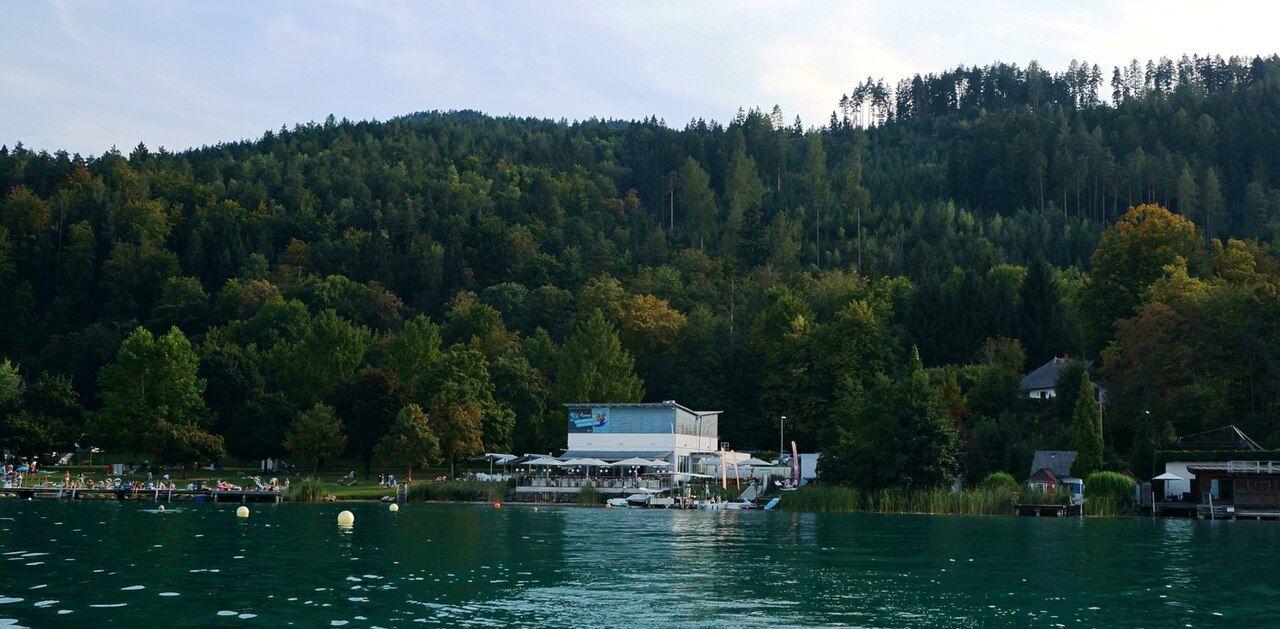
The 2,000-meter route stands as the event's premier test, requiring swimmers to complete two full laps across the darkened water. The race goes ahead despite continuous summer rain, yet the lake retains its remarkable warmth throughout the night alongside balmy air. Slicing through the quiet drizzle between glowing course markers creates a rhythmic, meditative stroke that carries you steadily back toward the shoreline lights.
Lake Wörthersee: glacial basin, three chambers, and summer heat
Lake Wörthersee owes its geography to the immense force of moving ice, having been carved out by glacial activity during the last ice age. The resulting freshwater basin spans 16.5 kilometers in length and 1.5 kilometers across, stretching all the way from Klagenfurt to the western bay of Velden. Rather than a single continuous trench, islands divide the lake into three distinct chambers. The entire lake drains through a single outlet, the Glanfurt river, which flows onward to join the Drava river system. During the summer months, the upper layer of water warms up significantly, creating gentle and exceptionally mild conditions. In midsummer, this warm epilimnion makes night swimming remarkably comfortable without requiring thick neoprene.

Winter transforms the surrounding landscape, although freezing over completely remains a rare occurrence for the lake, happening roughly once every ten years. The same glacial epoch that carved Wörthersee shaped neighboring valleys, including Keutschacher See, formed along a tectonic fault by a tributary branch of the Drau glacier. Reaching a maximum depth of 15.6 meters, this basin preserves ancient prehistoric archaeology. Around 6,000 years ago, when the water level was about 1.5 meters lower than today, Neolithic communities built a wooden stilt village on what was then an island. Tree-ring analysis of preserved oak trunks recovered from the settlement dates their felling to 3947 and 3871 BC. Today, the western shore features sandy moorland covered with sedges and reeds, and most of the lake is protected as a nature reserve.
Further through the protected Keutschacher-See-Tal landscape area, established in 1970 across 2,532 hectares, lies Hafnersee, another basin shaped by a side branch of the Drau glacier within a tectonic valley. Humic acids seeping from surrounding moors give its water a natural brown coloration. A shallow underwater sill just 1.8 meters deep divides the lake into two sections reaching depths of 10 meters and 9.1 meters. In 1974, archaeologists discovered another Neolithic pile dwelling situated on this central submerged ridge. The water warms up comfortably in the second half of July for swimming, before freezing over between late November and March beneath ice 40 to 50 centimeters thick. Perched above the valley at an altitude of 601 meters, the Forstsee covers 29 hectares with an average depth of 22 meters and a maximum plunge of 35 meters.
Since 1925, a pressure pipeline has hydraulically linked this high mountain lake to the Wörthersee power plant. An ancient roadway runs along its western shore, where a protected historical section is preserved. Official testing in 2008 confirmed very good hygienic water quality and oligotrophic conditions, supporting noble crayfish and 14 fish species, including pike, catfish, carp, and zander. About thirteen kilometres away sits Lake Ossiach, located at an altitude of 501 meters above sea level with an average depth of 19.6 meters and a maximum depth of 52.6 meters. As a dimictic lake with mixing periods occurring in spring and late autumn, its surface warms thoroughly in midsummer. Several uninhabited sections of its shoreline are designated as protected natural reserves, while the Tiebel Creek flows into the eastern bay where the Bleistatt Moor has undergone extensive re-naturalisation.
Blumeninsel and Kapuzinerinsel: the two solitary islands
Across the broad expanse of Lake Wörthersee, only two true islands emerge from the water. The smaller of the two is Kapuzinerinsel, a quiet, densely wooded outcrop that remains completely uninhabited. Anyone approaching must navigate with care, as shallow sandbanks flank both sides of Kapuzinerinsel, creating pale underwater ledges that contrast with the darker lake depths around them. Blumeninsel is the largest island anywhere on Lake Wörthersee, measuring 470 meters in length and 95 meters at its widest point. The island was hidden beneath the surface until 1770, when an artificial lowering of the lake's water level exposed its landmass. This change altered the surrounding channels so significantly that the water between the island and the peninsula became too shallow for passenger steamers of the Wörthersee shipping company to pass through.
Locals originally christened it Snake Island (Schlangeninsel), an ominous moniker that had nothing to do with serpents and referred purely to its long, sinuous serpentine outline. In reality, the island offers a tranquil natural haven, with its perimeter largely fringed by thick reed beds. Today, a section of the island is protected as a designated landscape conservation area, providing an undisturbed natural sanctuary in the middle of the lake.
The Pörtschach underwater threshold and the lakefront lidos
The underwater topography of Lake Wörthersee reveals dramatic structural features that directly influence the open water experience. A prominent underwater rock threshold rises from the lake bed between Maria Wörth and the Pörtschach peninsula, marking the boundary of the smallest basin in the entire lake. Blumeninsel sits directly next to this headland, positioned alongside the submerged geological formation. Along the western part of the lake, long stretches of the shoreline are bordered by a seawall. The Pörtschach peninsula has long anchored Carinthian bathing culture, featuring an expansive beach bath, two active piers for lake excursion boats, and a large beach promenade where visitors stroll between swims. That deep-rooted lido tradition extends all the way to Strandbad Maiernigg, which shares a unified ticketing network with Klagenfurt's other two public lidos. Standing on the shoreline as dusk settles over the water, looking out toward the glow of floating buoys and swimmers preparing to embark into the illuminated lake, you feel the enduring magic of night swimming in Carinthia.
Strandbad Maiernigg: piers and calm water on the lake
At Strandbad Maiernigg, wooden piers give direct access to deeper water of Lake Wörthersee, with good conditions for calm and uninterrupted swimming. A guide to quiet swim spots on the website of the Klagenfurt lidos singles out weekday early mornings at Strandbad Maiernigg for particularly calm water. The Austrian tourism site austria.info gives the water temperature of Lake Wörthersee as up to 27 °C (81 °F) in summer.
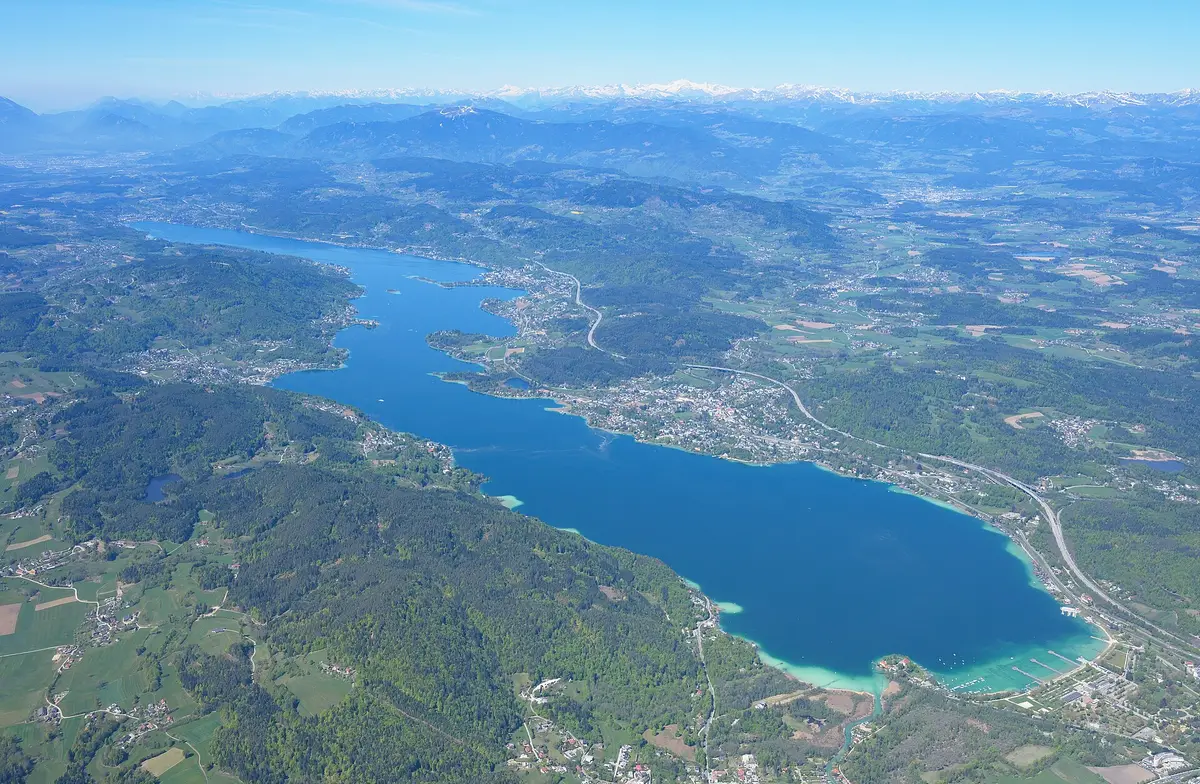
Sources: Wörthersee · Kapuzinerinsel · Blumeninsel (Wörthersee) · Pörtschacher Halbinsel · Keutschacher See
Course
Start and finish in Klagenfurt.
Start and finish in Klagenfurt.
Start and finish in Klagenfurt.
Awards
Non-competitive event, no timing.
Previous editions
How to get there
Car: Via A10/A2 (North), A2 (East), B91/A11/A2 (South), A2 (Italy). Train: ÖBB or ÖBB/DB.
Wörthersee Night Swim
Frequently asked questions
- When is Wörthersee Night Swim?
- Wörthersee Night Swim takes place on July 3, 2027.
- What distances does Wörthersee Night Swim offer?
- Wörthersee Night Swim offers 500 m, 1 km, and 2 km.
- How much is the entry fee for Wörthersee Night Swim?
- The entry fee ranges from 40 € to 60 €. 3.00 EUR of the entry fee is donated to animal welfare. Prices include 13% VAT.
- Where does Wörthersee Night Swim take place?
- Wörthersee Night Swim is a lake swim. Location: Strandbad Maiernigg, Klagenfurt am Wörthersee, Kärnten, Austria.
- How do I register for Wörthersee Night Swim?
- The reference page for registering for Wörthersee Night Swim is https://woerthersee-swim.com/night-swim/.
Where to stay
Klagenfurt offers a diverse range of stays, from historic boutique hotels situated near the harbor to traditional lakeside guesthouses. For those preferring a more direct connection with the water, several camping sites are located right on the beach fringes of the southern shore. Expect to pay between 80 EUR and 180 EUR per night for a double room, depending on the proximity to the Wörthersee waterfront and the level of service provided.
Things to do nearby
The area surrounding the Wörthersee is ideal for active exploration during the race weekend. Visitors can rent kayaks or SUPs to paddle the same routes as the swimmers, or take advantage of the extensive trekking network that leads up to the Pyramidenkogel for panoramic views. For a more relaxed pace, the lakeside towns feature numerous spots for local white wine tastings or visits to the nearby Neolithic stilt dwelling sites, which provide a fascinating deep-dive into the region's ancient archaeological history.
Swimmers
Similar races


Comments
Transparency: some links on this page (stays, flights, experiences, gear) are affiliate links — if you book or buy through them, Omniathlon may earn a commission from the partner at no extra cost to you. As an Amazon Associate we earn from qualifying purchases.