
Little Red Lite Swim
- Distance: 6.4km
At a glance
- Distances
- 6.4 km
- Where
- River · Hudson River — George Washington Bridge, New York, United States
- Entry fee
- 200 USD
- Registration
- nyopenwater.org
About the race
The Hudson River courses past Manhattan. The Little Red Lite Swim is an open water swimming race in the Hudson River, along the western shore of Manhattan in New York City. Organized by New York Open Water, the event is inspired by the Little Red Lighthouse 10K marathon swim and offers a non-competitive, untimed river journey covering a distance of 6.4 km, or 6,400 meters (4 miles). The point-to-point route starts at the Inwood Canoe Club and finishes downriver at the Baylander. Swimmers have a generous time limit of two hours to complete the course, assisted by a current that moves at approximately 1.5 mph. Every participant must bring and tow their own personal swim buoy at all times while in the water.
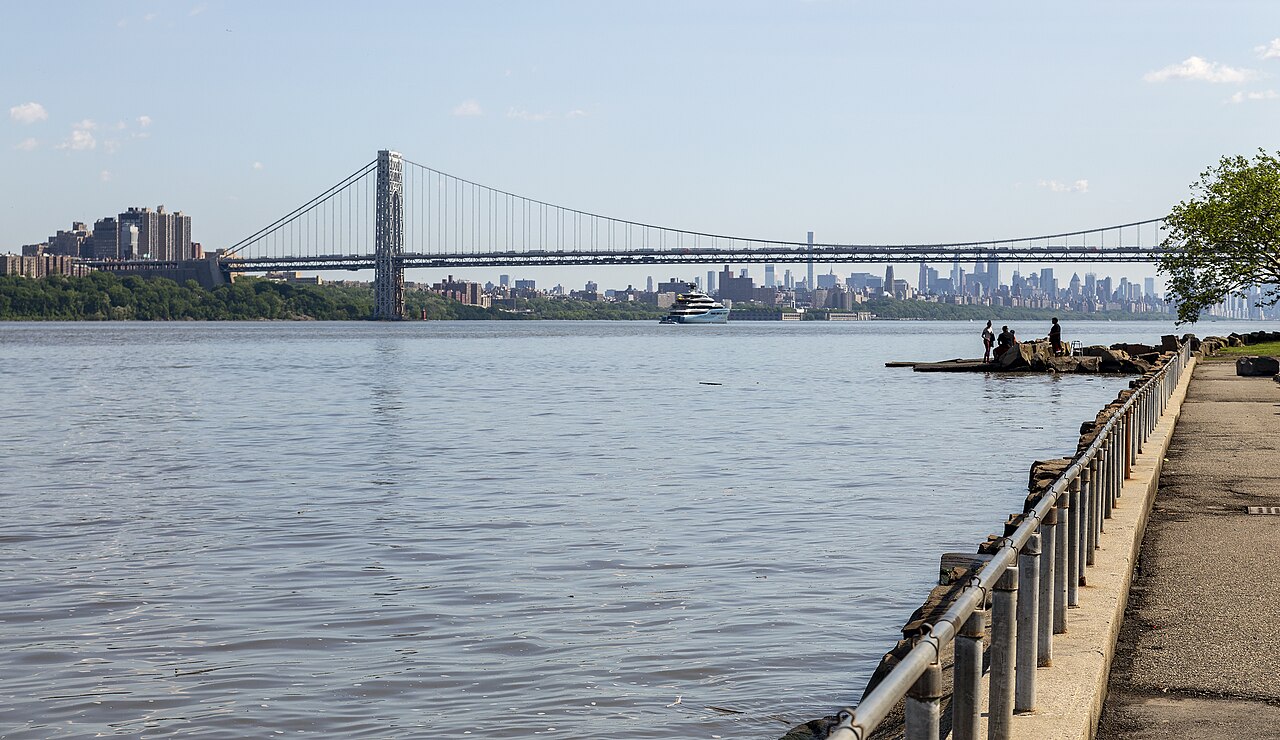
The swim is open to participants who are at least 13 years old. Entry includes swim access, an event t-shirt, a swim cap, and one drink ticket at the finish. Swimmers in previous river events on this course have encountered diverse conditions. During the 2012 edition, participants navigated by sighting approximately 19 buoys placed roughly a quarter of a mile apart along the water. That morning brought calm river conditions with less wind than other events that season, despite a slight chill in the air. Swimmers that day found the early to mid-section choppy and slow, before the strengthening current turned the final stretch very fast. Passing directly beneath the George Washington Bridge and looking across to the Little Red Lighthouse from the river proved to be a visual highlight of the swim.
The Harlem River forms an 8-mile tidal strait connecting the Hudson River and the East River. The northern section of that waterway was altered in 1895 by the construction of the Harlem Ship Canal, after which the original river course was filled in by 1914. Today, that neighboring strait is crossed by seven swing bridges, four lift bridges, and four arch bridges.
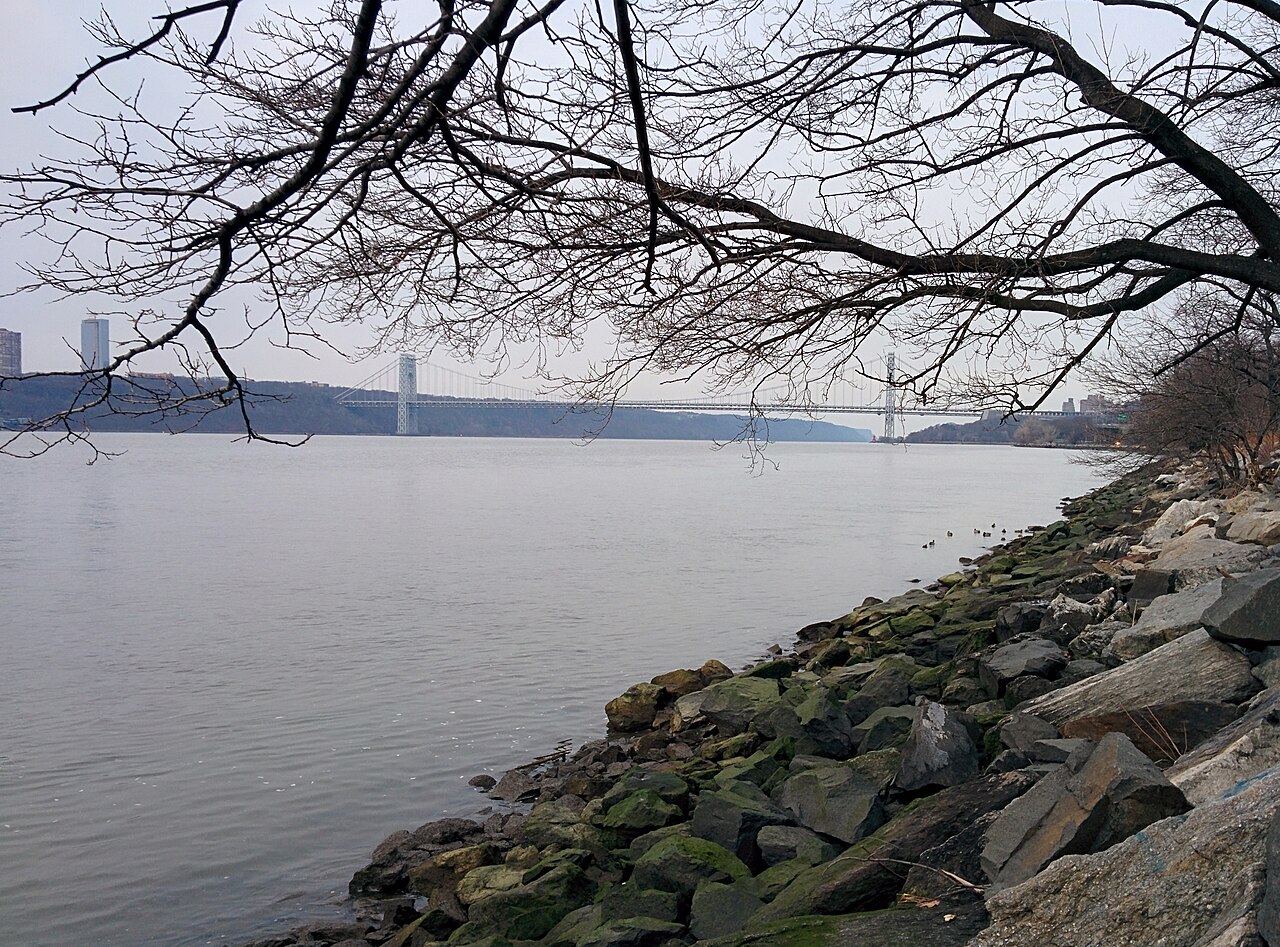
The Hudson River: lunar tides beneath the Palisades
Currents are governed by the phases of the moon. The flow experiences two predictable slack periods each day. During late August, Hudson water temperatures typically measure between 72 and 80 degrees Fahrenheit. In the 2012 race, the river registered 20°C (68 °F), feeling warmer than the morning air when swimmers first stepped in. From water level, swimmers take in an expansive vista looking across the river toward the New Jersey Palisades. Swimmers have described the experience of moving with the tidal flow while watching the city skyline and the towering Palisades as deeply meditative. John D. Rockefeller Jr. bought large parcels of land on the opposite side of the Hudson River specifically to preserve the scenic outlook from the Manhattan parks. About one kilometre from the race area, the Riviera nightclub once stood overlooking the Hudson River near the George Washington Bridge. That riverside nightclub site was later acquired to construct the Palisades Interstate Parkway.
Jeffrey's Hook: the Little Red Lighthouse and the Great Gray Bridge
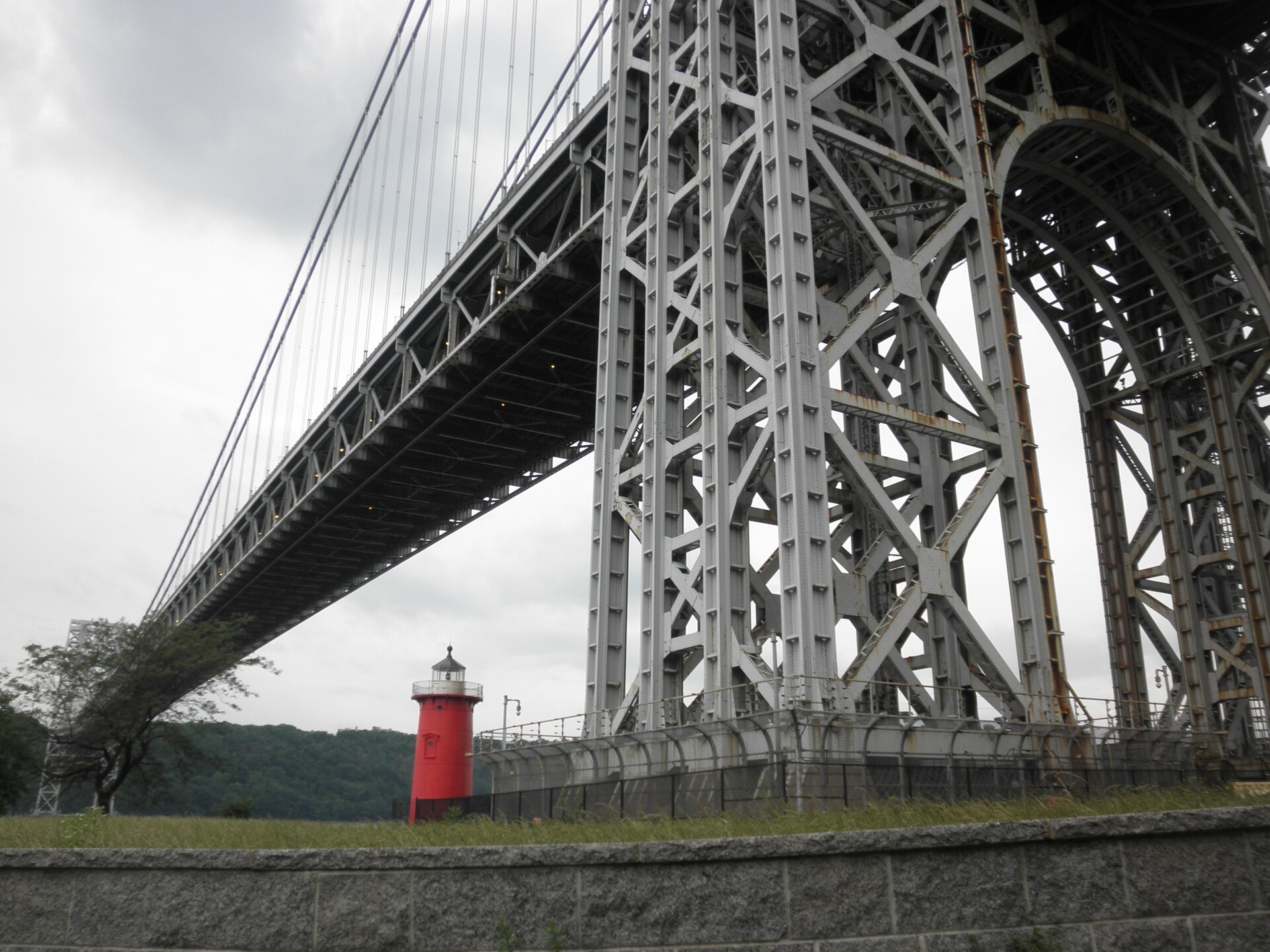
Under one kilometre from the race area, Fort Washington Park extends along the riverbanks of the Hudson. Along this shoreline, a small projection of land called Jeffrey's Hook, also known as Fort Washington Point, extends directly under the George Washington Bridge. The Little Red Lighthouse was relocated to this point in Fort Washington Park in 1921. The beacon served until 1948, when it was officially decommissioned. Scheduled to be dismantled, the lighthouse was saved and gained lasting renown through Hildegarde Swift's 1942 children's book, 'The Little Red Lighthouse and the Great Gray Bridge.'
Fort Washington and Fort Lee: Revolutionary river defenses
Under one kilometre from the race area, Fort Washington is on a schist outcropping that forms the highest natural point on Manhattan Island. Fort Washington and Fort Lee were constructed on opposite sides of the Hudson River to prevent British warships from passing up the river. To bar British vessels from navigating the Hudson, chevaux-de-frise were placed between Fort Lee and Fort Washington. About one kilometre from the race area, General George Washington made his headquarters at the Bourdette house near the landing, while the ferry at Burdett's Landing served as the vital supply line and sole link between the two fortified river positions. On November 20, 1776, British troops came ashore at Huyler's Landing, also called Lower Closter Landing.
The invading soldiers scaled the Palisades cliffs along a steep trail that was later turned into a cart road for moving farm produce to a dock on the river. About one kilometre from the race area, the Alpine Boat Basin now occupies the location once known as Upper Closter Landing.
From Paterno Castle to the Baylander at West Harlem
Under one kilometre from the race area, the former estate of Paterno Castle overlooked the Hudson River with balconies extending from its grand ballroom. The castle basement housed a private swimming pool filled with water drawn and filtered directly from the Hudson River. On the grounds, a guest house was constructed on a 250-foot pier suspended above a drop down to the Hudson River Greenway, looking out toward the river and the George Washington Bridge. Under one kilometre from the race area, the Dyckman Street Boat Marina was built on the site of a former car float that ceased operations in 1941. Before the bridge was finished, an 1842 temporary pipe supplied water across the river with a 115-foot fountain. About two kilometres from the race area, the Alexander Hamilton Bridge also spans the Harlem River between Manhattan and the Bronx, providing 103 feet of vertical clearance above the river. Parallel to the water runs a designated section of Hip Hop Boulevard. The riverbank behind Highbridge Park was home to the Fort George Amusement Park between 1895 and 1914, as well as the Harlem River Speedway, a horse racetrack constructed from 1894 and opened in 1898. In 1940, sections of the speedway were converted into the six-lane Harlem River Drive, cutting off public access to the water until the waterfront greenway along the Harlem River was restored and reopened around 2010.
The park also opened the city's first legal mountain bike trails in 2007 and contains the Highbridge Pool complex from July 14, 1936, featuring a main pool and wading pool that both measure 166 by 288 feet. The Little Red Lite Swim concludes at the Baylander.
Sources: Fort Washington Park (Manhattan) · Paterno Castle (New York City)
Course
How to get there
Little Red Lite Swim
Frequently asked questions
- What distances does Little Red Lite Swim offer?
- Little Red Lite Swim has a single distance: 6.4 km.
- How much is the entry fee for Little Red Lite Swim?
- The entry fee is 200 USD. Rates for ages 13-24 are $150 (Early bird $100). Fees include t-shirt, swim cap, and 1 drink ticket. Registration closes Aug 19, 2026.
- Where does Little Red Lite Swim take place?
- Little Red Lite Swim is a river swim. Location: Hudson River — George Washington Bridge, New York, United States.
- How do I register for Little Red Lite Swim?
- The reference page for registering for Little Red Lite Swim is https://www.nyopenwater.org/little-red-lite-swim/.
Where to stay
Accommodations in Manhattan range from high-end hotels near the Upper West Side, typically $350–$600 per night, to more modest guesthouses further uptown. For those preferring proximity to the river, some boutique hotels near the Hudson offer views of the water at premium rates. Alternatively, travelers often secure short-term apartment rentals in neighborhoods like Washington Heights to stay within easy reach of the park’s entry points, with prices fluctuating significantly based on proximity to the subway lines and the riverfront.
Things to do nearby
The area around the swim site offers diverse activities for the weekend. Visitors can explore the historic trails of Fort Tryon Park, which provide vantage points over the Hudson. Kayak and paddleboard rentals are available at specific public docks, allowing for a perspective of the Palisades from the water level. Additionally, the neighborhood features culinary stops ranging from local diners to traditional cafes, while nearby museums, such as The Cloisters, offer insight into the medieval architecture and history of the northern Manhattan landscape.
Swimmers
Other races by this organiser
- Ederle-Burke SwimNew York, US
- 2 Bridges Swim Under The WalkwayPoughkeepsie, US
- 20 Bridges Swim Around Manhattan — RelayNew York City, US
- 40 Bridges - Double Manhattan Island SwimNew York City, US
- 8 Bridges Hudson River SwimNew York, US
- Lake Minnewaska Silver Jubilee SwimKerhonkson, US
Similar races


Comments
Transparency: some links on this page (stays, flights, experiences, gear) are affiliate links — if you book or buy through them, Omniathlon may earn a commission from the partner at no extra cost to you. As an Amazon Associate we earn from qualifying purchases.